
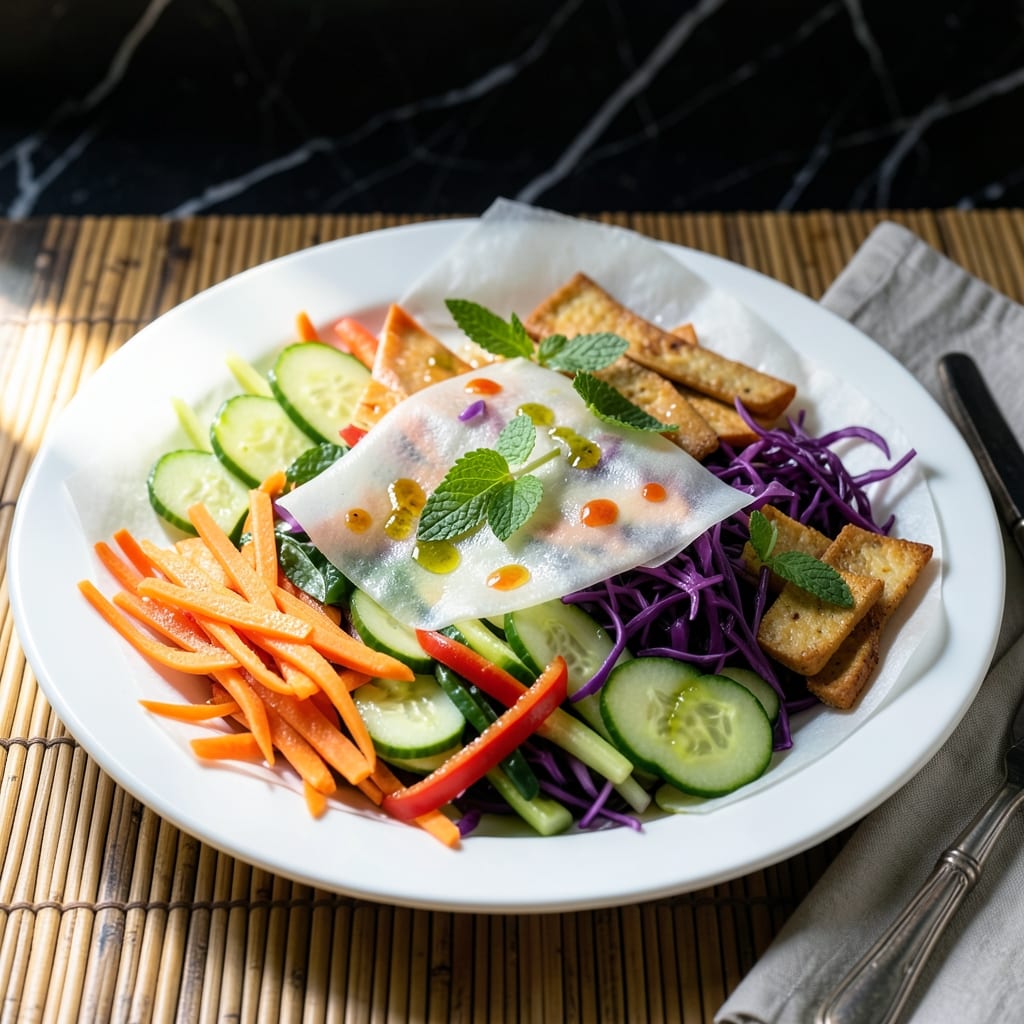
There’s something magical about the transparency of fresh rice paper spring rolls, revealing vibrant vegetables and herbs within. This Vietnamese classic transforms simple ingredients into an elegant, restaurant-quality dish that’s surprisingly easy to make at home.
The key is working with rice paper sheets while they’re still pliable, filling them with a colorful mix of vegetables, herbs, and your choice of protein. Each bite delivers a satisfying crunch followed by fresh, bright flavors that feel light yet deeply satisfying.
What makes this recipe special is its versatility – you can customize the fillings based on what’s fresh and available. The result is always a beautiful, no-fuss dish that’s perfect for appetizers or light meals.
Serve with peanut or hoisin dipping sauce for the complete experience. Here’s how to create these fresh spring rolls perfectly every time.
Ingredients for Vietnamese Rice Paper
Fresh vegetables, herbs, and rice paper transform into elegant, restaurant-quality spring rolls at home.
| Ingredient | Amount | Notes |
|---|---|---|
| Rice Paper Sheets 🍚 | 8 sheets | 8-inch diameter, spring roll variety |
| Carrots 🥕 | 2 whole | Medium, julienned for crunch |
| English Cucumber 🥒 | 1 whole | Peeled, seeded, julienned |
| Red Bell Pepper 🌶️ | 1 whole | Thinly sliced into strips |
| Purple Cabbage 🥬 | 1 cup | Thinly shredded for color |
| Fresh Mint Leaves 🌿 | ½ cup | Loosely packed, whole leaves |
| Fresh Cilantro 🍃 | ½ cup | Stems removed, roughly chopped |
| Fresh Thai Basil 🌿 | ¼ cup | Loosely packed, whole leaves |
| Rice Vermicelli Noodles 🍜 | 3 oz | Cooked according to package |
| Firm Tofu 🧈 | 14 oz | Pressed, cut into thin strips |
| Peanut Butter 🥜 | ½ cup | Creamy, unsweetened for sauce |
| Hoisin Sauce 🍯 | 3 tbsp | For dipping sauce base |
| Soy Sauce 🫙 | 2 tbsp | Low-sodium preferred for balance |
| Lime 🍈 | 1 whole | Juiced and zested for brightness |
| Garlic Cloves 🧄 | 2 cloves | Minced for sauce depth |
Rice paper quality matters—Three Ladies Brand or Spring Roll Skins from Asian markets are most reliable. Look for sheets that are uniform and free of holes. The vegetables should be crisp and vibrant; organic produce from Whole Foods or your local farmers market ensures the best texture and flavor. For the tofu, extra-firm from Nasoya or House Foods holds up best to slicing and frying.
No rice vermicelli? Thin rice noodles or even angel hair pasta work in a pinch. Can’t find Thai basil? Regular basil plus mint gets you close. For a nut-free sauce, swap peanut butter for sunflower seed butter (same ratio). The hoisin can be replaced with vegan oyster sauce or a mix of soy sauce and maple syrup. The lime is non-negotiable—it brightens everything.
Prep all fillings before softening the rice paper—they dry out fast. Store assembled rolls covered with a damp towel for up to 2 hours at room temperature. For longer storage, wrap individually in parchment and refrigerate for 1 day (they’ll firm up but still taste great).
Why You’ll Love This Recipe
- No Cook Needed: The rice paper softens in warm water—no stove, no fuss, just a bowl and a few minutes.
- Crunch in Every Bite: That fresh snap of cucumber and bell pepper against the chewy rice paper? Pure satisfaction.
- Endless Mix-Ins: Honestly, I swap proteins and herbs all the time—these work with shrimp one night, tofu the next.
- Pennywise Feast: A pack of rice paper and a handful of veggies stretch into a meal that feeds four for under ten bucks.
Step-by-Step Instructions for Vietnamese Rice Paper Rolls
Master the technique for perfect rolls with crisp vegetables and silky texture.
Step 1: Prepare the Filling Components
Begin by cooking the 3 oz Rice Vermicelli Noodles according to package instructions until al dente. Drain and rinse under cold water to stop the cooking process. Meanwhile, press the 14 oz Firm Tofu between paper towels for 15 minutes to remove excess moisture, then slice into thin strips.
Julienne the 2 whole Carrots, 1 whole English Cucumber, and 1 whole Red Bell Pepper into matchstick pieces. Thinly shred the 1 cup Purple Cabbage. These uniform cuts ensure even texture in every bite. Keep all prepared vegetables covered with damp paper towels to maintain freshness.
Step 2: Soften the Rice Paper Sheets
Fill a shallow dish with warm water. Submerge one Rice Paper Sheet at a time for 5-8 seconds until pliable but still slightly firm. Over-soaking makes them fragile and difficult to work with. Lay the softened sheet on a clean, damp kitchen towel.
Work quickly but carefully—the sheets become sticky as they soften. If the edges start to dry out before you finish rolling, lightly mist them with water. This step requires practice; the first few may not be perfect, but the technique improves with each attempt.
Step 3: Assemble the Spring Rolls
Place a small portion of the Rice Vermicelli Noodles near the bottom third of the sheet. Add a few strips of Firm Tofu followed by the prepared vegetables: Carrots, English Cucumber, Red Bell Pepper, and Purple Cabbage. Top with a few leaves of Fresh Mint Leaves, Fresh Cilantro, and Fresh Thai Basil.
Fold the sides inward, then roll tightly from the bottom up, similar to a burrito. The filling should be snug but not bursting through the paper. Place each finished roll seam-side down on a serving platter. Cover with a damp towel to prevent drying while you complete the batch.
Step 4: Prepare the Peanut Dipping Sauce
In a small bowl, whisk together the 0.5 cup Peanut Butter, 3 tbsp Hoisin Sauce, and 2 tbsp Soy Sauce until smooth. Add the juice and zest of the 1 whole Lime along with the 2 cloves Garlic Cloves, minced. Thin with 1-2 tablespoons of warm water until it reaches a pourable consistency.
The sauce should coat the back of a spoon but still drip slowly. Taste and adjust the balance—add more lime for brightness or hoisin for sweetness. This complex sauce complements the fresh, crisp rolls perfectly.
Pro Tips For Making Vietnamese Rice Paper
- Soak Briefly: Dip rice paper for 5-8 seconds in warm water—I learned this the hard way after ending up with gummy, torn sheets from over-soaking.
- Slice Thin: Shred carrots, cucumber, and cabbage into matchstick pieces, about 1/8-inch thick, so they bend without cracking the wrapper.
- Dry Your Veggies: Pat all fillings dry with a towel first; excess water makes the rolls slippery and hard to seal.
- Use a Damp Cloth: Keep a damp kitchen towel over unused rice paper sheets to prevent them from drying out and becoming brittle while you work.
Storing and Reheating This Dish
Short-Term Storage
Keep unrolled rice paper sheets in their original package, sealed tightly, at room temperature in a dry pantry. Once opened, transfer to an airtight container with a silica packet to prevent moisture damage. They’ll stay fresh for 6-8 months this way. 💡
Assembled Roll Storage
Cover finished spring rolls with a damp paper towel, then wrap the entire platter with plastic wrap. Refrigerate for up to 24 hours—they’ll firm up but maintain freshness. For best texture, serve within 4-6 hours of assembly.
Freezing Unused Sheets
For long-term storage, freeze rice paper sheets in their original package inside a freezer-safe bag. Squeeze out excess air before sealing. They’ll keep for 1 year without quality loss. Thaw at room temperature before using.
Reheating Advice
Rice paper rolls are best served fresh, but if needed, microwave covered with a damp paper towel for 20-30 seconds to restore pliability. Avoid high heat, which makes them gummy. Never reheat in an oven or toaster. ❄️
Sauce Storage
Peanut dipping sauce keeps in an airtight jar in the fridge for up to 5 days. Stir well before using as separation is natural. For longer storage, freeze in ice cube trays for 1 month.
Nutrition Facts
Frequently Asked Questions
How do I prevent the rice paper from tearing?
Don’t over-soak the sheets—5-8 seconds in warm water is enough. Work on a damp towel and keep unused sheets covered to prevent drying.
Can I make these ahead of time?
Yes, but assemble them no more than 2 hours before serving. Store covered with a damp towel to maintain freshness.
What can I use instead of tofu?
Try cooked shrimp, shredded chicken, or thinly sliced beef. For a vegan option, add avocado or tempeh for extra creaminess.
Why are my rolls turning out gummy?
This usually happens if the rice paper is over-soaked or left too long before rolling. You want it pliable, not soft.

- Jollof Rice Sauce Recipe: West African Tomato and Spice Infusion - September 25, 2026
- Japanese Rice Soup Recipe: Umami-Rich Comfort in a Bowl - September 25, 2026
- Homemade Cream Of Rice Recipe: Silk-Smooth Breakfast in Minutes - September 25, 2026