
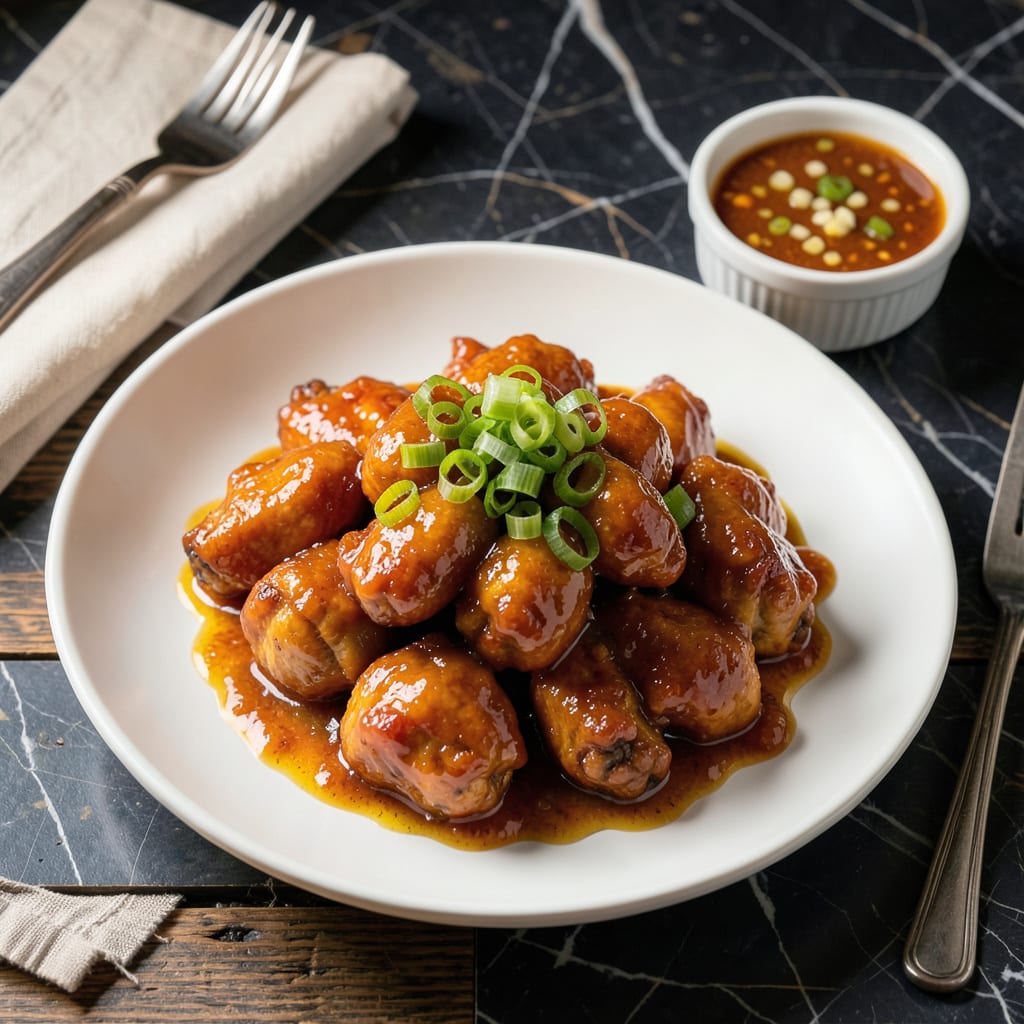
This simple orange chicken sauce delivers bold sweet citrus flavor with just three pantry staples. The perfect balance of tangy and sweet transforms ordinary chicken into a restaurant-worthy dish.
Ready in 5 minutes, this versatile glaze works for stir-fries, dipping, or drizzling. The secret is reducing the mixture to achieve the ideal thick, glossy consistency.
Ingredients for 3 Ingredient Orange Chicken Sauce
Just three key ingredients create this bold citrus glaze with restaurant-worthy results.
| Ingredient | Amount | Notes |
|---|---|---|
| Orange Marmalade 🍊 | 1 cup | High-quality for best flavor |
| Soy Sauce 🥫 | ½ cup | Low-sodium preferred |
| Rice Vinegar 🍯 | 2 tbsp | Unseasoned variety |
| Cornstarch 🌾 | 1 tbsp | For thickening slurry |
| Water 💧 | 2 tbsp | Cold, for cornstarch slurry |
| Garlic Cloves 🧄 | 2 cloves | Minced finely |
| Fresh Ginger 🌿 | 1 tsp | Grated or minced |
[recipeingredientscaler]
The marmalade is the foundation—Bonnie Plants or Smucker’s offer consistent sweetness with real fruit bits. For soy sauce, Kikkoman low-sodium balances flavor without overpowering saltiness. Rice vinegar should be the unseasoned type (check labels at Whole Foods or Trader Joe’s for pure versions). Fresh ginger and garlic elevate the depth, but jarred works in a pinch.
No marmalade? Orange juice concentrate plus zest mimics the sweetness (reduce liquid elsewhere). Soy sauce alternatives: tamari for gluten-free or coconut aminos for a milder taste. The cornstarch slurry is non-negotiable for that glossy consistency—skip it and you’ll have a thin, sad sauce. Fresh ginger can be swapped for one-fourth teaspoon ground ginger if desperate.
Sauce keeps 1 week refrigerated in a sealed jar. For longer storage, freeze in ice cube trays for up to 3 months. The slurry separates—just stir before using. Doubles easily for meal prep.
Why You’ll Love This Recipe
- 5-Minute Mix: I just stir marmalade, soy sauce, and vinegar in a saucepan—no chopping, no fuss.
- Sweet-Tangy Magic: That orange marmalade gives a bright, sticky glaze with little bits of citrus that cling to every bite.
- Weeknight Hero: I toss it with chicken and rice on busy Tuesdays, or drizzle it over stir-fried veggies when I need dinner fast.
- Pantry Stretch: Honestly, I always have these ingredients on hand, so this sauce saves me from last-minute takeout runs.
Step-by-Step Instructions for Orange Chicken Sauce
This streamlined process yields a glossy, restaurant-quality glaze with minimal effort.
Step 1: Bloom the Aromatics
Heat a medium saucepan over medium heat. Add the 2 cloves garlic cloves and 1 tsp fresh ginger to the dry pan, stirring constantly for 30-45 seconds until fragrant but not browned. This brief toasting intensifies their flavors without bitterness.
Watch closely—garlic burns quickly at this stage. The moment you detect its aroma, proceed immediately to the next step. This foundation layer ensures depth in the final sauce.
Step 2: Build the Base Sauce
Pour in the 1 cup orange marmalade, 0.5 cup soy sauce, and 2 tbsp rice vinegar. Stir well to combine, then bring to a gentle simmer over medium-high heat. The mixture will initially appear thin but will begin to thicken slightly as it heats.
Allow it to simmer for 3-4 minutes, stirring occasionally. You’ll notice the sauce darkening slightly and the marmalade’s citrus pieces softening. This simmering step marries the sweet, salty, and tangy elements.
Step 3: Create and Incorporate the Slurry
In a small bowl, whisk together the 1 tbsp cornstarch and 2 tbsp water until completely smooth with no lumps. This slurry will thicken the sauce to the perfect glaze consistency.
While stirring the simmering sauce constantly, pour in the cornstarch slurry in a slow, steady stream. Continue stirring for 1-2 minutes as the sauce transforms from thin to thick enough to coat the back of a spoon. The change happens quickly once the slurry hits the heat.
Step 4: Finish and Verify Consistency
Reduce heat to low and let the sauce simmer for an additional 1-2 minutes. This final cooking stage ensures the cornstarch is fully activated and the flavors are completely melded.
Test the consistency by dipping a spoon in the sauce—it should cling to the spoon and ribbon off slowly. If it’s too thick, add 1 tsp water and stir well. The finished sauce will have a glossy sheen and a balance of sweet, savory, and citrus notes. Remove from heat and use immediately for best results.
Pro Tips For Making 3 Ingredient Orange Chicken Sauce
- Simmer Gently: Keep the sauce at a low simmer once combined—boiling too hard will make the marmalade separate and turn the sauce grainy.
- Use Smooth Marmalade: Skip the chunky marmalade; the fine, smooth kind blends better and gives a silky texture to the sauce.
- Mix Cornstarch First: Whisk the cornstarch with cold water before adding to the sauce to prevent clumps—I learned this the hard way after stirring lumps for 10 minutes.
- Taste Before Serving: The balance of sweet and salty can vary by brand, so taste and adjust with a splash more rice vinegar or soy sauce if needed.
Regional Styles of 3 ingredient orange chicken sauce
Chinese Takeout Classic
This version mirrors what you’d find at your favorite American-Chinese restaurant, with a perfect balance of sweet and tangy. I use Smucker’s orange marmalade for consistent sweetness and Kikkoman soy sauce for that familiar umami depth. The rice vinegar adds the signature bright finish.
Spicy Sichuan Twist
For a bold variation, add 1 tsp chili crisp or ½ tsp crushed red pepper flakes to the finished sauce. This Sichuan-inspired version brings heat that cuts through the sweetness beautifully. I love using Lao Gan Ma chili crisp for authentic flavor. 🌶️
Korean Fusion Style
Swap the rice vinegar for 1 tbsp apple cider vinegar and add 1 tsp gochujang to the base sauce. This Korean fusion version adds depth with fermented heat. The gochujang blends surprisingly well with the citrus notes.
Thai Sweet Chili
Transform it into a Thai-inspired sauce by adding 1 tbsp lime juice and 1 tsp fish sauce to the finished mixture. This version has a brighter, more complex flavor profile that works wonderfully with grilled meats. 💫
Honey Citrus Glaze
For a milder, sweeter version, replace half the marmalade with ½ cup honey. This creates a smoother, more delicate citrus glaze perfect for drizzling over roasted vegetables or seafood. I prefer local wildflower honey for its floral notes.
Gluten-Free Adaptation
Simply swap the soy sauce for tamari and ensure your marmalade is gluten-free. The flavor remains nearly identical to the original. I’ve found San-J tamari works perfectly in this application.
Nutrition Facts
Frequently Asked Questions
Can I use orange juice instead of marmalade?
Yes, but you’ll need to adjust. Use 1 cup orange juice concentrate plus 2 tbsp zest to mimic the sweetness and texture. Reduce the liquid elsewhere to maintain the right consistency.
How long does the sauce keep in the fridge?
Properly stored in an airtight container, it stays fresh for up to 1 week. For longer storage, freeze in ice cube trays for up to 3 months.
Why did my sauce turn out thin?
The cornstarch slurry is key. Ensure you simmer for 1-2 minutes after adding it. If still thin, mix ½ tbsp cornstarch with 1 tbsp water and stir in.
Can I make this spicier?
Stir in 1 tsp chili crisp or ½ tsp red pepper flakes at the end. For extra heat, add ¼ tsp cayenne with the base ingredients.

- Jollof Rice Sauce Recipe: West African Tomato and Spice Infusion - September 25, 2026
- Japanese Rice Soup Recipe: Umami-Rich Comfort in a Bowl - September 25, 2026
- Homemade Cream Of Rice Recipe: Silk-Smooth Breakfast in Minutes - September 25, 2026