
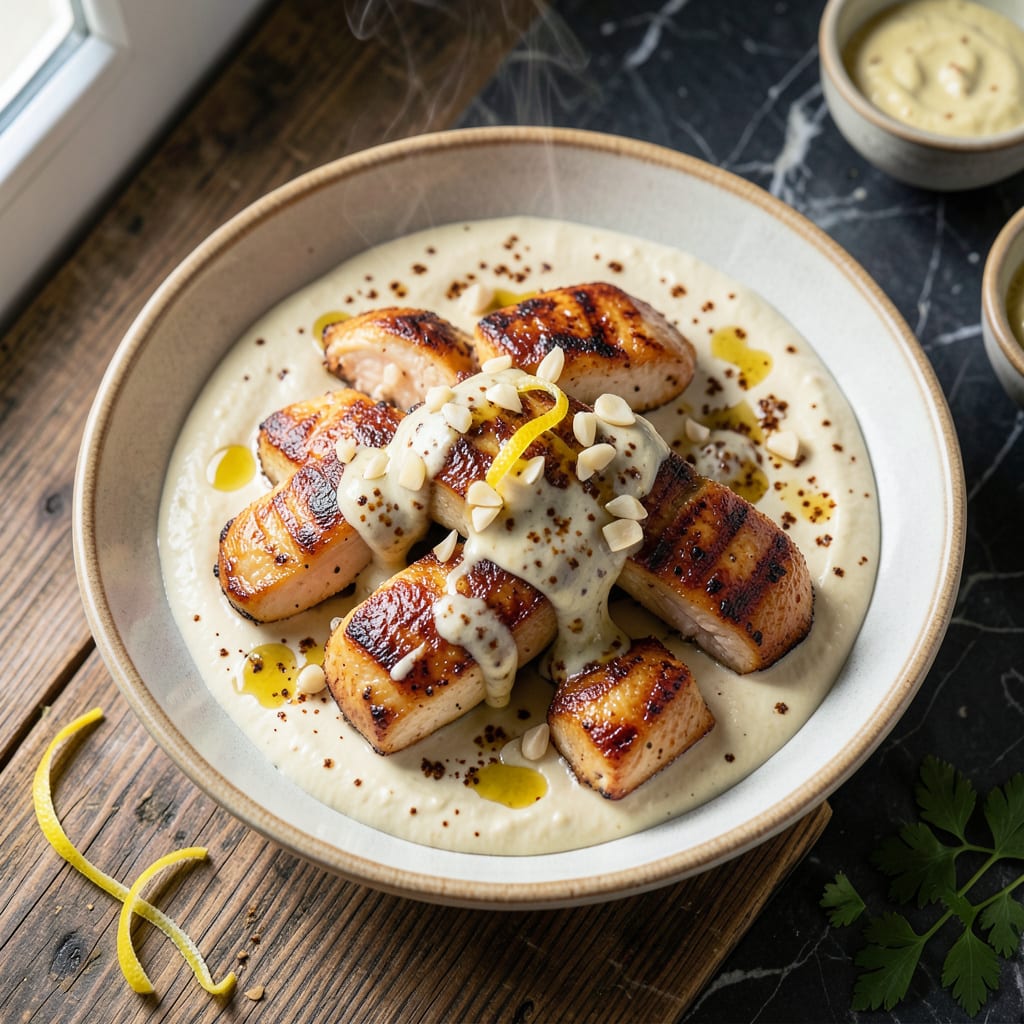
This aioli delivers a creamy, garlicky punch that transforms plain chicken into a restaurant-quality meal. The emulsion of oil, egg yolk, and lemon creates a rich, velvety texture that clings perfectly to every bite.
With just 5 ingredients and 5 minutes of whisking, you’ll have a sauce that’s bold, balanced, and far superior to store-bought versions. The key is slow, steady incorporation of oil for maximum creaminess.
Ingredients for Aioli Sauce Recipe for Chicken
Five simple ingredients create this rich, velvety emulsion for chicken. Pantry staples with bold results.
| Ingredient | Amount | Notes |
|---|---|---|
| Egg Yolks 🥚 | 2 whole | Large eggs, room temperature |
| Garlic Cloves 🧄 | 3 cloves | Freshly minced for bold flavor |
| Dijon Mustard 🟡 | 1 tbsp | Smooth, high-quality variety |
| Lemon Juice 🍋 | 2 tbsp | Freshly squeezed for brightness |
| Neutral Oil 🫒 | 1 ¼ cups | Light olive or avocado oil |
| Salt 🧂 | ½ tsp | Fine sea salt preferred |
| White Pepper 🌶️ | ¼ tsp | Ground, for subtle heat |
[recipeingredientscaler]
The oil is critical here—use a neutral variety like avocado or light olive oil (save the extra-virgin for finishing). The egg yolks must be at room temperature for proper emulsification, and freshness matters more than brand. Trader Joe’s or Whole Foods carry excellent Dijon mustard, but any smooth, high-quality variety will work. Garlic should be freshly minced; pre-minced lacks the sharp bite needed.
No Dijon? Whole-grain mustard at half the amount works in a pinch (just strain out seeds). Out of lemon juice? White wine vinegar at a 1:1 ratio substitutes well. For a lighter version, reduce oil to 3/4 cup—texture will be thinner but still delicious. If avoiding raw eggs, pasteurized yolks are available at most grocery stores.
Aioli keeps 3-4 days in the fridge in an airtight container. The emulsion may separate slightly—just whisk to recombine. For longer storage, freeze in ice cube trays for up to 1 month (thaw in fridge overnight).
Why You’ll Love This Recipe
- Five-Minute Whisk: I can make this aioli while the chicken rests—just egg yolks, oil, and a quick whisk.
- Garlic Punch: The raw garlic and Dijon give it that bold, tangy kick that cuts through rich chicken.
- Drizzle or Dip: Honestly, it’s as good on grilled thighs as it is for sandwiches the next day.
- No Waste: A small batch uses a single yolk and keeps in the fridge for days.
Step-by-Step Instructions for Aioli Sauce for Chicken
Master this emulsification technique and you’ll create a rich, creamy sauce that clings perfectly to chicken.
Step 1: Prepare the Base Emulsion
In a medium bowl, combine the 2 whole Egg Yolks, 1 tbsp Dijon Mustard, and 2 tbsp Lemon Juice. Whisk vigorously for 30 seconds until the mixture becomes pale and slightly thickened. The mustard acts as an emulsifier, while the acidity from the lemon juice brightens the flavor profile.
I always use room temperature egg yolks—they emulsify more readily with the oil. The mixture should look creamy and slightly aerated before you begin adding the neutral oil. This foundation ensures your aioli won’t separate during the oil incorporation.
Step 2: Incorporate the Aromatics
Add the 3 cloves Garlic Cloves (finely minced) to the egg mixture along with the 0.5 tsp Salt and 0.25 tsp White Pepper. Whisk for another 20 seconds to distribute the garlic evenly and dissolve the salt.
The garlic should be minced to a near-paste consistency for maximum flavor infusion. White pepper provides a subtle heat without the visual specks of black pepper, keeping the sauce’s appearance clean and elegant.
Step 3: Emulsify with Neutral Oil
Begin adding the 1.25 cups Neutral Oil in a very thin, steady stream while whisking constantly. Start with just a few drops at a time, then gradually increase to a thin stream as the emulsion forms. This slow incorporation is crucial—adding oil too quickly will cause the sauce to break.
After adding about half the oil, the mixture will thicken significantly and turn a pale, creamy color. At this point, you can add the remaining oil slightly faster, but maintain continuous whisking. The finished aioli should be thick enough to coat the back of a spoon with a smooth, glossy texture.
Step 4: Adjust and Rest
Once all the oil is incorporated, taste and adjust seasoning if needed. The aioli should have a balanced garlicky flavor with a slight tang from the lemon. If it’s too thick, whisk in a teaspoon of warm water to achieve your desired consistency.
Let the aioli rest for 10 minutes before serving to allow the flavors to meld. This resting period also gives the emulsion time to stabilize. The sauce will thicken slightly as it sits, so keep this in mind when adjusting the final consistency.
Pro Tips For Making Aioli Sauce Recipe For Chicken
- Temper Your Eggs: Pull your egg yolks out of the fridge 20-30 minutes before starting—room temperature yolks emulsify faster and hold better, so you won’t end up with a broken sauce.
- Mince Garlic Fine: Grate or finely mince the garlic cloves instead of pressing them; raw garlic can overpower the aioli, but the finer texture blends in smoothly and avoids harsh chunks.
- Drip Slowly: Add the oil in a thin, steady stream while whisking—pouring too fast is how I learned the hard way that aioli can split in seconds.
- Acid Last: Stir in the lemon juice after the emulsion forms; adding it too early can prevent the sauce from thickening, and you’ll be whisking forever.
Flavor Customization for This Recipe
Herb Infusions
Add 1 tbsp fresh rosemary or thyme leaves (finely chopped) to the base mixture before emulsifying. The herbal notes complement chicken beautifully while adding a sophisticated layer. I love rosemary with grilled chicken thighs. ✨
Spicy Kick
For heat, mix in ½ tsp cayenne pepper or 1 tsp sriracha with the garlic. The capsaicin builds gradually, so start small. A pinch of smoked paprika adds depth without overwhelming the garlic base.
Citrus Variations
Swap the lemon juice for lime juice or orange zest + 1 tbsp juice. Lime brightens the aioli for a tropical twist, while orange creates a sweeter profile. Both work wonderfully with grilled or baked chicken.
Cheesy Upgrade
Stir in ¼ cup grated Parmesan or pecorino after emulsifying. The umami-rich cheese adds saltiness, so reduce the added salt by ¼ tsp. This version is divine with crispy chicken tenders. 🧀
Roasted Garlic
Replace raw garlic with 4 cloves roasted garlic (mashed to a paste). The caramelized flavor is milder and sweeter, perfect for those sensitive to raw garlic’s sharpness. Roast at 400°F for 20 minutes before using.
Smoky Depth
Add ½ tsp smoked salt or 1 tsp chipotle powder for a barbecue-inspired twist. The smokiness pairs especially well with smoked or blackened chicken. Just a little goes a long way.
Nutrition Facts
Frequently Asked Questions
Can I use a blender instead of whisking by hand?
A blender or food processor works perfectly for emulsifying. Add all ingredients except oil, blend for 10 seconds, then slowly drizzle in the oil while running. This method is faster and reduces arm fatigue.
Why did my aioli break or separate?
This usually happens if oil is added too quickly or the mixture gets too warm. To fix, whisk 1 tsp warm water into the broken aioli, then slowly reincorporate the separated oil. Patience is key with emulsions.
How long will homemade aioli stay fresh?
Stored in an airtight container in the fridge, it keeps for 3-4 days. The flavors actually improve after 24 hours as they meld together. For longer storage, freeze in ice cube trays for up to 1 month.

- Jollof Rice Sauce Recipe: West African Tomato and Spice Infusion - September 25, 2026
- Japanese Rice Soup Recipe: Umami-Rich Comfort in a Bowl - September 25, 2026
- Homemade Cream Of Rice Recipe: Silk-Smooth Breakfast in Minutes - September 25, 2026