
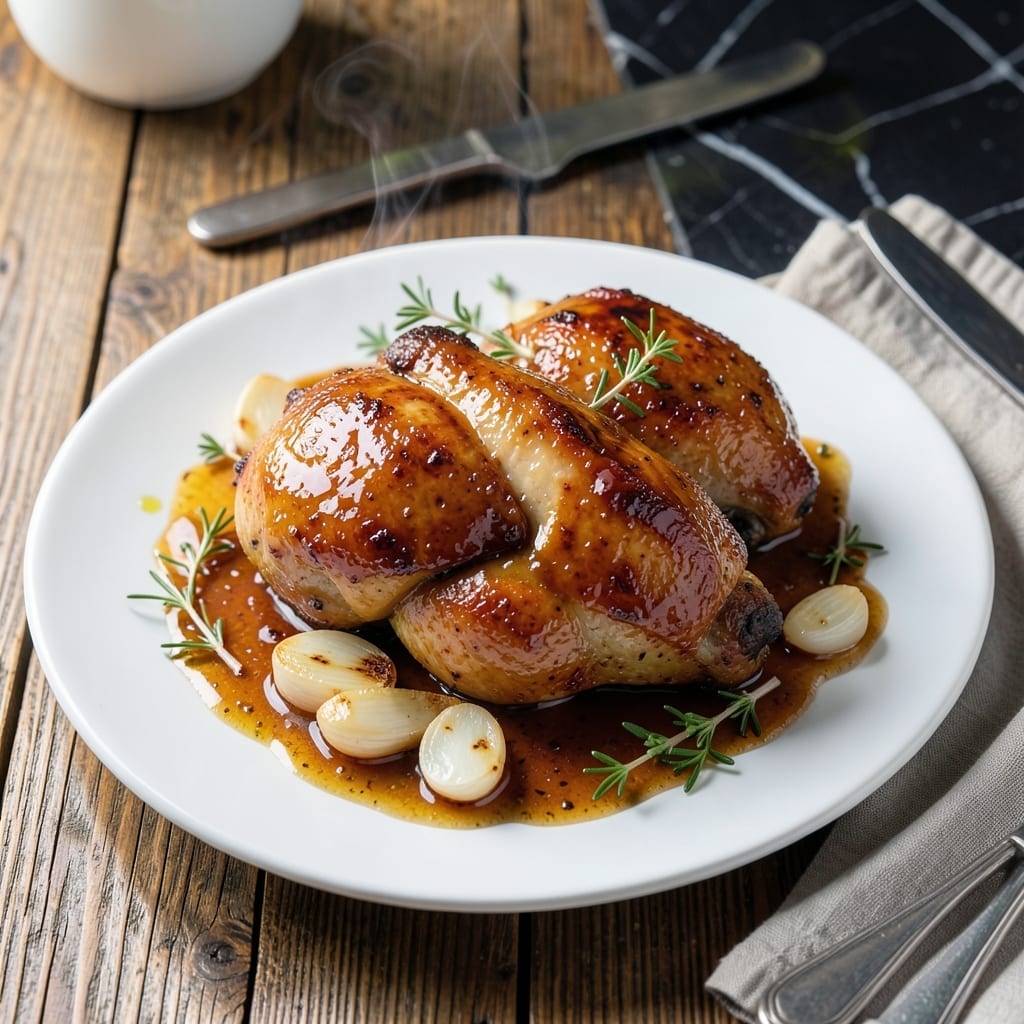
This chicken recipe transforms ordinary weeknight dinner into something extraordinary. The secret lies in using apple juice to create a perfect balance of sweet and savory flavors that caramelize beautifully as it cooks.
I developed this method after realizing how apple juice tenderizes the meat while building layers of complex flavor. The natural sugars in the juice create a glossy glaze that adheres to the chicken, resulting in a dish that looks as impressive as it tastes.
What emerges from the oven is juicy, flavorful chicken with a sticky, golden-brown exterior. The apple juice reduces down to a light syrup that coats every piece, making this dish irresistibly delicious.
Serve with roasted vegetables or rice to soak up every drop of the perfect glaze. This technique works with any cut of chicken you prefer.
Ingredients for Apple Juice Chicken
A handful of pantry staples plus apple juice create this irresistibly glazed dish.
| Ingredient | Amount | Notes |
|---|---|---|
| Chicken Thighs 🍗 | 2 lb | Boneless, skin-on preferred |
| Apple Juice 🍏 | 2 cups | 100% pure, no added sugar |
| Soy Sauce 🫒 | ¼ cup | Low-sodium recommended |
| Honey 🍯 | 3 tbsp | Clovers or wildflower variety |
| Garlic Cloves 🧄 | 4 cloves | Minced for maximum flavor |
| Fresh Ginger 🌿 | 1 tbsp | Peeled and finely grated |
| Olive Oil 🫒 | 2 tbsp | Extra-virgin for richness |
| Dijon Mustard 🟡 | 1 tbsp | Smooth, not whole grain |
| Apple Cider Vinegar 💧 | 1 tbsp | Balances the sweetness |
| Kosher Salt 🧂 | 1 tsp | Diamond Crystal preferred |
| Black Pepper 🌶️ | ½ tsp | Freshly ground for best flavor |
| Dried Thyme 🍃 | 1 tsp | Rubbed between fingers to release oils |
| Dried Rosemary 🌿 | ½ tsp | Crushed before measuring |
The chicken thighs are non-negotiable here. Bone-in, skin-on gives you that fall-off-the-bone tenderness and crispy exterior. Look for organic, air-chilled at Whole Foods or Costco for the best texture. Apple juice should be 100% pure—no added sugars or preservatives. The soy sauce balances the sweetness, so don’t skip it. I always keep a bottle of San-J Tamari on hand for a gluten-free option.
No apple juice? Unsweetened applesauce thinned with water works in a pinch. Swap honey for maple syrup or agave if you prefer. Fresh thyme and rosemary can replace dried at three times the amount. The Dijon mustard adds depth, but whole grain mustard gives a nice texture too. If you’re avoiding soy, coconut aminos make a great substitute.
The glaze thickens as it cools, so let the chicken rest 5-10 minutes before serving. Leftovers keep well for 4-5 days in the fridge, and the flavors deepen overnight. Freezes beautifully for up to 3 months—just thaw and reheat gently to preserve the glaze.
Why You’ll Love This Recipe
- One Pan Magic: I just toss everything in a pan and let the apple juice and soy sauce do the work.
- Sweet-Savory Bliss: The honey and garlic create this sticky, caramelized glaze on the chicken that’s ridiculous.
- Feeds Everyone: I’ve served this to picky kids and dinner guests—both groups clean their plates.
- Leftovers Win: Honestly, it tastes even better the next day in a sandwich or over rice.
Step-by-Step Instructions for Apple Juice Chicken
Master this technique for perfectly caramelized, tender chicken with a glossy sweet-savory glaze.
Step 1: Season and Sear the Chicken Thighs
Pat the 2 lb chicken thighs dry with paper towels—this ensures optimal browning. Season both sides uniformly with 1 tsp kosher salt, 0.5 tsp black pepper, 1 tsp dried thyme, and 0.5 tsp dried rosemary. I rub the herbs between my fingers first to release their aromatic oils.
Heat 2 tbsp olive oil in a large skillet over medium-high heat until shimmering. Add the chicken skin-side down and sear undisturbed for 5-6 minutes until the skin renders its fat and turns deep golden brown. Flip and sear the other side for 3-4 minutes until equally browned. Transfer to a plate and set aside.
Step 2: Build the Glaze Base with Aromatics
In the same skillet with the rendered fat, reduce heat to medium and add 4 cloves minced garlic cloves and 1 tbsp finely grated fresh ginger. Sauté for 45-60 seconds until fragrant but not browned—burnt garlic turns bitter.
Pour in 2 cups apple juice, 0.25 cup soy sauce, 3 tbsp honey, 1 tbsp Dijon mustard, and 1 tbsp apple cider vinegar. Stir to dissolve the honey and scrape up any browned bits from the pan. This forms the foundation of your glaze. Bring to a gentle simmer.
Step 3: Finish the Glaze and Coat the Chicken
Return the chicken to the skillet along with any accumulated juices. Spoon the liquid over the chicken repeatedly for 1-2 minutes to begin the glazing process. Reduce heat to medium-low and let it simmer uncovered for 12-15 minutes.
The glaze should thicken to a syrupy consistency that coats the back of a spoon. You’ll notice it transition from thin and bubbly to thick and glossy. Flip the chicken occasionally to ensure even coating. The internal temperature should reach 165°F.
Step 4: Rest and Serve with Glaze
Transfer the chicken to a serving platter and tent loosely with foil. Let it rest for 5 minutes—this allows the juices to redistribute and the glaze to set slightly. The residual heat will keep it warm while you finish the sauce.
Skimming any excess fat from the surface, pour the remaining glaze over the chicken. The sauce should cling to each piece with a beautiful sheen. Serve immediately while hot, ensuring every bite delivers the perfect balance of sweet apple, savory soy, and aromatic herbs.
Pro Tips For Making Apple Juice Chicken
- Sear the Thighs First: Brown the chicken thighs well in the pan before adding liquids—about 3-4 minutes per side on medium-high heat. I learned this the hard way when my sauce tasted flat because the fond never developed.
- Use Fresh Apple Juice: Skip the shelf-stable stuff and grab chilled apple juice from the fridge section. The fresher, less processed juice actually changes the outcome, giving a brighter, more vibrant flavor to the glaze.
- Reduce the Sauce: After simmering, let the apple juice, soy sauce, and honey reduce by half before returning the chicken to the pan. Sounds weird, but it works: this guarantees a glossy, clingy glaze instead of a watery mess.
- Smash the Garlic: Lightly crush the garlic cloves with the side of your knife before adding them. My grandmother swore by this, and she was right: it releases more aroma without the risk of burning the minced pieces.
Common Mistakes When Making This Recipe
Overcrowding the Pan
Don’t cram all 2 lb chicken thighs into a small skillet. Overcrowding steams the meat instead of searing it, resulting in rubbery skin. Use a 12-inch skillet or cook in batches if needed. I learned this the hard way with my first attempt!
Skipping the Dry
Always pat the chicken completely dry with paper towels before seasoning. Wet skin prevents proper browning and leads to a pale, soggy exterior. This step takes 30 seconds but makes all the difference in achieving that crispy finish.
High Heat for Garlic
Never add minced garlic to screaming hot oil. It burns in 10-15 seconds, turning bitter. Always reduce to medium heat first, then add the 4 cloves garlic and ginger. You want fragrant, not charred.
Unreduced Glaze
If your glaze stays thin and watery, you didn’t simmer it long enough. It needs 12-15 minutes at medium-low heat to reduce to a syrupy consistency. Be patient—the payoff is that beautiful, clinging coating. 💡
No Resting Time
Slicing into chicken immediately causes all the juices to spill out onto the cutting board. Always rest for at least 5 minutes after cooking. This gives the muscle fibers time to reabsorb the moisture.
Wrong Apple Juice
Using apple juice with added sugar throws off the balance of your glaze. Stick with 100% pure apple juice—the natural sugars caramelize perfectly without being cloyingly sweet. I always check the label for additives.
Nutrition Facts
Frequently Asked Questions
Can I use boneless chicken thighs?
Yes, but bone-in, skin-on gives better flavor and texture. Boneless may dry out faster, so reduce cooking time by 2-3 minutes.
What if my glaze is too thin?
Simmer uncovered for 2-3 minutes longer at medium-low heat. The natural sugars will thicken as moisture evaporates.
Can I substitute the soy sauce?
Use 1:1 coconut aminos or tamari for gluten-free options. Both maintain the umami depth without altering the flavor balance.
How do I store leftovers?
Keep in an airtight container for 4-5 days in the fridge. Reheat gently in a skillet to preserve the glaze.

- Jollof Rice Sauce Recipe: West African Tomato and Spice Infusion - September 25, 2026
- Japanese Rice Soup Recipe: Umami-Rich Comfort in a Bowl - September 25, 2026
- Homemade Cream Of Rice Recipe: Silk-Smooth Breakfast in Minutes - September 25, 2026