
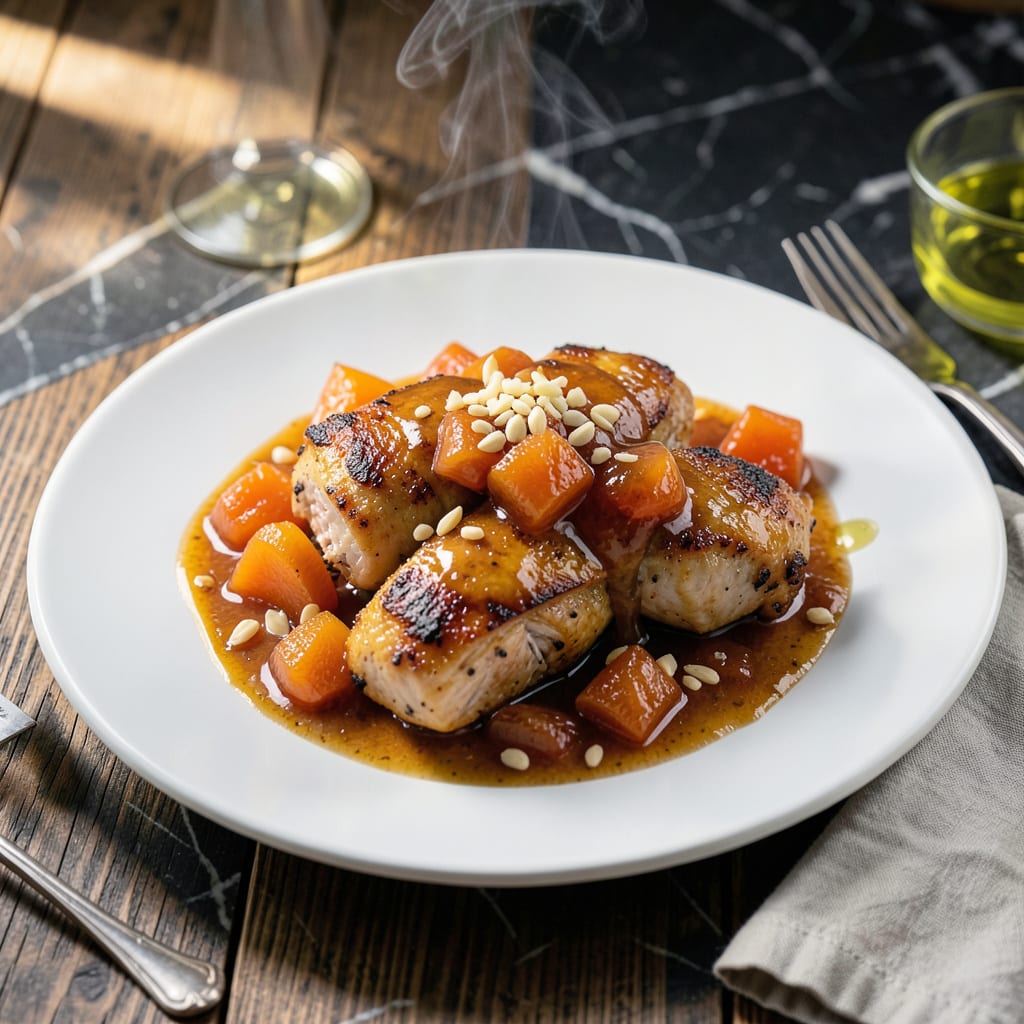
This apricot chicken sauce transforms ordinary dishes with its perfectly balanced sweet and tangy profile. A simple blend of preserves, vinegar, and spices creates a glossy glaze that elevates grilled or baked meats.
Ready in under 10 minutes, this versatile sauce enhances chicken, pork, or even roasted vegetables. The natural fruit sweetness pairs beautifully with savory notes for a restaurant-quality finish.
Ingredients for Apricot Chicken Sauce
Nine ingredients create this glossy, restaurant-quality sweet and tangy glaze for meats or vegetables.
| Ingredient | Amount | Notes |
|---|---|---|
| Apricot Preserves 🍑 | 1 cup | High-quality for best flavor |
| Apple Cider Vinegar 🍏 | ¼ cup | Balances sweetness with tang |
| Dijon Mustard 🟡 | 1 tbsp | Adds depth and sharpness |
| Honey 🍯 | 2 tbsp | Smooth, natural variety preferred |
| Soy Sauce 🥢 | 1 tbsp | Low-sodium for control |
| Minced Garlic 🧄 | 2 cloves | Freshly minced for bold flavor |
| Ground Ginger 🌿 | ½ tsp | Enhances warmth and complexity |
| Onion Powder 🧅 | ½ tsp | Adds savory depth |
| Red Pepper Flakes 🌶️ | ¼ tsp | Adjust to heat preference |
[recipeingredientscaler]
The apricot preserves are non-negotiable for that signature flavor. Smucker’s or Bonne Maman offer the right balance of fruitiness and thickness. For vinegar, apple cider vinegar adds the perfect tang, but white wine vinegar works in a pinch. Dijon mustard provides the sharp contrast—skip the yellow kind. Find these at any major grocery store, but Whole Foods has great organic options.
No honey? Maple syrup or agave at a 1:1 ratio keeps the sweetness. Out of apricot preserves? Peach or mango jam can substitute, though the flavor will shift slightly. If you lack fresh garlic, garlic powder at half the amount works. For a smoother sauce, strain out the garlic after simmering. The red pepper flakes can be omitted for a milder version.
This sauce keeps beautifully in the fridge for up to 10 days in a sealed jar. Freeze in ice cube trays for 3 months—perfect for quick weeknight meals. Always give it a good stir before using, as ingredients may settle.
Why You’ll Love This Recipe
- 5-Minute Mix: I just dump the apricot preserves, a splash of vinegar, and the rest into a bowl—no chopping, no fuss.
- Sweet & Tangy: That first bite where the honey and mustard hit the apricot? I make extra just to eat with a spoon.
- Dinner or Dip: I’ve slathered it on chicken, stirred it into rice, even used it as a dip for spring rolls.
- Fridge for Days: It keeps for a week, so I double the batch and have a head start on next week’s meals.
Step-by-Step Instructions for Apricot Chicken Sauce
This method delivers a perfectly balanced glaze with minimal effort and maximum flavor.
Step 1: Combine the Base Ingredients
In a medium saucepan, combine 1 cup Apricot Preserves with 0.25 cup Apple Cider Vinegar. The preserves should be slightly chunky—this adds texture to the final sauce. Place the pan over medium heat and stir until the mixture begins to bubble gently at the edges.
Watch for the preserves to loosen and thin out as they warm. This initial heating helps dissolve the natural pectin in the fruit, creating a smoother foundation. Avoid high heat at this stage, as it can cause the sugars to scorch before the other ingredients are incorporated.
Step 2: Incorporate the Aromatics and Spices
Add 2 cloves Minced Garlic, 0.5 tsp Ground Ginger, 0.5 tsp Onion Powder, and 0.25 tsp Red Pepper Flakes to the pan. Stir constantly for 1 minute—just until the garlic becomes fragrant and the spices bloom in the warm liquid.
The red pepper flakes will release their heat gradually, so taste as you go if you prefer a milder sauce. The onion powder and ground ginger deepen the flavor profile, while the garlic adds a pungent, savory note that balances the sweetness of the preserves.
Step 3: Finish with the Binding Agents
Stir in 1 tbsp Dijon Mustard, 2 tbsp Honey, and 1 tbsp Soy Sauce. The mustard acts as an emulsifier, helping the fat and water-based ingredients blend seamlessly. The honey adds a floral sweetness, while the soy sauce contributes umami and saltiness.
Reduce the heat to low and let the mixture simmer for 8-10 minutes, stirring occasionally. The sauce should thicken slightly, coating the back of a spoon, but remain pourable. If it reduces too quickly, add a splash of water to adjust the consistency.
Taste and adjust the seasoning if needed, though the soy sauce typically provides enough salt. The finished sauce should have a glossy sheen and a complex balance of sweet, tangy, and savory notes.
Pro Tips For Making Apricot Chicken Sauce
- Simmer Low and Slow: I learned this the hard way—boiling the apricot preserves too fast makes the sauce thin and bitter. Keep it at a gentle simmer for 8-10 minutes to let the flavors meld properly.
- Strain the Preserves: Unless you love chewy bits, push the apricot preserves through a fine-mesh sieve first. It gives the sauce a silky texture that coats the chicken beautifully.
- Balance the Sweetness: After burning one batch, I finally figured out that the honey and preserves need the vinegar’s tang to cut through. Taste before serving and add a splash more apple cider vinegar if it’s too sweet.
- Bloom the Mustard: Sounds weird, but it works: whisk the Dijon mustard into the warm oil for 30 seconds before adding liquids. It deepens the flavor and prevents that raw mustard bite.
Pro Cooking Tips for This Dish
Perfect Consistency Control
Start with medium heat to dissolve the preserves, but switch to low heat once all ingredients are combined. This prevents scorching while allowing the flavors to meld. I use a heavy-bottomed saucepan for even heat distribution.
Spice Bloom Technique
When adding 2 cloves Minced Garlic and spices, stir constantly for exactly 1 minute. This blooms the aromatics without burning them. The garlic should turn fragrant but not brown—burnt garlic adds bitterness to your sauce. 🌡️
Emulsification Trick
The 1 tbsp Dijon Mustard acts as your emulsifier. Add it slowly while whisking to create a smooth, cohesive sauce. If you see separation, a quick whisk or immersion blender will bring it back together.
Simmer Time Precision
Let the sauce simmer for 8-10 minutes at low heat. This reduces the liquid by about 10-15%, creating that perfect glaze consistency. Test by dragging a spoon through—it should leave a clear path that slowly fills back in.
Thickness Adjustment
Too thick? Thin with 1-2 tbsp water. Too thin? Simmer 2-3 minutes longer. Remember, the sauce will thicken slightly as it cools. I keep a small water bottle nearby for quick adjustments.
Flavor Balancing
Taste before finalizing. Need more tang? Add 1 tsp Apple Cider Vinegar. Want it sweeter? Stir in 1 tsp Honey. The 1 tbsp Soy Sauce usually provides enough salt, but a pinch can enhance all flavors. 💛
Nutrition Facts
Frequently Asked Questions
Can I use fresh apricots instead of preserves?
Yes, but cook 2 cups chopped fresh apricots with 1/4 cup sugar until soft first. Strain if you prefer a smooth sauce. Preserves save time and add natural pectin for thickness.
How long can I store this sauce?
Keep in an airtight container in the fridge for up to 10 days. For longer storage, freeze in ice cube trays for 3 months. Thaw overnight before using.
Why did my sauce separate?
This happens if the heat was too high or it cooled too quickly. Reheat gently while whisking, or blend briefly with an immersion blender. The 1 tbsp Dijon Mustard helps prevent this.

- Jollof Rice Sauce Recipe: West African Tomato and Spice Infusion - September 25, 2026
- Japanese Rice Soup Recipe: Umami-Rich Comfort in a Bowl - September 25, 2026
- Homemade Cream Of Rice Recipe: Silk-Smooth Breakfast in Minutes - September 25, 2026