
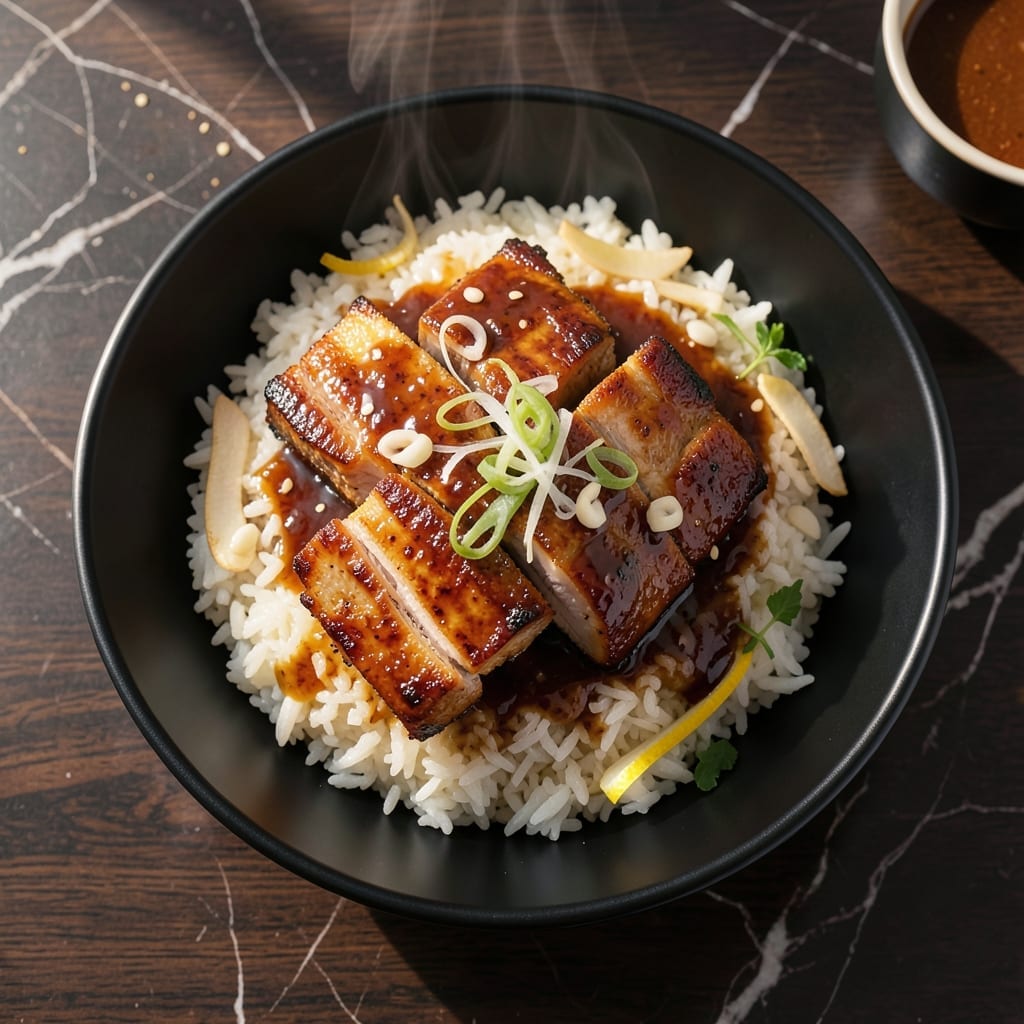
This recipe brings authentic Asian flavors to your dinner table with minimal effort. The pork chops are marinated in a savory-sweet blend, then wok-seared to achieve a tender texture with caramelized edges.
Steamed jasmine rice serves as the perfect base, soaking up the rich pan sauce created during cooking. The combination of soy sauce, garlic, and ginger creates layers of umami that elevate every bite.
What you’ll love most is how the high-heat cooking locks in juices while developing deep flavor. The pork stays moist inside with a slightly crisp exterior, paired beautifully with fluffy, fragrant rice.
This dish comes together in under 30 minutes, making it ideal for busy weeknights when you crave restaurant-quality results at home.
Ingredients for Asian Pork Chops and Rice
A few pantry staples and fresh ingredients deliver restaurant-quality results at home in minutes.
| Ingredient | Amount | Notes |
|---|---|---|
| Bone-In Pork Chops 🥩 | 1 ½ lb | About 1-inch thick, center-cut |
| Jasmine Rice 🍚 | 1 ½ cups | Rinsed until water runs clear |
| Soy Sauce 🫒 | ⅓ cup | Low-sodium preferred for balance |
| Brown Sugar 🍯 | 2 tbsp | Light or dark, packed |
| Fresh Ginger Root 🌿 | 1 tbsp | Peeled and finely grated |
| Garlic Cloves 🧄 | 4 cloves | Minced to fine paste |
| Rice Vinegar 🫒 | 2 tbsp | Unseasoned variety essential |
| Sesame Oil 🫒 | 1 tbsp | Toasted for depth of flavor |
| Vegetable Oil 🫒 | 2 tbsp | High smoke point for searing |
| Green Onions 🧅 | 4 whole | Sliced thin on bias |
| Cornstarch 🌾 | 1 tbsp | For velveting pork texture |
| Water 💧 | ½ cup | For marinade consistency |
| Red Pepper Flakes 🌶️ | ½ tsp | Optional for heat lovers |
The pork chops are everything here. Bone-in, center-cut (about 1-inch thick) stay juiciest during high-heat searing. I grab mine from Whole Foods or Costco—look for good marbling. Jasmine rice is non-negotiable for that fragrant, slightly sticky texture that pairs perfectly with the sauce. The soy sauce should be low-sodium so you can control the saltiness yourself.
No jasmine rice? Basmati works in a pinch but lacks that floral aroma. Swap brown sugar for honey or maple syrup if needed. Out of rice vinegar? Apple cider vinegar at the same amount gets you close. The ginger and garlic must be fresh—powdered versions just won’t cut it. For extra umami, add 1 tsp fish sauce (though it’s not traditional for this dish).
Pork chops keep in the fridge for 2-3 days or freeze for 2 months. Jasmine rice stays fresh in the pantry for 1 year. Cook the rice first—it’ll stay warm while you sear the chops. Leftovers reheat beautifully, but the pork is best fresh off the wok.
Why You’ll Love This Recipe
- One Pan Wonder: I love that everything cooks together—pork chops, rice, and that sticky soy-ginger sauce—so I’m not juggling multiple pots.
- Sweet-Savory Magic: The brown sugar caramelizes with the soy sauce, while fresh ginger gives it a zing that’s honestly restaurant-level good.
- Feeds a Crowd: Between us, this stretches easily for leftovers or a family dinner, and it’s just as tasty reheated the next day.
- Budget Hero: Bone-in pork chops are cheaper than boneless, and jasmine rice is a pantry staple—so it saves me money without sacrificing flavor.
Step-by-Step Instructions for Asian Pork Chops and Rice
Here’s the method I trust for tender pork and fragrant rice that never disappoints.
Step 1: Velvet the Pork for Maximum Tenderness
In a bowl, whisk together the 0.33 cup soy sauce, 2 tbsp brown sugar, 1 tbsp fresh ginger root, 4 cloves garlic cloves, 2 tbsp rice vinegar, 1 tbsp sesame oil, and 0.5 tsp red pepper flakes until the sugar dissolves completely. This creates your flavor-packed marinade.
Toss the 1.5 lb bone-in pork chops in the marinade, then sprinkle the 1 tbsp cornstarch over them. Massage it in thoroughly until each chop is evenly coated and the marinade thickens slightly. The cornstarch is the secret to that silky, restaurant-style texture. Let them sit for 15 minutes while you prep the rice.
Step 2: Cook the Jasmine Rice to Perfection
Rinse the 1.5 cups jasmine rice under cold water until the liquid runs completely clear—this removes excess starch and prevents gummy results. I typically go through 3-4 rinses to get it right.
Combine the rinsed rice with 1.5 cups water (1:1 ratio) in a saucepan. Bring to a boil, then immediately reduce to a simmer, cover, and cook for 12-15 minutes until all water is absorbed and the grains are tender. Remove from heat and let it steam, covered, for 10 minutes—this final rest ensures fluffy, separate grains.
Step 3: Sear the Pork Chops to Golden Brown
Heat the 2 tbsp vegetable oil in a large skillet over medium-high heat until it shimmers. Working in batches if needed, add the pork chops and sear undisturbed for 4-5 minutes per side until they develop a deep golden crust and reach 145°F internally.
Watch for the edges to turn opaque and rise from the pan—that’s your visual cue they’re ready to flip. Don’t crowd the pan or the temperature will drop, leading to steamed rather than seared chops. Transfer to a plate and let them rest while you finish the rice.
Step 4: Fluff the Rice and Garnish the Dish
Gently fluff the cooked jasmine rice with a fork to separate the grains. The texture should be light and fragrant with each grain distinct. I always lift from the bottom to distribute the moisture evenly without crushing the rice.
Slice the 4 whole green onions thinly on the bias and sprinkle half over the rice. Arrange the seared pork chops atop the rice, then drizzle any remaining marinade from the bowl over the chops. Finish with the remaining green onions for a fresh, crisp contrast. Serve immediately while the pork is at its juiciest.
Pro Tips For Making Asian Pork Chops And Rice
- Sear High, Finish Low: Start the pork chops on screaming hot oil to get that deep brown crust, then drop the heat to medium-low to cook through without burning the sugar in your marinade—after ruining two batches with charred edges, I finally got this right.
- Grate the Ginger: Skip the mincing and use a microplane for the fresh ginger root; it blends seamlessly into the soy-brown sugar marinade and actually coats the meat instead of sinking to the bottom of the bowl.
- Rest the Chops: Give the pork a solid 5-10 minutes under foil after cooking—it keeps the juices from running all over your rice when you slice into it, and I learned this the hard way with dry, sad chops.
- Rinse the Rice: Wash your jasmine rice until the water runs clear; it removes excess starch so you get fluffy grains instead of a gummy mess under your pork, and yes, it’s worth the extra 2 minutes.
Health Benefits of These Flavors
Protein Powerhouse
This dish delivers a solid 35 grams of protein per serving from the pork chops alone, supporting muscle growth and repair. The bone-in cuts retain more moisture during cooking, keeping the meat juicy while providing all nine essential amino acids your body needs daily.
Low-Carb Energy
With jasmine rice as the base, you get a moderate glycemic index energy source that fuels your body without spiking blood sugar. The 1.5 cups of rice provides sustained energy, perfect for active lifestyles or busy days when you need lasting power.
Essential Minerals
Pork is rich in zinc and iron, crucial for immune function and oxygen transport. The soy sauce adds a boost of sodium and umami compounds that enhance flavor while contributing to your daily mineral intake. I always feel more energized after enjoying this meal. 💪
Antioxidant Boost
The fresh ginger and garlic in the marinade provide powerful antioxidants and anti-inflammatory benefits. These ingredients have been used for centuries in Asian cuisine for their health-promoting properties, and they add depth to the dish’s flavor profile.
B Vitamin Complex
Pork chops are an excellent source of B vitamins, particularly B12 and B6, which support brain function and metabolism. The combination with rice creates a balanced meal that helps convert food into energy efficiently. 🥗
Heart-Healthy Fats
The sesame oil and vegetable oil used in cooking provide a mix of monounsaturated and polyunsaturated fats. These healthy fats support cardiovascular health while the cornstarch coating helps create that signature tender texture without excess oil absorption.
Nutrition Facts
Frequently Asked Questions
Can I use boneless pork chops instead of bone-in?
Yes, but reduce cooking time to 3-4 minutes per side since boneless cooks faster. Bone-in stays juicier, but boneless works in a pinch.
What if I don’t have a wok?
A large skillet with high sides works just as well. Use medium-high heat and ensure the pan is hot before adding oil to mimic wok searing.
How do I prevent the pork from drying out?
Don’t overcook! Remove chops at 145°F internal temp and let them rest 5 minutes before serving. The cornstarch coating also helps retain moisture.
Can I make this ahead of time?
Marinate the pork up to 24 hours ahead, but cook just before serving for best texture. Reheat gently to avoid drying out.

- Jollof Rice Sauce Recipe: West African Tomato and Spice Infusion - September 25, 2026
- Japanese Rice Soup Recipe: Umami-Rich Comfort in a Bowl - September 25, 2026
- Homemade Cream Of Rice Recipe: Silk-Smooth Breakfast in Minutes - September 25, 2026