
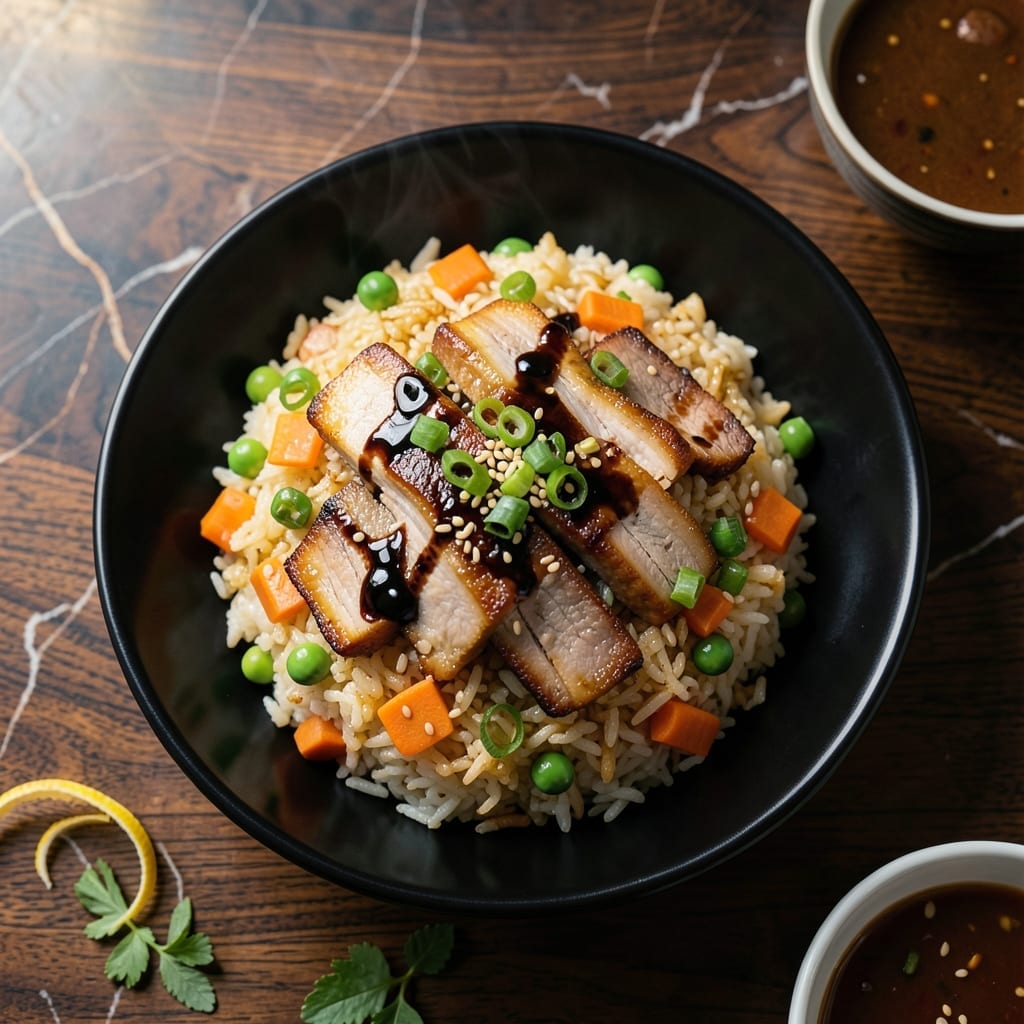
This wok-seared creation brings authentic Asian flavors to your kitchen with a perfect balance of savory pork and vibrant vegetables.
The high-heat cooking method ensures every grain of rice is coated in rich umami while maintaining that signature wok-kissed texture. Simple ingredients deliver complex results.
Ingredients for Asian Pork Fried Rice
High-heat wok essentials deliver authentic Asian flavors with savory pork and vibrant vegetables ready in minutes.
| Ingredient | Amount | Notes |
|---|---|---|
| Jasmine Rice 🍚 | 3 cups | Day-old, cooked and chilled |
| Pork Shoulder 🐖 | ¾ lb | Thinly sliced for quick cooking |
| Green Peas 🌱 | 1 cup | Fresh or frozen, thawed |
| Carrots 🥕 | 2 whole | Medium, finely diced |
| Green Onions 🧅 | 4 whole | Thinly sliced, white and green parts separated |
| Garlic Cloves 🧄 | 3 cloves | Minced for maximum flavor |
| Fresh Ginger 🌿 | 1 tbsp | Peeled and grated |
| Soy Sauce 🫒 | 3 tbsp | Low-sodium preferred for balance |
| Oyster Sauce 🫒 | 2 tbsp | Essential for umami depth |
| Sesame Oil 🫒 | 1 tbsp | Toasted for authentic aroma |
| Large Eggs 🥚 | 2 whole | Lightly beaten for scrambling |
| Neutral Oil 🫒 | 3 tbsp | High smoke point for wok-searing |
| Salt 🧂 | ½ tsp | Adjust to taste at end |
| White Pepper 🌶️ | ¼ tsp | Freshly ground for subtle heat |
The pork is critical for texture. Pork shoulder (or pork butt) yields the best results—avoid lean cuts like tenderloin, which dry out. Source from Whole Foods or a trusted butcher for quality marbling. Always slice thinly against the grain for tenderness. For the rice, jasmine is ideal (its floral notes complement the dish), but long-grain white works in a pinch. Day-old, chilled rice is non-negotiable—fresh rice turns to mush under high heat.
No pork? Chicken thighs or shrimp (peeled, deveined) are excellent alternatives—adjust cooking time accordingly. For a vegetarian version, extra-firm tofu (pressed and cubed) absorbs the flavors beautifully. Oyster sauce can be substituted with hoisin or vegetarian oyster sauce (available at Asian markets). Frozen peas are fine (just thaw first), but fresh delivers superior texture and color.
Cooked rice keeps in the fridge for up to 5 days before using—ideal for meal prep. The completed dish reheats well but is best consumed fresh for that signature wok-kissed texture. Store leftovers in an airtight container for 3-4 days. Not suitable for freezing due to egg texture changes.
Why You’ll Love This Recipe
- One Pan Dinner: I love that everything cooks together—jasmine rice, tender pork shoulder, and veggies—with just one skillet to wash.
- Umami Bomb: The pork shoulder soaks up the soy and sesame, while those green onions add a fresh bite that ties it all together.
- Meal Prep Hero: I make a big batch Sunday and it reheats beautifully for lunches all week. Honestly, it tastes even better the next day.
- Budget Stretcher: Pork shoulder is cheap, and a little goes a long way with rice and whatever veggies I have on hand.
Step-by-Step Instructions for Asian Pork Fried Rice
Master the wok technique for perfectly seared rice with layers of umami and texture.
Step 1: Prepare and Velvet the Pork
Thinly slice the 0.75 lb pork shoulder into ¼-inch strips against the grain for maximum tenderness. In a bowl, toss the pork with 1 tbsp of the soy sauce, 1 tbsp of the neutral oil, and ½ tsp of the fresh ginger. Let it marinate for 10-15 minutes.
This velveting step ensures the pork stays juicy and absorbs flavor. The ginger tenderizes the meat while the soy sauce adds an initial layer of seasoning. Don’t skip this—it’s the difference between dry pork and melt-in-your-mouth texture.
Step 2: Scramble the Eggs and Aromatics
Heat 1 tbsp neutral oil in a wok or large skillet over high heat until shimmering. Add the 2 lightly beaten large eggs and scramble quickly until just set but still slightly runny. Remove the eggs to a plate—they’ll finish cooking later when combined with the hot rice.
In the same wok, add the remaining 1 tbsp neutral oil and sauté the 3 minced garlic cloves and remaining ½ tbsp fresh ginger for 20-30 seconds until fragrant. Be vigilant here—garlic burns easily and bitter garlic ruins the dish.
Step 3: Sear the Pork and Vegetables
Increase heat to maximum and add the marinated pork in a single layer. Sear undisturbed for 1-2 minutes until lightly browned on one side, then stir-fry for another 1 minute until just cooked through. Remove pork to the plate with the eggs.
In the same wok, add the 2 finely diced carrots and stir-fry for 2 minutes until slightly softened. Add the 1 cup green peas and the white parts of the 4 thinly sliced green onions, cooking for 1 additional minute. The vegetables should retain some bite—they’ll soften further when combined with the rice.
Step 4: Combine and Season
Add the remaining 2 tbsp soy sauce, 2 tbsp oyster sauce, and 1 tbsp sesame oil to the wok. Stir to combine, then add the 3 cups chilled jasmine rice, breaking up any clumps with your spatula. The cold rice is crucial—it prevents the dish from turning mushy.
Return the pork and eggs to the wok. Stir-fry over high heat for 2-3 minutes until everything is evenly distributed and heated through. Season with 0.5 tsp salt and 0.25 tsp white pepper, adjusting to taste.
Step 5: Finish and Garnish
Remove from heat and stir in the green parts of the green onions. The residual heat will slightly wilt them while preserving their fresh, oniony bite. Let the fried rice rest for 2 minutes before serving to allow the flavors to meld.
Each grain of rice should be distinct, with a slight sheen from the sauces and a smoky depth from the wok hei. The pork should be tender, the vegetables vibrant, and the eggs distributed in soft, golden ribbons throughout.
Pro Tips For Making Asian Pork Fried Rice
- Use Day-Old Rice: Fresh rice turns to mush in the wok—spread leftover jasmine rice on a tray and refrigerate overnight so it dries out and fries up with that perfect chewy texture.
- Velvet the Pork: Toss thinly sliced pork shoulder with 1 tsp cornstarch and 1 tbsp soy sauce before cooking; it keeps the meat tender and prevents it from turning into rubbery bits in the fried rice.
- Skip the Overcrowding: I learned this the hard way—cook the pork in batches so the wok stays hot, or you’ll end up steaming it instead of searing, and nobody wants sad, gray pork in their fried rice.
- Char the Carrots: Cut the carrots small—like ¼-inch dice—and let them sit in the hot wok for 30 seconds before stirring to develop a little color; it adds a sweet depth that raw carrots just can’t.
Dietary Considerations for asian pork fried rice
Gluten-Free Adaptation
For a gluten-free version, swap the soy sauce for tamari and ensure your oyster sauce is certified gluten-free. I like San-J Tamari—it has the same rich umami without wheat. Always check labels, as some brands contain hidden gluten. 💡
Low-Sodium Option
Use low-sodium soy sauce and reduced-sodium oyster sauce to cut back on salt without sacrificing flavor. I also reduce the added salt to ¼ tsp and boost umami with 1 tsp fish sauce instead. The result is just as delicious.
Dairy-Free and Egg-Free
Simply omit the eggs—the dish remains flavorful with pork and vegetables. For extra protein, add ½ cup cubed tofu when stir-frying the pork. The tofu will absorb the savory sauces beautifully.
Vegetarian Version
Replace the pork with extra-firm tofu (pressed and cubed) or tempeh. Marinate it with 1 tbsp soy sauce and 1 tsp sesame oil before searing. The texture and flavor will surprise you—honestly, my vegetarian friends can’t tell the difference. 🌱
Nut Allergy Note
This recipe is naturally nut-free, but always verify your oyster sauce and sesame oil brands. Some Asian sauces contain trace nuts or are processed in shared facilities. I stick with Kikkoman products for peace of mind.
Meal Prep Friendly
This dish reheats well for lunches, but avoid freezing due to the egg texture. Store leftovers in an airtight container in the fridge for up to 3 days. Reheat in a skillet over medium heat with a splash of water to restore moisture.
Nutrition Facts
Frequently Asked Questions
Why use day-old rice?
Day-old rice is drier and firmer, preventing mushiness when stir-fried. Fresh rice contains too much moisture and will turn sticky.
Can I substitute pork shoulder?
Yes! Chicken thighs or shrimp work well. For vegetarians, extra-firm tofu absorbs the umami flavors beautifully. Adjust cooking time accordingly.
How do I prevent soggy fried rice?
Use high heat and cook in small batches. Overcrowding the wok lowers the temperature, causing steam instead of searing.
What’s the secret to wok hei?
Crank the heat to maximum and let the wok get smoking hot before adding ingredients. The smoky flavor comes from this high-heat searing.

- Machboos Rice Recipe: Bahraini Spiced One-Pot Tradition - September 25, 2026
- Recipe For Zucchini Rice Casserole: Cheesy Bake With Garden Freshness - September 25, 2026
- Somali Banana and Rice Recipe: Sweet and Spiced East African Tradition - September 25, 2026