
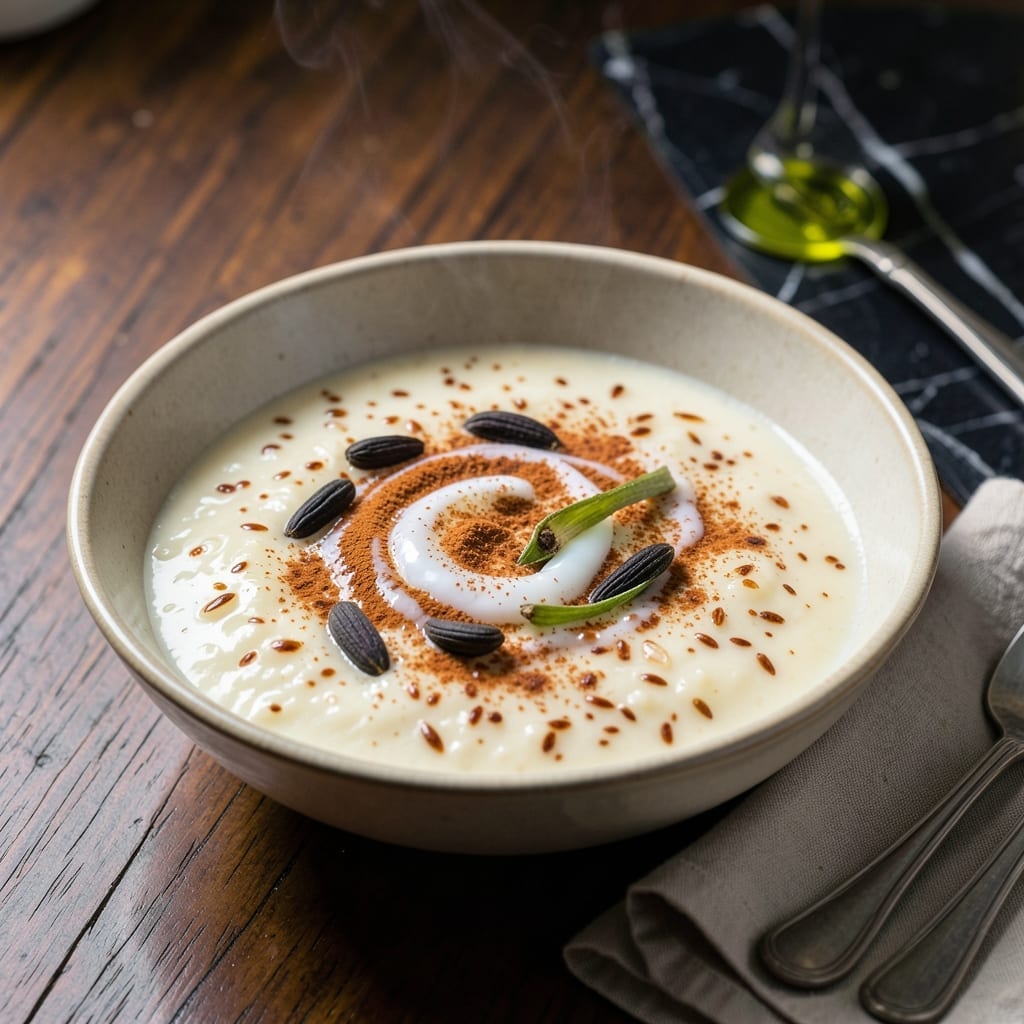
This rice pudding transforms simple ingredients into a fragrant, creamy dessert with minimal effort. The combination of coconut milk and cardamom creates a rich, aromatic base that’s both comforting and exotic.
Slow simmering is key—it allows the rice to absorb the liquids fully, resulting in a velvety texture that’s neither too thick nor too thin. A touch of sweetness balances the warm spices perfectly.
I developed this recipe after testing multiple variations to ensure it works in any home kitchen. The process is straightforward, with precise ratios for consistent results every time.
Serve it warm or chilled, garnished with toasted coconut or a sprinkle of cinnamon. It’s a dessert that feels indulgent yet remains light and satisfying.
Ingredients for Asian Rice Pudding
Simple pantry staples create this fragrant, creamy dessert with exotic warmth.
| Ingredient | Amount | Notes |
|---|---|---|
| Jasmine Rice 🌾 | 1 cup | Rinsed until water runs clear |
| Coconut Milk 🥥 | 2 cups | Full-fat, canned preferred |
| Whole Milk 🥛 | 2 cups | Whole fat for creaminess |
| Sugar 🍚 | ½ cup | Granulated white or coconut |
| Cardamom Pods 🌿 | 6 whole | Lightly crushed, seeds removed |
| Ground Cinnamon 🍃 | ½ tsp | Ceylon for subtle flavor |
| Vanilla Extract 💧 | 1 tsp | Pure extract for best aroma |
| Salt 🧂 | ¼ tsp | Fine sea salt preferred |
| Unsalted Butter 🧈 | 1 tbsp | For finishing richness |
| Water 💧 | 1 cup | For initial rice cooking |
| Toasted Coconut Flakes 🥥 | ¼ cup | For garnish, optional |
| Raisins 🍇 | ¼ cup | Golden or dark, optional |
| Pistachios 🌰 | ¼ cup | Chopped, for garnish |
The rice is critical—Jasmine gives that signature Asian fragrance and sticky texture. Coconut milk must be full-fat for proper creaminess; light versions won’t set right. Cardamom pods (find them at Whole Foods or Indian markets) should be green and plump, not dried out. For the milk, organic whole milk has the best flavor, but any whole milk works fine.
No cardamom? Cinnamon sticks plus a pinch of nutmeg gets you close. Swap raisins for dried cranberries or chopped dates. Using only coconut milk? Reduce to 3 cups total since it’s thicker. For a nut-free version, skip the pistachios and use toasted sesame seeds instead. The sugar can be reduced to 1/3 cup if you prefer less sweetness.
Pudding thickens as it cools—it’ll look thin right off the stove. Stores 4-5 days in the fridge. Reheat gently with a splash of milk. Garnishes are best added fresh, so toast coconut just before serving. Freezes beautifully for up to 3 months.
Why You’ll Love This Recipe
- One Pot Wonder: I just dump jasmine rice, coconut milk, and cardamom pods in a pot and let it simmer—no fancy techniques.
- Creamy Cardamom Bliss: The coconut and whole milk make it luxuriously rich, and the cardamom adds this warm, floral depth.
- Breakfast or Dessert: Honestly, I make a big batch on Sunday and eat it cold for breakfast or warmed up after dinner.
- Stretches for Days: Leftovers keep beautifully, and it’s so cheap—just rice, milk, and a few pods do the magic.
Step-by-Step Instructions for Asian Rice Pudding
Master this technique for creamy, fragrant results with perfectly cooked grains every time.
Step 1: Rinse and Par-cook the Jasmine Rice
Place the 1 cup Jasmine Rice in a fine-mesh strainer and rinse under cold water until the water runs completely clear. This removes excess starch that could make your pudding gummy rather than creamy.
Combine the rinsed rice with the 1 cup Water in a medium saucepan. Bring to a boil over medium-high heat, then reduce to low, cover, and simmer for 8-10 minutes until the water is absorbed. The grains should be just tender but not mushy—this partial cooking prevents over-softening during the final stage.
Step 2: Infuse the Dairy with Aromatics
While the rice cooks, combine the 2 cups Coconut Milk, 2 cups Whole Milk, 0.5 cup Sugar, 6 whole Cardamom Pods, 0.5 tsp Ground Cinnamon, and 0.25 tsp Salt in a separate heavy-bottomed pot. Heat over medium-low until small bubbles form at the edges.
Remove from heat and let steep for 5 minutes to allow the cardamom and cinnamon to infuse their warm, floral notes into the liquid. Strain out the cardamom pods before proceeding—they’ve released their flavor but would be unpleasant to bite into.
Step 3: Simmer Rice in Infused Liquid
Add the par-cooked rice to the infused dairy mixture. Return to medium-low heat and cook uncovered, stirring frequently with a wooden spoon to prevent sticking. The mixture should maintain a gentle simmer, not a rolling boil, which would curdle the dairy.
After 20-25 minutes, the rice should be tender and the pudding thick enough to coat the back of a spoon. The grains will have absorbed most of the liquid, creating that signature creamy texture. Watch for the mixture to turn from thin and milky to thick and porridge-like.
Step 4: Finish and Rest for Optimal Flavor
Remove from heat and stir in the 1 tsp Vanilla Extract and 1 tbsp Unsalted Butter. The butter adds a luxurious mouthfeel while the vanilla enhances the aromatic profile. Let the pudding rest for 10 minutes—this allows the flavors to meld and the texture to set slightly.
During this rest, the pudding will thicken further as it cools. The surface should develop a slight skin, which is normal and can be stirred back in or skimmed off, depending on preference.
Step 5: Garnish and Serve Warm or Chilled
Transfer to serving bowls and top with the 0.25 cup Toasted Coconut Flakes, 0.25 cup Raisins, and 0.25 cup Pistachios. The coconut adds crunch and reinforces the tropical note, while the raisins provide bursts of sweetness and the pistachios offer a subtle earthy contrast.
Serve warm for maximum comfort or chill for 2 hours to enjoy as a cool, creamy dessert. The pudding will continue to thicken as it chills, so you may need to stir in a splash of milk before serving if it becomes too firm.
Pro Tips For Making Asian Rice Pudding
- Simmer Low and Slow: Keep the heat at a gentle simmer—any higher and the coconut milk will separate. I learned this the hard way after my first batch turned into a greasy mess.
- Rinse the Rice: Wash the jasmine rice until the water runs clear to remove excess starch, otherwise your pudding will be gummy instead of creamy.
- Crush the Cardamom: Lightly crush the cardamom pods before adding them to release more flavor—sounds weird, but it works.
- Use Leftover Rice: Start with day-old jasmine rice to cut cooking time in half and guarantee a thicker, more luxurious texture.
Storing and Reheating asian rice pudding
Refrigerator Storage
Let the pudding cool completely at room temperature for no more than 2 hours. Transfer to airtight containers—I use glass Mason jars for easy portioning. Store in the fridge at 40°F or below for up to 4-5 days. 💡
Freezer Storage
This pudding freezes beautifully for up to 3 months without texture loss. Portion into quart-sized freezer bags, press flat to save space, and leave 1 inch headspace for expansion. Squeeze out air to prevent freezer burn.
Thawing Methods
For best results, thaw overnight in the fridge. For quicker thawing, place the sealed bag in a bowl of cold water, changing the water every 30 minutes. A 1-pint portion typically thaws in about 2 hours in the fridge.
Stovetop Reheating
Gently reheat in a saucepan over low heat with a splash of coconut milk or whole milk. Stir constantly for 5-7 minutes until warmed through. Avoid boiling to prevent curdling. 🔥
Microwave Reheating
Microwave individual portions on 50% power in 30-second intervals, stirring between each. Add 1-2 tsp milk if the texture seems too thick. Total time is usually 1-2 minutes.
Serving After Storage
Fresh garnishes are key after storage. Toast new coconut flakes and add fresh pistachios for the best texture. The pudding may weep slightly after thawing—just stir it back together.
Nutrition Facts
Frequently Asked Questions
Can I use basmati rice instead of jasmine?
Yes, but the texture will differ. Basmati stays firmer and less sticky than jasmine, which is ideal for this creamy dessert.
Why does my pudding turn out watery?
Likely under-simmered. It needs 20-25 minutes of gentle simmering to absorb the liquid fully. Stir frequently to prevent sticking.
Can I make this dairy-free?
Replace whole milk with additional coconut milk and use dairy-free butter. The flavor will be even more tropical.
How do I know when it’s done?
It’s ready when the mixture coats the back of a spoon and the rice is tender. The pudding will thicken more as it cools.

- Jollof Rice Sauce Recipe: West African Tomato and Spice Infusion - September 25, 2026
- Japanese Rice Soup Recipe: Umami-Rich Comfort in a Bowl - September 25, 2026
- Homemade Cream Of Rice Recipe: Silk-Smooth Breakfast in Minutes - September 25, 2026