
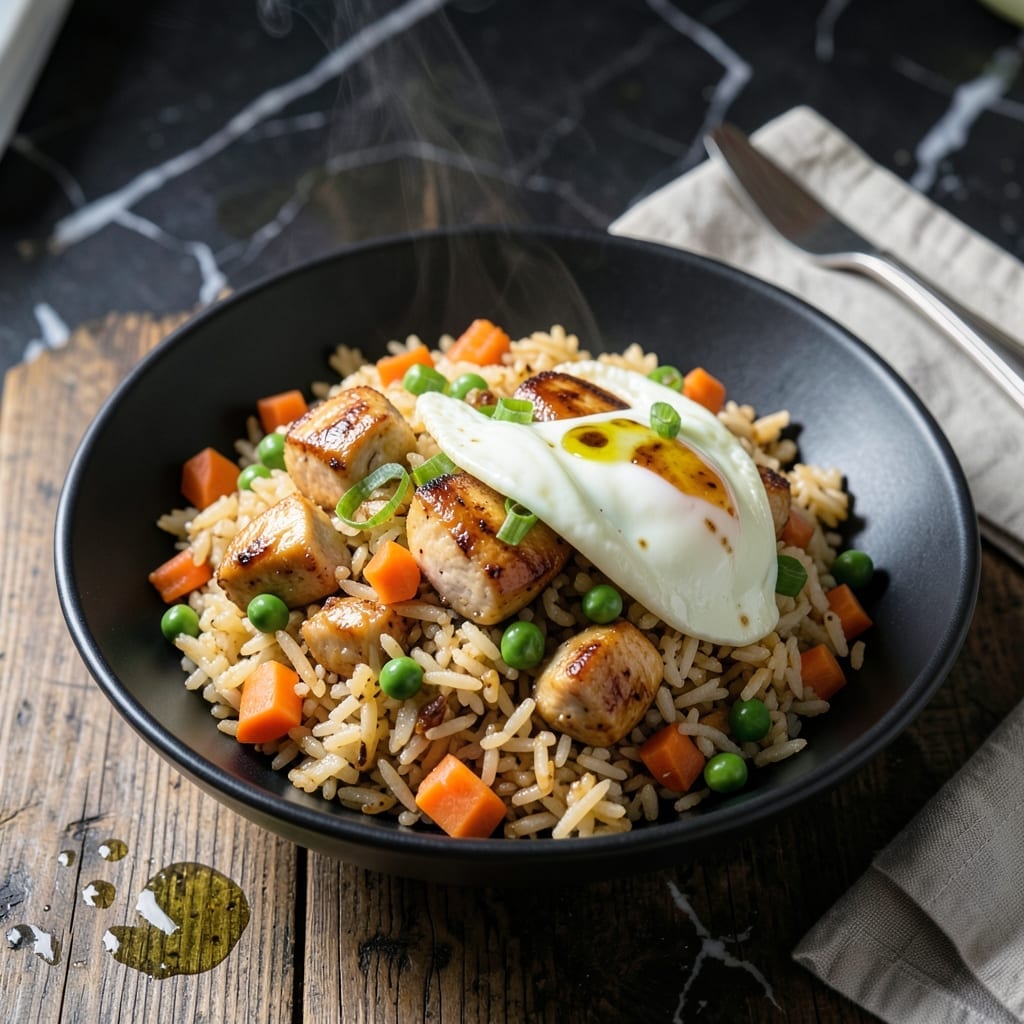
This recipe brings traditional wok-fried flavors to your home kitchen with proven techniques. I learned the art of high-heat stir-frying during my apprenticeship, where timing and temperature make all the difference.
The key is using day-old rice and cooking in small batches to achieve that signature wok-seared texture. Each ingredient serves a purpose, from the umami-rich soy sauce to the aromatic ginger and garlic.
What results is a dish with distinct layers of flavor—tender chicken, crisp vegetables, and rice with just the right amount of char. The process moves quickly, so having everything prepped is essential.
Serve this as a main course or alongside other Chinese classics. The authentic taste comes from respecting the traditional method.
Ingredients for Authentic Chicken Fried Rice
Traditional wok-seared flavors start with day-old rice and bold staples you know.
| Ingredient | Amount | Notes |
|---|---|---|
| Day-Old Cooked White Rice 🍚 | 4 cups | Firm, dry grains preferred |
| Boneless Chicken Thighs 🍗 | 1 lb | Cut into small, even pieces |
| Large Eggs 🥚 | 3 whole | Lightly beaten for scrambling |
| Green Onions 🧅 | 4 whole | White and green parts separated |
| Carrots 🥕 | 1 whole | Peeled, finely diced |
| Frozen Peas 🌱 | ¾ cup | Thawed under cold water |
| Fresh Ginger 🌿 | 1 tbsp | Minced or finely grated |
| Garlic Cloves 🧄 | 3 cloves | Minced to fine paste |
| Light Soy Sauce 💧 | 3 tbsp | Low-sodium recommended |
| Dark Soy Sauce 💧 | 1 tbsp | For depth and color |
| Sesame Oil 🫒 | 1 tsp | Toasted variety preferred |
| Shaoxing Wine 🍶 | 2 tbsp | Dry sherry as substitute |
| Vegetable Oil 🫒 | 3 tbsp | High smoke point essential |
| Kosher Salt 🧂 | ½ tsp | Adjust to taste at end |
| White Pepper 🌶️ | ¼ tsp | Freshly ground preferred |
The rice absolutely must be day-old and dry—fresh rice turns to mush under high heat. Jasmine or long-grain white works best. For the chicken, thighs over breasts every time (juicier, more flavor). Most Asian markets sell pre-cut stir-fry chicken, but buy whole thighs and cut yourself for better texture. The ginger and garlic? Fresh is non-negotiable—no shortcuts here.
No Shaoxing wine? Dry sherry in a pinch (just skip the cooking wine—too salty). Light soy sauce is the main seasoning, but dark soy adds that deep brown color. Out of peas? Frozen corn or diced bell peppers work fine. For the eggs, duck eggs if you want extra richness, but standard large eggs are perfect. The sesame oil is for finishing—never cook with it, just drizzle at the end.
Prep everything before heating the wok—high heat waits for no one. Cooked rice keeps in the fridge for 2-3 days before using. Leftovers (if you have any) reheat well—2-3 minutes in a hot pan brings it back to life. Freezes for up to 3 months, but best fresh.
Why You’ll Love This Recipe
- I’ll be real: chicken thighs and rice stretch my grocery budget further than takeout ever could.
- One Pan Wonder: I toss everything in my wok and it’s done in 15 minutes—no extra dishes, just flavor.
- Umami Bomb: The chicken thighs and day-old rice soak up that soy-garlic magic like nobody’s business.
- Feed the Crew: Honestly, it’s my go-to for Sunday meal prep and Tuesday leftovers taste even better.
Step-by-Step Instructions for Chicken Fried Rice
Master the wok technique that delivers authentic flavor in every grain of this dish.
Step 1: Prep and Marinate the Chicken
Cut the 1 lb Boneless Chicken Thighs into small, even ½-inch pieces. I prefer thighs over breasts for their richer flavor and juicier texture in stir-fries. Toss the chicken with 1 tablespoon of the 3 tbsp Light Soy Sauce, 1 tablespoon of the 2 tbsp Shaoxing Wine, and ½ teaspoon of the 0.5 tsp Kosher Salt.
Let it marinate while you prep the rest. This short marinade infuses flavor and helps tenderize the meat. Don’t skip this—it’s the difference between bland and authentic. The chicken should look glossy and slightly sticky when ready.
Step 2: Scramble the Eggs and Cook the Chicken
Heat 1 tablespoon of the 3 tbsp Vegetable Oil in your wok over high heat until it shimmers. Pour in the 3 whole Large Eggs and scramble quickly until just set but still slightly runny. Remove and set aside—they’ll finish cooking later.
Add another 1 tablespoon Vegetable Oil to the wok. When it’s screaming hot, add the marinated chicken in a single layer. Let it sear undisturbed for 30 seconds before stirring. Cook until no longer pink, about 3-4 minutes. Remove and join the eggs.
Step 3: Stir-Fry the Aromatics and Vegetables
Return the wok to high heat and add the final 1 tablespoon Vegetable Oil. Add the 1 tbsp Fresh Ginger, 3 cloves Garlic Cloves, and white parts of the 4 whole Green Onions. Stir-fry for 15-20 seconds until fragrant—don’t let the garlic burn.
Immediately add the 1 whole Carrots and 0.75 cup Frozen Peas. Stir-fry for 2-3 minutes until the carrots soften slightly but still have bite. The peas should turn bright green and hot throughout. This is where the dish develops its layered aroma.
Step 4: Combine and Season Everything
Add the 4 cups Day-Old Cooked White Rice, breaking up any clumps with your hands first. Press the rice into the wok and let it toast for 30 seconds before stirring. This creates those coveted slightly crispy bits.
Return the chicken and eggs to the wok. Drizzle with the remaining 2 tbsp Light Soy Sauce, 1 tbsp Dark Soy Sauce, and 1 tsp Sesame Oil. Toss everything together for 2-3 minutes until heated through. The rice should be glossy and every grain coated with sauce.
Step 5: Finish and Garnish
Taste and adjust seasoning with the remaining 0.5 tsp Kosher Salt and 0.25 tsp White Pepper. The flavors should be balanced—not too salty, with a hint of umami depth from the dark soy.
Stir in the green parts of the 4 whole Green Onions and serve immediately. The dish should have distinct wok hei aroma, with each component visible but harmonious. The rice should be slightly crisp in spots, the chicken tender, and the eggs soft and fluffy.
Pro Tips For Making Authentic Chicken Fried Rice
- Use Cold Rice: Always start with day-old, cold rice—freshly cooked rice turns mushy. I learned this the hard way after my first few batches ended up like porridge.
- High Heat Only: Crank the wok or skillet to smoking hot before adding oil and ingredients. After burning three batches, I finally figured out that lukewarm heat just steams the rice instead of frying it.
- Prep Chicken Small: Cut the boneless chicken thighs into tiny, even pieces—about ½-inch cubes. This makes a real difference in getting that quick, even cook without chewy bits.
- Scramble Eggs First: Push the rice and chicken to one side, add a little more oil, then scramble the eggs in the empty space. Sounds weird, but it works and saves you from dirtying another pan.
Regional Styles of This Dish
Cantonese Style
This is the version I learned in Charleston’s Chinese kitchens, where the focus is on high heat and quick cooking. The rice gets that signature wok hei smokiness from being pressed against the wok’s surface. We use char siu (Chinese BBQ pork) instead of chicken for extra depth. 🌟
Sichuan Spicy
For heat lovers, add 1 tbsp Sichuan peppercorns and 2 chopped dried chilies when stir-frying aromatics. The numbing spice of Sichuan peppercorns pairs perfectly with the dish’s savory base. I also fold in doubanjiang (fermented chili bean paste) for complexity.
Yangzhou Classic
This luxurious version from Jiangsu province includes shrimp, char siu, and bamboo shoots alongside the chicken. The protein trio creates a textural masterpiece. I learned this variation during my apprenticeship—it’s fit for an emperor. 💛
Thai Basil
Swap the green onions for 1 cup holy basil leaves added at the end. Use fish sauce instead of soy sauce for the umami base. The anise-like aroma of Thai basil transforms this into a completely different dish. Cook it 30 seconds just until wilted.
Indonesian Nasi Goreng
This street food version uses kecap manis (sweet soy sauce) for its signature caramel color and flavor. Add 1 tsp shrimp paste when cooking aromatics. Serve with a fried egg on top and krupuk (shrimp crackers) on the side.
American Takeout
This is what you’ll find in most US Chinese restaurants. They often use MSG (¼ tsp enhances umami) and add bean sprouts for crunch. The rice is typically softer, with more sauce to appeal to American palates. I add 1 tsp sugar to balance the saltiness.
Nutrition Facts
Frequently Asked Questions
Why use day-old rice for this dish?
Day-old rice has had time to dry out, which prevents it from turning mushy when stir-fried at high heat. Fresh rice contains too much moisture and will steam instead of searing. This is crucial for achieving that authentic texture.
Can I substitute chicken breast for thighs?
You can, but chicken thighs stay juicier and have more flavor. If using breasts, cut them into small pieces and marinate for 10 minutes to prevent dryness. Thighs are preferred in traditional recipes.
What if I don’t have a wok?
A large, heavy skillet with high sides works as a substitute. Use high heat and cook in batches to avoid overcrowding. The key is maintaining that searing temperature throughout cooking.

- Jollof Rice Sauce Recipe: West African Tomato and Spice Infusion - September 25, 2026
- Japanese Rice Soup Recipe: Umami-Rich Comfort in a Bowl - September 25, 2026
- Homemade Cream Of Rice Recipe: Silk-Smooth Breakfast in Minutes - September 25, 2026