
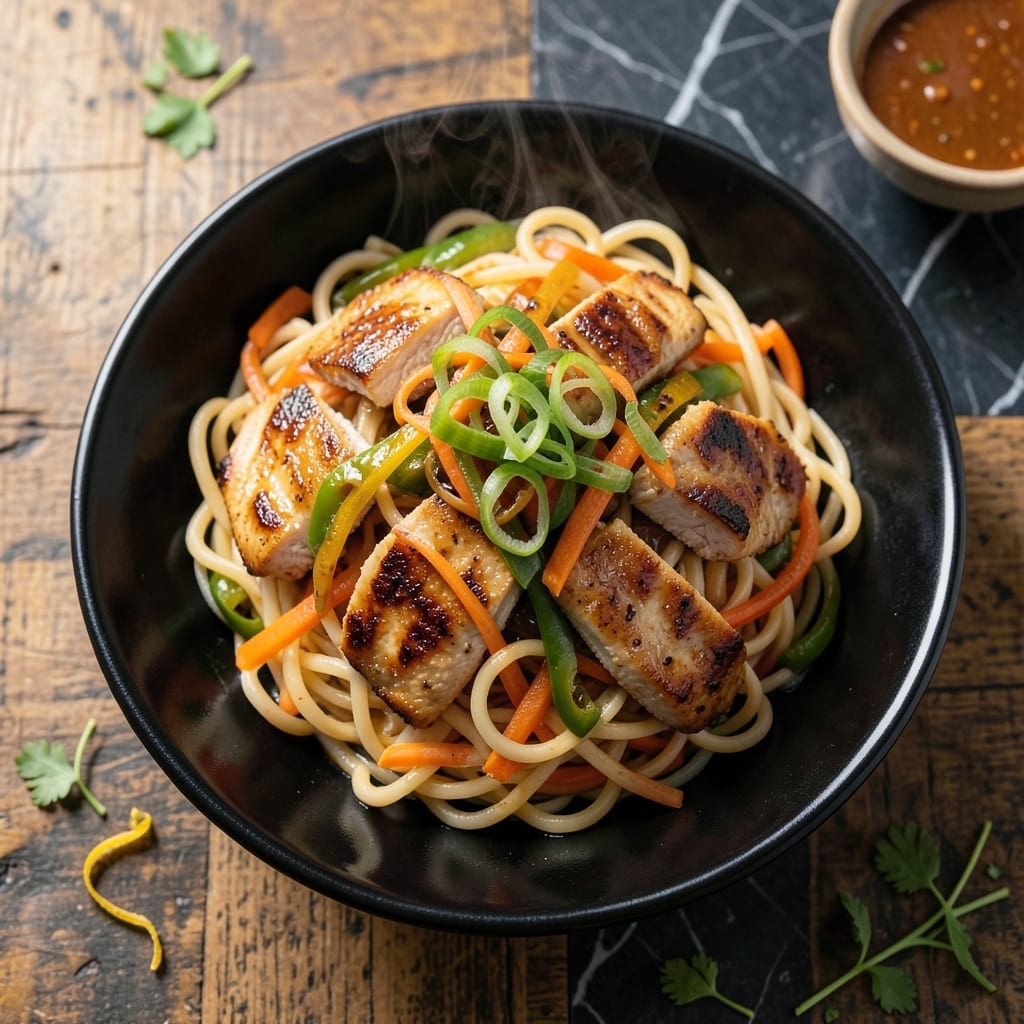
I spent years chasing that perfect takeout flavor before cracking the code for this lo mein. The secret? High heat and the right sauce ratio.
This version uses fresh egg noodles and a simple but authentic blend of soy sauces that creates that signature umami depth. I also toss in velvety chicken that’s been marinated in cornstarch and soy for maximum tenderness.
The stir-fry process is quick—just 5 minutes once everything’s prepped. The noodles soak up the sauce without turning mushy, while the chicken stays juicy and the vegetables retain their crisp bite.
You’ll end up with a dish that tastes straight from your favorite street food stall, not your kitchen. Here’s how to make it right.
Ingredients for Authentic Chicken Lo Mein
Fresh egg noodles, tender chicken, and a sauce that hits all the right notes.
| Ingredient | Amount | Notes |
|---|---|---|
| Fresh Egg Noodles 🍜 | 1 lb | Lo mein noodles preferred |
| Boneless Chicken Breast 🍗 | 1 lb | Thinly sliced against grain |
| Cornstarch 🌾 | 2 tbsp | For marinating chicken |
| Light Soy Sauce 🫙 | 3 tbsp | For marinade and sauce |
| Dark Soy Sauce 🫙 | 1 tbsp | For depth of color |
| Oyster Sauce 🫙 | 2 tbsp | Vegan oyster sauce if needed |
| Sesame Oil 🫒 | 1 tbsp | Toasted for best flavor |
| Garlic Cloves 🧄 | 4 cloves | Minced finely |
| Fresh Ginger 🌿 | 1 tbsp | Grated or minced |
| Carrots 🥕 | 2 whole | Julienned for texture |
| Bell Pepper 🌶️ | 1 whole | Thinly sliced, any color |
| Green Onions 🧅 | 4 whole | Sliced, whites and greens separated |
| Vegetable Oil 🫒 | 3 tbsp | High smoke point for stir-frying |
| Sugar 🍚 | 1 tsp | Balances the sauce |
| White Pepper 🌶️ | ½ tsp | Classic lo mein seasoning |
The noodles are non-negotiable—fresh egg noodles are what give lo mein its signature chew. Most Asian markets carry them in the refrigerated section, but dried lo mein noodles work in a pinch if you soak them first. For the chicken, thighs are even more tender than breasts (and cheaper), but breasts work if that’s what you’ve got. Just slice them thin so they cook fast and stay juicy.
No oyster sauce? Hoison sauce is the closest sub, but you can also mix soy sauce with a pinch of sugar. Dark soy sauce is worth hunting down at an Asian market—it adds that deep color and complexity. The ginger and garlic? Fresh only (jarred stuff tastes like regret). If you’re missing bell peppers, cabbage or snap peas add a nice crunch.
Prepped ingredients keep in the fridge for 1-2 days before cooking. Leftovers? 3-4 days in the fridge, but honestly it’s best fresh. Reheat in a dry pan to crisp up the noodles a bit. Freezing isn’t ideal here—the noodles get mushy.
Why You’ll Love This Recipe
- 20-Minute Meal: I can get this from prep to plate faster than delivery arrives. The cornstarch keeps the chicken tender while the noodles soak up every bit of sauce.
- Umami Bomb: That deep, rich flavor from the dark soy sauce paired with the lighter stuff? It hits all the right notes without being overpowering.
- Feeds a Crowd: I make a big batch on Sunday and we’re set for lunches all week. The noodles hold up surprisingly well in the fridge.
- Budget Stretcher: Chicken breast and egg noodles are affordable, and a little goes a long way. Honestly, it tastes like takeout but costs half as much.
Step-by-Step Instructions for Chicken Lo Mein
Here’s how I create restaurant-quality lo mein with the perfect balance of flavors and textures.
Step 1: Marinate and Prepare the Chicken
Slice the boneless chicken breast thinly against the grain into ¼-inch strips. In a bowl, toss the chicken with 2 tbsp cornstarch, 2 tbsp light soy sauce, and 1 tbsp sesame oil. I always use my hands for this—it ensures every piece is evenly coated and the cornstarch sticks properly.
Let the chicken marinate for 15-20 minutes at room temperature. This short marinade tenderizes the meat and gives it that velvety texture authentic to lo mein. While it sits, you’ll have time to prep the rest of your ingredients—this dish comes together fast once you start cooking.
Step 2: Prep Vegetables and Create the Sauce
Julienne the carrots into matchstick-sized pieces and thinly slice the bell pepper. Separate the green onions into whites and greens. Mince the garlic cloves and grate the fresh ginger. Having everything ready to go is crucial—once you start stir-frying, there’s no time to chop.
In a small bowl, whisk together 1 tbsp light soy sauce, 1 tbsp dark soy sauce, 2 tbsp oyster sauce, 1 tsp sugar, and 0.5 tsp white pepper. This sauce is the heart of the dish, delivering that classic lo mein flavor with its perfect balance of salty, sweet, and umami.
Step 3: Stir-Fry Chicken and Vegetables
Heat 2 tbsp vegetable oil in a wok or large skillet over high heat until shimmering. Add the marinated chicken in a single layer and cook undisturbed for 1-2 minutes until the bottoms turn golden brown. Stir-fry for another 2 minutes until the chicken is cooked through and no longer pink.
Push the chicken to one side of the pan and add the remaining 1 tbsp vegetable oil. Toss in the garlic, ginger, and white parts of the green onions. Stir-fry for 30 seconds until fragrant, then add the carrots and bell pepper. Cook for 2-3 minutes until the vegetables soften slightly but retain some crunch.
Step 4: Combine with Noodles and Sauce
Add the fresh egg noodles to the pan, breaking up any clumps with your hands. Pour the sauce mixture evenly over the noodles. Using tongs, toss everything together for 2-3 minutes until the noodles are heated through and well coated with the sauce.
The noodles should be tender but still have some bite. If the mixture looks dry, add a splash of water and toss again. Sprinkle the green onion tops over the top and give it one final toss. The noodles should glisten with sauce, and every strand should carry bits of chicken and vegetables.
Pro Tips For Making Authentic Chicken Lo Mein
- Velvet the Chicken: Toss chicken pieces with 1 tablespoon cornstarch and 1 tablespoon water before cooking—I learned this the hard way after my first few batches turned out dry and tough.
- Skip Pre-Boiling Noodles: Fresh egg noodles only need 30-60 seconds in the wok with the sauce to soften; pre-boiling turns them to mush.
- High Heat Only: Crank the wok to smoking hot before adding anything, otherwise your lo mein will steam instead of stir-fry.
- Double the Dark Soy: Use twice as much dark soy as light for that deep caramel color and rich flavor—my grandmother swore by this ratio.
Common Mistakes When Making authentic chicken lo mein
Overcrowding the Pan
Never dump all your ingredients in at once. Crowding the pan steams the chicken and vegetables instead of searing them. I cook in batches—chicken first, then veggies—so each gets that golden-brown color and stays tender. Trust me, this makes all the difference. 🌡️
Skipping the Marinade
That 15-20 minute marinade with cornstarch and soy isn’t optional. It’s what gives the chicken that signature velvety texture. I’ve tried skipping it to save time, and the result was dry, chewy meat. The cornstarch also helps the sauce cling better to every bite.
Underheating the Oil
Your oil must be shimmering hot before adding anything. If it’s not, the chicken will absorb oil instead of searing, leaving you with greasy, soggy lo mein. I test the heat by flicking a drop of water in—if it sizzles and dances, it’s ready.
Using Dried Noodles
Fresh egg noodles are non-negotiable for that authentic chew. Dried noodles, even after soaking, just don’t absorb the sauce the same way. If you must use dried, par-boil them for 1 minute first to soften, then drain well before stir-frying.
Overcooking the Noodles
Noodles should be tender but still have a slight bite. Overcooking turns them mushy and breaks them into clumps. I toss them with the sauce for just 2-3 minutes—enough to heat through and coat evenly without falling apart.
Forgetting the High Heat
Lo mein demands high heat throughout. If your stove runs cool, use a wok or skillet that conducts heat well. I keep my burner on max and work quickly—this dish is all about speed and intensity to lock in those bold flavors. 🔥
Nutrition Facts
Frequently Asked Questions
Can I use chicken thighs instead of breasts?
Chicken thighs stay juicier and are more forgiving during cooking. Just slice them thinly against the grain for even cooking.
What if I can’t find fresh egg noodles?
Dried lo mein noodles work in a pinch. Soak them in hot water for 5-10 minutes until pliable, then drain well before stir-frying.
How do I prevent my noodles from sticking?
Use high heat and keep the noodles moving constantly with tongs. A splash of water can help loosen them if they start to clump.
Can I make this dish ahead of time?
Prep ingredients up to 1-2 days in advance, but cook just before serving. Leftovers keep for 3-4 days but lose some texture.

- Jollof Rice Sauce Recipe: West African Tomato and Spice Infusion - September 25, 2026
- Japanese Rice Soup Recipe: Umami-Rich Comfort in a Bowl - September 25, 2026
- Homemade Cream Of Rice Recipe: Silk-Smooth Breakfast in Minutes - September 25, 2026