
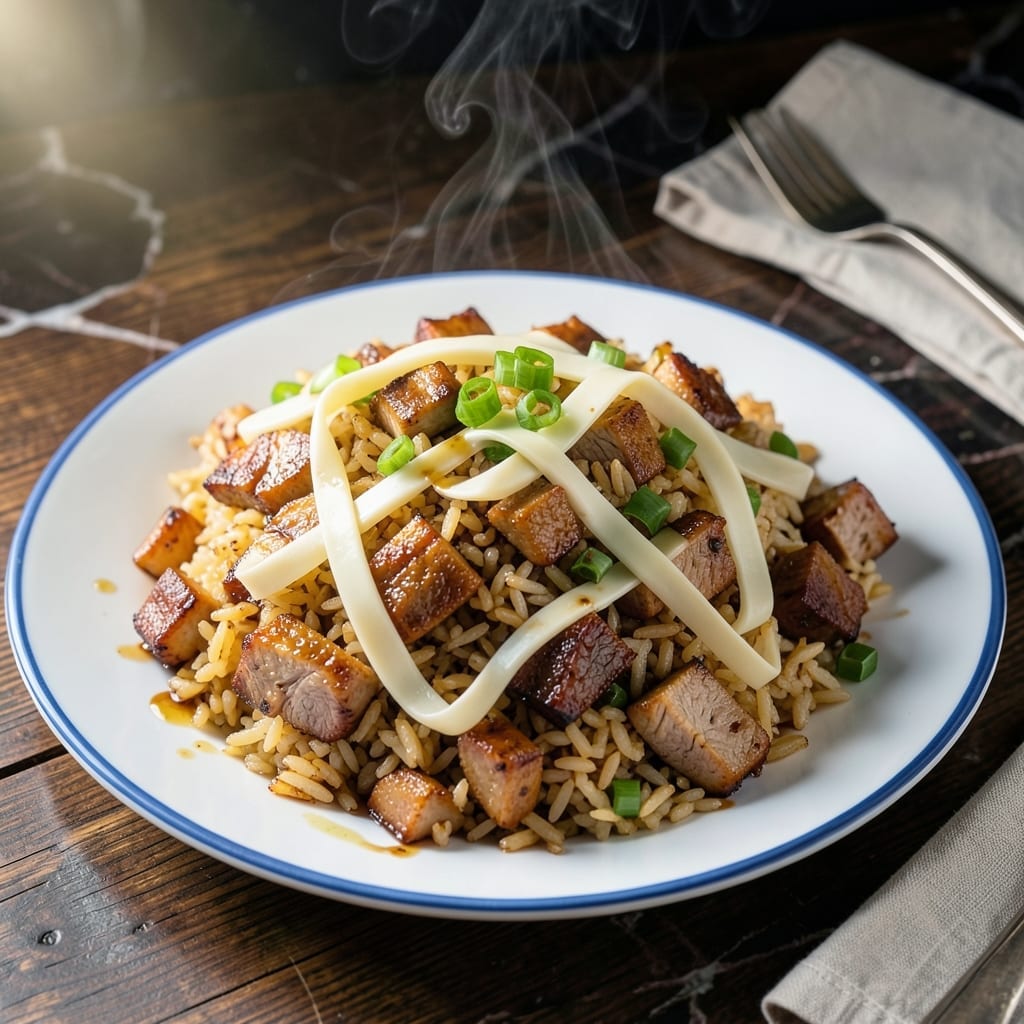
This authentic fried rice recipe captures the essence of traditional Chinese cooking with a few key techniques. The wok-heated method creates that signature smoky flavor.
Using day-old rice and high heat ensures each grain stays separate and slightly crisp. The pork should be marinated briefly for maximum tenderness and flavor.
What makes this dish special is the balance of savory soy sauce, sweet pork, and fresh vegetables. The result is a restaurant-quality meal that’s surprisingly simple to recreate.
Perfect for using leftover ingredients while delivering authentic flavor in every bite. The process takes 20 minutes start to finish.
Ingredients for Authentic Chinese Pork Fried Rice
Day-old rice and high-heat wok work create this restaurant-quality dish with authentic depth.
| Ingredient | Amount | Notes |
|---|---|---|
| Day-Old Cooked White Rice 🍚 | 4 cups | Chilled, preferably overnight |
| Pork Shoulder 🐖 | ¾ lb | Diced into small cubes |
| Light Soy Sauce 🫙 | 2 tbsp | Low-sodium preferred |
| Dark Soy Sauce 🫙 | 1 tsp | For depth of color |
| Shaoxing Wine 🍶 | 2 tbsp | Chinese cooking wine |
| Large Eggs 🥚 | 3 whole | Lightly beaten |
| Green Onions 🧅 | 4 whole | Thinly sliced, white and green parts separated |
| Carrots 🥕 | 1 whole | Diced into small cubes |
| Frozen Peas 🌱 | ¾ cup | Thawed before cooking |
| Garlic Cloves 🧄 | 3 cloves | Minced finely |
| Fresh Ginger 🌿 | 1 tbsp | Peeled and grated |
| Vegetable Oil 🫒 | 3 tbsp | High smoke point oil |
| Sesame Oil 🫒 | 1 tsp | Toasted, for finishing |
| White Pepper 🧂 | ½ tsp | Ground, for authenticity |
| Granulated Sugar 🥄 | ½ tsp | Balances savory flavors |
The rice is non-negotiable—day-old, chilled rice from a reputable Asian market or your own batch prevents mushiness. For the pork, pork shoulder offers the right fat-to-meat ratio for tenderness. Shaoxing wine (found at H Mart or 99 Ranch) adds the signature depth; dry sherry works in a pinch but lacks complexity. Fresh ginger and garlic should be aromatic and firm, not shriveled or sprouting.
Swap pork shoulder for char siu (Chinese BBQ pork) if available—1 cup diced replaces the raw meat. No Shaoxing wine? Use dry sherry. Out of white pepper? Black pepper at half the amount. Frozen mixed vegetables can replace carrots and peas, but avoid watery options like zucchini. For a seafood twist, shrimp or scallops work beautifully (marinate briefly first).
Store cooked pork fried rice in an airtight container—keeps 3-4 days refrigerated. Reheat in a wok or skillet over high heat to revive the texture. Freezing isn’t recommended; the rice loses its signature chew. Always prep all ingredients before heating the wok—high-heat cooking moves fast.
Why You’ll Love This Recipe
- One Pan Wonder: I toss everything in the wok and let the day-old rice soak up the Shaoxing wine and soy sauces—minimal mess, maximum flavor.
- Deep Umami Bomb: That dark soy sauce gives it this rich, caramelized depth while the pork shoulder stays juicy. Honestly, it’s the kind of taste that lingers.
- Leftover Magic: Day-old rice is the secret here, so I always make extra the night before. Zero waste, just better texture.
- Budget Stretcher: Pork shoulder is cheap, rice is cheap, and it feeds my family for two meals. I’ll be real: it’s my go-to when the wallet feels tight.
Step-by-Step Instructions for Authentic Chinese Pork Fried Rice
Master the wok toss technique for restaurant-quality results with these precise steps.
Step 1: Prepare the Protein and Aromatics
Heat 1 tablespoon of the vegetable oil in a wok over high heat until shimmering. Add the diced pork shoulder and stir-fry for 4-5 minutes until the pieces are lightly browned and cooked through. The meat should develop a slight crust on the edges.
Push the pork to one side of the wok and add the minced garlic cloves and grated fresh ginger to the empty space. Stir-fry for 20-30 seconds until the aromatics become fragrant—this builds the flavor foundation. Remove the pork mixture and set aside.
Step 2: Scramble the Eggs
In the same wok, add another 1 tablespoon of the vegetable oil. Pour in the lightly beaten large eggs and let them set for 10 seconds before gently scrambling with a spatula. Cook until the eggs are just set but still slightly runny.
Break the curds into small pieces, about the size of the diced pork. The eggs should be soft and slightly underdone—they’ll finish cooking when combined with the hot rice and pork. Transfer the scrambled eggs to the plate with the pork.
Step 3: Stir-Fry the Vegetables
Add the remaining 1 tablespoon of vegetable oil to the wok. Add the diced carrots and stir-fry for 2 minutes until they begin to soften. Then add the thawed frozen peas and the white parts of the sliced green onions.
Stir-fry for another 1-2 minutes until the vegetables are tender but still vibrant in color. The carrots should be slightly crisp but not raw. Push the vegetables to one side of the wok.
Step 4: Combine and Season
Add the chilled day-old cooked white rice to the wok, breaking up any clumps with your spatula. Stir-fry for 2-3 minutes until the rice is heated through and begins to crisp slightly against the wok’s surface.
Return the pork and eggs to the wok. Drizzle the light soy sauce, dark soy sauce, Shaoxing wine, granulated sugar, and white pepper over the mixture. Toss everything together vigorously for 1-2 minutes until evenly coated and heated through.
Step 5: Finish and Serve
Turn off the heat and stir in the sesame oil. Taste and adjust seasoning if needed, though the soy sauces should provide ample saltiness. Garnish with the green parts of the green onions for a fresh, vibrant finish.
Serve immediately while hot. The rice should have a slight sheen from the sauces, with each grain distinct yet coated in savory flavor. The pork should be tender, the eggs soft, and the vegetables just crisp enough to provide texture contrast.
Pro Tips For Making Authentic Chinese Pork Fried Rice
- Crank the Heat: High heat is non-negotiable for that signature wok hei. I learned this the hard way—medium heat just steams the rice instead of frying it.
- Dry the Rice: Spread your day-old rice on a tray and let it air-dry for 30 minutes before cooking. Sounds weird, but it works: it prevents soggy fried rice.
- Marinate the Pork: Toss the pork shoulder with a splash of Shaoxing wine and a teaspoon of light soy sauce for 15 minutes before cooking. It actually changes the outcome, adding depth without extra effort.
- Skip the Crowding: Cook the pork in batches if needed—overcrowding the pan boils it instead of browning. After burning three batches, I finally figured out the timing.
Common Mistakes When Making This Recipe
Overcrowding the Wok
Resist the urge to dump all ingredients at once—high heat is key to that signature wok hei flavor. Cook in batches: pork first, then eggs, then veggies, finally rice. Crowding lowers the temperature, leading to steamed, mushy rice instead of seared, separate grains.
Using Fresh Rice
Freshly cooked rice contains too much moisture and will turn to mush. Always use day-old, chilled rice straight from the fridge. If you’re in a pinch, spread freshly cooked rice on a tray and refrigerate uncovered for 1-2 hours to dry it out. 🌡️
Low Heat Cooking
Your home stove may not reach professional wok temperatures, but get it as hot as possible. Use maximum heat throughout—if the oil isn’t shimmering, it’s not hot enough. A screaming hot wok creates that coveted smoky aroma and prevents soggy results.
Skipping the Marinade
Even a 10-minute marinade with soy sauce and Shaoxing wine transforms the pork. Without it, the meat stays bland and dry. I mix 1 tsp soy sauce and 1 tbsp Shaoxing wine into the diced pork while prepping other ingredients.
Overcooking the Eggs
Scramble the eggs just until softly set—they’ll finish cooking when mixed with the hot rice. Overcooked eggs become rubbery and lose their tender texture. Remove them from the wok while still slightly runny for perfect, custardy results.
Neglecting the Wok Toss
Constant motion is everything in stir-frying. Use a wok spatula to toss ingredients continuously, flipping them through the air to expose all surfaces to the heat. This technique ensures even cooking and prevents burning while developing that restaurant-quality texture. 💡
Nutrition Facts
Frequently Asked Questions
Why must the rice be day-old?
Fresh rice holds too much moisture, making fried rice mushy instead of fluffy. Day-old rice dries out in the fridge, allowing it to fry up crisp and separate.
Can I substitute the pork?
Yes! Try char siu (Chinese BBQ pork), shrimp, or chicken. For vegetarian, use tofu or mushrooms. Adjust cooking time for different proteins.
What if I don’t have Shaoxing wine?
Dry sherry is the best alternative. In a pinch, use 1 tbsp rice vinegar + 1 tsp sugar for similar acidity and depth. Avoid cooking wine with added salt.
How do I prevent soggy rice?
Use high heat and cook in batches to avoid crowding the wok. Spread rice out in the pan to maximize contact with the hot surface.

- Chuy’s Green Chili Rice Copycat Recipe: Spicy Southwest Flavor in Every Bite - September 25, 2026
- Beaten Rice Recipe: Fluffy Grains With Nutty Depth - September 25, 2026
- Machboos Rice Recipe: Bahraini Spiced One-Pot Tradition - September 25, 2026