
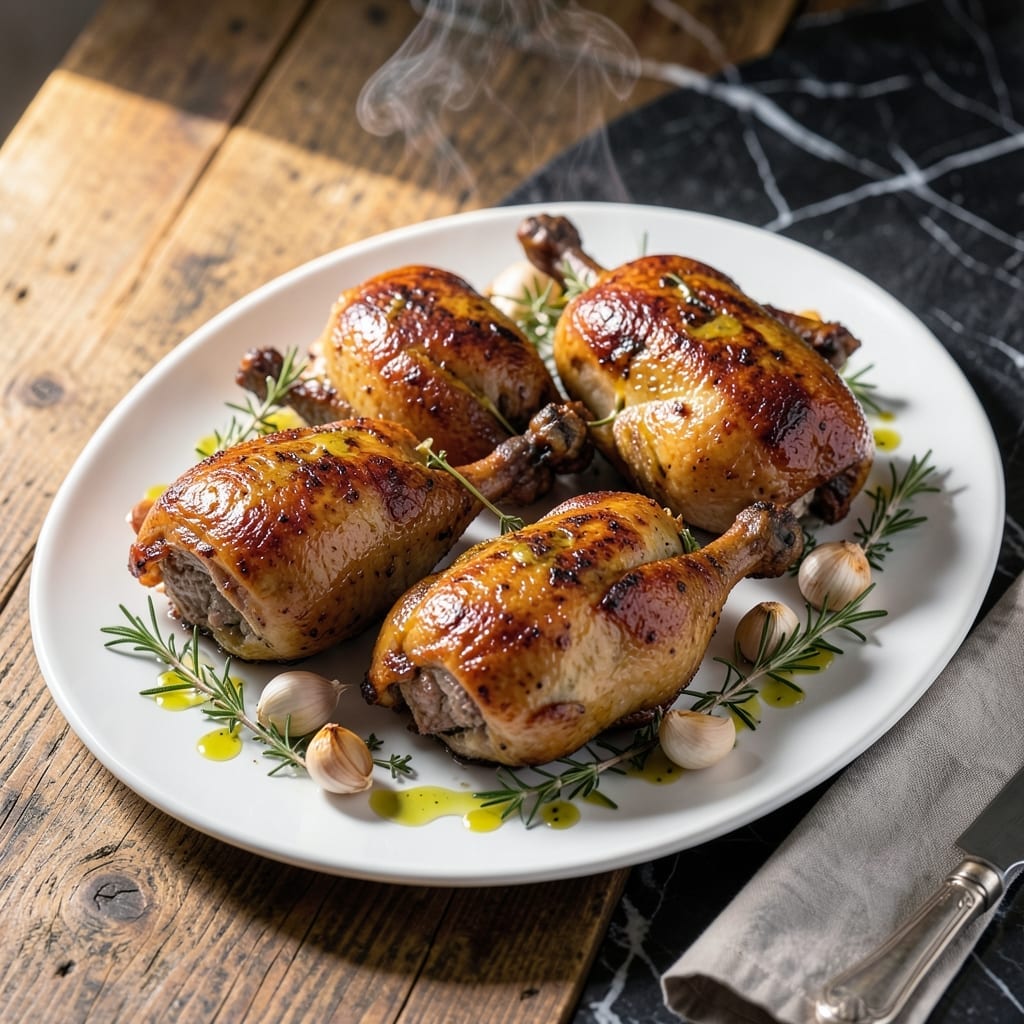
There’s an art to cooking young chicken so the skin turns crispy while keeping the meat juicy and tender. This method ensures both, every single time.
I’ve tested multiple approaches, and the key is balancing high heat with proper timing. The result is a dish with golden, shatteringly crispy skin and meat that stays succulent and flavorful.
What sets this apart is the attention to detail—from drying the skin thoroughly to using the right temperature. It’s simple, but precision matters.
Serve it whole for a dramatic presentation or carve it at the table. The flavors speak for themselves.
Ingredients for Baby Chicken
A handful of premium ingredients transform these young birds into a restaurant-worthy centerpiece every time.
| Ingredient | Amount | Notes |
|---|---|---|
| Cornish Game Hens 🍗 | 4 whole | Patted dry, skin intact |
| Unsalted Butter 🧈 | 4 tbsp | Melted for basting |
| Extra-Virgin Olive Oil 🫒 | 2 tbsp | High smoke point preferred |
| Garlic Cloves 🧄 | 6 cloves | Minced for compound butter |
| Fresh Rosemary Sprigs 🌿 | 4 sprigs | Finely chopped, stems discarded |
| Fresh Thyme Sprigs 🍃 | 6 sprigs | Leaves stripped from stems |
| Lemon 🍋 | 1 whole | Zested and juiced |
| Kosher Salt 🧂 | 1 ½ tsp | Diamond Crystal brand preferred |
| Freshly Ground Black Pepper 🌶️ | 1 tsp | Coarse grind for texture |
| Smoked Paprika 🌶️ | 1 tsp | For depth and color |
| Dijon Mustard 🟡 | 1 tbsp | For acidity balance |
| Honey 🍯 | 1 tbsp | For glaze and caramelization |
The Cornish game hens are non-negotiable here. Whole Foods or a quality butcher will have them fresh—avoid frozen if possible, as the skin won’t crisp as well. Look for birds weighing about 1 to 1.25 lb each. The butter should be high-fat European style (like Plugrá), and the herbs must be fresh—dried simply won’t deliver the same aromatic punch.
Short on time? Skip the compound butter and just use olive oil with salt and pepper. No fresh herbs? Dried at one-third the amount, but toast them first to wake up the flavors. For a sweeter glaze, swap the honey for maple syrup. If you can’t find smoked paprika, regular paprika plus a pinch of cayenne works in a pinch.
Best served immediately, but leftovers keep 3-4 days in the fridge. Reheat in a 400°F oven to revive the crispiness. The compound butter can be made ahead and stored in the freezer for up to 3 months.
Why You’ll Love This Recipe
- One Pan Wonder: I toss the hens with melted butter, garlic, and rosemary—everything cooks together on a single sheet. One pan, minimal cleanup, maximum flavor.
- Garlic-Rosemary Magic: The butter, garlic, and fresh rosemary soak into the tender Cornish hens, creating a rich, aromatic taste that’s hard to beat.
- Impress Without Stress: I serve this for Sunday dinner or when guests pop over—looks fancy but takes almost no effort. Even my picky nephew cleans his plate.
- Leftovers for Days: The hens taste even better the next day, and I love slicing the meat for sandwiches or tossing it into salads. Zero waste, all flavor.
Step-by-Step Instructions for Crispy Baby Chicken
This method guarantees perfectly crisped skin and juicy meat every time you prepare this dish.
Step 1: Prepare and Season the Cornish Game Hens
Pat the 4 whole Cornish Game Hens completely dry inside and out with paper towels. This critical step removes moisture that would otherwise steam the skin instead of crisping it. Season the cavity of each hen with 1.5 tsp Kosher Salt and 1 tsp Freshly Ground Black Pepper, distributing it evenly.
In a small bowl, combine the 4 tbsp Unsalted Butter (melted), 1 tbsp Dijon Mustard, 1 tbsp Honey, and 1 tsp Smoked Paprika. Brush this mixture generously over the outside of each hen, ensuring full coverage. The butter will baste the meat while the mustard and honey create a glossy, caramelized finish.
Step 2: Stuff with Aromatics for Maximum Flavor
Zest the 1 whole Lemon and mix the zest with the minced 6 cloves Garlic Cloves, chopped leaves from 4 sprigs Fresh Rosemary Sprigs, and leaves from 6 sprigs Fresh Thyme Sprigs. This aromatic blend will infuse the meat with bright, herbal notes.
Divide the mixture evenly among the hens, stuffing it into the cavities. Add the juiced lemon halves to the cavities as well. This not only seasons the meat from within but also helps maintain moisture during roasting. Truss the legs together with kitchen twine to maintain shape and ensure even cooking.
Step 3: Sear for Crispy Skin Foundation
Preheat your oven to 425°F. Heat 2 tbsp Extra-Virgin Olive Oil in a large oven-safe skillet or roasting pan over medium-high heat. Once the oil shimmers, carefully place the hens breast-side down in the pan. Sear undisturbed for 5-6 minutes until the skin turns deep golden brown.
This initial sear creates the foundation for crispy skin by rendering fat and developing a Maillard crust. You’ll hear a steady sizzle—this is the sound of perfect browning. Flip the hens breast-side up; they should release easily from the pan when properly seared.
Step 4: Roast to Perfection
Transfer the skillet or pan to the preheated oven. Roast for 35-40 minutes, basting the hens with the pan juices every 10 minutes. Basting ensures the skin stays moist and develops an even, glossy finish while the meat cooks through.
The hens are done when an instant-read thermometer inserted into the thickest part of the thigh (avoiding bone) registers 165°F. The skin should be deep mahogany and crisp to the touch, while the juices run clear when pierced. If the skin isn’t crispy enough, broil for 2-3 minutes at the end, watching closely to prevent burning.
Step 5: Rest and Serve
Transfer the hens to a cutting board and tent loosely with foil. Let them rest for 10-15 minutes before carving. Resting allows the juices to redistribute, ensuring each bite is succulent and flavorful. The internal temperature will rise slightly during this time, reaching the ideal serving temperature.
Carve each hen into quarters or serve whole, spooning any accumulated pan juices over the top. The skin should crackle slightly when cut, revealing tender, aromatic meat beneath. Serve immediately to preserve the crispiness of the skin.
Pro Tips For Making Baby Chicken
- Pat Hens Dry: Use paper towels to thoroughly dry the Cornish game hens before seasoning—I learned this the hard way after my first few batches came out steamed instead of golden.
- Start Hot, Finish Low: Sear the hens in a screaming hot pan with olive oil first, then drop the oven temp to 375°F to cook through without drying them out.
- Butter Under Skin: Gently loosen the skin and rub softened unsalted butter mixed with minced garlic and chopped rosemary directly on the meat—it actually changes the outcome.
- Rest Before Carving: Give the hens a solid 10 minutes under foil after roasting, or all those juices will end up on the cutting board instead of in the meat.
Common Mistakes When Making Great baby chicken
Skipping the Dry
Never skip drying the hens thoroughly with paper towels. Any moisture left on the skin will steam instead of crisp, leaving you with rubbery results. I pat both inside and out, pressing firmly to absorb all liquid. 💡
Cold Birds Ruin Crisp
Always bring your hens to room temperature before cooking. Cold meat seizes up when it hits heat, preventing even cooking and proper skin crisping. I pull mine from the fridge 30-45 minutes before starting.
Overcrowding the Pan
Don’t crowd the hens in your skillet. They need space for steam to escape and air to circulate. I use a 12-inch oven-safe skillet for 4 hens. If needed, cook in batches rather than cramming them in.
Neglecting to Baste
Basting every 10 minutes during roasting is non-negotiable. The pan juices contain rendered fat and flavor that build layers of crispiness. I use a bulb baster for precision, coating every surface.
Under-Resting the Meat
Cutting too soon causes all the juices to spill onto your cutting board. I rest my hens for the full 15 minutes tented with foil. The skin stays crisp while the meat reabsorbs its moisture. 🔥
Wrong Oven Temp
Avoid low oven temperatures that dry out the meat before crisping the skin. My 425°F setting provides the perfect balance of thorough cooking and skin caramelization. Any lower and you risk tough, dry meat.
Nutrition Facts
Frequently Asked Questions
Can I use regular chicken instead of Cornish hens?
Yes, but adjust cooking time. A 3-4 lb chicken needs about 1 hour at 375°F. Cornish hens cook faster due to their smaller size.
What if the skin isn’t crispy enough?
Broil for 2-3 minutes at the end. Watch closely to prevent burning. Basting more frequently during roasting also helps.
How can I make this ahead of time?
Prep the hens and season them 1 day ahead. Store uncovered in the fridge to dry the skin further, ensuring extra crispiness.
Can I use dried herbs instead of fresh?
Use 1/3 the amount of dried herbs. Toast them first to enhance flavor. Fresh herbs provide better aroma though.

- Jollof Rice Sauce Recipe: West African Tomato and Spice Infusion - September 25, 2026
- Japanese Rice Soup Recipe: Umami-Rich Comfort in a Bowl - September 25, 2026
- Homemade Cream Of Rice Recipe: Silk-Smooth Breakfast in Minutes - September 25, 2026