
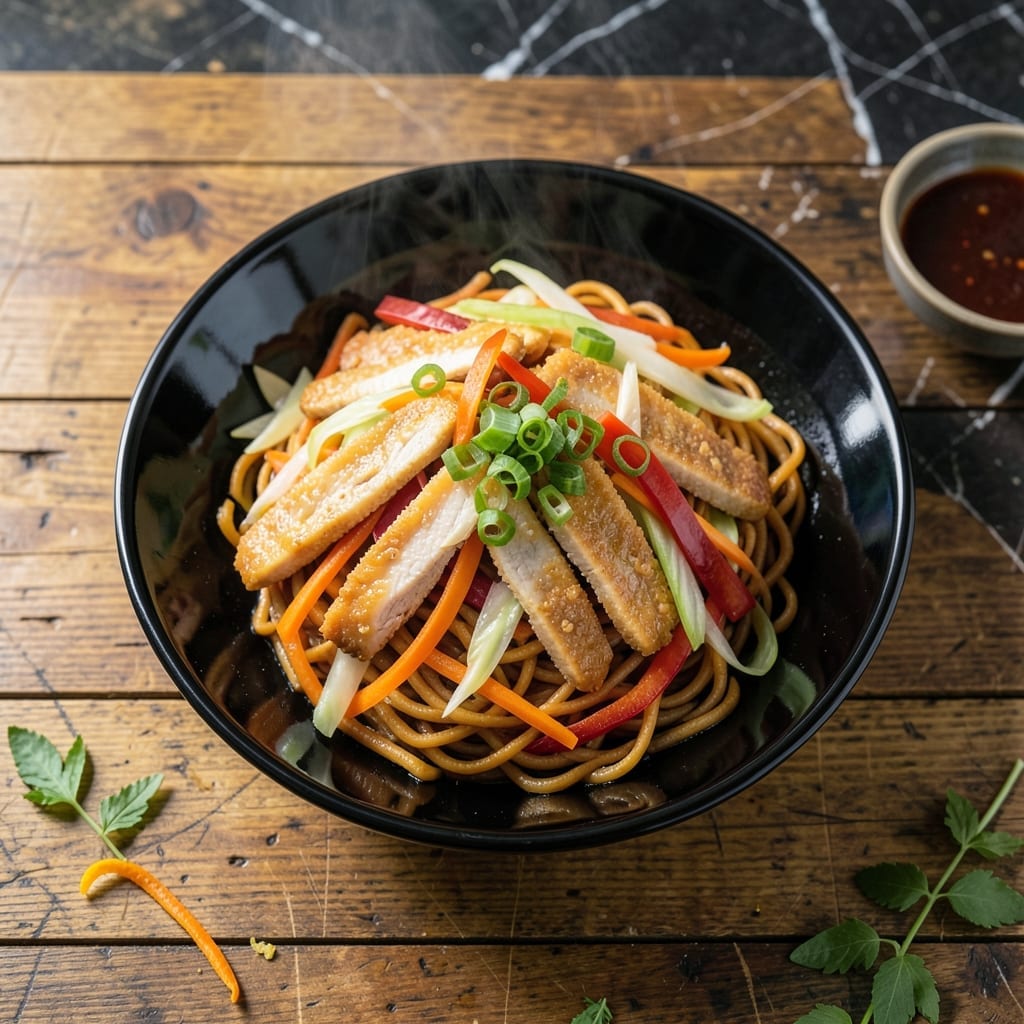
There’s a reason chicken chow mein remains a takeout favorite—its perfect balance of savory flavors and satisfying textures never disappoints. This version brings that same restaurant-quality experience to your kitchen with a straightforward, wok-tossed method.
The dish comes together quickly with fresh ingredients and a few key seasonings, delivering tender chicken, crisp vegetables, and chewy noodles in every bite. The sauce is simple but packed with umami depth, coating each strand evenly without being overly heavy.
What sets this apart is the high-heat cooking technique, which creates that signature slightly charred, smoky flavor. The noodles stay springy, the chicken remains juicy, and the vegetables retain just the right amount of crunch.
Serve it hot for a meal that’s as comforting as it is flavorful. Here’s how to make it at home.
Ingredients for Chicken Chowmein
Fresh vegetables, tender chicken, and chewy noodles create this restaurant-quality dish with bold savory depth.
| Ingredient | Amount | Notes |
|---|---|---|
| Chicken Breast 🍗 | 1 ½ lb | Boneless, skinless, thinly sliced |
| Dried Chow Mein Noodles 🍜 | 8 oz | Or fresh egg noodles |
| Napa Cabbage 🥬 | 2 cups | Thinly shredded |
| Carrots 🥕 | 2 whole | Julienned for crunch |
| Red Bell Pepper 🌶️ | 1 whole | Thinly sliced |
| Green Onions 🧅 | ½ cup | Thinly sliced, whites and greens separated |
| Garlic Cloves 🧄 | 4 cloves | Minced finely |
| Fresh Ginger 🌿 | 1 tbsp | Grated or minced |
| Soy Sauce 🫒 | ⅓ cup | Low-sodium preferred |
| Oyster Sauce 🫒 | 2 tbsp | Vegan oyster sauce optional |
| Sesame Oil 🫒 | 1 tbsp | Toasted for depth |
| Vegetable Oil 🫒 | 3 tbsp | High smoke point required |
| Cornstarch 🌾 | 1 tbsp | For velvety sauce |
| Chicken Broth 🥣 | ½ cup | Low-sodium preferred |
| Salt 🧂 | ½ tsp | Adjust to taste |
| Black Pepper 🌶️ | ¼ tsp | Freshly ground |
The noodles set the foundation. Look for dried chow mein noodles in the Asian aisle—fresh egg noodles work too but cook faster. I like the texture of Napa cabbage here, but regular green cabbage is fine (just slice it thinner). For the chicken, thighs stay juicier than breasts if you’re worried about overcooking. Most Asian markets will have everything you need in one stop.
No oyster sauce? Hoisin or teriyaki can stand in, but the flavor shifts a bit. Fresh ginger is ideal, but ground ginger at one-quarter the amount works in a pinch. The soy sauce is non-negotiable—use low-sodium so you can control the salt. For heat, add red pepper flakes or a dash of sriracha at the end.
This keeps 3-4 days in the fridge, but the noodles soften over time. Reheat in a skillet with a splash of water to revive. For best results, prep all ingredients before cooking—this moves fast once the wok hits the heat.
Why You’ll Love This Recipe
- One Pan Wonder: I toss everything—chicken, cabbage, crunchy carrots—into one skillet and it’s done in 20 minutes flat.
- Crave-Worthy Bite: The crispy noodles soak up the savory sauce while the bell peppers add just the right pop of sweetness.
- Weeknight Friend: Honestly, it’s my go-to for busy evenings when I need something filling and fast.
- Budget Stretcher: A single chicken breast and a handful of veggies feed my family of four with leftovers for lunch.
Step-by-Step Instructions for Chicken Chow Mein
Master the wok technique for perfectly charred noodles with tender chicken and crisp vegetables every time.
Step 1: Velvet the Chicken for Maximum Tenderness
Begin by thinly slicing the 1.5 lb chicken breast against the grain into ¼-inch strips. In a bowl, combine the chicken with 1 tbsp cornstarch, 1 tbsp soy sauce, and 0.5 tsp salt. The cornstarch coating creates that signature velvety texture.
Mix thoroughly with your hands until each piece is evenly coated. Let it marinate for 15 minutes while you prep the remaining ingredients. This step prevents the chicken from drying out during the high-heat cooking process.
Step 2: Blanch the Noodles and Prep Vegetables
Bring a pot of water to a boil and cook the 8 oz dried chow mein noodles for 2 minutes less than package instructions. They should be slightly underdone. Drain and rinse under cold water to stop the cooking process, then toss with 1 tsp vegetable oil to prevent sticking.
Meanwhile, julienne the 2 whole carrots, thinly slice the 1 whole red bell pepper and 2 cups napa cabbage, and separate the whites and greens of the 0.5 cup green onions. Mince the 4 cloves garlic cloves and grate the 1 tbsp fresh ginger. Organization is key for stir-frying success.
Step 3: Stir-Fry Chicken and Vegetables in Batches
Heat 2 tbsp vegetable oil in a wok or large skillet over high heat until shimmering. Add the chicken in a single layer and cook undisturbed for 1-2 minutes until the bottoms turn opaque white. Stir-fry for another 1-2 minutes until just cooked through. Remove to a plate.
Add the remaining 1 tbsp vegetable oil to the wok. Stir-fry the carrots and red bell pepper for 2 minutes, then add the cabbage, garlic, and ginger. Cook for 1-2 minutes until the vegetables are crisp-tender but still vibrant. Return the chicken to the wok.
Step 4: Combine with Sauce and Noodles
In a small bowl, whisk together the remaining 0.33 cup soy sauce (minus the 1 tbsp used earlier), 2 tbsp oyster sauce, 0.5 cup chicken broth, and 0.25 tsp black pepper. Pour this sauce over the chicken and vegetables in the wok.
Add the blanched noodles and toss everything together with tongs for 2-3 minutes until the noodles are coated and slightly charred. The mixture should sizzle and steam as it cooks. Drizzle with 1 tbsp sesame oil and toss once more to distribute the nutty aroma.
Step 5: Finish with Green Onions and Serve
Remove from heat and stir in the green onion greens, reserving some whites for garnish if desired. The residual heat will slightly wilt them while maintaining their fresh bite. Taste and adjust seasoning—though the sauce should be perfectly balanced from the measured ingredients.
Serve immediately in bowls, garnished with the remaining green onion whites. The ideal texture features tender chicken, crisp vegetables, and noodles with a slight chew, all coated in that glossy, umami-rich sauce that clings to each strand.
Pro Tips For Making Chicken Chowmein
- Pre-Cook the Noodles: Boil the dried chow mein noodles for 2 minutes less than package instructions, then rinse with cold water—this keeps them from turning mushy when stir-fried later. I learned this the hard way after ending up with a gummy mess more than once.
- Slice Chicken Thin: Cut the chicken breast into ¼-inch thick strips against the grain so it cooks through in 2-3 minutes and stays tender. Sounds fussy, but it actually changes the outcome, especially with lean breast meat.
- Skip the Soggy Veggies: Stir-fry the napa cabbage and red bell pepper separately from the carrots since they release different amounts of water. After burning three batches, I finally figured out this keeps everything crisp.
- Use Hot Oil: Get the wok or pan screaming hot before adding the chicken—about 2 tablespoons of oil should shimmer. High heat. Seriously, crank it up, or the chicken will steam instead of sear.
Make-Ahead Tips for This Recipe
Prep Ahead Strategy
I always prep all my ingredients before starting this dish. Slice the 1.5 lb chicken breast and marinate it with cornstarch as directed. Chop all vegetables and measure sauces the night before. Store them in separate containers in the fridge. This makes cooking much smoother. 💡
Noodle Prep
You can blanch the 8 oz chow mein noodles up to 24 hours ahead. Toss them with 1 tsp vegetable oil after draining and store in an airtight container in the fridge. They’ll keep their texture and won’t stick together.
Sauce Mixing
Combine the 0.33 cup soy sauce, 2 tbsp oyster sauce, and 0.5 cup chicken broth in a jar and refrigerate. The flavors meld overnight, enhancing the depth. Shake well before using to redistribute any settled ingredients.
Storage Tips
Cooked chow mein keeps well in the fridge for 3-4 days. Store in airtight containers to maintain freshness. The noodles will soften slightly but retain good flavor. Avoid freezing as it makes noodles mushy.
Reheating Method
For best results, reheat in a skillet over medium-high heat with a splash of water. This revives the noodles’ texture better than a microwave. Stir-fry for 2-3 minutes until hot throughout and slightly crispy in spots. 🔥
Freezing Caution
While possible, freezing isn’t ideal for this dish. The noodles lose their chewy texture and become mushy when thawed. If you must freeze, do so before adding the noodles and cook fresh ones when reheating.
Nutrition Facts
Frequently Asked Questions
What’s the best way to cut the chicken?
Slice against the grain into ¼-inch strips for maximum tenderness. This shortens the muscle fibers, making each bite easier to chew.
Can I use a different type of noodle?
Yes! Ramen or udon work well, but adjust cooking times. Fresh egg noodles cook faster—blanch for just 1 minute before stir-frying.
Why did my noodles turn mushy?
Overcooking is the main culprit. Blanch noodles 2 minutes less than package instructions, then stir-fry briefly over high heat. This keeps them chewy.
How can I make this dish spicier?
Add ½ tsp red pepper flakes with the garlic or a dash of sriracha at the end. For extra heat, include sliced jalapeños when stir-frying the vegetables.

- Jollof Rice Sauce Recipe: West African Tomato and Spice Infusion - September 25, 2026
- Japanese Rice Soup Recipe: Umami-Rich Comfort in a Bowl - September 25, 2026
- Homemade Cream Of Rice Recipe: Silk-Smooth Breakfast in Minutes - September 25, 2026