
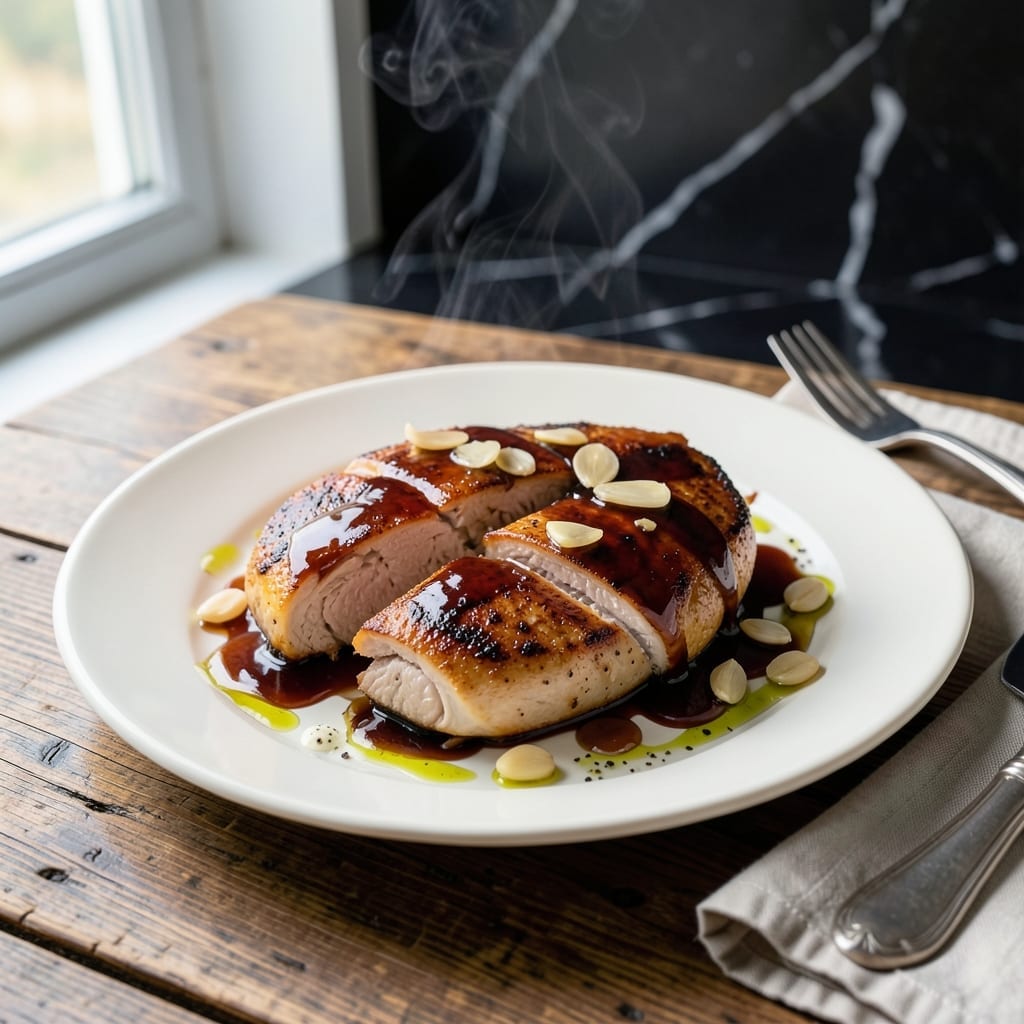
This balsamic chicken delivers tender results with minimal effort and maximum flavor impact. The vinegar’s natural sweetness caramelizes into a glossy glaze that coats every bite.
I developed this method to highlight balsamic’s complexity while keeping the cooking process straightforward. A simple pan-sear locks in juices before the glaze works its magic in the oven.
What emerges is juicy, flavorful chicken with a sticky, tangy coating that pairs perfectly with roasted vegetables or mashed potatoes. The acidity cuts through richness without overpowering.
Ready in under an hour, this becomes a weeknight staple that tastes restaurant-worthy. The technique ensures consistent results every time.
Ingredients for Balsamic Chicken
Quality ingredients transform into restaurant-worthy balsamic chicken with tender, juicy results.
| Ingredient | Amount | Notes |
|---|---|---|
| Boneless Skinless Chicken Breasts 🍗 | 1 ½ lb | Pounded to even thickness |
| Balsamic Vinegar 🍷 | ½ cup | Aged for depth of flavor |
| Honey 🍯 | 2 tbsp | Balances vinegar acidity |
| Garlic Cloves 🧄 | 4 cloves | Minced for aromatic base |
| Olive Oil 🫒 | 2 tbsp | Divided for searing and glaze |
| Dijon Mustard 🟡 | 1 tbsp | Adds tangy complexity |
| Dried Thyme 🌿 | 1 tsp | Earthy herbal note |
| Dried Rosemary 🌿 | 1 tsp | Crushed to release oils |
| Salt 🧂 | 1 tsp | Diamond Crystal kosher salt preferred |
| Black Pepper 🌶️ | ½ tsp | Freshly ground for best flavor |
| Chicken Stock 🥣 | ¼ cup | Low-sodium for controlled seasoning |
| Unsalted Butter 🧈 | 2 tbsp | For finishing glaze |
| Fresh Parsley 🌿 | 2 tbsp | Chopped, for garnish |
The balsamic vinegar quality is paramount here. Aged balsamic from Modena (look for Giusti or Noni brands) delivers the complex sweetness that caramelizes into that signature glaze. Whole Foods carries excellent options, or order online for authentic Italian imports. Chicken breasts should be uniform thickness—pound them yourself or ask the butcher to do it (most will for free).
No aged balsamic? Regular balsamic plus 1 tsp brown sugar mimics the depth. Short on honey? Maple syrup at equal amount works. Dried herbs can be swapped for fresh at triple the quantity—just add them at the end to preserve their brightness. Chicken thighs stay juicier than breasts but require 5 extra minutes in the oven.
The glaze thickens as it cools—perfect for drizzling over sides. Store leftovers in an airtight container for up to 4 days. Reheat gently on the stove with a splash of water to revive the sauce. Freezes beautifully for 3 months (thaw overnight before reheating).
Why You’ll Love This Recipe
- I’ll be real: this is my go-to when I need dinner on the table faster than takeout.
- One Pan Wonder: I toss everything in a single skillet—chicken, honey, balsamic—and let the oven do the work.
- Sweet-Tangy Magic: That first bite of caramelized honey and sharp balsamic with garlic? Ridiculously good.
- Weeknight Hero: I’ll be real: this is my go-to when I need dinner on the table faster than takeout.
Step-by-Step Instructions for Balsamic Chicken
Achieve perfectly glazed, fork-tender chicken with this refined stovetop method.
Step 1: Prepare and Season the Chicken
Place the boneless skinless chicken breasts between sheets of plastic wrap and pound them to an even ½-inch thickness using a meat mallet. This ensures uniform cooking and prevents dry, overcooked edges while the center finishes.
Pat the chicken dry with paper towels, then season both sides evenly with the salt, black pepper, dried thyme, and crushed dried rosemary. I press the spices gently into the meat so they adhere during cooking. Let the seasoned chicken rest at room temperature for 10 minutes while you prepare the glaze.
Step 2: Sear the Chicken to Golden Perfection
Heat 1 tablespoon of the olive oil in a large skillet over medium-high heat until it shimmers. Add the chicken breasts and sear undisturbed for 5-6 minutes per side until they develop a deep golden-brown crust and release easily from the pan.
The chicken should reach an internal temperature of 160°F during searing. Don’t crowd the pan—cook in batches if necessary to maintain the proper sear. Transfer the chicken to a plate and tent with foil to keep warm while you build the glaze.
Step 3: Create the Balsamic Glaze
In the same skillet, reduce heat to medium and add the remaining 1 tablespoon olive oil. Sauté the minced garlic cloves for 30 seconds until fragrant, then pour in the balsamic vinegar, honey, Dijon mustard, and chicken stock. Stir to combine all the browned bits from the pan.
Simmer the mixture for 4-5 minutes, stirring occasionally, until it reduces by half and thickens enough to coat the back of a spoon. The glaze should be glossy and deeply aromatic, with the honey balancing the vinegar’s tang. Remove from heat and stir in the unsalted butter until melted and fully incorporated.
Step 4: Finish and Serve
Return the chicken to the skillet with the glaze, spooning it generously over each piece. Simmer together for 1-2 minutes to allow the flavors to meld and the chicken to reach a final internal temperature of 165°F.
Transfer the balsamic chicken to serving plates, drizzle with any remaining glaze from the pan, and garnish with the chopped fresh parsley. The glaze should be thick enough to cling to the chicken, creating a lustrous sheen. Serve immediately while hot for the most tender, flavorful results.
Pro Tips For Making Balsamic Chicken
- Pound the Chicken: I learned this the hard way—uneven breasts cook unevenly. Pound them to ¾-inch thickness so every piece hits that perfect 165°F at the same time.
- Reduce the Sauce: After removing the chicken, let that balsamic-honey mixture simmer for 3-4 minutes until it thickens enough to coat the back of a spoon—otherwise it’ll just pool at the bottom of the plate.
- Skip the Pre-Cut Garlic: Those pre-minced jars save time but taste harsh. Freshly crushed cloves (3-4 per batch) melt into the sauce and actually change the outcome.
- Start Hot, Finish Low: Sear the chicken over medium-high for 2 minutes per side to get color, then drop to medium-low to cook through without burning the honey in the glaze.
Best Sauces and Condiments for This Dish
Classic Balsamic Reduction
Simmer ½ cup balsamic vinegar with 1 tbsp honey and 1 tsp Dijon mustard until reduced by half. This intensifies the vinegar’s natural sweetness, creating a glossy sauce that complements the chicken perfectly. 🔥
Creamy Garlic Sauce
Blend ¼ cup Greek yogurt with 1 minced garlic clove, 1 tsp lemon juice, and a pinch of salt. The tangy creaminess balances the balsamic’s depth while adding richness.
Herb-Infused Butter
Melt 2 tbsp unsalted butter with 1 tsp chopped fresh thyme and 1 tsp chopped fresh rosemary. Drizzle over the chicken for an aromatic finish that enhances the dish’s herbal notes.
Spicy Honey Drizzle
Mix 2 tbsp honey with ½ tsp red pepper flakes and a pinch of salt. Warm gently and drizzle over the chicken for a sweet-heat contrast that elevates the balsamic glaze.
Roasted Garlic Aioli
Combine ¼ cup mayonnaise with 1 roasted garlic clove (mashed) and 1 tsp lemon zest. This creamy, garlicky sauce adds a luxurious touch to every bite.
Fresh Herb Garnish
Sprinkle with 2 tbsp chopped fresh parsley and 1 tsp chopped fresh chives just before serving. The fresh herbs brighten the dish and add a pop of color. 🌿
Nutrition Facts
Frequently Asked Questions
Can I use chicken thighs instead of breasts?
Use bone-in, skin-on thighs for extra juiciness. Sear them for 6-7 minutes per side and add 5 extra minutes in the oven to reach 165°F. The dark meat pairs wonderfully with the tangy glaze.
What if my glaze is too thin?
Simmer it longer over medium heat until it coats the back of a spoon. If it reduces too much, add 1-2 tablespoons of chicken stock to loosen it. The butter at the end helps thicken it naturally.
How do I store leftovers?
Keep in an airtight container in the fridge for up to 4 days. Reheat gently on the stove with a splash of water to restore the sauce’s consistency.

- Jollof Rice Sauce Recipe: West African Tomato and Spice Infusion - September 25, 2026
- Japanese Rice Soup Recipe: Umami-Rich Comfort in a Bowl - September 25, 2026
- Homemade Cream Of Rice Recipe: Silk-Smooth Breakfast in Minutes - September 25, 2026