
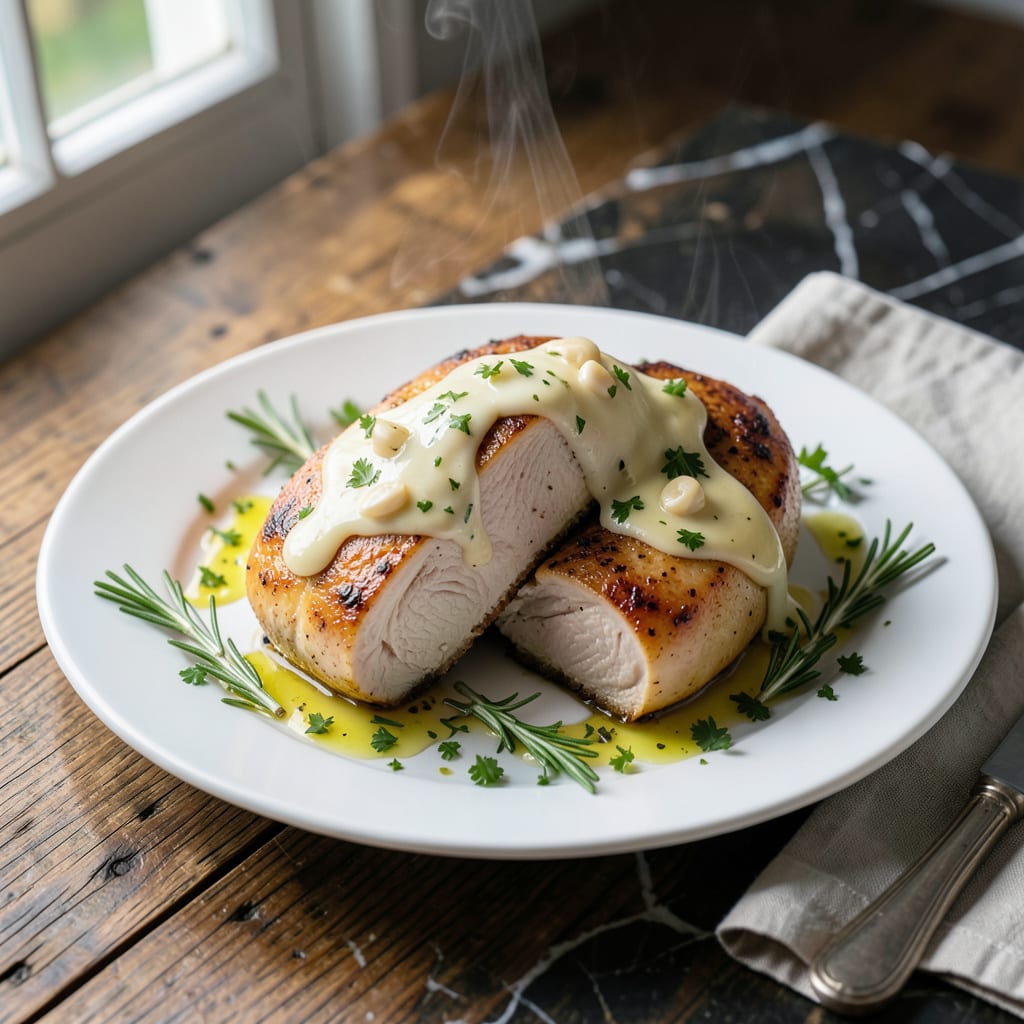
This oven-baked method guarantees moist chicken breasts every time, with a golden crust that seals in juices. The herb butter adds rich flavor while keeping the meat tender.
With precise timing and temperature, you’ll achieve perfectly cooked chicken that’s far from dry. Simple ingredients, professional results—no fancy techniques required.
Ingredients for Recipe for Cooking Chicken Breasts in the Oven
Pantry staples meet fresh herbs for oven-baked chicken with golden, juicy results every time.
| Ingredient | Amount | Notes |
|---|---|---|
| Boneless Skinless Chicken Breasts 🍗 | 1 ½ lb | Pounded to even thickness |
| Unsalted Butter 🧈 | ½ cup | Softened to room temperature |
| Fresh Garlic Cloves 🧄 | 4 cloves | Minced finely for even distribution |
| Fresh Rosemary 🌿 | 2 tbsp | Finely chopped, stems discarded |
| Fresh Thyme Leaves 🍃 | 2 tbsp | Stripped from stems, chopped |
| Fresh Parsley 🌿 | ¼ cup | Chopped, for herb butter and garnish |
| Kosher Salt 🧂 | 1 ½ tsp | Diamond Crystal preferred for even seasoning |
| Freshly Ground Black Pepper 🌶️ | 1 tsp | Coarse grind for texture |
| Lemon Zest 🍋 | 1 tbsp | From 1 medium lemon, finely grated |
| Lemon Juice 🍋 | 1 tbsp | Freshly squeezed for brightness |
| Olive Oil 🫒 | 1 tbsp | Extra-virgin, for high-heat searing |
| Dijon Mustard 🟡 | 1 tbsp | For depth in herb butter |
[recipeingredientscaler]
The chicken quality is non-negotiable. Boneless, skinless breasts with even thickness cook uniformly—pound them to ¾-inch if needed. Whole Foods and Costco offer reliable options; avoid pre-brined varieties (they release too much moisture). For the herbs, fresh rosemary and thyme from the produce section outperform dried—look for vibrant green sprigs with no wilting.
No fresh herbs? Dried at one-third the amount works, but the flavor won’t be as bright. Substitute sage or marjoram if thyme is unavailable. The butter must be unsalted to control seasoning—Land O’Lakes or Kerrygold are solid choices. Lemon can be swapped for lime, but reduce juice slightly to avoid bitterness.
Prep the herb butter up to 2 days ahead—it firms up in the fridge. Cooked chicken keeps 4 days refrigerated or freezes for 3 months. Reheat gently to preserve moisture, and always let meat rest before slicing (worth the extra minute).
Why You’ll Love This Recipe
- One Pan Magic: I toss the chicken with melted butter, garlic, rosemary, and thyme, then let the oven do the rest.
- Rich Herb Butter: That butter soaks up the garlic and herbs, making every bite juicy and packed with flavor.
- Meal Prep Hero: I make a big batch on Sunday and use it in salads, wraps, or pasta all week long.
- Budget Stretch: Boneless skinless chicken breasts are affordable, and this method keeps them tender every time.
Step-by-Step Instructions for Cooking Chicken Breasts in the Oven
This method guarantees juicy results with a golden crust and herbed butter infusion.
Step 1: Prepare the Chicken Breasts
Begin by pounding the 1.5 lb boneless skinless chicken breasts to an even ¾-inch thickness using a meat mallet. This ensures uniform cooking and prevents dry spots in thicker areas. Place the breasts on a clean work surface and cover with plastic wrap before pounding to avoid tearing.
Pat the chicken completely dry with paper towels—this step is non-negotiable for achieving a proper sear. Season both sides evenly with the 1.5 tsp kosher salt and 1 tsp freshly ground black pepper. The seasoning should adhere well to the dry surface.
Step 2: Create the Herb Butter Mixture
In a small bowl, combine the 0.5 cup unsalted butter (softened to room temperature) with the 4 cloves minced fresh garlic cloves, 2 tbsp fresh rosemary, 2 tbsp fresh thyme leaves, 1 tbsp lemon zest, 1 tbsp lemon juice, and 1 tbsp Dijon mustard. Mix until all ingredients are fully incorporated.
The butter should be soft enough to blend easily but not melted. This herb butter will baste the chicken during cooking, infusing every bite with aromatic flavor. Reserve ¼ cup fresh parsley for garnishing after cooking.
Step 3: Sear and Begin Roasting
Preheat your oven to 400°F. Heat the 1 tbsp olive oil in a large oven-safe skillet over medium-high heat until shimmering. Add the chicken breasts and sear for 2-3 minutes per side until golden brown.
The searing creates a flavorful crust and locks in moisture. Don’t move the chicken too soon—it should release easily from the pan when properly browned. Remove from heat and spread half the herb butter mixture evenly over the chicken breasts.
Step 4: Finish Cooking in the Oven
Transfer the skillet to the preheated oven and roast for 12-15 minutes, or until the internal temperature reaches 160°F on an instant-read thermometer. The chicken will continue cooking to 165°F during resting.
Baste the chicken with the remaining herb butter and pan juices halfway through cooking. This step ensures the top stays moist and develops a beautiful golden hue. The herb butter will melt into the pan, creating a fragrant sauce.
Step 5: Rest and Serve
Transfer the chicken to a cutting board and let it rest for 5-10 minutes before slicing. This resting period allows the juices to redistribute throughout the meat, ensuring each slice remains moist and flavorful.
Spoon any remaining herb butter sauce from the skillet over the chicken. Garnish with the reserved ¼ cup fresh parsley before serving. The parsley adds a fresh, vibrant finish to the dish.
Pro Tips For Making Recipe For Cooking Chicken Breasts In The Oven
- Pound to Even Thickness: Uneven chicken breasts cook unevenly—pound them to ¾-inch thickness with a rolling pin or heavy pan. I learned this the hard way after too many dry, overcooked edges.
- Room Temp First: Pull the chicken out of the fridge 20-30 minutes before cooking. Cold meat seizes up in the oven, and you’ll end up overcooking it trying to hit a safe temp.
- Butter Under the Skin: Sounds weird, but it works: Loosen the skin (even on skinless breasts, make small slits) and tuck small pats of butter, garlic, and herbs inside. The flavor seeps deep into the meat.
- Rest Before Carving: Give it a solid 5-10 minutes under foil after baking. Skip this and all those juices you worked for will end up on the cutting board, not in the chicken.
Pro Cooking Tips for recipe for cooking chicken breasts in the oven
Thermometer Accuracy
Invest in a quality instant-read thermometer—I swear by my ThermoWorks ThermoPop. It reads in 3-4 seconds and gives precise temperatures. Pull the chicken at 160°F; the carryover heat will bring it to 165°F during resting. 🌡️
Even Cooking Secret
Pounding to ¾-inch thickness is non-negotiable for uniform doneness. Use a meat mallet with a flat side, not the spiky one. I place chicken between plastic wrap to avoid splatter. This prevents dry edges while the center finishes cooking.
Butter Timing
Add half the herb butter before oven roasting, then baste with the rest halfway through. This double-butter approach ensures continuous flavor infusion. The Land O’Lakes butter I use melts beautifully into the pan juices.
Pan Selection
A heavy oven-safe skillet is essential—I prefer my Lodge cast iron. It retains heat evenly and creates a perfect sear. Avoid nonstick for this recipe; you need the high-heat capability of stainless steel or cast iron.
Resting Matters
That 5-10 minute rest isn’t optional. The juices redistribute, making the difference between dry and moist chicken. I tent mine loosely with foil during resting. The residual heat keeps it warm while the magic happens. 💡
Herb Freshness
Fresh herbs make all the difference. I source my rosemary and thyme from the farmer’s market when possible. If using dried, remember the 1:3 ratio—dried herbs are more concentrated than fresh.
Nutrition Facts
Frequently Asked Questions
What’s the best oven temperature for juicy results?
Use 400°F for a perfect balance of browning and even cooking. This creates a golden crust while keeping the inside moist and tender.
Can I skip pounding the chicken to even thickness?
Don’t skip it! Uneven thickness leads to dry spots or undercooked centers. Pounding to ¾-inch ensures uniform doneness throughout.
How do I know when it’s done without a thermometer?
Press the thickest part—the meat should spring back and juices run clear. For guaranteed results, use a thermometer and aim for 165°F.
Can I use dried herbs instead of fresh?
Yes, but use 1/3 the amount since dried herbs are more concentrated. Fresh herbs deliver brighter flavor, but dried work in a pinch.

- Jollof Rice Sauce Recipe: West African Tomato and Spice Infusion - September 25, 2026
- Japanese Rice Soup Recipe: Umami-Rich Comfort in a Bowl - September 25, 2026
- Homemade Cream Of Rice Recipe: Silk-Smooth Breakfast in Minutes - September 25, 2026