
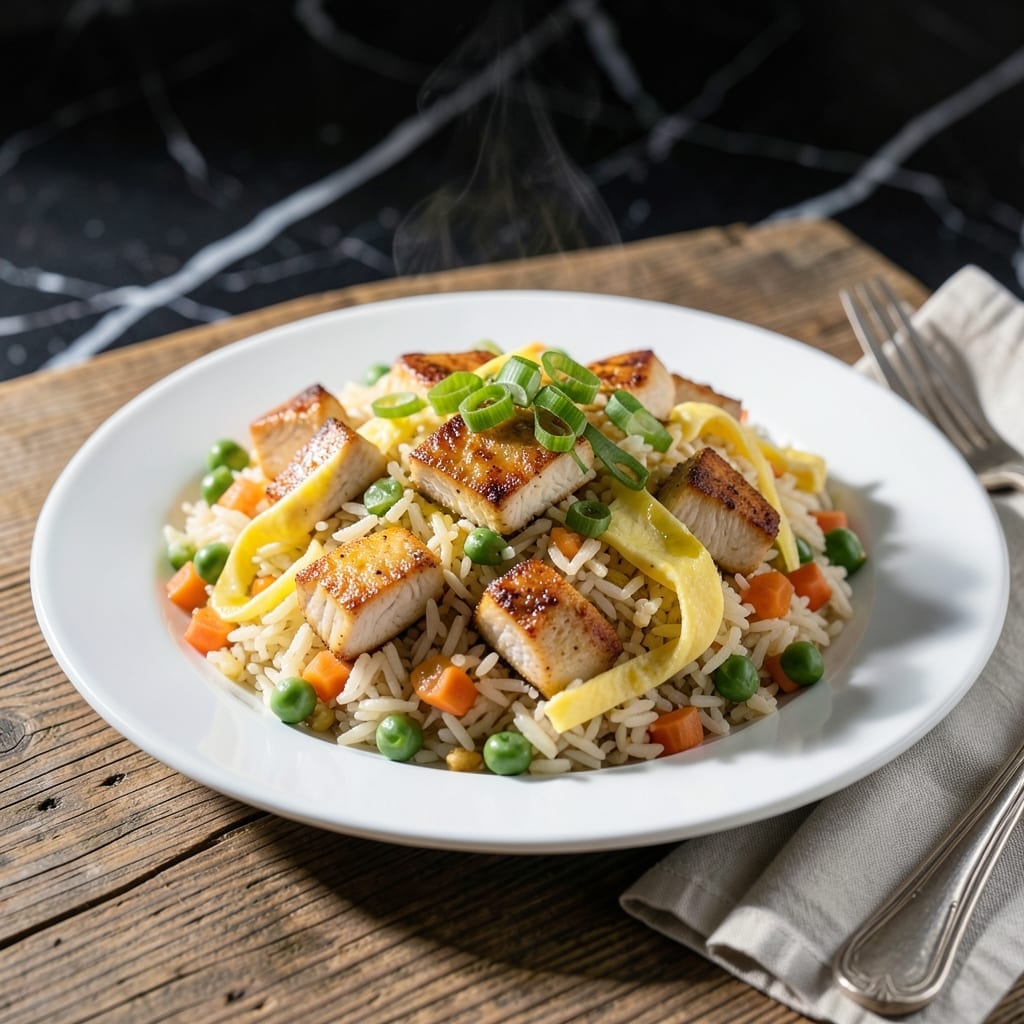
This one-pan dish captures the essence of classic takeout fried rice with a homemade touch. I developed this method to achieve that signature wok-hei flavor without specialized equipment.
The key is using day-old rice and cooking in small batches to ensure each grain gets properly seared. Chicken stays tender while vegetables retain their crispness, creating perfect texture contrast.
What emerges is a classic version that rivals your favorite restaurant – golden rice flecked with egg, tender chicken, and bright vegetables. The soy sauce base provides authentic depth without overpowering the dish.
Ready in 20 minutes, this becomes a weeknight staple. The technique works with any protein or vegetable variation you prefer.
Ingredients for Basic Chicken Fried Rice
Classic takeout flavors start with day-old rice and a few fresh ingredients.
| Ingredient | Amount | Notes |
|---|---|---|
| Day-Old Cooked White Rice 🍚 | 4 cups | Chilled, preferably overnight |
| Boneless Skinless Chicken Breast 🍗 | 1 lb | Cut into small uniform pieces |
| Large Eggs 🥚 | 2 whole | Lightly beaten for scrambling |
| Frozen Peas and Carrots Mix 🥕 | 1 cup | Thawed, standard blend |
| Green Onions 🧅 | 3 whole | Thinly sliced, white and green parts |
| Garlic Cloves 🧄 | 2 cloves | Minced finely for even distribution |
| Soy Sauce 🫒 | 3 tbsp | Low-sodium preferred for control |
| Oyster Sauce 🫒 | 1 tbsp | Optional but recommended for depth |
| Sesame Oil 🫒 | 1 tsp | Toasted variety for aroma |
| Vegetable Oil 🫒 | 2 tbsp | High smoke point for searing |
| Kosher Salt 🧂 | ½ tsp | Adjust to taste at end |
| Ground White Pepper 🌶️ | ¼ tsp | Traditional for authentic flavor |
The rice is non-negotiable—day-old, cold, and dry is essential for that proper sear. Jasmine or long-grain white works best; avoid instant rice as it turns mushy. For the chicken, thighs can substitute for breasts if you prefer darker meat. Whole Foods or any Asian market will have quality soy and oyster sauces. Look for Pearl River Bridge brand for authentic flavor without artificial additives.
No oyster sauce? Hoisin or fish sauce (if not vegetarian) can stand in, though the flavor profile shifts slightly. Fresh peas and carrots work instead of frozen, but thawed is fine for convenience. The green onions are flexible—substitute with chives if needed. For a gluten-free version, tamari replaces soy sauce one-for-one. The sesame oil is potent—don’t overdo it or it’ll dominate.
Prep all ingredients before starting—this moves fast. Leftover fried rice keeps 3-4 days refrigerated, though it’s best fresh. Reheat in a skillet with a splash of water to revive. The dish freezes well for up to 3 months, though texture changes slightly on thawing.
Why You’ll Love This Recipe
- 20-Minute Meal: I can get this from fridge to table faster than ordering takeout. Honestly, the chicken cooks while I scramble the eggs, and the rice just needs a quick toss in the pan.
- That Wok-Kissed Flavor: The soy sauce caramelizes on the chicken, and the green onions add just the right fresh bite—simple but so satisfying.
- Feeds the Freezer: Leftovers taste even better the next day, and it freezes beautifully for those no-time nights.
- Pantry Hero: Between us, I always have these ingredients on hand. The frozen veggies mean no chopping, and day-old rice actually works better.
Step-by-Step Instructions for Chicken Fried Rice
Classic takeout-style results come from proper technique and precise timing.
Step 1: Prep and Season All Components
Begin by cutting the boneless skinless chicken breast into small uniform pieces—about ½-inch cubes. This ensures even cooking and prevents chewy bits. Toss the chicken with 0.5 tsp kosher salt and 0.25 tsp ground white pepper to build flavor layers.
Thinly slice the green onions, keeping white and green parts separate for garnish. Mince the garlic cloves finely so they distribute evenly throughout the dish. Lightly beat the large eggs in a small bowl—this makes them easier to scramble quickly in the hot pan.
Step 2: Sear Chicken and Scramble Eggs
Heat 1 tbsp vegetable oil in a large skillet or wok over high heat until shimmering. Add the seasoned chicken and cook for 3-4 minutes, stirring occasionally, until the pieces are lightly browned and cooked through. The chicken should reach 165°F internally but will finish cooking later.
Push the chicken to one side of the pan and add the remaining 1 tbsp vegetable oil to the empty space. Pour in the beaten eggs and scramble quickly with a spatula until just set—about 1 minute. The eggs should be soft and slightly runny, as they’ll continue cooking when combined with the hot rice.
Step 3: Combine Rice and Vegetables
Add the day-old cooked white rice to the pan, breaking up any clumps with your spatula. The rice should be cold and dry—this prevents mushiness. Stir-fry for 2 minutes to heat the rice through and allow it to absorb flavors from the chicken and eggs.
Incorporate the thawed frozen peas and carrots mix and minced garlic. Cook for another 2-3 minutes until the vegetables are heated through and the garlic becomes fragrant. The peas should be bright green and the carrots slightly softened but still retaining some bite.
Step 4: Season and Finish
Drizzle the soy sauce, oyster sauce, and sesame oil evenly over the mixture. The soy sauce should sizzle slightly when it hits the hot pan. Stir everything together thoroughly to distribute the sauces and ensure every grain of rice is coated.
Continue cooking for 1-2 minutes until the rice develops a slight crispness and all components are heated through. Taste and adjust seasoning if needed, though the soy and oyster sauces should provide sufficient saltiness. The final texture should be slightly dry with distinct grains of rice.
Step 5: Garnish and Serve
Remove from heat and stir in the white parts of the green onions. Transfer to a serving platter and garnish with the reserved green onion tops. The contrast of the fresh green onions against the golden rice creates visual appeal.
Serve immediately while hot. Each serving should showcase the chicken’s tender texture, the rice’s slight chew, and the vegetables’ vibrant color. The dish should have a balanced savory flavor with subtle sweetness from the oyster sauce and aromatic depth from the sesame oil.
Pro Tips For Making Basic Chicken Fried Rice
- Crank the Heat: Use the highest heat your stove allows—this is how you get that smoky wok flavor even in a home kitchen. I learned this the hard way after too many sad, soggy batches.
- Dry the Rice: Spread day-old rice on a baking sheet for 10 minutes before cooking to evaporate excess moisture. Sounds tedious, but it’s the only way to avoid mushy fried rice.
- Skip Thawing Veggies: Toss the frozen peas and carrots straight into the hot pan—they’ll warm through without turning to mush. I was skeptical until I tried it and saved 10 minutes of prep.
- Scramble Eggs First: Push the cooked eggs to one side of the pan before adding chicken—this keeps them light and fluffy instead of rubbery. My first few attempts ended with sad, overcooked egg bits.
Best Sauces and Condiments for basic chicken fried rice
Classic Soy Base
I always start with low-sodium soy sauce for control over saltiness. The 3 tbsp in this recipe creates that authentic umami backbone. Pearl River Bridge brand delivers the cleanest, most balanced flavor I’ve found in Atlanta markets. 💛
Oyster Sauce Depth
That 1 tbsp oyster sauce adds a rich, slightly sweet complexity that sets restaurant-style fried rice apart. I learned from Chef Chen that Lee Kum Kee offers the most consistent quality. It’s thicker than soy, so I drizzle it evenly to coat every grain.
Sesame Oil Finish
Just 1 tsp toasted sesame oil at the end provides aromatic nuttiness. I use Kadoya brand—its deep amber color signals proper toasting. Add it last to preserve its delicate flavor, as high heat can make it bitter.
Spicy Sriracha Kick
For heat lovers, I suggest 1-2 tsp Sriracha stirred in at the end. The garlic and chili in Huy Fong’s version complement the dish perfectly. Start with 1 tsp and adjust to taste—it’s potent stuff!
Sweet Chili Balance
A drizzle of Mae Ploy sweet chili sauce adds fruity brightness that cuts through the savory notes. I keep a bottle in my pantry for fried rice nights. Just 1 tbsp over the top before serving does the trick.
Fresh Lime Zing
I finish mine with a squeeze of fresh lime juice—about ½ lime per serving. The acidity lifts all the flavors. It’s a trick I picked up from Charleston street vendors. 🌟
Nutrition Facts
Frequently Asked Questions
Why use day-old rice?
Day-old rice is drier and firmer, preventing mushiness when stir-fried. Fresh rice contains too much moisture, leading to a soggy texture. Always chill it for at least 4 hours or overnight.
Can I substitute other proteins?
Shrimp, pork, or tofu work well. Adjust cooking times: shrimp needs 2-3 minutes, pork 5-6 minutes. For tofu, press and cube it first for better texture.
How do I prevent soggy fried rice?
Cook over high heat in small batches to avoid steaming. Use enough oil (2 tbsp) and keep ingredients moving constantly. Overcrowding the pan is the #1 cause of sogginess.
What if I don’t have oyster sauce?
Replace with 1 tbsp hoisin or ½ tbsp fish sauce. Both add depth, though flavors will vary slightly. For a vegetarian option, try 1 tbsp soy sauce + ½ tsp sugar.

- Jollof Rice Sauce Recipe: West African Tomato and Spice Infusion - September 25, 2026
- Japanese Rice Soup Recipe: Umami-Rich Comfort in a Bowl - September 25, 2026
- Homemade Cream Of Rice Recipe: Silk-Smooth Breakfast in Minutes - September 25, 2026