
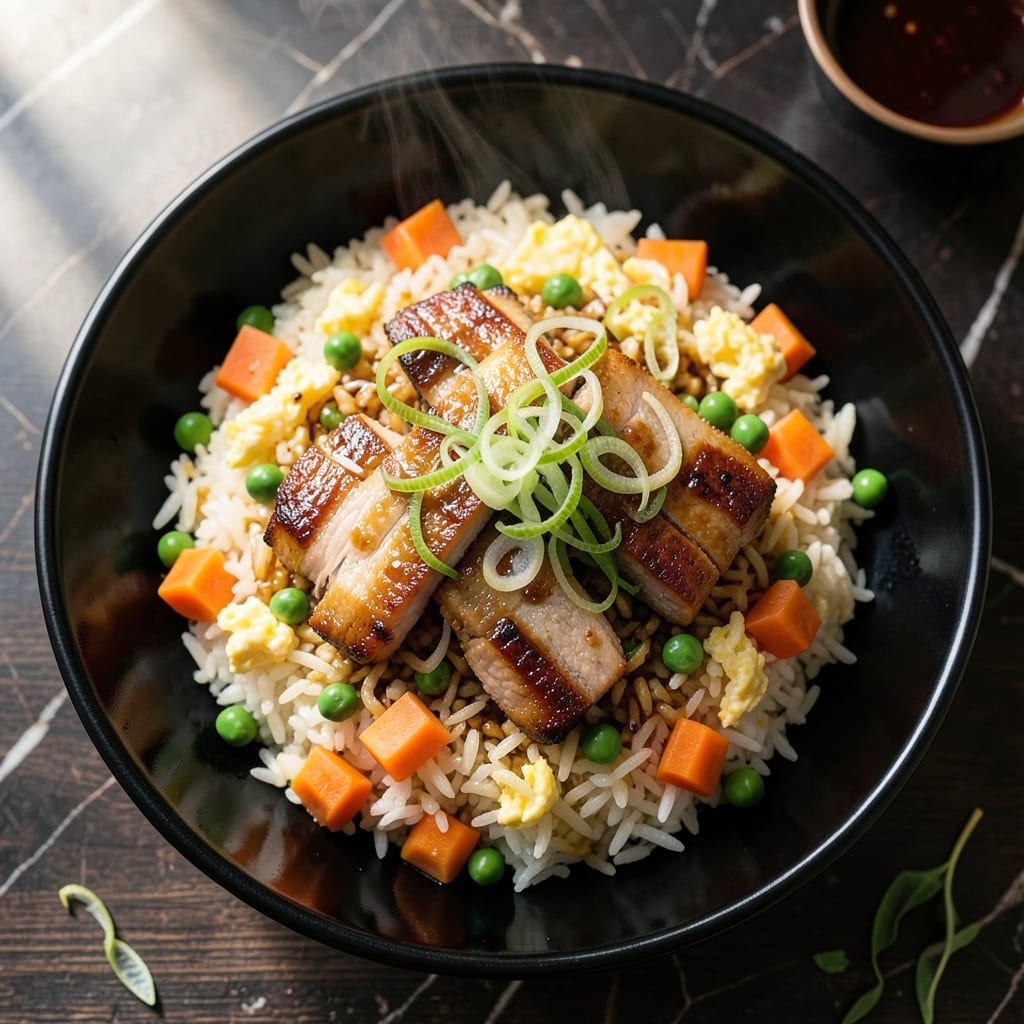
Achieving authentic Cantonese wok hei at home requires the right technique and ingredients. This recipe delivers the best pork fried rice with that coveted smoky aroma.
I perfected this method after countless tests to capture the essence of traditional Chinese takeout. The key is high heat, quick cooking, and proper wok seasoning.
You’ll get tender pork, fluffy rice, and vegetables all tossed in a savory sauce that defines authentic flavor. The result is restaurant-quality every time.
Serve hot for the full wok hei experience. Here’s how to make it.
Ingredients for Best Pork Fried Rice Recipe Ever Chinese
Pantry staples and fresh aromatics combine for authentic Cantonese flavor in every bite.
| Ingredient | Amount | Notes |
|---|---|---|
| Jasmine Rice 🍚 | 3 cups | Day-old, cooked and chilled |
| Pork Shoulder 🥩 | ¾ lb | Thinly sliced, boneless |
| Large Eggs 🥚 | 3 whole | Lightly beaten |
| Green Onions 🧅 | 4 whole | Thinly sliced, white and green parts separated |
| Carrots 🥕 | 1 whole | Small dice, peeled |
| Frozen Peas 🌱 | ¾ cup | Thawed under cold water |
| Garlic Cloves 🧄 | 3 cloves | Minced finely |
| Fresh Ginger 🌿 | 1 tbsp | Minced or grated |
| Light Soy Sauce 🫒 | 3 tbsp | For seasoning layers |
| Dark Soy Sauce 🫒 | 1 tbsp | For color and depth |
| Oyster Sauce 🫒 | 2 tbsp | High-quality recommended |
| Sesame Oil 🫒 | 1 tsp | Toasted, for finishing |
| Shaoxing Wine 🍶 | 2 tbsp | Dry sherry as substitute |
| Neutral Oil 🫒 | ¼ cup | High smoke point, for wok |
| White Pepper 🌶️ | ½ tsp | Freshly ground preferred |
The pork is non-negotiable for texture. Pork shoulder (or pork butt) offers the ideal fat-to-lean ratio for tender bites—avoid lean cuts like tenderloin. Source from Asian markets for pre-sliced options, or ask your butcher to thinly slice against the grain. Day-old jasmine rice is critical; freshly cooked rice turns to mush in the wok. Look for rice labeled ‘jasmine’ or ‘Thai fragrant’ at 99 Ranch or H Mart.
No Shaoxing wine? Dry sherry works perfectly (avoid cooking wine with added salt). For a vegetarian twist, mushroom stir-fry sauce replaces oyster sauce at a 1:1 ratio. Peas and carrots are classic, but bell peppers or corn add color and crunch. The dark soy sauce is essential for that deep caramel color—don’t substitute with more light soy. If avoiding alcohol entirely, chicken broth with a splash of rice vinegar mimics the complexity.
Fried rice is best consumed immediately for that wok hei experience, but leftovers keep 3-4 days refrigerated. Reheat in a wok or skillet with a splash of water to restore moisture. Freeze portions for up to 3 months—thaw in the fridge overnight before reheating. Always store rice and pork separately until ready to cook for food safety.
Why You’ll Love This Recipe
- One Pan Wonder: I toss everything—the pork, jasmine rice, and veggies—in one wok and it’s done in a flash. No mountain of dishes afterward.
- Umami Bomb: The pork shoulder soaks up the soy and sesame oil, while the eggs add this rich, silky texture that’s honestly hard to beat.
- Weeknight Hero: I’ve served this for dinner on a Tuesday and again for lunch the next day. Leftovers taste even better the second time around.
- Budget Stretcher: Pork shoulder is cheap, rice is cheap, and it feeds my whole family with seconds. I’ll be real: it’s my go-to when I need to save a few bucks.
Step-by-Step Instructions for Pork Fried Rice
Achieve authentic wok hei at home with this proven technique for perfectly textured rice every time.
Step 1: Prepare and Velvet the Pork
Begin by thinly slicing the 0.75 lb Pork Shoulder into bite-sized pieces. In a bowl, combine the pork with 1 tbsp Fresh Ginger, 3 cloves Garlic Cloves, 2 tbsp Shaoxing Wine, 1 tbsp Light Soy Sauce, and 0.5 tsp White Pepper. This marinade tenderizes the meat and infuses it with depth of flavor.
Let the mixture sit for 15 minutes while you prep the remaining ingredients. The pork should absorb the liquid and appear slightly glossy, which indicates proper velveting. This step ensures the meat stays juicy and flavorful during the high-heat stir-fry.
Step 2: Scramble the Eggs and Cook the Aromatics
Heat 1 tablespoon of the 0.25 cup Neutral Oil in a wok over high heat until shimmering. Add the 3 whole Large Eggs and scramble quickly until just set but still slightly runny. Remove the eggs and set aside—they’ll finish cooking when combined with the rice.
In the same wok, add another 1 tablespoon Neutral Oil and stir-fry the 1 whole Carrots and white parts of the 4 whole Green Onions for 2 minutes until the carrots begin to soften. Push these to one side, then add the marinated pork. Cook until the pork is no longer pink, about 3-4 minutes.
Step 3: Combine Rice and Seasonings for Wok Hei
Increase the heat to maximum and add the remaining 2 tablespoons Neutral Oil. Add the 3 cups Jasmine Rice, breaking up any clumps with your spatula. Stir-fry for 2 minutes to toast the rice slightly, which enhances its nutty flavor and prevents a mushy texture.
Drizzle the 2 tbsp Oyster Sauce, 2 tbsp Light Soy Sauce, and 1 tbsp Dark Soy Sauce evenly over the rice. The dark soy sauce adds the signature deep color, while the light soy and oyster sauces build layered umami. Toss everything together for 1-2 minutes until the rice is evenly coated and heated through.
Step 4: Finish with Peas, Eggs, and Final Touches
Add the 0.75 cup Frozen Peas and the scrambled eggs back into the wok. Stir-fry for another 1-2 minutes until the peas are warmed through and the eggs are fully incorporated. The peas should retain their bright green color and slight bite.
Remove from heat and stir in the 1 tsp Sesame Oil and the green parts of the 4 whole Green Onions. The sesame oil adds a fragrant finish, while the green onions provide a fresh, crisp contrast. Taste and adjust seasoning if needed, though the sauces should provide a balanced flavor.
Serve immediately while hot, with each grain of rice distinct and glossy from the wok’s intense heat. The final dish should have a smoky aroma and a slightly charred edge, the hallmark of authentic wok hei.
Pro Tips For Making Best Pork Fried Rice Recipe Ever Chinese
- Use Day-Old Rice: Fresh rice turns to mush in the wok—I learned this the hard way after three soggy batches. Cook your jasmine rice the night before and refrigerate it uncovered to dry it out.
- Velvet the Pork: Toss pork shoulder slices in 1 tsp cornstarch and 1 tbsp soy sauce for 10 minutes before cooking. It keeps the meat stupidly tender, even when stir-fried over high heat.
- Scramble Eggs Separately: Skip the urge to mix raw eggs into the rice. Cook them first in a corner of the wok, then break them up—this way they stay fluffy instead of disappearing into the grains.
- Crank the Heat: High heat is non-negotiable for that smoky wok hei flavor. If your oil isn’t shimmering and your green onions aren’t sizzling on contact, your burner isn’t hot enough.
Wine and Beer Pairings for This best pork fried rice recipe ever chinese
Asian Beer Pairings
I love a crisp Tsintgtao or Sapporo with this dish—their light bodies and subtle sweetness complement the savory pork and rice without overpowering. The carbonation cuts through the richness beautifully. 🍺
Chinese Tea Options
Jasmine tea is my go-to for balancing the bold flavors. The floral notes enhance the ginger and garlic while cleansing your palate. I brew it strong and serve it hot alongside the fried rice.
White Wine Choices
A chilled Riesling from Washington state works wonderfully. The slight sweetness and bright acidity mirror the dish’s umami depth. I pick one with citrus notes for extra freshness.
Light Beer Alternatives
For something local, Deschutes River Ale from Oregon offers a clean, crisp profile that pairs well. Its mild hoppiness won’t clash with the oyster sauce or soy sauce in the recipe.
Non-Alcoholic Pairings
Sparkling water with a squeeze of lime refreshes between bites. I also enjoy lychee iced tea—its fruity sweetness contrasts the savory pork perfectly. ❄️
Red Wine Caution
Avoid heavy reds like Cabernet—they’ll overpower the dish’s delicate balance. If you must, try a light Pinot Noir from Oregon’s Willamette Valley, but white or beer is truly best.
Nutrition Facts
Frequently Asked Questions
Can I use fresh rice instead of day-old?
Fresh rice has too much moisture and will turn mushy when stir-fried. Always use day-old jasmine rice that’s been chilled for best texture. Spread freshly cooked rice on a tray and refrigerate uncovered for 1-2 hours if you’re in a pinch.
What’s the secret to authentic wok hei flavor?
Crank your wok to maximum heat and work in small batches. The smoky aroma comes from high-heat stir-frying with neutral oil. A well-seasoned carbon steel wok helps too, but a heavy skillet works if that’s what you have.
Can I substitute the pork with another protein?
Try chicken thigh, shrimp, or tofu for variation. For shrimp, add it at the very end to prevent overcooking. Chicken should be marinated similarly to the pork for best flavor.
Why did my fried rice turn out soggy?
The usual culprits are fresh rice, overcrowding the wok, or insufficient heat. Use cold rice, cook in batches, and keep the heat at maximum. Also, avoid adding too much sauce at once.

- Jollof Rice Sauce Recipe: West African Tomato and Spice Infusion - September 25, 2026
- Japanese Rice Soup Recipe: Umami-Rich Comfort in a Bowl - September 25, 2026
- Homemade Cream Of Rice Recipe: Silk-Smooth Breakfast in Minutes - September 25, 2026