
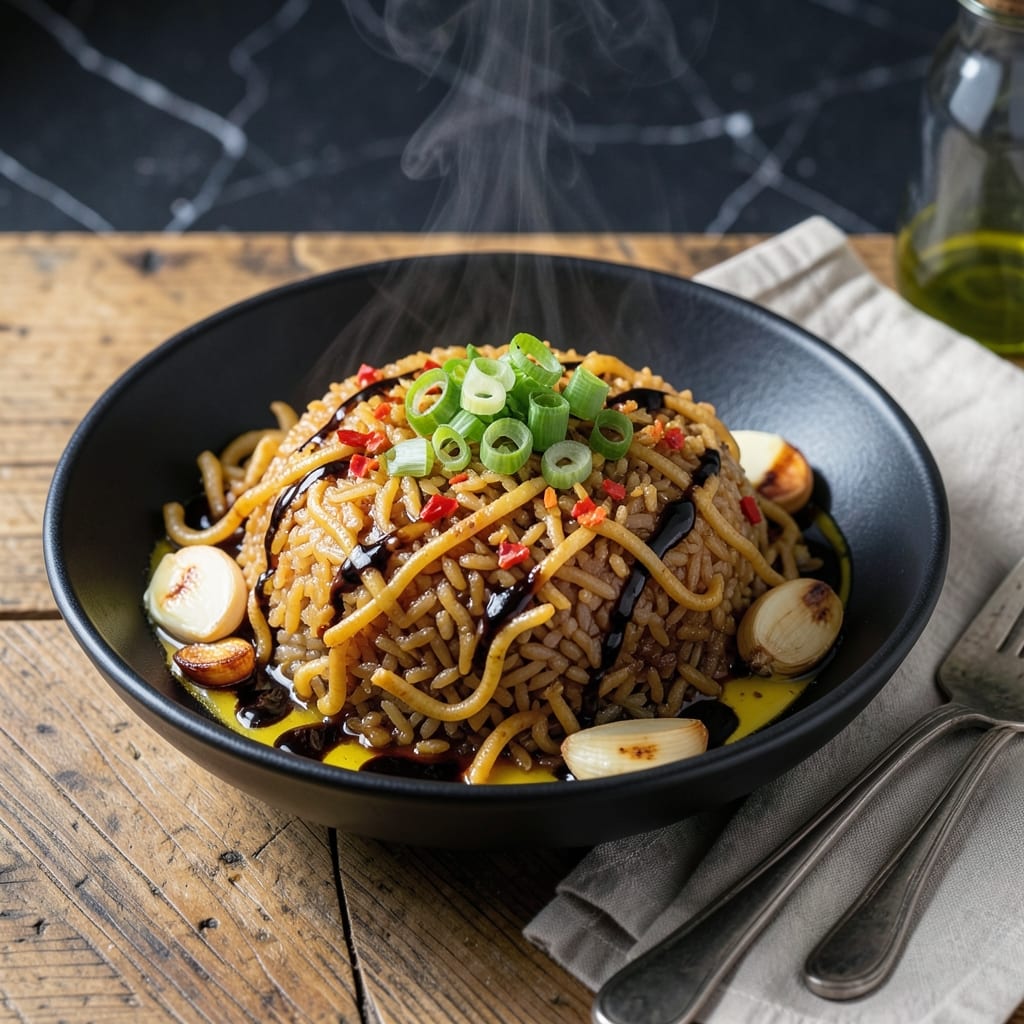
This Korean-inspired rice dish brings bold, fiery flavors to your kitchen with a simple fusion technique. The combination of spicy noodles and perfectly cooked rice creates an addictive texture and heat level that builds with each bite.
I developed this recipe to capture the intensity of Buldak noodles while making it approachable for home cooks. The key is balancing the spicy sauce with the neutral base of rice, allowing the flavors to meld without overwhelming the dish.
What results is a satisfying one-bowl meal with layers of heat, umami, and just enough sweetness to keep you reaching for more. The rice absorbs the sauce beautifully, creating a cohesive dish that’s more than the sum of its parts.
Ready in under 30 minutes, this fusion dish delivers restaurant-quality heat and flavor with minimal effort. Serve with a cold beverage to balance the spice.
Ingredients for Buldak Rice
Bold spices, chewy noodles, and fluffy rice make this fusion dish unforgettable.
| Ingredient | Amount | Notes |
|---|---|---|
| Samyang Buldak Hot Chicken Flavor Ramen 🍜 | 2 packages | Including seasoning packets |
| Jasmine Rice 🍚 | 2 cups | Uncooked, rinsed well |
| Unsalted Butter 🧈 | 2 tbsp | For richness in sauce |
| Garlic Cloves 🧄 | 4 cloves | Minced finely |
| Brown Sugar 🫙 | 1 tbsp | Balances the heat |
| Soy Sauce 🥢 | 2 tbsp | Low-sodium preferred |
| Gochujang 🌶️ | 1 tbsp | Korean chili paste |
| Sesame Oil 🫒 | 1 tsp | Toasted, for aroma |
| Large Eggs 🥚 | 2 whole | Optional fried egg topping |
| Green Onions 🧅 | ½ cup | Thinly sliced for garnish |
| Sesame Seeds 🌰 | 1 tsp | Toasted, for garnish |
| Water 💧 | 4 cups | For cooking noodles and rice |
| Neutral Cooking Oil 🫒 | 1 tbsp | For frying eggs |
The Buldak noodles are non-negotiable here—look for the red package (the 2x Spicy version if you dare). I grab mine at H Mart or Asian grocery stores, but Amazon works in a pinch. The gochujang adds depth, so check the label for no added sugar if you want to control the sweetness. Jasmine rice is ideal, but any long-grain works (just rinse it well).
No gochujang? Sriracha plus a spoon of miso gets you close. Butter can be swapped for neutral oil if avoiding dairy. Out of brown sugar? Honey or maple syrup works too. The eggs are optional but highly recommended—that runny yolk cuts the heat. Baby spinach or shredded cabbage would be great stir-in additions if you want some green.
Leftover rice? Store in an airtight container for up to 4 days. The noodles will soften, so eat those within 2 days. Freezing isn’t ideal for this dish (the texture suffers), but you can freeze the cooked rice separately for 3 months.
Why You’ll Love This Recipe
- 20-Minute Meal: I can have this on the table faster than ordering takeout—just cook the rice, fry the ramen seasoning with butter and garlic, and mix.
- Addictive Heat: The Buldak seasoning gives that signature spicy-sweet kick, balanced perfectly by the brown sugar and creamy butter.
- Feeds My Crowd: It’s a hit with my roommates—spicy enough for heat lovers but customizable with extra sugar or a fried egg on top.
Step-by-Step Instructions for Spicy Korean Fire Noodle Fusion
This is the method I use every time for that perfect balance of heat and flavor.
Step 1: Cook the Rice and Noodles
Rinse the 2 cups Jasmine Rice thoroughly until the water runs clear. Combine it with 4 cups Water in a pot and bring to a boil. Once boiling, reduce to a simmer, cover, and cook for 15 minutes until the water is absorbed and the rice is tender.
While the rice cooks, prepare the 2 packages Samyang Buldak Hot Chicken Flavor Ramen according to the package instructions, but only use half the seasoning packets—this keeps the heat manageable. Drain the noodles and set them aside. You want both the rice and noodles hot when you combine them later.
Step 2: Make the Spicy Sauce
In a large skillet, melt the 2 tbsp Unsalted Butter over medium heat. Add the 4 cloves Garlic Cloves, minced finely, and sauté for 30 seconds until fragrant but not browned. Stir in the 1 tbsp Brown Sugar, 2 tbsp Soy Sauce, 1 tbsp Gochujang, and 1 tsp Sesame Oil.
Let the sauce simmer for 2-3 minutes until it thickens slightly and the flavors meld together. The mixture should be glossy and coat the back of a spoon. Taste and adjust the seasoning if needed, but remember the noodles and rice will absorb some of the saltiness.
Step 3: Combine Rice, Noodles, and Sauce
Add the cooked rice and drained noodles to the skillet with the sauce. Stir everything together gently but thoroughly, ensuring the rice and noodles are evenly coated. Cook over medium-low heat for 3-4 minutes to let the flavors penetrate.
Watch for the edges to start looking slightly crispy—that’s your sign the dish is ready. The rice should be sticky and infused with the spicy, savory sauce, while the noodles add a chewy texture.
Step 4: Fry the Eggs and Garnish
In a separate pan, heat the 1 tbsp Neutral Cooking Oil over medium heat. Crack in the 2 whole Large Eggs and fry until the whites are set but the yolks are still runny, about 2-3 minutes. The yolk will add a creamy richness when mixed into the dish.
Transfer the rice and noodles to serving bowls and top each with a fried egg. Sprinkle with the 0.5 cup Green Onions and 1 tsp Sesame Seeds for freshness and crunch. Serve immediately while the egg yolks are still warm and runny.
Pro Tips For Making Buldak Rice
- Toast the Ramen Dust: Cook the seasoning packet in the butter for 30-45 seconds before adding liquid—this deepens the flavor and removes any raw spice bite.
- Use Day-Old Rice: Fresh rice turns mushy; leftover jasmine rice from the fridge holds its shape and soaks up the sauce better.
- Mince Garlic Fine: After burning a few batches, I learned that finely minced garlic cooks evenly in the butter without turning bitter.
- Add Sugar Last: Stir in the brown sugar at the very end to prevent it from caramelizing too early and overpowering the spice.
Regional Styles of This Dish
Korean Fusion Style
This version stays true to Korean flavors by doubling the gochujang to 2 tbsp and adding 1 tbsp gochugaru (Korean chili flakes) to the sauce. The heat builds slowly, creating that signature Korean fire. I love how the deep red color signals the intensity. 🌶️
Japanese Adaptation
For a milder twist, reduce the Buldak seasoning by half and add 1 tbsp mirin and 1 tsp dashi powder to the sauce. The umami depth from dashi complements the spice beautifully. Serve with pickled ginger on the side to cleanse your palate.
Thai-Inspired Version
Swap the brown sugar for 1 tbsp palm sugar and add 1 stalk lemongrass (bruised) and 3 kaffir lime leaves while cooking the rice. The citrusy aroma cuts through the heat. Remove the lemongrass and lime leaves before serving.
American Comfort
Add ½ cup shredded cheddar and ¼ cup cream cheese to the sauce for a creamy, cheesy twist. The dairy tames the spice while adding richness. I grew up eating this version at college potlucks—it’s a crowd-pleaser.
Vegetarian Option
Replace the Buldak seasoning with 1 tbsp vegan Buldak sauce (available at H Mart) and add 1 cup diced tofu with the noodles. The tofu soaks up the sauce, making every bite flavorful. Garnish with extra sesame seeds for crunch.
Street Food Style
Serve the dish in a toasted corn tortilla with shredded lettuce and sriracha mayo. This handheld version is perfect for summer picnics. The crunch from the tortilla adds a fun texture contrast to the soft rice and noodles. 🔥
Nutrition Facts
Frequently Asked Questions
Can I use a different type of rice?
Yes! While jasmine works best, any long-grain rice will do. Just rinse it well and adjust cooking time as needed. Short-grain rice may turn too sticky.
How do I make this less spicy?
Use only half the Buldak seasoning packets and add 1 tbsp honey to balance the heat. The gochujang can also be reduced to ½ tbsp for milder flavor.
Can I prepare this ahead of time?
Cook and store the rice separately for up to 4 days, but combine with noodles and sauce just before serving. The noodles soften quickly, so eat within 2 days.
What if I don’t have gochujang?
Substitute with 1 tbsp sriracha mixed with 1 tsp miso paste for similar depth. The dish will still be flavorful, though slightly different.

- Jollof Rice Sauce Recipe: West African Tomato and Spice Infusion - September 25, 2026
- Japanese Rice Soup Recipe: Umami-Rich Comfort in a Bowl - September 25, 2026
- Homemade Cream Of Rice Recipe: Silk-Smooth Breakfast in Minutes - September 25, 2026