
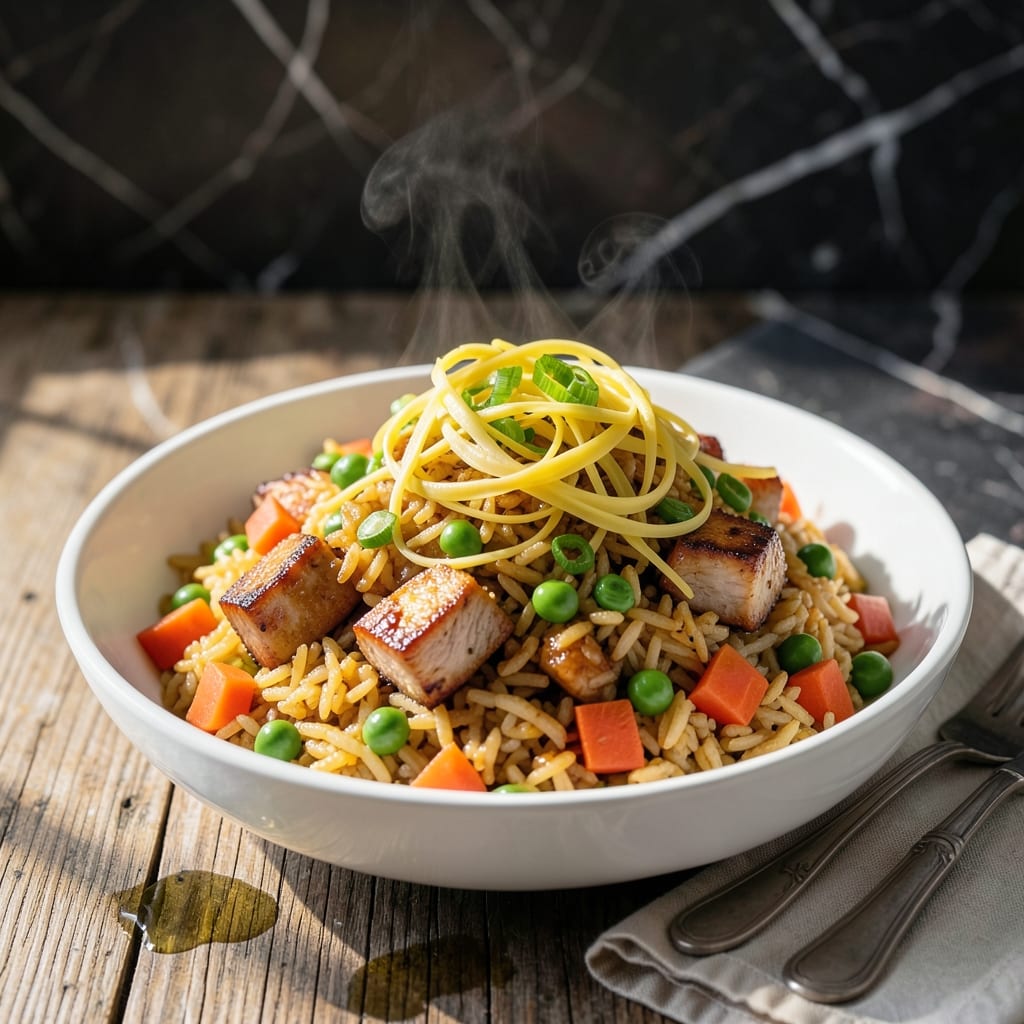
This Cantonese-style pork fried rice delivers the authentic wok-hei flavor that sets the best versions apart from takeout. Years of practice taught me the precise technique for achieving those signature savory bites with smoky depth.
The secret lies in high heat, day-old rice, and proper ingredient sequencing. Each component—tender pork, crisp vegetables, and eggs—cooks at exactly the right moment to maintain texture and flavor without turning mushy.
What results is a dish with distinct layers: slightly charred pork pieces, fluffy rice grains, and vegetables that retain their bite. The soy-based seasoning ties everything together without overpowering the natural flavors.
This method transforms simple ingredients into a restaurant-quality meal that’s worth the effort. The final dish speaks for itself with every perfectly balanced bite.
Ingredients for Best Pork Fried Rice Recipe Ever
Authentic Cantonese wok-fried rice requires precise ingredients for that signature smoky depth and layered texture.
| Ingredient | Amount | Notes |
|---|---|---|
| Jasmine Rice 🍚 | 3 cups | Day-old, cooked and chilled |
| Pork Shoulder 🥩 | ¾ lb | Cut into small dice |
| Large Eggs 🥚 | 3 whole | Lightly beaten |
| Green Onions 🧅 | 4 whole | Thinly sliced, white and green parts separated |
| Carrots 🥕 | 1 whole | Finely diced |
| Frozen Peas 🌱 | ¾ cup | Thawed and drained |
| Garlic Cloves 🧄 | 3 cloves | Minced finely |
| Light Soy Sauce 💧 | 3 tbsp | Low-sodium preferred |
| Dark Soy Sauce 💧 | 1 tbsp | For color and depth |
| Oyster Sauce 🫒 | 1 ½ tbsp | Vegan oyster sauce optional |
| Shaoxing Wine 🍷 | 2 tbsp | Dry sherry substitute |
| Sesame Oil 🫒 | 1 tsp | Toasted, for finishing |
| Neutral Oil 🫒 | 3 tbsp | High smoke point, divided |
| White Pepper 🧂 | ½ tsp | Freshly ground |
| Kosher Salt 🧂 | ½ tsp | Or to taste |
The rice is non-negotiable—day-old jasmine from a trusted Asian market (or 99 Ranch if you’re stateside) gives you the right grain separation. For the pork, shoulder or butt offers the best fat marbling for those slightly charred, savory bites. Avoid pre-ground pork; the texture suffers. Shaoxing wine is the authentic choice, but dry sherry in a pinch won’t betray the dish.
No Shaoxing? Dry sherry works, but skip cooking wine—it’s too salty. Oyster sauce is traditional, but vegan oyster sauce or even hoisin can substitute. Frozen peas are fine (the small, sweet kind), but fresh are better if you’ve got them. The light and dark soy sauces both matter: one for salt, one for color. Don’t use just one.
Cooked rice keeps 3-4 days in the fridge—perfect for fried rice. The pork can be prepped a day ahead. Once cooked, this dish is best fresh, but leftovers reheat well with a splash of water and a quick stir-fry. Never microwave straight from the fridge; it’ll turn mushy.
Why You’ll Love This Recipe
- I’ll be real: pork shoulder is cheap, and it turns this dish into a meal that feels way fancier than the cost.
- One Pan Wonder: I toss everything—the jasmine rice, tender pork shoulder, and veggies—into a single wok and it’s done in 20 minutes.
- Umami Bomb: The pork shoulder soaks up the soy and garlic, while the eggs add this rich, creamy texture that’s honestly addictive.
- Feeds a Crowd: Between us, I make a double batch and it disappears between lunchboxes and late-night snacks.
Step-by-Step Instructions for Cantonese Wok-Fried Savory Bites
Master the wok hei technique with this method that delivers authentic flavor and texture every time.
Step 1: Prepare and Velvet the Pork
Begin by marinating the diced pork shoulder with 1 tbsp Light Soy Sauce, 1 tbsp Shaoxing Wine, and 0.25 tsp Kosher Salt. I always let this mixture sit for 10-15 minutes to allow the flavors to penetrate the meat.
Heat 1 tbsp Neutral Oil in your wok over high heat until shimmering. Add the pork and stir-fry for 3-4 minutes until just cooked through but still slightly pink—this prevents overcooking when we combine everything later. The pork should be tender with a light crust. Remove and set aside.
Step 2: Scramble the Eggs and Aromatics
In the same wok, add another 1 tbsp Neutral Oil and swirl to coat. Pour in the beaten large eggs and let them set for 10 seconds before gently scrambling with a wok spatula. The eggs should form soft, fluffy curds—remove them just before they’re fully set.
Add the remaining 1 tbsp Neutral Oil, then toss in the minced garlic cloves and white parts of the green onions. Stir-fry for 30 seconds until fragrant but not browned. Immediately add the finely diced carrots and cook for 1-2 minutes until slightly softened but still vibrant.
Step 3: Combine Rice and Create the Sauce
Increase heat to maximum and add the day-old jasmine rice, breaking up any clumps with your spatula. The rice should sizzle upon contact—this is how you achieve that coveted wok hei. Stir-fry for 2 minutes until each grain is separate and hot.
Pour the remaining 2 tbsp Light Soy Sauce, 1 tbsp Dark Soy Sauce, 1.5 tbsp Oyster Sauce, 0.5 tsp White Pepper, and 0.25 tsp Kosher Salt evenly over the rice. Add the thawed frozen peas and diced pork. Toss everything together for 2-3 minutes until the rice is evenly coated and the sauce has been absorbed.
Step 4: Finish and Plate with Precision
Drizzle the 1 tsp Sesame Oil around the edges of the wok and toss once more to incorporate. The rice should now have a beautiful caramelized color with glossy, individual grains. Taste and adjust seasoning if needed—remember the dark soy sauce adds depth but also saltiness.
Transfer to a serving platter and garnish with the green parts of the green onions. Serve immediately while the rice maintains its perfect texture—the grains should be separate yet slightly sticky, with each bite delivering the savory pork, sweet peas, and aromatic sauce in perfect harmony.
Pro Tips For Making Best Pork Fried Rice Recipe Ever
- Use Day-Old Rice: Fresh rice turns to mush—spread leftover jasmine rice on a tray and refrigerate overnight to dry it out, so it fries up fluffy with distinct grains.
- Velvet the Pork: Toss thin-sliced pork shoulder with 1 tsp cornstarch and 1 tsp soy sauce before stir-frying; it stays tender and doesn’t chew like rubber.
- Scramble Eggs First: Push scrambled eggs to one side of the wok before adding veggies and pork, so they don’t disappear into the rice and actually show up in every bite.
- High Heat Only: Crank the burner to max and cook in small batches—overcrowding steams the rice and turns your fried rice into sad, soggy rice.
Storing and Reheating Leftovers
Refrigerator Storage
Let your pork fried rice cool completely before storing—this prevents condensation from making it soggy. Transfer to airtight containers and refrigerate at 40°F or below. It keeps beautifully for 3-4 days, and the flavors actually deepen overnight as the rice absorbs the savory sauce. 🥢
Freezer Storage
For longer storage, freeze portions in heavy-duty freezer bags for up to 2 months. I recommend quart-size bags for single servings. Squeeze out excess air to prevent freezer burn. The texture changes slightly after thawing, but it’s still delicious for quick meals.
Stovetop Reheating
This is my preferred method for maintaining texture. Heat 1 tbsp neutral oil in a wok or skillet over medium-high heat. Add the rice and stir-fry for 3-4 minutes, breaking up any clumps. A splash of water helps steam the grains back to life.
Microwave Reheating
For convenience, spread rice on a microwave-safe plate and cover with a damp paper towel. Heat on 70% power for 1-2 minutes, stir, then repeat until hot. Add a few drops of sesame oil afterward to refresh the flavor. ⏰
Re-Crisping the Pork
If reheating leftovers, the pork pieces can lose their slight char. To revive them, spread the rice on a baking sheet and broil for 2-3 minutes on high. Watch closely to avoid burning. This brings back that signature wok-fired texture.
Serving Leftovers
I often add a fried egg on top when serving reheated rice—it brings freshness to the dish. A drizzle of extra oyster sauce or a sprinkle of green onions can also brighten up the flavors beautifully.
Nutrition Facts
Frequently Asked Questions
Why use day-old rice?
Fresh rice contains too much moisture, which makes it clump together in the wok. Day-old rice is drier, allowing for that perfect separated grain texture that defines great fried rice.
Can I use a different protein?
Chicken, shrimp, or tofu work well as substitutes. Just adjust cooking times—shrimp only needs 2-3 minutes while chicken may need 5-6 minutes to cook through.
What if my rice turns mushy?
This usually happens from overcrowding the wok or using fresh rice. Cook in batches over high heat and ensure your rice is properly chilled before starting.
Can I make this without a wok?
A large skillet works, but use medium-high heat and work in smaller batches. You won’t get quite the same smoky flavor, but the taste will still be excellent.

- Jollof Rice Sauce Recipe: West African Tomato and Spice Infusion - September 25, 2026
- Japanese Rice Soup Recipe: Umami-Rich Comfort in a Bowl - September 25, 2026
- Homemade Cream Of Rice Recipe: Silk-Smooth Breakfast in Minutes - September 25, 2026