
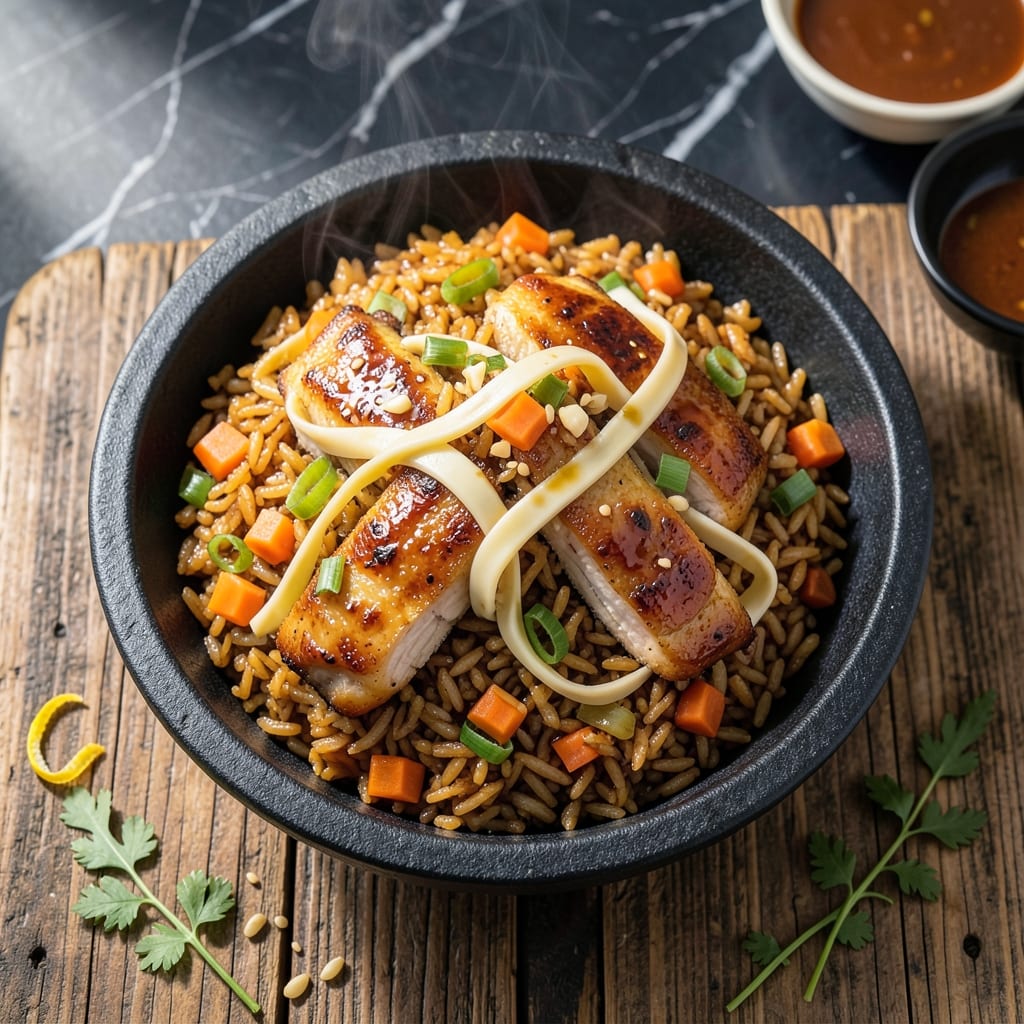
This wok-seared creation delivers restaurant-quality fried rice with charred aromatics and bold umami depth. The high-heat technique creates that signature smoky flavor that sets it apart from home-cooked versions.
Each bite combines tender chicken, perfectly charred rice, and vegetables with that distinctive wok hei taste. The method is straightforward but requires attention to timing and temperature for the best results.
Ingredients for Black Stone Chicken Fried Rice
Restaurant-quality fried rice starts with high-heat ingredients and bold umami boosters ready for your wok.
| Ingredient | Amount | Notes |
|---|---|---|
| Boneless Skinless Chicken Thighs 🍗 | 1 ½ lb | Cut into small uniform pieces |
| Jasmine Rice 🍚 | 4 cups | Day-old, cooked and chilled |
| Large Eggs 🥚 | 3 whole | Lightly beaten for scrambling |
| Carrots 🥕 | 2 whole | Medium dice for even cooking |
| Green Onions 🧅 | 4 whole | Thinly sliced, whites and greens separated |
| Garlic Cloves 🧄 | 4 cloves | Minced finely for maximum flavor |
| Fresh Ginger 🌿 | 1 tbsp | Grated or minced finely |
| Soy Sauce 🫒 | 3 tbsp | Low-sodium preferred for control |
| Oyster Sauce 🫒 | 2 tbsp | Essential for authentic umami depth |
| Sesame Oil 🫒 | 1 tbsp | Toasted variety for aroma |
| Peanut Oil 🫒 | ⅓ cup | High smoke point for wok frying |
| Frozen Green Peas 🌱 | ¾ cup | Thawed before cooking |
| Diamond Crystal Kosher Salt 🧂 | 1 tsp | Adjust to taste at end |
| White Pepper 🌶️ | ½ tsp | Freshly ground for subtle heat |
The chicken thighs are non-negotiable for authentic texture—boneless, skinless from Whole Foods or Costco gives you the right fat content for char. Jasmine rice is traditional, but any long-grain works if it’s day-old and completely chilled. The oyster sauce is the umami backbone—Lee Kum Kee is the standard in professional kitchens. For the oil, peanut oil’s high smoke point is essential for that signature wok hei.
No oyster sauce? Vegetarian oyster sauce or hoisin at half the amount works in a pinch. Chicken breasts can sub for thighs but stay vigilant—they dry out fast. Fresh ginger is ideal, but ground ginger at one-quarter the quantity gets you close. The peas can be fresh or frozen, but don’t skip thawing or they’ll water down the dish. Low-sodium soy lets you control the salt.
Cooked rice keeps 3-4 days in the fridge—perfect for planning ahead. Leftovers reheat beautifully in a skillet with a splash of water. The fried rice itself is best eaten fresh but holds 2-3 days. Freezing isn’t recommended—the texture suffers.
Why You’ll Love This Recipe
- One Pan Wonder: I love that everything—chicken, eggs, veggies—cooks together in one wok or skillet. No extra dishes, just flavor.
- Umami Bomb: The chicken thighs and jasmine rice soak up that rich, savory black stone sauce. Honestly, it’s the kind of taste that lingers.
- Weeknight Hero: Between us, this is my go-to for busy evenings. Ready faster than takeout, and way more satisfying.
- Budget Stretcher: A pound of chicken thighs and a handful of veggies feed my family for two meals. Leftovers taste even better the next day.
Step-by-Step Instructions for Black Stone Chicken Fried Rice
Master the wok technique for perfectly charred aromatics and umami-rich chicken fried rice every time.
Step 1: Velvet the Chicken for Maximum Tenderness
Cut the 1.5 lb boneless skinless chicken thighs into small uniform pieces as specified. In a bowl, combine the chicken with 1 tbsp soy sauce, 1 tbsp sesame oil, and 1 tsp Diamond Crystal kosher salt. Mix thoroughly to coat each piece evenly.
Let the chicken marinate for 10-15 minutes while you prepare the remaining ingredients. This velveting process ensures the chicken stays juicy and tender during the high-heat cooking. The pieces should glisten slightly when ready to cook.
Step 2: Char the Aromatics and Scramble the Eggs
Heat ⅓ cup peanut oil in a wok or large skillet over high heat until it begins to shimmer. Add the minced garlic cloves and 1 tbsp fresh ginger, stirring constantly for 30-45 seconds until fragrant and just beginning to brown.
Push the aromatics to one side and pour in the 3 lightly beaten large eggs. Scramble quickly with a spatula until just set but still slightly runny—about 1 minute. Remove the eggs and set aside; they’ll finish cooking when combined later.
Step 3: Wok-Fry the Chicken to Golden Perfection
In the same wok, add the marinated chicken in a single layer. Let it sear undisturbed for 1-2 minutes until the edges develop a deep golden-brown crust. Stir-fry for another 2-3 minutes until the chicken is cooked through and no longer pink inside.
Add the medium-diced carrots and cook for 2 minutes, stirring frequently. The carrots should soften slightly but retain a bit of bite. Push everything to one side of the wok to make room for the rice.
Step 4: Combine and Season with Umami Depth
Add the 4 cups day-old jasmine rice, breaking up any clumps with your spatula. Stir-fry for 2-3 minutes until the rice is heated through and begins to crisp slightly. The grains should separate easily and take on a slightly toasted appearance.
Incorporate the scrambled eggs, thinly sliced green onions (whites and greens separated), ¾ cup thawed frozen green peas, 2 tbsp oyster sauce, and the remaining 2 tbsp soy sauce. Stir-fry for another 2 minutes until everything is evenly coated and heated through.
Step 5: Finish with Fresh Herbs and Final Seasoning
Drizzle the 1 tbsp sesame oil over the fried rice and toss to combine. The oil should glisten on the surface of the rice. Sprinkle with ½ tsp white pepper and taste for seasoning, adjusting with more Diamond Crystal kosher salt if needed.
Garnish with the reserved green onion greens. The final dish should have a glossy sheen from the sauces, with distinct charred bits of chicken and aromatics throughout. Serve immediately while hot for the best texture and flavor.
Pro Tips For Making Black Stone Chicken Fried Rice
- Crank Up the Heat: Use the highest heat your wok or skillet can handle—black stone chicken fried rice needs that searing temperature to get the smoky flavor and prevent soggy rice. I learned this the hard way after too many lukewarm attempts.
- Dry the Chicken: Pat the boneless skinless chicken thighs completely dry with a paper towel before cooking. Even a little moisture will steam the meat instead of browning it, and you’ll lose that rich, caramelized texture.
- Use Day-Old Rice: Fresh jasmine rice turns to mush in the wok. Cook your rice the day before and refrigerate it uncovered so it dries out—this guarantees those separate, slightly chewy grains that make great fried rice.
- Scramble Eggs First: Push the cooked chicken and veggies to the side, add a little more oil, then scramble the eggs in the same pan. Sounds like an extra step, but it distributes the egg evenly and adds that classic fried rice texture without overmixing.
Dietary Considerations for These Flavors
Gluten-Free Adaptation
Swap the soy sauce for tamari or a certified gluten-free soy alternative like San-J. Oyster sauce is the trickier ingredient—use gluten-free oyster sauce or substitute with coconut aminos for a similar umami kick. Always check labels carefully. 💡
Lower-Sodium Option
Use low-sodium soy sauce and reduced-sodium oyster sauce to cut the salt content significantly. I also recommend reducing the Diamond Crystal kosher salt by half initially, then adjusting to taste at the end. The dish will still pack plenty of flavor.
Vegetarian Version
Replace the chicken with extra-firm tofu (pressed and cubed) or a plant-based chicken substitute like Beyond Meat. Use vegetarian oyster sauce to maintain that essential umami depth. The technique remains identical—just adjust cooking time slightly for tofu. 🌱
Egg-Free Modification
Omit the eggs entirely or replace them with ½ cup scrambled firm tofu for similar texture. The dish will still be delicious, though you might want to add an extra 1 tbsp sesame oil at the end to compensate for the missing richness.
Nut Allergy Consideration
For those with nut allergies, replace peanut oil with a high-smoke-point alternative like avocado oil or grapeseed oil. These maintain the necessary heat resistance for proper wok searing without compromising flavor.
Dairy-Free Note
This recipe is naturally dairy-free, so no modifications are needed. Just ensure all your sauces and oils are free from dairy derivatives, which is standard for most Asian cooking ingredients. Double-check oyster sauce brands to be certain.
Nutrition Facts
Frequently Asked Questions
Why use day-old rice?
Fresh rice contains too much moisture and will turn mushy when stir-fried. Day-old, chilled rice has dried slightly, allowing it to maintain separate grains and develop that perfect slightly crisp texture in the wok.
Can I use chicken breast instead of thighs?
You can, but thighs stay juicier during high-heat cooking. If using breasts, cut them into small pieces and cook for just 1-2 minutes to prevent drying out. Consider marinating them for 20 minutes to add moisture.
How do I get that restaurant-style char?
Use high heat and let ingredients sit undisturbed for 30-60 seconds before stirring. A well-seasoned wok helps create those coveted charred bits. Avoid overcrowding the pan to ensure proper browning.
What if I don’t have oyster sauce?
Substitute with hoisin sauce or vegetarian oyster sauce. For a quick fix, mix 1 tbsp soy sauce with ½ tsp sugar and ½ tsp sesame oil to mimic the flavor.

- Jollof Rice Sauce Recipe: West African Tomato and Spice Infusion - September 25, 2026
- Japanese Rice Soup Recipe: Umami-Rich Comfort in a Bowl - September 25, 2026
- Homemade Cream Of Rice Recipe: Silk-Smooth Breakfast in Minutes - September 25, 2026