
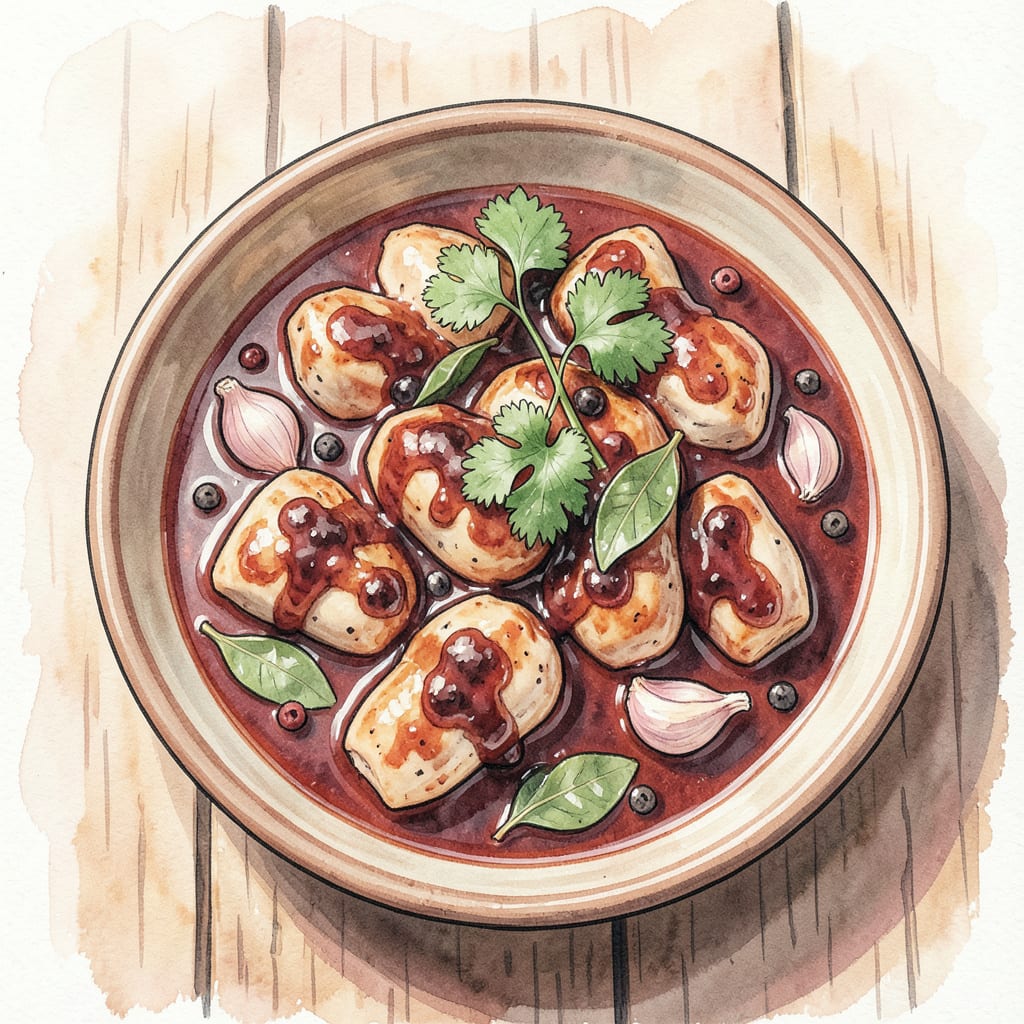
I’ve perfected my boneless chicken adobo recipe by combining traditional Filipino flavors with modern cooking techniques. This dish delivers the same rich, savory taste as the classic version but with tender boneless chicken.
Ready in under 30 minutes, this recipe is perfect for weeknight dinners. The combination of vinegar, soy sauce, and garlic creates a flavorful sauce that’s both tangy and aromatic, making it a true Filipino classic with a modern twist.
Ingredients for Boneless Chicken Adobo
Simple ingredients come together to create this Filipino classic with a modern twist.
| Ingredient | Amount | Notes |
|---|---|---|
| Boneless, Skinless Chicken Breasts 🍗 | 1 ½ lb | Cut into bite-sized pieces |
| White Vinegar 🥘 | ½ cup | Apple cider or white vinegar |
| Soy Sauce 🧂 | ¼ cup | Use low-sodium variety |
| Garlic Cloves 🧄 | 6 cloves | Minced or pressed |
| Bay Leaves 🌿 | 2 whole | Dried or fresh |
| Black Peppercorns 🌶️ | 1 tsp | Freshly ground |
| Salt 🧂 | ½ tsp | Kosher or sea salt |
| Olive Oil 🫒 | 2 tbsp | For browning chicken |
| Green Onions 🌿 | ¼ cup | Chopped, for garnish |
| Fresh Black Pepper 🌶️ | ¼ tsp | For seasoning |
| Water 💧 | 1 cup | For sauce consistency |
| Sugar 🍮 | 1 tbsp | Optional, for balancing flavor |
For authentic Filipino flavor, use Patis or fish sauce if available. Most grocery stores carry it in their international section. If not, you can omit it or substitute with a combination of soy sauce and lime juice. The chicken should be cut into uniform pieces to ensure even cooking. I prefer using chicken breasts for this recipe as they cook quickly and remain tender.
No white vinegar? Apple cider vinegar is a good substitute. If you prefer a less tangy flavor, start with 1/4 cup and adjust to taste. For a richer sauce, you can add 1-2 tablespoons of chicken broth. Bay leaves add depth, but you can omit them if you don’t have them on hand. Freshly ground black pepper makes a difference here—it’s worth the extra minute to grind it yourself.
This dish reheats beautifully and tastes even better the next day. Store leftovers in an airtight container in the fridge for up to 3-4 days. You can also freeze it for up to 2 months. When reheating, add a splash of water or broth if the sauce has thickened too much.
Step-by-Step Instructions for Boneless Chicken Adobo
Follow these detailed steps to create a modern twist on the Filipino classic dish.
Step 1: Prepare the Chicken and Marinade
Start by cutting the 1.5 lb Boneless, Skinless Chicken Breasts into bite-sized pieces. I like to make sure they’re relatively uniform so they cook evenly. In a large bowl, combine the chicken pieces, 0.25 cup Soy Sauce, 6 cloves Garlic Cloves (minced or pressed), 1 tsp Black Peppercorns (freshly ground), and 0.5 tsp Salt. Mix well to ensure the chicken is coated with the marinade. Cover the bowl with plastic wrap and refrigerate for at least 30 minutes or up to 2 hours for more flavor penetration.
While the chicken is marinating, prepare the other ingredients. I always use low-sodium soy sauce to control the saltiness of the dish. If you’re using fresh bay leaves, make sure to bruise them slightly to release their aroma.
Step 2: Brown the Chicken and Sauté Aromatics
Heat 2 tbsp Olive Oil in a large skillet or Dutch oven over medium-high heat. Remove the chicken from the marinade, letting any excess liquid drip off. Add the chicken to the hot oil and cook until browned on all sides, about 5-7 minutes. Transfer the browned chicken to a plate and set aside. In the same pan, add the 2 whole Bay Leaves and cook for 1 minute until fragrant. This step enhances the aromatic flavor of the bay leaves.
The browned chicken will continue cooking in the sauce later, ensuring it stays moist and tender. Be careful not to burn the garlic or bay leaves, as they can quickly become bitter.
Step 3: Create the Adobo Sauce
Pour 0.5 cup White Vinegar and 1 cup Water into the same skillet, scraping up any browned bits from the bottom. Bring the mixture to a simmer and cook for 5 minutes until it reduces slightly. Add the 0.25 tsp Fresh Black Pepper and 1 tbsp Sugar (if using). Stir well to combine. The sugar helps balance the acidity and saltiness of the dish.
Return the browned chicken to the skillet and simmer in the sauce for 10-15 minutes or until the chicken is cooked through and the sauce has thickened slightly. I like to check the chicken for doneness by cutting into the thickest piece; it should be white and juicy.
Step 4: Finish and Serve
Once the chicken is cooked and the sauce has reached your desired consistency, remove the skillet from the heat. Stir in the 0.25 cup Green Onions (chopped) and let the dish sit for a few minutes to allow the flavors to meld together. Serve the boneless chicken adobo hot, garnished with additional green onions if desired. This dish is best served with steamed rice to soak up the flavorful sauce.
The result is a tender, flavorful chicken dish with a rich, tangy sauce that’s characteristic of traditional Filipino adobo. The modern twist comes from using boneless, skinless chicken breasts, which makes the dish lighter and easier to prepare.
Regional Styles of This boneless chicken adobo
Traditional Filipino Style
The classic Filipino version of adobo uses bone-in chicken pieces with skin, which adds richness to the sauce. For this modern adaptation, I’ve substituted boneless, skinless chicken breasts for quicker cooking and tender results. The traditional method involves browning the chicken in lard or oil before simmering it in the vinegar-based sauce.
Regional Variations
Different regions in the Philippines have their own takes on adobo. Some use turmeric for added depth, while others incorporate coconut milk for creaminess. You can experiment with these variations by adding 1 tsp ground turmeric or 1/2 cup coconut milk to create your own unique flavor profile. The beauty of adobo lies in its adaptability.
Modern Twists
To give this dish a modern twist, I’ve used boneless chicken breasts and adjusted the cooking time accordingly. You can further customize it by adding diced potatoes or hard-boiled eggs to make it heartier. Some cooks also add a splash of fish sauce (patis) for an umami boost, which is a common practice in Filipino cuisine.
Spicy Adobo Variation
For those who like a bit of heat, you can create a spicy adobo by adding 1-2 Thai chilies or 1 tsp chili flakes to the sauce. This adds a nice kick without overpowering the other flavors. I like to add the chilies during the last 5 minutes of simmering so the heat melds with the other ingredients.
Serving Suggestions
Adobo is typically served with steamed white rice, which helps soak up the flavorful sauce. You can also pair it with garlic fried rice for added complexity. For a more substantial meal, consider serving it with steamed vegetables or a simple salad. The tangy sauce pairs well with a variety of sides.
Nutrition Facts
Frequently Asked Questions
Can I use bone-in chicken instead of boneless?
Yes, you can use bone-in chicken, but adjust the cooking time to 30-40 minutes to ensure the chicken is fully cooked. Bone-in chicken adds more flavor to the sauce, but requires longer cooking.
How do I prevent the chicken from becoming dry?
To keep the chicken moist, don’t overcook it. Remove it from heat when it reaches an internal temperature of 165°F. Letting it rest in the sauce helps retain juiciness. The sauce will continue to cook the chicken slightly after removing from heat.
Can I make this recipe in advance?
Absolutely! Adobo actually tastes better when made ahead. Prepare it up to 2 days in advance and store it in the refrigerator. Reheat gently over low heat, adding a splash of water if the sauce has thickened too much. The flavors will meld together beautifully.
What can I serve with boneless chicken adobo?
Steamed white rice is the traditional pairing, but you can also serve it with garlic fried rice or steamed vegetables for a complete meal. The tangy sauce pairs well with a variety of sides. For a heartier meal, add diced potatoes or hard-boiled eggs to the adobo.

- Jollof Rice Sauce Recipe: West African Tomato and Spice Infusion - September 25, 2026
- Japanese Rice Soup Recipe: Umami-Rich Comfort in a Bowl - September 25, 2026
- Homemade Cream Of Rice Recipe: Silk-Smooth Breakfast in Minutes - September 25, 2026