
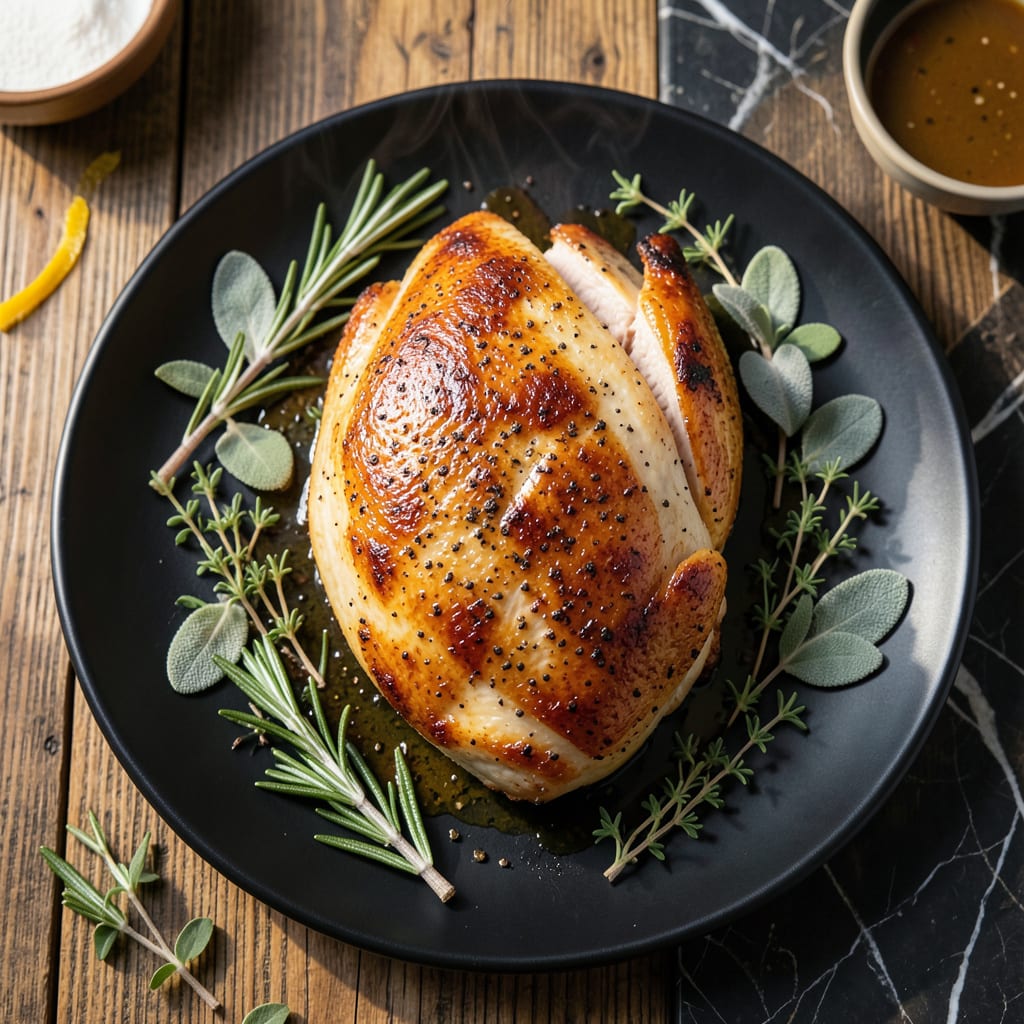
This herb-crusted boneless chicken roast delivers restaurant-quality results with minimal effort. The secret lies in a simple dry brine and fresh herb crust that locks in moisture and flavor.
With even cooking and a golden, crispy exterior, this dish transforms an ordinary chicken into an impressive centerpiece. The oven does most of the work while you enjoy the aroma filling your kitchen.
Ingredients for Boneless Chicken Roast
Restaurant-quality starts with fresh herbs, quality chicken, and a few pantry staples.
| Ingredient | Amount | Notes |
|---|---|---|
| Boneless Chicken Breast 🍗 | 2 lb | Skin-on for crispier texture |
| Kosher Salt 🧂 | 1 ½ tbsp | Diamond Crystal preferred for dry brine |
| Freshly Ground Black Pepper 🌶️ | 1 tsp | Coarse grind recommended |
| Fresh Rosemary 🌿 | 2 tbsp | Finely chopped, stems discarded |
| Fresh Thyme 🍃 | 2 tbsp | Leaves stripped from stems |
| Fresh Sage 🌿 | 1 tbsp | Finely minced for even distribution |
| Garlic Cloves 🧄 | 4 cloves | Minced to fine paste |
| Extra-Virgin Olive Oil 🫒 | ¼ cup | Divided for brushing and herbs |
| Unsalted Butter 🧈 | 2 tbsp | Softened for herb mixture |
| Dijon Mustard 🟡 | 1 tbsp | For binding herb crust |
| Lemon 🍋 | 1 whole | Zested and juiced |
| Dry White Wine 🍷 | ½ cup | For deglazing pan |
| Chicken Stock 🍲 | ½ cup | Low-sodium preferred |
[recipeingredientscaler]
The chicken is everything here. Boneless, skin-on breasts from Whole Foods or a good butcher give you that perfect texture—avoid the pre-packaged stuff that’s been sitting in its own juices. For the herbs, fresh is non-negotiable (the good stuff, not the pre-cut packages). I grab mine from Trader Joe’s when I’m in a rush, but a farmers market haul is even better.
No fresh herbs? Dried at one-third the amount works in a pinch, but the flavor won’t be as bright. Out of white wine? Chicken broth with a splash of lemon gets you close. The Dijon can be subbed with whole-grain mustard if that’s what you have. Want extra crisp? Add panko breadcrumbs to the herb mix.
The dry-brined chicken can sit overnight in the fridge (actually improves the flavor). Leftovers keep for 3-4 days—great cold on sandwiches or shredded into salads. The herb crust freezes well too if you make extra.
Why You’ll Love This Recipe
- One Pan Wonder: I toss the chicken with rosemary, thyme, salt, and pepper, then roast—no babysitting, no flipping, just walk away.
- Herb Heaven: That fresh rosemary and thyme crust? It makes every bite taste like a Sunday dinner, even on a Wednesday.
- Meal Prep MVP: I roast a big batch and it’s just as good sliced into salads or stuffed in wraps for lunch all week.
- Budget Stretcher: Boneless breasts are affordable, and this turns them into something that feels fancy without the price tag.
Step-by-Step Instructions for Herb-Crusted Chicken Roast
This method delivers crispy skin and juicy meat with a fragrant herb crust every time.
Step 1: Prepare and Season the Chicken
Pat the 2 lb Boneless Chicken Breast completely dry with paper towels. This step is non-negotiable—moisture prevents crispy skin. Season all over with the 1.5 tbsp Kosher Salt and 1 tsp Freshly Ground Black Pepper, pressing gently so the seasoning adheres.
Let it sit uncovered on a wire rack at room temperature for 30 minutes. This dry brine draws moisture to the surface, which we’ll later crisp in the oven. The skin should look slightly tacky by the time you’re ready to roast.
Step 2: Create the Herb Butter Mixture
In a small bowl, combine the 2 tbsp Fresh Rosemary, 2 tbsp Fresh Thyme, 1 tbsp Fresh Sage, 4 cloves Garlic Cloves (minced to a paste), 0.25 cup Extra-Virgin Olive Oil, 2 tbsp Unsalted Butter, and 1 tbsp Dijon Mustard. Mix until it forms a thick, fragrant paste.
Zest the 1 whole Lemon directly into the mixture, then stir in half the juice. The acidity brightens the herbs while the mustard binds everything together. This paste will form the aromatic crust that defines the dish.
Step 3: Roast the Chicken to Perfection
Preheat your oven to 425°F. Place the chicken skin-side up on a rack set over a baking sheet. Brush generously with half the herb mixture, coating every crevice. Roast for 25 minutes until the skin starts to turn golden brown.
Remove the chicken from the oven and brush with the remaining herb mixture. Pour the 0.5 cup Dry White Wine and 0.5 cup Chicken Stock into the baking sheet below. Return to the oven and roast for another 20-25 minutes, basting occasionally with the pan liquids.
Step 4: Rest and Serve
Transfer the chicken to a cutting board when the internal temperature reaches 165°F in the thickest part. Tent loosely with foil and let it rest for 10 minutes. This allows the juices to redistribute, ensuring every slice is moist and flavorful.
Carve against the grain into thick slices. Spoon any pan juices over the top for extra richness. The skin should be deeply browned and crackling, while the meat stays tender beneath that fragrant herb crust.
Pro Tips For Making Boneless Chicken Roast
- Pound the Breasts: Boneless chicken breasts cook unevenly—pound them to an even 1-inch thickness with a rolling pin so they roast through at the same rate.
- Salt Overnight: Sprinkle the breasts with kosher salt at least 12 hours before cooking; it seasons deep and keeps them juicy like my grandma’s Sunday roast.
- Skip Dry Herbs: Fresh rosemary and thyme bruise easily, releasing more aroma than their dried counterparts; skip the jarred stuff for this dish.
- Rest Under Foil: Tent the roast with foil for 5-10 minutes after pulling it from the oven—it redistributes the juices and prevents that sad, dry first slice.
Essential Equipment for boneless chicken roast
Roasting Pan Essentials
Invest in a heavy-duty stainless steel roasting pan with a rack—like the All-Clad model I’ve used for years. The rack elevates the chicken, allowing hot air to circulate for even browning. A half-sheet pan works too for a budget-friendly option.
Thermometer Accuracy
An instant-read thermometer is non-negotiable for perfect results. I trust my ThermoWorks MK4 for its 2-3 second response time. Check the thickest part of the breast to ensure it hits 165°F without overcooking.
Herb Prep Tools
A sharp chef’s knife—my Wüsthof 8-inch—makes quick work of chopping fresh herbs. For garlic, a microplane creates that fine paste that blends seamlessly into the herb butter. These small tools make a big difference. 💡
Basting Partners
Use a pastry brush to apply the herb mixture evenly. I prefer silicone bristles because they won’t melt or shed. A measuring cup with a spout helps pour pan juices for basting without spills.
Resting Station
A wooden cutting board provides the perfect surface for resting the roast. The natural wood absorbs excess moisture while keeping the chicken warm. I always tent with foil to retain heat during the crucial 10-minute rest. ✨
Cleanup Helpers
Line your pan with parchment paper for easy cleanup. The pan juices caramelize during roasting, but parchment prevents stubborn residue. Just be sure to cut slits for airflow—this simple step saves so much scrubbing time.
Nutrition Facts
Frequently Asked Questions
Can I use boneless skinless chicken breasts instead?
Yes, but you’ll lose the crispy skin texture. Brush with extra oil to help browning and reduce cooking time by 5-10 minutes since skinless cooks faster.
What if I don’t have fresh herbs?
Use dried herbs at 1/3 the amount. For best results, rehydrate them in 1 tablespoon warm water first to wake up the flavors.
How do I know when it’s done without a thermometer?
Pierce the thickest part with a knife. If juices run clear and meat feels firm (not rubbery), it’s ready. For safety, always aim for 165°F internally.
Can I make this ahead of time?
Dry-brine the chicken up to 24 hours ahead. Store uncovered in the fridge, then bring to room temperature before roasting.

- Jollof Rice Sauce Recipe: West African Tomato and Spice Infusion - September 25, 2026
- Japanese Rice Soup Recipe: Umami-Rich Comfort in a Bowl - September 25, 2026
- Homemade Cream Of Rice Recipe: Silk-Smooth Breakfast in Minutes - September 25, 2026