
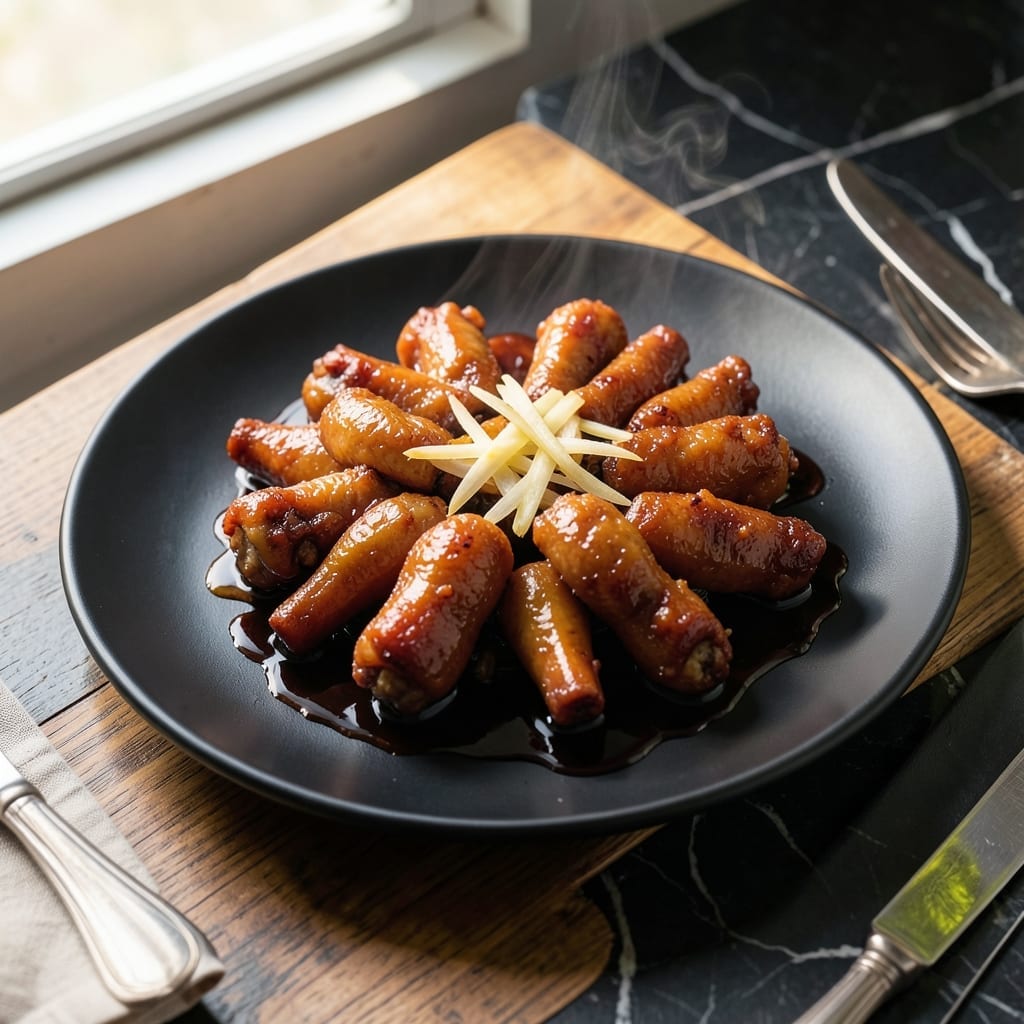
This braised chicken feet recipe transforms a humble ingredient into a collagen-rich delicacy that’s both nourishing and deeply flavorful. The slow-cooking method ensures every bite is tender, with a rich, gelatinous texture that’s prized in many Asian cuisines.
The dish relies on bold spices and aromatics, which infuse the broth with layers of warmth and depth. Traditional techniques like blanching the feet first remove impurities, while a gentle simmer allows the flavors to meld perfectly over time.
What emerges is a comforting, restaurant-quality dish that’s hearty and satisfying. The broth becomes silky and aromatic, while the chicken feet absorb the spices, delivering a taste that’s both familiar and exotic.
Serve it as a main course or alongside steamed rice for a complete meal. Here’s how to make it at home.
Ingredients for Braised Chicken Feet
Transform humble chicken feet into a collagen-rich delicacy with bold Asian spices and aromatics.
| Ingredient | Amount | Notes |
|---|---|---|
| Chicken Feet 🍗 | 2 lb | Blanched and cleaned thoroughly |
| Soy Sauce 🫒 | ½ cup | Low-sodium preferred for balance |
| Dark Soy Sauce 🫒 | 2 tbsp | For depth and color |
| Shaoxing Wine 🍶 | ¼ cup | Chinese cooking wine, dry variety |
| Rock Sugar 🍬 | ¼ cup | Or substitute granulated sugar |
| Ginger 🌿 | 3 slices | Fresh, thick-cut for infusion |
| Garlic Cloves 🧄 | 6 cloves | Smashed lightly to release flavor |
| Star Anise Pods ⭐ | 2 whole | Whole for slow infusion |
| Dried Shitake Mushrooms 🍄 | 4 pieces | Rehydrated for umami depth |
| Green Onions 🧅 | 4 whole | Cut into 2-inch pieces |
| Sesame Oil 🫒 | 1 tbsp | Toasted, for finishing aroma |
| Black Peppercorns 🌶️ | 1 tsp | Whole, lightly crushed |
| Bay Leaves 🍃 | 2 whole | Dried, for subtle earthiness |
| Water 💧 | 4 cups | Or enough to cover chicken feet |
The chicken feet are critical—source from a trusted Asian market or butcher for the freshest quality. Look for plump, pale feet without strong odor. Blanching is non-negotiable (removes impurities, tightens skin). For the soy sauces, Pearl River Bridge or Lee Kum Kee are professional-grade. Shaoxing wine should be cooking-grade (not drinking wine) for proper acidity balance.
No Shaoxing wine? Dry sherry at a 1:1 ratio works in a pinch. Rock sugar can be swapped for brown sugar (slightly different depth). For the mushrooms, fresh shiitake are fine but dried have more concentrated umami. If star anise is unavailable, a pinch of five-spice powder offers similar warmth. The green onions can be replaced with leeks for a milder flavor.
This dish tastes even better the next day—store in the fridge for up to 4 days. Freeze portions for 3 months (broth and feet together). Reheat gently to preserve the collagen’s silky texture. Always skim fat from the surface before serving.
Why You’ll Love This Recipe
- One Pot Wonder: I just toss everything in, let it simmer, and the soy sauces do all the work.
- Sweet and Savory: The rock sugar caramelizes with the Shaoxing wine—deep, rich flavor every time.
- Party Favorite: Honestly, it’s the first dish to disappear at family gatherings.
- Budget Stretch: I get a pound of chicken feet for pennies, and it feeds us for days.
Step-by-Step Instructions for Braised Chicken Feet
This method delivers tender, collagen-rich results with deep, aromatic flavor development.
Step 1: Blanch and Prepare Aromatics
Begin by blanching the 2 lb Chicken Feet in boiling water for 3-5 minutes to remove impurities, then drain and rinse under cold water. This step ensures a clean base for your braise and removes any residual odors.
While the chicken feet dry, lightly crush the 6 cloves Garlic Cloves and 1 tsp Black Peppercorns, and cut the 4 whole Green Onions into 2-inch pieces. Prepare the 3 slices Ginger, 2 whole Star Anise Pods, and 2 whole Bay Leaves, keeping them whole for slow infusion during cooking.
Step 2: Build the Braising Liquid
In a large pot or Dutch oven, combine the 4 cups Water, 0.5 cup Soy Sauce, 2 tbsp Dark Soy Sauce, 0.25 cup Shaoxing Wine, and 0.25 cup Rock Sugar. Stir until the sugar dissolves completely—this ensures even flavor distribution throughout the braise.
Add the 4 pieces Dried Shitake Mushrooms, which should be rehydrated to release their umami richness. Bring the mixture to a gentle simmer over medium heat, then reduce to low heat to maintain a steady, subtle bubble. This base will infuse with the aromatics as it cooks.
Step 3: Simmer Until Silky and Tender
Add the blanched chicken feet to the braising liquid along with the prepared aromatics: ginger, garlic cloves, star anise pods, bay leaves, and green onions. The liquid should just cover the chicken feet—if not, add a bit more water to ensure even cooking.
Cover and simmer gently for 2 to 2.5 hours, occasionally skimming off any foam that rises to the surface. The chicken feet are done when they’re fork-tender and the collagen has rendered into a silky, rich sauce. Avoid boiling, as this can make the meat tough instead of fall-off-the-bone tender.
Step 4: Finish and Serve
Once the chicken feet are tender, remove the pot from heat and discard the star anise pods and bay leaves. Stir in the 1 tbsp Sesame Oil, which adds a nutty aroma to complement the deep, savory flavors of the braise.
Let the chicken feet sit in the braising liquid for 10-15 minutes to absorb the final layers of flavor. Serve hot in shallow bowls with plenty of the braising liquid, ensuring each portion includes the tender chicken feet and the rich, collagen-infused sauce.
Pro Tips For Making Braised Chicken Feet
- Blanch First: Parboil chicken feet for 3-5 minutes in boiling water with a splash of vinegar to remove impurities and tighten the skin—this keeps the braising liquid clean and the texture firm.
- Balance the Soy: Use a 2:1 ratio of regular soy sauce to dark soy sauce to get rich color without overpowering saltiness; I learned this the hard way after ruining a batch with too much dark soy.
- Skip the Rush: Braise on low heat for at least 1.5 hours—any faster and the collagen won’t break down into that silky, melt-in-your-mouth texture.
- Dissolve the Sugar: Crush the rock sugar into smaller pieces before adding to ensure it dissolves evenly and coats the chicken feet with a glossy, caramelized sheen.
Regional Styles of This braised chicken feet
Cantonese Style
In Cantonese cuisine, this dish often includes fermented black beans and dried tangerine peel for a complex, citrusy depth. I add 1 tbsp fermented black beans and 1 piece dried tangerine peel to the braising liquid. The result is a more aromatic, layered flavor profile.
Sichuan Spicy Version
For a Sichuan twist, I stir in 2 tbsp chili bean paste and 1 tsp Sichuan peppercorns during the last 30 minutes of cooking. The dish takes on a fiery, numbing heat that’s signature to the region. Serve with extra chili oil on the side for heat lovers.
Taiwanese Approach
Taiwanese cooks often use rice wine instead of Shaoxing wine and add dried squid or dried scallops for extra umami. I soak 2 dried scallops in warm water for 15 minutes before adding to the braise. The broth becomes incredibly rich and savory.
Vietnamese Adaptation
In Vietnam, this dish is lighter, with fish sauce and coconut water replacing some soy sauce. I use 2 tbsp fish sauce and 1 cup coconut water for a refreshing, slightly sweet take. Fresh herbs like Thai basil finish the dish beautifully. 🌟
Fujian White Braise
Fujian cuisine favors a clearer broth, so I reduce the soy sauce to ¼ cup and add 1 tbsp oyster sauce for depth. The focus is on the natural sweetness of the chicken feet and the subtle aromatics. It’s a more delicate, refined version.
Malaysian Peranakan
Peranakan cooks add lemongrass, galangal, and kaffir lime leaves for a fragrant, citrus-forward profile. I bruise 2 stalks lemongrass and add them with 3 slices galangal to the braising liquid for a unique, aromatic twist.
Nutrition Facts
Frequently Asked Questions
Why do you blanch chicken feet first?
Blanching removes impurities and tightens the skin for a cleaner base. It eliminates any residual odors, ensuring your final dish has a pure, rich flavor.
Can I substitute Shaoxing wine?
Yes, dry sherry works as a 1:1 replacement. It offers similar acidity and depth, though Shaoxing wine is preferred for authentic flavor.
How do I know when they’re done?
They’re ready after 2 to 2.5 hours when fork-tender and collagen has rendered into a silky sauce. Avoid boiling to prevent toughness.
What’s the best way to store leftovers?
Store in the fridge for up to 4 days or freeze for 3 months. Reheat gently to preserve the delicate texture.

- Jollof Rice Sauce Recipe: West African Tomato and Spice Infusion - September 25, 2026
- Japanese Rice Soup Recipe: Umami-Rich Comfort in a Bowl - September 25, 2026
- Homemade Cream Of Rice Recipe: Silk-Smooth Breakfast in Minutes - September 25, 2026