
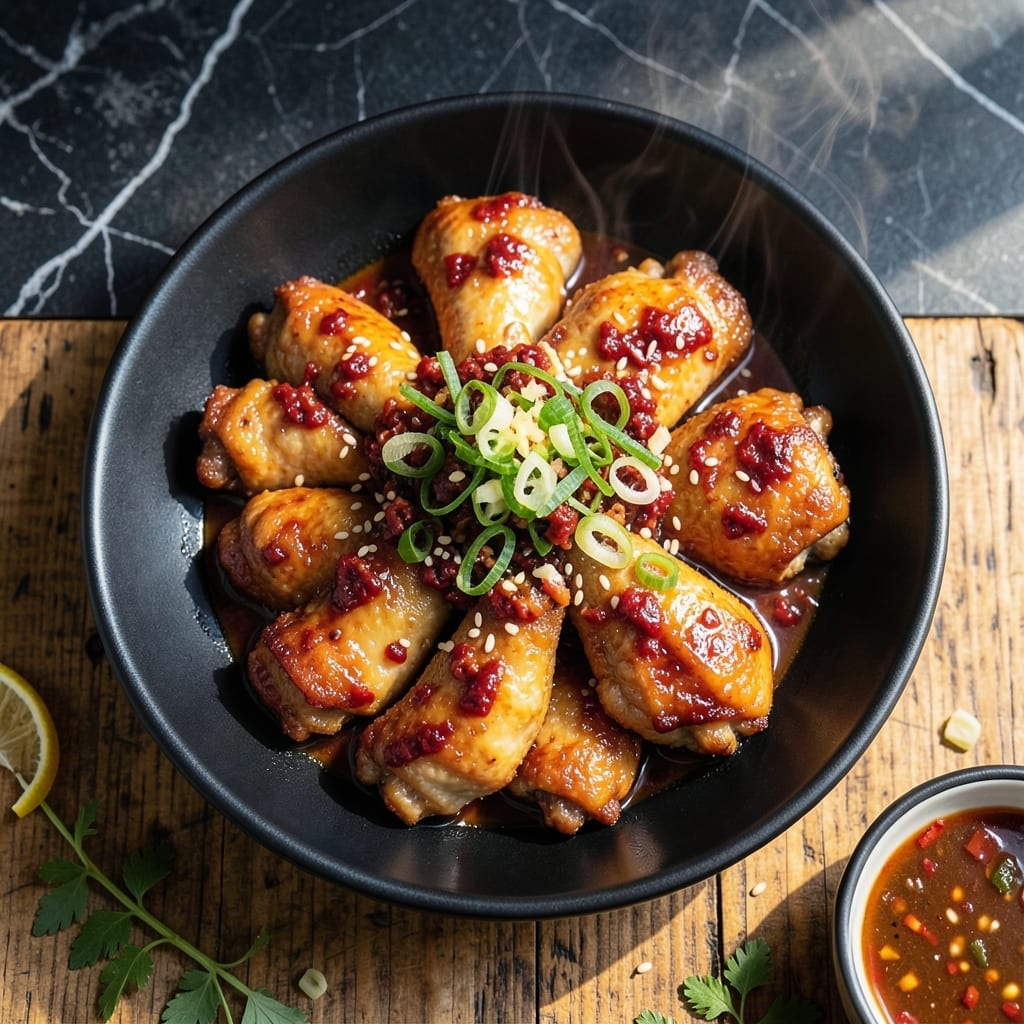
This Korean-inspired chicken delivers perfectly balanced sweet and spicy flavors in every bite. The glossy glaze caramelizes beautifully, creating sticky, finger-licking results that rival any restaurant version.
The secret lies in a double-coating technique that ensures maximum flavor adhesion. Simple ingredients transform into a complex sauce that’s both tangy and slightly sweet, with just enough heat to keep things interesting.
You’ll achieve tender, juicy chicken with a glossy, caramelized exterior that’s impossible to resist. The dish comes together quickly, making it ideal for weeknight dinners with impressive results.
Serve with steamed rice and quick-pickled vegetables to complete the meal. This recipe brings authentic Korean flavors to your home kitchen with minimal effort.
Ingredients for Zippy’s Korean Chicken
Simple ingredients transform into a complex, sticky-sweet glaze that defines this dish.
| Ingredient | Amount | Notes |
|---|---|---|
| Chicken Thighs 🍗 | 2 lb | Boneless, skinless, cut into bite-sized pieces |
| Soy Sauce 🫒 | ½ cup | Low-sodium preferred for balance |
| Gochujang 🌶️ | ⅓ cup | Korean red pepper paste, essential for heat |
| Honey 🍯 | ¼ cup | For natural sweetness and glaze |
| Rice Vinegar 💧 | 2 tbsp | Adds tangy brightness to sauce |
| Brown Sugar 🍚 | 2 tbsp | Packed, for depth of flavor |
| Garlic Cloves 🧄 | 6 cloves | Minced for maximum flavor infusion |
| Fresh Ginger 🌿 | 1 tbsp | Grated, adds aromatic warmth |
| Sesame Oil 🫒 | 1 tbsp | Toasted, for nutty aroma |
| Cornstarch 🌾 | 2 tbsp | For thickening the glaze |
| Vegetable Oil 🫒 | ¼ cup | High smoke point for frying |
| Toasted Sesame Seeds 🌻 | 1 tbsp | For garnish and crunch |
| Green Onions 🧅 | 4 whole | Thinly sliced for fresh finish |
The chicken is the foundation here. Boneless, skinless thighs stay juicier than breasts during cooking. Look for fresh, plump pieces at your butcher or Whole Foods—avoid anything with added solutions. Gochujang is non-negotiable; find it in the international aisle or at a Korean market for authentic flavor. The sauce balances sweet, spicy, and tangy perfectly, so don’t skip the rice vinegar.
No gochujang? Sriracha plus a teaspoon of miso paste gets you close but won’t be the same. Honey can be swapped for maple syrup or agave if needed. For extra depth, add a splash of fish sauce (vegetarian versions work too). The cornstarch is key for that glossy finish—ensure it’s fully dissolved before adding to the sauce. Fresh ginger is ideal, but ground ginger at half the amount works in a pinch.
The glaze thickens as it cools, so serve immediately for that perfect sticky texture. Leftovers keep for 3-4 days in the fridge—reheat gently to avoid breaking the sauce. Freeze cooked chicken in sauce for up to 1 month (the texture softens slightly but the flavor holds).
Why You’ll Love This Recipe
- One Pan Magic: I toss everything in a single dish—chicken thighs, gochujang, honey—and let the oven do the work.
- Sweet-Spicy Addiction: That sticky glaze from the honey and gochujang? I catch myself licking the plate every time.
- Meal Prep MVP: It reheats beautifully, so I pack leftovers for lunch all week. (Yes, even on a Tuesday night)
- Budget Friendly: Chicken thighs stay cheap, and a little gochujang goes a long way for maximum flavor.
Step-by-Step Instructions for Sweet and Spicy Glazed Chicken
This method ensures perfectly crispy, saucy chicken with balanced sweet and spicy flavors every time.
Step 1: Prepare the Marinade Base
In a mixing bowl, combine the 0.5 cup soy sauce, 0.33 cup gochujang, 0.25 cup honey, 2 tbsp rice vinegar, 2 tbsp brown sugar, minced 6 cloves garlic cloves, and grated 1 tbsp fresh ginger. Whisk vigorously until the brown sugar fully dissolves and the mixture becomes smooth and glossy.
The gochujang will create a thick, vibrant red base with some texture—this is normal. I always taste at this stage and adjust the balance if needed, though the recipe is calibrated for optimal sweet-spicy harmony. Let this sit while you prep the chicken to allow flavors to meld.
Step 2: Coat and Fry the Chicken
Toss the 2 lb chicken thighs in the 2 tbsp cornstarch until each piece is evenly coated with a thin, white layer. This creates the foundation for that signature crispy texture. Heat the 0.25 cup vegetable oil in a large skillet over medium-high heat until it shimmers but doesn’t smoke.
Working in batches to avoid crowding, fry the chicken for 5-6 minutes per side until golden brown and cooked through to 165°F internally. The cornstarch coating will create a delicate, lacy crust. Transfer to a paper towel-lined plate to drain excess oil while maintaining crispness.
Step 3: Create the Glaze and Finish
Pour off all but 1 tbsp of oil from the skillet, then add the marinade mixture. Stir in the 1 tbsp sesame oil and bring to a gentle simmer over medium heat. Cook for 3-4 minutes until the sauce thickens slightly and becomes glossy—it should coat the back of a spoon but still be pourable.
Return all chicken to the skillet and toss to coat evenly in the sauce. Cook for an additional 2 minutes, allowing the sauce to cling and caramelize slightly on the crispy exterior. The chicken should glisten with a deep, mahogany-colored glaze without becoming soggy.
Step 4: Garnish and Serve
Transfer the chicken to a serving platter and immediately sprinkle with the 1 tbsp toasted sesame seeds. The residual heat will help them adhere to the sticky glaze. Thinly slice the 4 whole green onions on a diagonal and scatter them over the top for a fresh, sharp contrast to the rich sauce.
Serve immediately while hot—the contrast between the crispy chicken, thick glaze, and fresh garnishes is at its peak. The sesame seeds should be fragrant and the green onions should retain their bright color and slight crunch.
Pro Tips For Making Zippy’S Korean Chicken
- Pat Thighs Dry: Sounds weird, but it works: blot the chicken thighs with paper towels before marinating so the sauce clings better instead of pooling at the bottom of the dish.
- Balance the Gochujang: I learned this the hard way—taste your gochujang before mixing. If it’s extra spicy, add a teaspoon more honey to mellow it out without losing that zippy kick.
- Don’t Boil the Glaze: Keep the heat at medium when reducing the sauce—high heat burns the honey and turns it bitter. Simmer until it coats the back of a spoon, about 3-4 minutes.
- Marinate Overnight: My grandmother swore by this, and she was right: give the thighs at least 4 hours (or overnight) in the fridge for the soy sauce and gochujang to really sink in.
Dietary Considerations for This Recipe
Gluten-Free Option
Swap the soy sauce for tamari (a gluten-free soy alternative) to make this dish completely gluten-free. I personally use San-J tamari—it has the same depth of flavor without any wheat. Double-check your gochujang label too, as some brands contain wheat as a thickener. 💡
Lower Sugar Version
Reduce the honey to 2 tbsp and use 1 tbsp brown sugar to cut down on sweetness without losing the glaze’s caramelized texture. Add 1 tsp apple cider vinegar to balance the flavors if needed. The sauce will still cling beautifully to the chicken.
Dairy-Free and Egg-Free
This dish is naturally free of dairy and eggs, making it perfect for those with allergies. The crispy coating comes from cornstarch, not flour or egg wash. Just ensure your gochujang doesn’t contain any dairy-based additives—most traditional brands are safe.
Spice Level Adjustment
For a milder version, reduce gochujang to ¼ cup and add 1 tbsp tomato paste for depth without heat. For extra spice, add ½ tsp cayenne pepper or 1 chopped Thai chili to the sauce. I always keep a small bowl of extra gochujang on the side for heat lovers.
Low-Carb/Keto Adaptation
Replace the honey with a sugar-free substitute like monk fruit sweetener or erythritol. Use 1 tbsp xanthan gum instead of cornstarch to thicken the sauce. The result won’t be exactly the same, but it’s a solid keto-friendly alternative.
Nut Allergy Note
This recipe is nut-free as written, but always verify your sesame oil and toasted sesame seeds if you have severe allergies. Some brands process sesame in facilities with nuts. For complete peace of mind, omit the sesame garnish and use extra green onions instead.
Nutrition Facts
Frequently Asked Questions
Can I use chicken breasts instead of thighs?
Yes, but thighs stay juicier. If using breasts, reduce cooking time to 4-5 minutes per side to prevent dryness. The cornstarch coating helps retain moisture.
What if I don’t have gochujang?
Substitute with 2 tbsp sriracha plus 1 tsp miso paste for a similar flavor. It won’t be identical, but the sweet-spicy balance will still shine.
How do I store leftovers?
Keep in an airtight container in the fridge for 3-4 days. Reheat gently on the stove to avoid breaking the glaze. Freeze for up to 1 month.

- Jollof Rice Sauce Recipe: West African Tomato and Spice Infusion - September 25, 2026
- Japanese Rice Soup Recipe: Umami-Rich Comfort in a Bowl - September 25, 2026
- Homemade Cream Of Rice Recipe: Silk-Smooth Breakfast in Minutes - September 25, 2026