
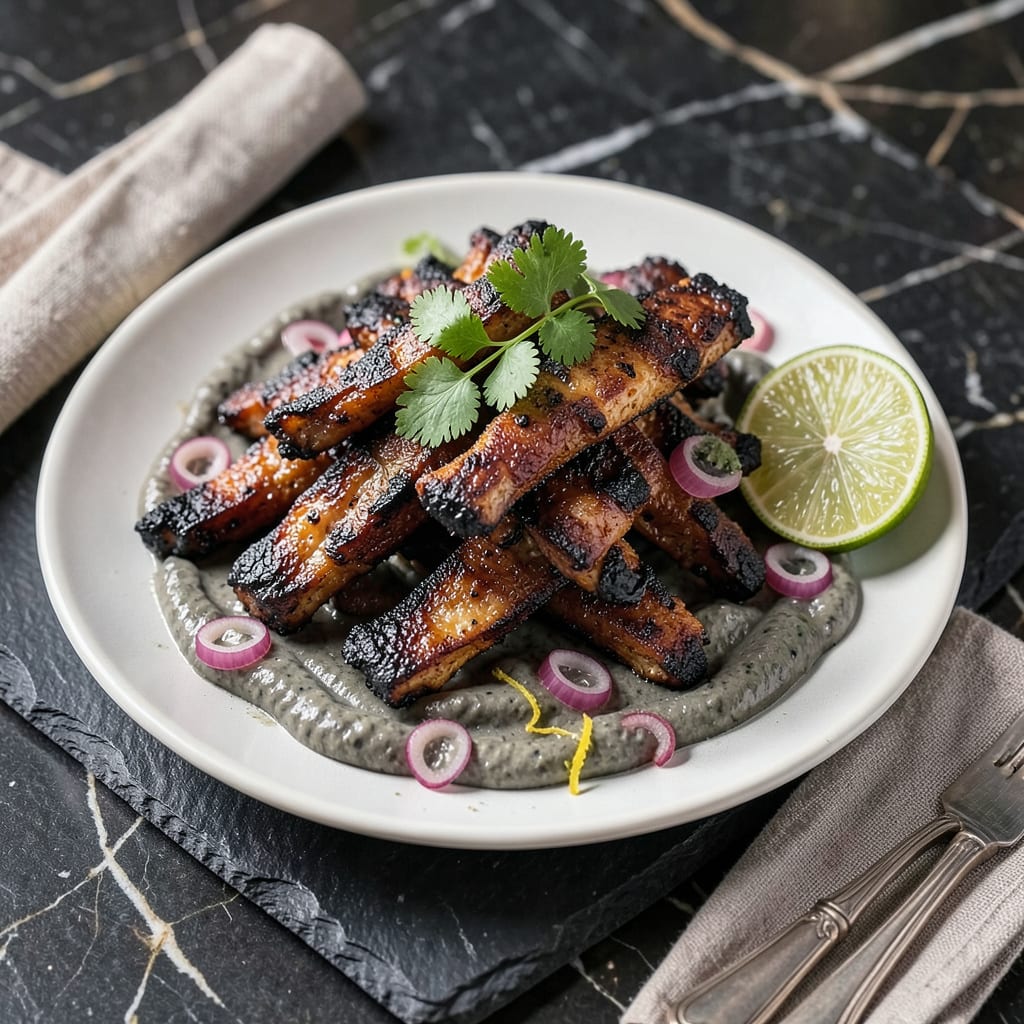
Lightly burnt chicken strips can often be saved by trimming the charred edges and soaking in milk or broth for 10-15 minutes. For severe burns, repurpose them into shredded chicken for tacos, salads, or casseroles to mask the flavor.
When you’re dealing with overcooked chicken, the key is working with texture and moisture. 🔥 The milk or broth soak isn’t just about adding flavor—it actually helps rehydrate the protein fibers that tighten up when exposed to excessive heat. I’ve found this technique works particularly well with buttermilk, which has a slight acidity that tenderizes while it moisturizes.
For strips that are beyond simple fixes, think of them as a flavor base rather than a standalone dish. The caramelized (burnt) bits actually develop deep, smoky notes that work surprisingly well in strongly seasoned dishes. My go-to move is tossing them with chipotle sauce and using them as nacho toppings—no one ever guesses they started as kitchen mishaps! ✨
💡 In This Article
- Why Chicken Strips Burn So Quickly and How Heat Works
- 5 Creative Ways to Salvage Burnt Chicken Strips in Recipes
Why Chicken Strips Burn So Quickly and How Heat Works
Chicken strips burn faster than whole pieces because of their high surface-area-to-volume ratio. When you cut chicken into thin strips, you expose more protein to direct heat, accelerating the denaturation process. Proteins in chicken begin unfolding at 140°F and fully coagulate by 165°F, but beyond 200°F, they start breaking down into dry, tough fibers.
The thinner the strip, the quicker this transformation happens. 🔥
The Maillard reaction (that delicious browning) occurs between 280-330°F, but actual burning begins around 400°F when sugars and amino acids carbonize. Marinades with sugar or honey can drop this burning point by 50-100°F because sugars caramelize at 320°F. That’s why honey-mustard coated strips blacken faster than plain ones.
Oil choice matters too—vegetable oil smokes at 400°F while butter burns at just 300°F. ✨
Here’s what’s actually happening at the molecular level: Heat causes collagen in chicken to contract violently, squeezing out moisture. Without proper resting, these contracted fibers can’t reabsorb juices, leaving you with dry, rubbery strips. The outer layers also form a crust that insulates the center—this is why burnt strips often have raw centers. The solution?
Lower heat (350°F max) and frequent flipping to prevent hotspot formation. 💫
Your cooking surface plays a bigger role than you think. Cast iron retains heat at 20% higher efficiency than stainless steel, creating hotspots that char strips unevenly. Nonstick pans distribute heat more evenly but can’t handle temperatures above 500°F before degrading.
For perfect strips, use medium-high heat (375°F) and check oil temperature with a thermometer—visual “shimmering” isn’t reliable enough. 🌟
Even distribution is key—crowding the pan drops oil temperature by 50-100°F, causing strips to steam rather than sear. This creates that dreaded “burnt outside, raw inside” scenario. Professional kitchens use the “two-zone” method: sear at high heat (400°F) for 1-2 minutes per side, then finish in a 350°F oven.
This prevents the acute temperature spikes that lead to burning while ensuring even cooking. ⚡
What most people don’t realize is that carryover cooking continues raising internal temperature by 5-10°F after removal from heat. That’s why strips often go from perfect to burnt while “resting.” The fix?
Pull them 5°F before your target temperature (so 160°F for safe eating) and transfer to a wire rack—not a plate—to prevent steam from making the crust soggy. 💛

- Jollof Rice Sauce Recipe: West African Tomato and Spice Infusion - September 25, 2026
- Japanese Rice Soup Recipe: Umami-Rich Comfort in a Bowl - September 25, 2026
- Homemade Cream Of Rice Recipe: Silk-Smooth Breakfast in Minutes - September 25, 2026