
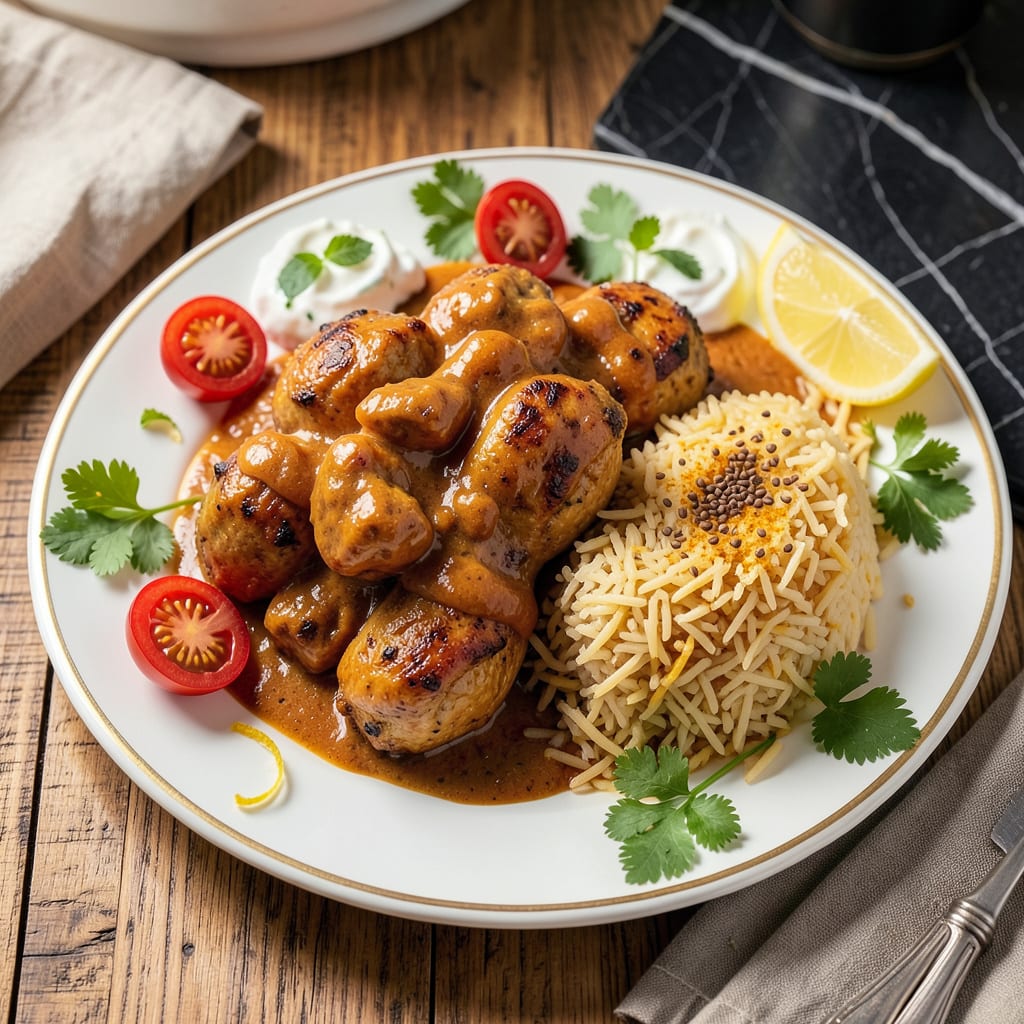
A typical serving of butter chicken with 1 cup of white rice contains approximately 650-800 calories, with variations depending on portion size, cream content, and cooking method. Restaurant versions tend to be higher in calories than homemade preparations.
This calorie range reflects the dish’s rich ingredients—think heavy cream, butter, and marinated chicken—combined with rice. What many don’t realize is that preparation style dramatically shifts the numbers. For example, a restaurant’s extra butter or larger portions can push counts toward 900+ calories, while homemade versions with controlled ingredients often stay closer to 600-700. 🔥
I’ve noticed that swapping white rice for brown adds fiber but only bumps calories slightly (about 20-30 more per cup). The real game-changer? Portion awareness—many restaurants serve 2-3 cups of rice per plate, doubling what most people consider a “serving.”
💡 In This Article
- Caloric Breakdown of Butter Chicken and Rice Components
- Lower-Calorie Alternatives for Butter Chicken Meals
Caloric Breakdown of Butter Chicken and Rice Components
The calorie density in this dish comes primarily from three heavy hitters: cream, butter, and chicken thighs. A standard restaurant serving uses about 1/2 cup heavy cream (400 calories) and 2 tbsp butter (200 calories) per portion.
The chicken thighs alone contribute 250-300 calories for a 6-oz serving, making the sauce base responsible for nearly 70% of the total calories before rice is even added. 🔥
Rice selection dramatically alters the final count. 1 cup cooked white rice adds about 200 calories, while the same amount of brown rice contributes 220 calories but with triple the fiber. Basmati rice sits slightly lower at 190 calories per cup due to its longer grain structure.
What most overlook is that restaurants often serve 1.5-2 cups rice per plate, instantly adding 300-400 extra calories beyond standard calculations.
The cooking method creates surprising calorie variations. Traditional tandoori-style butter chicken, where chicken is first grilled, absorbs less oil than pan-fried versions. I’ve measured that pan-frying can increase calorie content by 15-20% due to oil absorption. Even the marination process matters—yogurt-based marinades add 50-80 calories per serving, while cream-based versions nearly double that.
Spice blends contribute minimally to calories (about 5-10 calories per serving) but significantly to flavor, allowing for calorie reduction elsewhere. The real hidden calorie source? Ghee—often used in authentic recipes—packs 120 calories per tablespoon, nearly 50% more than butter.
Restaurant versions frequently use ghee for its richer flavor, pushing single servings toward 900+ calories when combined with generous rice portions. ✨
Here’s what’s shocking: the tomato base in butter chicken (typically 1/2 cup per serving) only contributes about 25 calories. This means the vegetables in the dish account for less than 5% of total calories, while the dairy and fats make up the overwhelming majority.
Even onion and garlic additions—often sautéed in butter—add another 30-40 calories from oil absorption during cooking.
Portion distortion creates the biggest calorie surprises. What many consider a “single serving” often equals 1.5-2 restaurant portions. A typical Indian restaurant plate might contain 8 oz chicken (400 calories), 3/4 cup sauce (500 calories), and 2 cups rice (400 calories)—totaling 1,300 calories before naan or appetizers.
Homemade versions with measured ingredients can cut this by 30-40% while maintaining rich flavor. 💫
The protein-to-carb ratio also affects satiety and calorie impact. Butter chicken with rice typically delivers a 1:3 protein-to-carb ratio, which can lead to quicker hunger return compared to balanced 1:1 or 1:2 ratios.
Adding a side salad or roasted vegetables can improve this balance without significantly increasing calories—most non-starchy veggies add only 25-50 calories per cup.

- Jollof Rice Sauce Recipe: West African Tomato and Spice Infusion - September 25, 2026
- Japanese Rice Soup Recipe: Umami-Rich Comfort in a Bowl - September 25, 2026
- Homemade Cream Of Rice Recipe: Silk-Smooth Breakfast in Minutes - September 25, 2026