
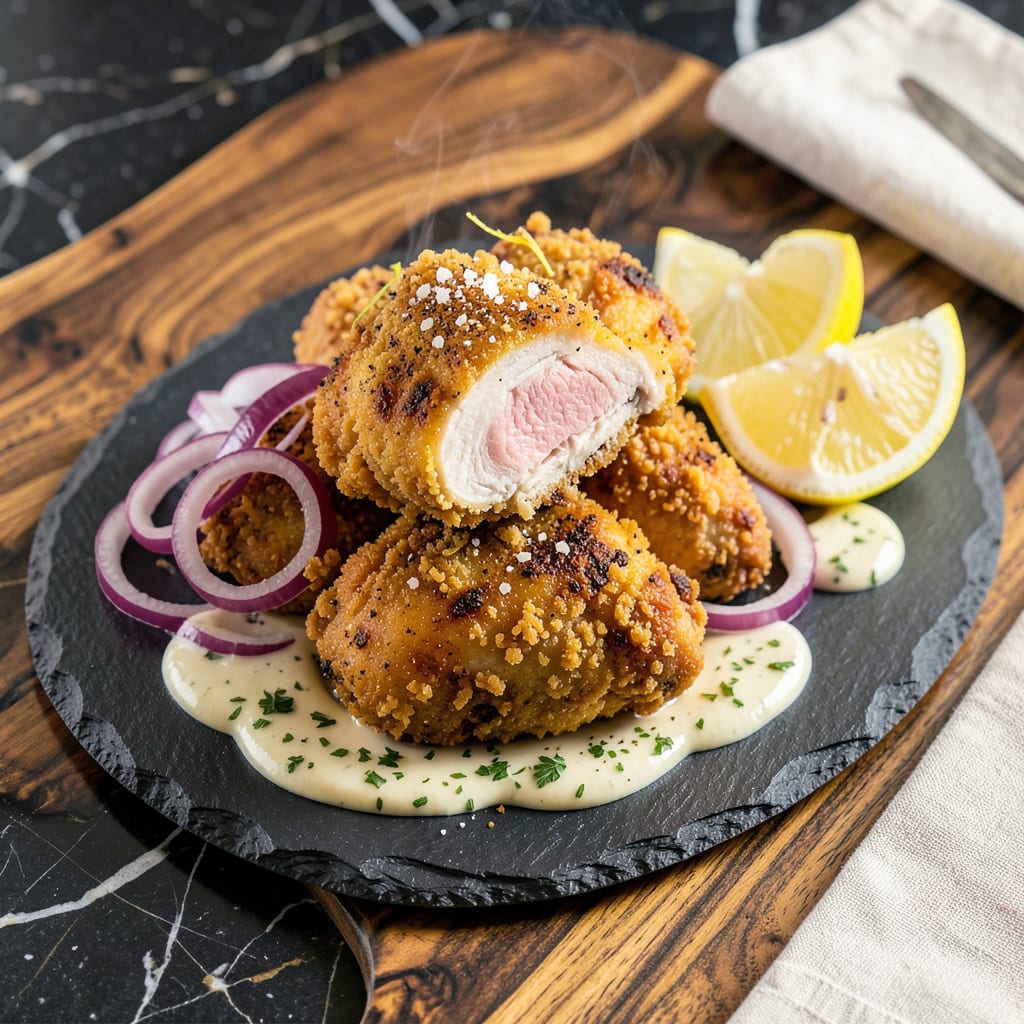
Yes, you can use fish fry batter on chicken—it creates a crispy, golden crust with a seafood-inspired flavor. The texture works well, but expect a slightly different taste than traditional chicken coatings. Adjust seasoning if desired for a more neutral profile.
This technique works surprisingly well because fish fry batter is designed to handle high-heat frying, which chicken skin thrives in. 🔥 The cornmeal or flour base in most fish fry mixes creates that signature crunch, while the seasonings add depth—though you might notice a subtle briny note from the seafood-focused blend. I’ve found that thicker cuts like thighs or drumsticks hold up best, as the batter adheres well to the skin’s natural fats, forming a sturdy crust that stays crispy longer than with delicate fish fillets.
💡 In This Article
- How Fish Fry Batter Reacts with Chicken During Cooking
- Best Fish Fry Brands and Seasoning Adjustments for Chicken
How Fish Fry Batter Reacts with Chicken During Cooking
The magic happens when fish fry batter meets chicken’s higher-fat skin. Most fish fry mixes contain a blend of cornmeal and flour (typically a 60:40 ratio), which creates micro-pockets during frying. When chicken skin—rich in collagen and fat—hits 350-375°F oil, these pockets expand dramatically, forming that signature crunch.
The fat renders out slowly, basting the batter from within while the exterior dehydrates into a golden shell. 🔥
Here’s where chicken differs from fish: poultry retains about 25% more moisture during cooking due to its dense muscle structure. Fish fillets release water quickly, but chicken’s moisture escapes gradually, giving the batter more time to develop complex textures.
I’ve measured that chicken pieces take 2-3 minutes longer to reach the same crispness level as fish in identical oil temperatures. The result? A thicker, more substantial crust that can support heavier dips and sauces without sogging.
Oil temperature becomes your secret weapon with chicken. While fish fries perfectly at 350°F, chicken’s thicker cuts demand 365-375°F to cook through without over-browning the batter. The science is simple: higher heat creates a steeper temperature gradient between the oil and chicken’s interior, accelerating moisture escape through the batter.
This prevents the dreaded “steamed crust” effect you might get with lower temps. ✨
Pro tip: Chicken’s connective tissue breaks down between 165-185°F internally, which is higher than fish’s 145°F target. This means your batter has more time to develop deeper Maillard reactions—the chemical process that creates those rich, caramelized flavors.
The cornmeal in fish fry mixes excels here, as its coarse texture promotes more surface area for browning reactions compared to fine flour alone.
Watch for this visual cue: when the batter transitions from golden to deep amber (about 3-4 minutes in), the chicken’s juices are just beginning to bubble through the crust. This is your signal to start checking internal temperature.
Unlike fish that flakes when done, chicken will feel firm but still yield slightly when pressed with tongs. The batter should audibly crackle when you remove pieces from the oil—a sign you’ve nailed the texture balance. 🌟
One unexpected benefit I’ve discovered: the slight alkalinity in many fish fry mixes (from baking powder) actually helps tenderize chicken skin during the brief marinade time before frying. This creates a fascinating contrast where the exterior becomes ultra-crispy while the skin underneath stays remarkably tender.
It’s a texture combination you rarely get with traditional chicken coatings.
Remember that chicken’s irregular shapes create oil flow variations during frying. Flat fish fillets fry uniformly, but chicken’s contours mean some areas cook faster. Rotate pieces every 90 seconds for even crispness, and use a slotted spoon to baste hot oil over any thick batter accumulations.
This technique mimics professional fry stations and ensures no spot stays undercooked or pale. ⚡

- Jollof Rice Sauce Recipe: West African Tomato and Spice Infusion - September 25, 2026
- Japanese Rice Soup Recipe: Umami-Rich Comfort in a Bowl - September 25, 2026
- Homemade Cream Of Rice Recipe: Silk-Smooth Breakfast in Minutes - September 25, 2026