
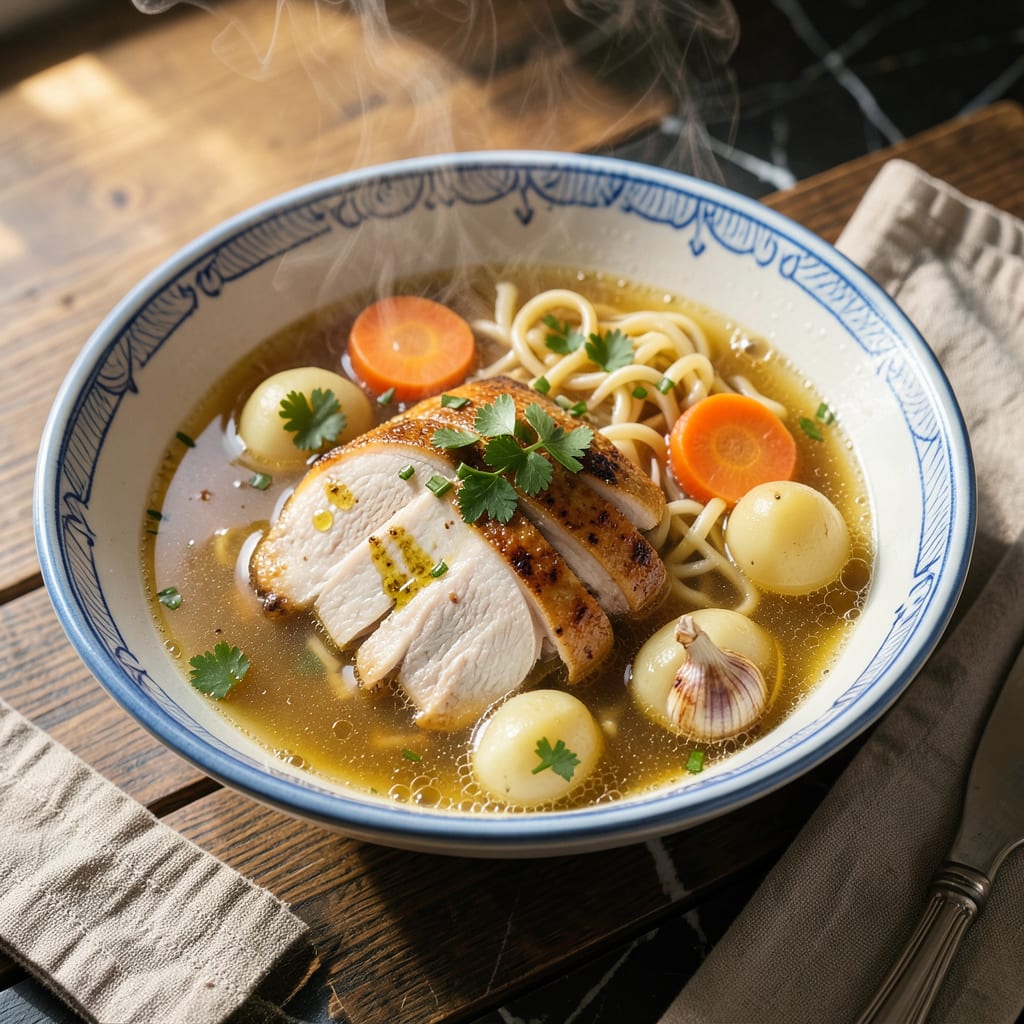
Yes, you can make chicken broth with chicken breast, though it produces a lighter, milder flavor than bone-in cuts. For best results, use a 1:2 meat-to-water ratio, simmer gently for 1.5–2 hours, and add aromatics like onions, carrots, and herbs to boost depth.
I love using chicken breast for broth when I want a clean, delicate base for recipes like risotto or poached dishes. The lean meat yields a golden liquid that won’t overpower other ingredients, which is perfect for showcasing fresh herbs or citrus notes. 🔥 What’s key here is the simmering technique—too aggressive and you’ll toughen the meat, too gentle and you’ll miss extracting every bit of flavor. I’ve found that adding a splash of white wine or apple cider vinegar early on helps break down the proteins for richer results.
This method shines when you’re short on time but still want homemade quality. While traditional bone broths develop collagen-rich body over hours, breast-based versions deliver bright, immediate flavor that works beautifully in quick-cooking dishes. ✨ Just remember to skim the foam that rises during the first 20 minutes—this keeps your broth crystal clear and prevents bitterness from forming.
💡 In This Article
- Why Chicken Breast Broth Differs From Traditional Stocks
- Pro Tips for Maximizing Flavor in Chicken Breast Broth
Why Chicken Breast Broth Differs From Traditional Stocks
The key difference lies in the collagen content—or lack thereof. Chicken bones and connective tissues are packed with collagen that breaks down into gelatin during long simmering, giving traditional stocks their signature body and mouth-coating richness.
Breast meat, being lean, contains almost no collagen (0.5g per 100g vs. 6g in chicken feet), so the resulting broth stays thin and clear. 🔥
Flavor extraction works differently too. Bones release minerals like calcium and phosphorus that contribute to depth, while breast meat primarily offers protein-based savoriness. The simmering window is shorter (1.5-2 hours max) because breast fibers toughen after prolonged heat—unlike bones that can simmer 8-12 hours without issue.
This makes breast broth ideal for delicate dishes where you want the chicken essence without heaviness.
Nutritionally, breast-based broth delivers more protein (2-3g per cup) but far less gelatin (virtually none) compared to bone broth (5-10g gelatin per cup). The amino acid profile shifts too—more tryptophan and lysine from the meat versus glycine and proline from collagen.
This explains why breast broth feels lighter on the palate while bone broth leaves that lingering “sticky” sensation. ✨
Texture tells the story visually. Cool a spoonful of each: bone broth sets like soft jelly when chilled, while breast broth remains liquid. This makes breast versions perfect for consommé or poaching liquids where clarity matters, while bone broths excel in hearty soups needing body.
I’ve found breast broth particularly brilliant for Asian-style clear broths or French velouté sauces where purity of flavor is paramount.
Consider the aroma differences. Bone broth develops deep, meaty notes from Maillard reactions between collagen and amino acids during long cooking. Breast broth stays brighter and cleaner—almost like a concentrated chicken tea—with herbal or citrus additions shining through.
The absence of rendered fat means aromatics infuse more directly, which is why I double the usual herb quantities when using breast meat. 💫
One unexpected advantage? Breast broth concentrates faster. With no bones to buffer the process, flavors intensify more quickly. I’ve achieved restaurant-quality depth in 90 minutes by using a 1:1.5 meat-to-water ratio and reducing by a third—something that would take bone broth 4+ hours to match.
This makes it my go-to for weeknight cooking when time is tight but quality can’t be compromised.

- Jollof Rice Sauce Recipe: West African Tomato and Spice Infusion - September 25, 2026
- Japanese Rice Soup Recipe: Umami-Rich Comfort in a Bowl - September 25, 2026
- Homemade Cream Of Rice Recipe: Silk-Smooth Breakfast in Minutes - September 25, 2026