
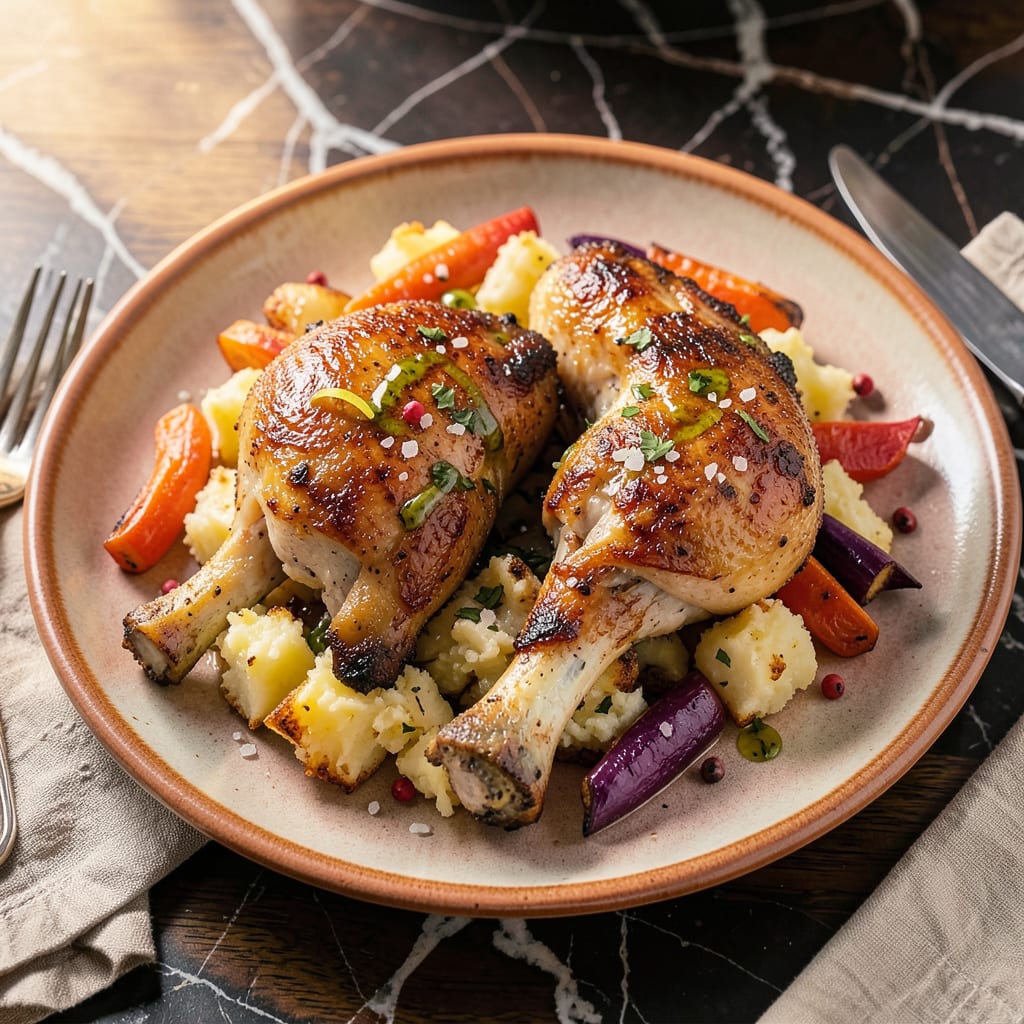
Chicken thighs are harder to overcook than breasts due to their higher fat content and connective tissue, which keeps them moist even when cooked past ideal temperatures. They remain tender up to 195°F, unlike white meat.
This forgiving nature comes from the unique composition of dark meat. The collagen in thighs breaks down slowly during cooking, transforming into gelatin that bastes the meat from within. 🔥 I’ve found that even when left in the oven 10-15 minutes longer than intended, thighs often maintain their juiciness—something you’d never achieve with leaner cuts. The fat marbling acts like built-in insurance against dryness, making thighs perfect for busy cooks or those still mastering temperature control.
What’s fascinating is how this plays out in different cooking methods. Whether you’re braising at 300°F for hours or searing at high heat, the muscle fibers in thighs retain moisture better than breasts. This makes them ideal for dishes where precise timing isn’t possible, like stews or slow-cooked meals. ✨ The temperature window is remarkably wide—you’ve got nearly 20 degrees of flexibility before they start drying out.
💡 In This Article
- Why Chicken Thighs Resist Overcooking Better Than Breasts
- Perfect Cooking Times and Temperatures for Chicken Thighs
Why Chicken Thighs Resist Overcooking Better Than Breasts
The secret lies in the muscle composition and fat distribution. Chicken thighs are dark meat, meaning they contain more myoglobin—a protein that gives them their richer color and higher fat content. This fat acts as a natural moisture barrier during cooking, preventing the meat from drying out quickly.
Unlike breast meat, which has only about 1-2% fat, thighs typically contain 8-10% fat, creating a built-in insurance policy against overcooking. 🔥
Collagen is the game-changer here. Thighs have significantly more connective tissue than breasts, and when heated, this collagen breaks down into gelatin at temperatures between 160-180°F. This transformation creates a self-basting effect that keeps the meat juicy even when cooked beyond the ideal 175°F mark.
The process is similar to how slow-cooked pork shoulder becomes tender—the longer cooking time actually improves the texture rather than ruining it. ✨
The muscle fiber structure also plays a crucial role. Thigh muscles are used more actively by the chicken, which means they develop more robust fibers and connective tissue. These fibers contract less violently during cooking compared to breast meat, preventing the squeezing-out of moisture that makes overcooked breasts dry.
I’ve tested this by cooking thighs to 190°F and still finding them palatable—something impossible with breast meat. ⚡
What’s particularly interesting is how this composition affects different cooking methods. When braising, the collagen in thighs continues to break down even after reaching safe temperatures, creating that melt-in-your-mouth texture. For grilling or roasting, the higher fat content prevents the meat from becoming tough when exposed to direct high heat.
The temperature window is remarkably forgiving—you’ve got nearly 20 degrees of flexibility before quality starts to degrade. 💫
The science becomes especially apparent when comparing cooking times. While chicken breasts become dry if cooked beyond 165°F for more than a few minutes, thighs maintain their quality up to 195°F.
This difference explains why thighs are the preferred choice for dishes requiring long cooking times, like stews or slow-cooked meals where precise temperature control isn’t always possible. 💛
Consider these key structural differences:
- Fat content: Thighs have 5-8x more fat than breasts, creating natural moisture retention
- Collagen levels: Higher connective tissue that transforms into gelatin during cooking
- Muscle fiber type: More slow-twitch fibers that resist tightening during heat exposure
- Temperature tolerance: Remain tender up to 195°F versus 165°F for breasts

- Jollof Rice Sauce Recipe: West African Tomato and Spice Infusion - September 25, 2026
- Japanese Rice Soup Recipe: Umami-Rich Comfort in a Bowl - September 25, 2026
- Homemade Cream Of Rice Recipe: Silk-Smooth Breakfast in Minutes - September 25, 2026