
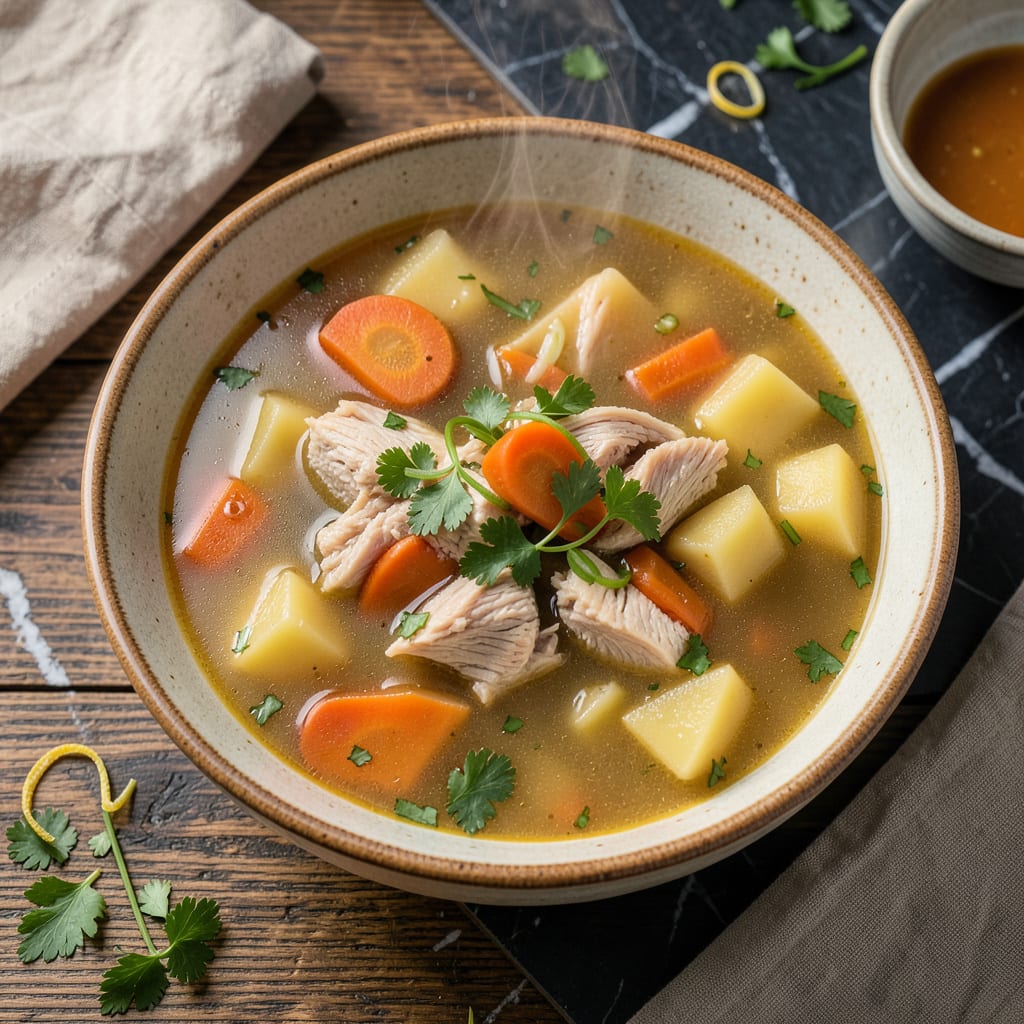
Yes, potatoes work wonderfully in chicken soup—they add hearty texture and absorb flavors beautifully. Use waxy varieties like Yukon Gold or red potatoes to prevent mushiness, adding them 15-20 minutes before serving for perfect tenderness.
I love how potatoes transform chicken soup from a light broth into a satisfying meal. 🔥 The starch they release naturally thickens the liquid, creating a velvety consistency that clings to every spoonful. Waxy varieties hold their shape better than starchy ones, which is why I always reach for Yukon Golds—they maintain a pleasant bite even after simmering. Timing matters too: add them too early and they’ll turn to mush; too late and they’ll taste undercooked. That 15-20 minute window before serving is the sweet spot for ideal texture and flavor absorption.
💡 In This Article
- Why Potatoes Thrive in Chicken Soup Flavor Pairings
- Best Potato Types and Prep Tips for Chicken Soup
Why Potatoes Thrive in Chicken Soup Flavor Pairings
Potatoes act like flavor sponges in chicken soup, thanks to their starch content and cellular structure. When simmered, their cell walls break down just enough to absorb savory broth while releasing amylose—a starch that naturally thickens the liquid. This creates a velvety mouthfeel that complements chicken’s umami notes.
🔥 The science is simple: potatoes contain about 17-20% starch, which gelatinizes at 140-150°F, right in the soup’s simmering range.
Texture dynamics play a huge role in the pairing. Waxy potatoes (like Yukon Golds) maintain their shape because their cells are tightly packed with low amylose content. Starchy varieties (like Russets) break down faster, releasing more thickening power but risking mushiness.
I’ve found that 3/4-inch cubes cook evenly in 15-20 minutes, allowing the edges to soften while keeping centers intact. The contrast between tender potatoes and shredded chicken creates satisfying bite variation.
The flavor marriage works because potatoes’ mild sweetness balances chicken’s savory depth. As they cook, their natural sugars caramelize slightly at the edges, adding subtle complexity. This is why I always add potatoes during the final simmering phase—it gives them time to absorb broth flavors without over-softening.
The starch they release also helps emulsify any fat from the chicken, creating a richer, more cohesive mouthfeel.
What most people overlook is how potato skins contribute. Leaving them on adds earthy notes and extra fiber, but they can make the broth slightly cloudy. For clear soups, I peel them; for rustic versions, I leave skins intact. The key is matching your prep to the soup style.
💫 Pro tip: Toss cubes with a pinch of salt before adding to the pot—this helps them absorb seasoning more evenly.
Temperature control is everything. Potatoes added to boiling broth will cook unevenly, with exteriors turning mushy before centers soften. A gentle simmer at 180-200°F allows even cooking. I test doneness with a fork—it should slide in easily but meet slight resistance at the center.
This ensures they’ll hold up when ladled into bowls without turning to paste.
Consider the broth’s acidity too. If your soup contains tomatoes or wine, the acid can prevent potatoes from softening properly. In these cases, I either par-cook the potatoes separately or add a pinch of baking soda to neutralize the acid. This small adjustment makes a surprising difference in texture consistency. ✨
The final magic happens during resting. Letting the soup sit off-heat for 10-15 minutes allows potatoes to finish absorbing flavors. This resting period also lets the starches fully distribute through the broth, creating that perfect spoon-coating consistency we all love in hearty soups.

- Jollof Rice Sauce Recipe: West African Tomato and Spice Infusion - September 25, 2026
- Japanese Rice Soup Recipe: Umami-Rich Comfort in a Bowl - September 25, 2026
- Homemade Cream Of Rice Recipe: Silk-Smooth Breakfast in Minutes - September 25, 2026