
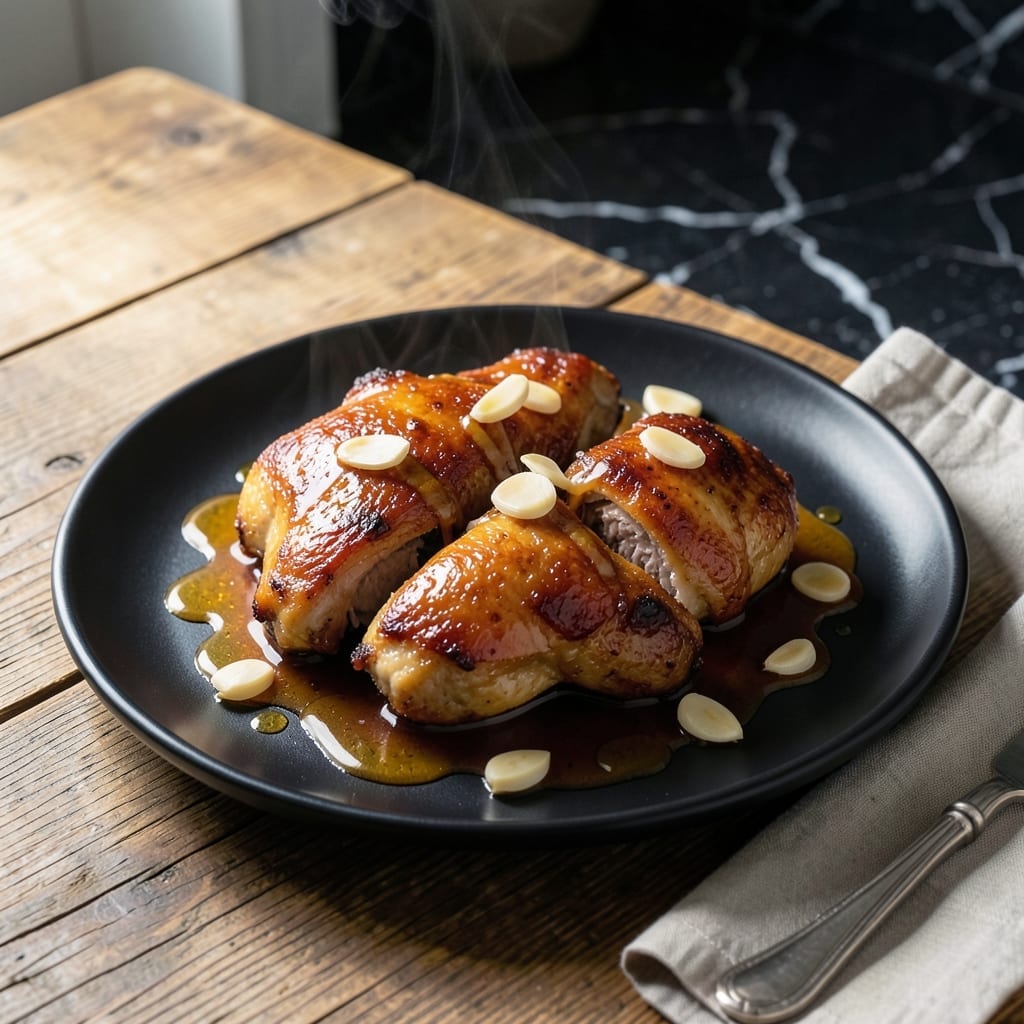
This dish perfectly balances sweet and savory with a glossy, sticky glaze that clings to every piece of chicken. The caramelization process transforms simple ingredients into something extraordinary.
I developed this method to ensure the sauce thickens without burning, creating a rich coating that enhances the chicken’s natural flavors. The key is patience and precise heat control.
The result is tender, flavorful chicken with a deep amber glaze that’s both sweet and slightly salty. It pairs beautifully with steamed rice or crisp vegetables.
This recipe delivers restaurant-quality results with straightforward techniques. The glaze reduces to the perfect consistency every time.
Ingredients for Caramel Chicken
These ingredients create a glossy, sticky glaze that transforms chicken into something extraordinary.
| Ingredient | Amount | Notes |
|---|---|---|
| Chicken Thighs 🍗 | 2 lb | Boneless, skinless, trimmed of fat |
| Granulated Sugar 🍚 | ¾ cup | For caramel base |
| Brown Sugar 🟤 | ½ cup | Light or dark variety |
| Soy Sauce 🫙 | ⅓ cup | Low-sodium preferred for balance |
| Rice Vinegar 🍶 | 2 tbsp | Balances sweetness with acidity |
| Garlic Cloves 🧄 | 4 cloves | Minced for depth of flavor |
| Fresh Ginger 🌿 | 1 tbsp | Peeled and finely grated |
| Cornstarch 🌾 | 1 tbsp | Thickens the glaze to perfection |
| Water 💧 | ¼ cup | For cornstarch slurry |
| Vegetable Oil 🫒 | 2 tbsp | High smoke point for searing |
| Green Onions 🧅 | 3 whole | Thinly sliced for garnish |
| Sesame Seeds 🌰 | 1 tbsp | Toasted for garnish (optional) |
| Red Pepper Flakes 🌶️ | ½ tsp | Adds subtle heat to glaze |
The chicken thighs are non-negotiable for this dish—bone-in works too, but boneless keeps things tidy. Look for skin-on if you want extra crispiness (just remove it before cooking). For soy sauce, Kikkoman low-sodium is my go-to, but any quality brand works. The brown sugar adds depth, so don’t skip it. Fresh ginger is a must—jarred ginger lacks the bright, zesty kick.
Out of rice vinegar? Apple cider vinegar at the same amount works in a pinch. No fresh ginger? Ground ginger at one-quarter the amount (but fresh is better). For a gluten-free version, swap soy sauce for tamari. The cornstarch slurry is key for that perfect glaze consistency—don’t eyeball it. Green onions can be swapped for chives if needed.
Store raw chicken in the fridge for up to 2 days—freeze if holding longer. The glaze keeps in a jar for 1 week if you want to make it ahead. Leftovers taste even better the next day once flavors meld. Reheat gently to avoid drying out the chicken.
Why You’ll Love This Recipe
- One Pan Wonder: I toss everything in a skillet—chicken, sugars, soy, vinegar—and let the caramel work its magic while I set the table.
- Sticky Sweet Heat: That glossy caramel glaze from the brown sugar and soy sauce clings to every bite, with just enough tang from the rice vinegar to keep it interesting.
- Weeknight Hero: I’ve served this for quick family dinners and doubled the batch for meal prep—reheats like a dream.
- Budget Friendly: Chicken thighs stay juicy and cheap, and the pantry staples mean I’m never scrambling for special ingredients.
Step-by-Step Instructions for Caramel Chicken
Master this balance of sweet and savory with precise timing and proper caramel technique.
Step 1: Sear the Chicken Thighs
Heat the 2 tbsp Vegetable Oil in a large skillet over medium-high heat until shimmering. Add the 2 lb Chicken Thighs and sear for 4-5 minutes per side until golden brown and cooked through.
You’ll know they’re ready to flip when they release easily from the pan. The internal temperature should reach 165°F. Transfer the chicken to a plate and set aside, leaving the rendered fat in the skillet for building the caramel sauce.
Step 2: Create the Caramel Base
In the same skillet, add the 0.75 cup Granulated Sugar and spread it evenly across the pan. Cook over medium heat without stirring for 3-5 minutes until the sugar melts and turns a deep amber color.
Watch carefully as it transitions from clear to light brown—this happens quickly. Swirl the pan gently if needed to even out the color, but resist stirring. The moment it reaches a rich caramel hue, immediately proceed to the next step to prevent burning.
Step 3: Build the Glaze with Aromatics
Carefully add the 0.5 cup Brown Sugar, 0.33 cup Soy Sauce, 2 tbsp Rice Vinegar, minced 4 cloves Garlic Cloves, and 1 tbsp Fresh Ginger to the caramel. The mixture will bubble vigorously.
Stir constantly for 2-3 minutes until the caramel dissolves and the sauce thickens slightly. Add the 0.5 tsp Red Pepper Flakes for a subtle kick. This combination of sweet, salty, and tangy creates the perfect glaze base.
Step 4: Thicken and Finish the Sauce
In a small bowl, whisk together the 1 tbsp Cornstarch and 0.25 cup Water to create a slurry. Slowly pour this into the simmering sauce while stirring constantly. Cook for an additional 1-2 minutes until the glaze thickens to a syrupy consistency that coats the back of a spoon.
Return the chicken to the skillet and turn to coat each piece thoroughly in the glaze. Allow it to simmer together for 1-2 minutes so the flavors meld and the sauce clings beautifully to the chicken.
Step 5: Garnish and Serve
Transfer the caramel chicken to a serving platter. Sprinkle with the thinly sliced 3 whole Green Onions and 1 tbsp Sesame Seeds for a fresh contrast and visual appeal.
Serve immediately while the glaze is still glossy and sticky. The dish should have a beautiful sheen with the sauce clinging to each piece of chicken, balanced by the bright green of the onions and the nutty aroma of the sesame seeds.
Pro Tips For Making Caramel Chicken
- Pat Dry the Thighs: I learned this the hard way—wet chicken steams instead of caramelizing, so blot those thighs with paper towels before they hit the pan.
- Watch the Sugar: The granulated sugar burns fast once it melts, so keep the heat at medium and stir constantly until it turns amber, about 3-4 minutes.
- Skip the Overcrowding: Resist the urge to dump all the thighs in at once; cook in batches so each piece gets proper browning and that sticky caramel coating.
- Use Room-Temp Soy Sauce: Cold soy sauce straight from the fridge can cause the caramel to seize up, so let it sit out for 10 minutes before adding it to the pan.
Best Sauces and Condiments for These Flavors
Sweet Heat Pairing
For a spicy contrast, I love drizzling sriracha or chili garlic sauce over this dish. The heat cuts through the sweetness beautifully. Start with 1 tsp per serving and adjust to taste. 🌶️
Tangy Complements
Pickled vegetables add brightness that balances the rich glaze. Try quick-pickled cucumbers or radishes with a splash of rice vinegar. Even store-bought kimchi works in a pinch.
Creamy Counterpoints
A cool, creamy element takes this to another level. I often serve with a dollop of sour cream or Greek yogurt thinned with a little water. The contrast in temperature and texture is divine.
Herbal Garnishes
Fresh herbs add freshness to the sticky glaze. Beyond green onions, try cilantro or Thai basil for an Asian-inspired twist. Tear or chop leaves just before serving for maximum flavor.
Citrus Zing
A squeeze of lime or lemon right before eating brightens all the flavors. I keep wedges on the side for guests to add as they like. The acidity perfectly complements the caramel notes. 🍋
Sesame Enhancement
Toasted sesame oil drizzled lightly over the finished dish adds depth. Use 1 tsp per serving and swirl it in at the table. The nutty aroma pairs wonderfully with the caramelized sauce.
Nutrition Facts
Frequently Asked Questions
Can I use chicken breast instead of thighs?
You can, but thighs stay juicier and handle the rich glaze better. If using breasts, reduce cooking time to 3-4 minutes per side and monitor internal temp to avoid drying out.
How do I prevent the caramel from burning?
Keep heat at medium and don’t stir the sugar until it melts. Swirl the pan gently for even coloring. Remove from heat immediately once it reaches deep amber.
What if my glaze is too thin?
Simmer for 1-2 extra minutes or mix 1 tsp cornstarch with 1 tbsp water and stir in. The sauce should coat the back of a spoon when ready.
Can I make this ahead of time?
The chicken is best served fresh, but you can prepare the glaze 1 day ahead. Store in an airtight container and reheat gently before adding to freshly cooked chicken.

- Jollof Rice Sauce Recipe: West African Tomato and Spice Infusion - September 25, 2026
- Japanese Rice Soup Recipe: Umami-Rich Comfort in a Bowl - September 25, 2026
- Homemade Cream Of Rice Recipe: Silk-Smooth Breakfast in Minutes - September 25, 2026