
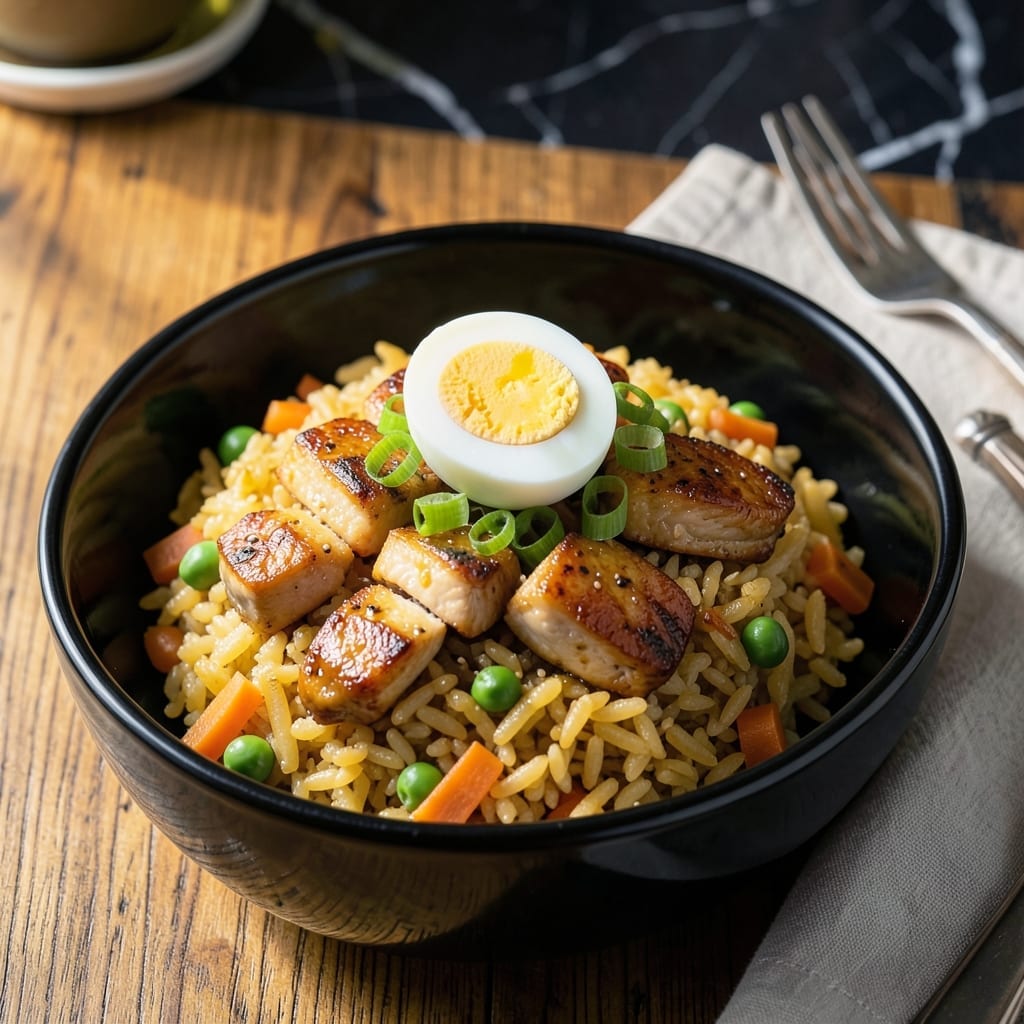
I’ve spent years perfecting this wok-tossed Japanese fried rice, and the secret lies in the high-heat cooking technique that creates that signature smoky flavor. This isn’t your typical fried rice—it’s a carefully balanced dish where each grain stays separate yet absorbs maximum flavor.
The key is using day-old rice and cooking everything in stages at high heat. I always start with cold rice to prevent mushiness, then quickly toss in vegetables, protein, and that magical combination of soy sauce and sesame oil.
What you get is perfectly textured rice with caramelized edges, tender vegetables, and just the right amount of savory seasoning. The beauty is in the details: crisp peas, soft carrots, and that unmistakable wok hei aroma.
Serve it as a main dish or alongside your favorite Japanese entrees. Here’s how to achieve restaurant-quality results at home.
Ingredients for Chahan Rice
Day-old rice, fresh veggies, and a few pantry staples make this wok-tossed classic sing.
| Ingredient | Amount | Notes |
|---|---|---|
| Day-Old Cooked White Rice 🍚 | 4 cups | Cold, preferably overnight |
| Boneless Chicken Thighs 🍗 | ¾ lb | Diced into small pieces |
| Carrots 🥕 | 2 whole | Medium, finely diced |
| Frozen Green Peas 🌱 | 1 cup | No need to thaw |
| Green Onions 🧅 | 3 whole | Thinly sliced, whites and greens separated |
| Large Eggs 🥚 | 3 whole | Lightly beaten |
| Soy Sauce 🫒 | 3 tbsp | Low-sodium preferred |
| Sesame Oil 🫒 | 1 tbsp | Toasted for depth of flavor |
| Neutral Cooking Oil 🫒 | 2 tbsp | Vegetable or canola oil |
| Garlic Cloves 🧄 | 3 cloves | Minced finely |
| Fresh Ginger 🌿 | 1 tbsp | Grated or minced |
| Salt 🧂 | ½ tsp | Adjust to taste |
| White Pepper 🌶️ | ¼ tsp | Traditional for chahan |
| Nori Seaweed Sheets 🌊 | 1 sheet | Optional, cut into strips |
The rice is non-negotiable—day-old and cold is the only way to get that separate, smoky texture. Freshly cooked rice will turn to mush. I grab jasmine or short-grain white rice from the bulk bins at Whole Foods or any Asian market (the bags are huge and cheap). For the chicken, thighs stay juicier than breasts in high heat, but swap in shrimp or tofu if you prefer.
No green peas? Edamame or diced bell peppers add color and crunch. Out of sesame oil? Toasted peanut oil works in a pinch, but the flavor won’t be the same. For a darker color, add 1 tsp of oyster sauce (or vegan oyster sauce). The nori is optional but adds that umami punch—find it at Trader Joe’s or any grocery store’s international aisle.
Leftovers keep 3-4 days in the fridge, but honestly, it’s best fresh. Freeze without the nori garnish for up to 1 month—reheat in a skillet to revive the texture. Prep the veggies ahead (don’t skip the fine dice) to save time.
Why You’ll Love This Recipe
- 20-Minute Meal: I can get this from fridge to table faster than delivery arrives, using just one pan and leftover rice.
- Umami Bomb: The chicken thighs crisp up in soy and sesame oil, while the peas add that pop of sweetness against the savory rice.
- Feeds the Crew: Honestly, it’s my go-to for weeknight dinners, picnic contributions, or even a quick lunchbox filler the next day.
- Budget Hero: Between us, it stretches a single chicken thigh and a handful of veggies into a filling meal that costs pennies per serving.
Step-by-Step Instructions for Chahan Rice
Master the wok-tossed technique for restaurant-quality results at home.
Step 1: Prep Ingredients for Maximum Efficiency
Begin by dicing the 0.75 lb boneless chicken thighs into ½-inch pieces. I keep them uniform so they cook evenly and quickly. Next, finely dice the 2 whole carrots—small pieces blend into the dish better than large chunks.
Thinly slice the 3 whole green onions, keeping whites and greens separate. The whites will cook into the dish, while the greens add freshness at the end. Lightly beat the 3 whole large eggs in a bowl and set aside. Mince the 3 cloves garlic cloves and grate the 1 tbsp fresh ginger—these aromatics build the flavor base.
Step 2: Cook Chicken and Aromatics for Deep Flavor
Heat 2 tbsp neutral cooking oil in a wok or large skillet over high heat until it shimmers. Add the diced chicken and cook for 3-4 minutes, stirring occasionally, until no longer pink. The chicken should develop some browning—this adds depth to your dish.
Push the chicken to one side and add the minced garlic and grated ginger to the empty space. Cook for 30 seconds until fragrant—don’t let the garlic burn. Then add the diced carrots and cook for 2 minutes until they begin to soften. The carrots should be tender-crisp, not mushy.
Step 3: Scramble Eggs and Incorporate Rice
Push all the ingredients to one side of the wok and pour the beaten eggs into the empty space. Let them sit undisturbed for 10 seconds, then scramble quickly with a spatula until just set—soft curds are ideal.
Add the 4 cups day-old cooked white rice, breaking up any clumps with your spatula. The rice should be cold and dry for best texture. Stir-fry for 2-3 minutes until the rice is heated through and begins to toast slightly. You’ll hear a subtle sizzling sound when the rice hits the hot surface.
Step 4: Season and Finish with Signature Touches
Drizzle the 3 tbsp soy sauce and 1 tbsp sesame oil over the rice mixture. Add the 1 cup frozen green peas, 0.5 tsp salt, and 0.25 tsp white pepper. Stir-fry for another 2 minutes until everything is well combined and the peas are warmed through.
Turn off the heat and fold in the green onion greens. For a traditional touch, cut the 1 sheet nori seaweed sheets into thin strips and sprinkle on top. The nori adds a subtle oceanic note that complements the umami-rich dish perfectly.
Pro Tips For Making Chahan Rice
- Break Up the Rice: Press the day-old rice between your fingers before frying to separate grains completely—I learned this the hard way after too many clumpy batches.
- Velvet the Chicken: Toss the chicken thighs with 1 teaspoon baking soda and 1 tablespoon water for 15 minutes before cooking; it stays tender even when stirred vigorously in the wok.
- Skip Thawing Peas: Throw frozen green peas straight into the hot wok with the rice; thawing first makes them mushy and waters down the dish.
- High Heat Only: Crank the burner to max and work in small batches—after burning three attempts, I finally figured out that anything less than screaming hot turns chahan into sad, steamed rice.
Best Sauces and Condiments for This Dish
Classic Japanese Sauces
For an authentic touch, drizzle 1-2 tbsp of tonkatsu sauce over your chahan. Its sweet and tangy flavor complements the savory rice beautifully. I also love adding 1 tsp of sriracha for a spicy kick that balances the dish perfectly. 🔥
Umami Boosters
Oyster sauce adds depth—mix in 1 tbsp during the final stir-fry. For a vegetarian option, mushroom oyster sauce works just as well. A dash of fish sauce (½ tsp) enhances the umami without overpowering the other flavors.
Fresh and Zesty
A squeeze of lime juice or rice vinegar (1 tbsp) brightens up the dish. I also recommend topping with pickled ginger for a refreshing contrast. These additions cut through the richness and add a vibrant finish.
Creamy and Rich
For a decadent twist, serve with a fried egg on top and a drizzle of Kewpie mayonnaise. The creamy texture pairs wonderfully with the crispy rice. A sprinkle of furikake adds extra crunch and a burst of flavor. ✨
Nutrition Facts
Frequently Asked Questions
Why use day-old rice?
Day-old rice is drier, preventing mushiness when stir-fried. Fresh rice contains too much moisture, leading to clumpy results. For best texture, spread freshly cooked rice on a tray and refrigerate uncovered for 1 hour before using.
Can I make this vegetarian?
Replace chicken with firm tofu or edamame. Use mushroom oyster sauce instead of regular for extra umami. Add 1/2 tsp turmeric for color if desired.
What’s the secret to wok hei flavor?
Cook on high heat in a well-seasoned wok or cast-iron skillet. Use a neutral oil with a high smoke point like avocado or peanut oil. The smoky aroma comes from the Maillard reaction at 400°F+.
How do I prevent soggy rice?
Work in small batches to avoid overcrowding the pan. Stir-fry continuously and use cold rice straight from the fridge. Press the rice with your spatula to create crispy bits.

- Jollof Rice Sauce Recipe: West African Tomato and Spice Infusion - September 25, 2026
- Japanese Rice Soup Recipe: Umami-Rich Comfort in a Bowl - September 25, 2026
- Homemade Cream Of Rice Recipe: Silk-Smooth Breakfast in Minutes - September 25, 2026