
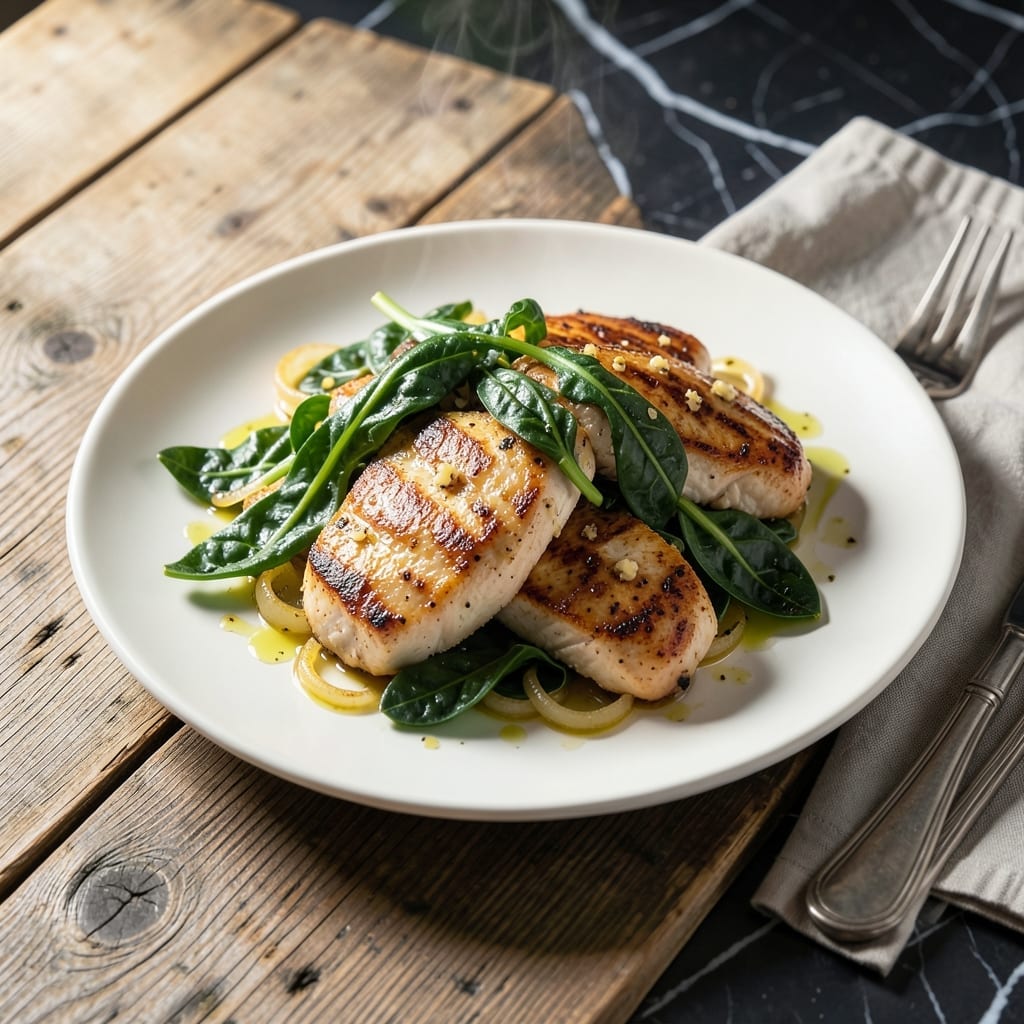
This dish transforms simple ingredients into a tender, flavorful meal that feels special yet effortless.
Sautéed chard and chicken come together with aromatic herbs, creating a balanced plate with vibrant greens and juicy protein. The key is cooking the chicken just until done, then using the same pan to wilt the chard in its flavorful juices.
The result is a tender chicken breast paired with silky greens, all infused with garlic and herbs. Every bite delivers warmth and satisfaction without complicated techniques.
Ready in under 30 minutes, this recipe proves that wholesome meals don’t require hours in the kitchen.
Ingredients for Chard and Chicken
Pantry staples plus fresh chard and chicken create this balanced, herb-infused plate.
| Ingredient | Amount | Notes |
|---|---|---|
| Boneless Skinless Chicken Breasts 🍗 | 1 ½ lb | Pounded to even thickness |
| Swiss Chard 🥬 | 1 lb | Stems removed, leaves chopped |
| Extra-Virgin Olive Oil 🫒 | 3 tbsp | Divided for cooking |
| Garlic Cloves 🧄 | 4 cloves | Minced finely |
| Yellow Onion 🧅 | 1 whole | Medium, finely diced |
| Dry White Wine 🍷 | ¼ cup | Sauvignon Blanc or Pinot Grigio |
| Chicken Stock 🥘 | ¼ cup | Low-sodium preferred |
| Fresh Thyme Sprigs 🌿 | 4 whole | Leaves stripped from stems |
| Fresh Rosemary 🍃 | 1 tbsp | Finely chopped |
| Lemon Juice 🍋 | 1 tbsp | Freshly squeezed |
| Kosher Salt 🧂 | 1 tsp | Diamond Crystal preferred |
| Freshly Ground Black Pepper 🌶️ | ½ tsp | Coarse grind |
| Red Pepper Flakes 🌶️ | ¼ tsp | Optional for heat |
| Unsalted Butter 🧈 | 1 tbsp | For finishing |
The chicken quality is paramount here. Opt for air-chilled, free-range breasts from Whole Foods or your local butcher for superior tenderness and flavor. The Swiss chard should have vibrant, unblemished leaves—avoid any with yellowing or slimy spots. For the herbs, fresh thyme and rosemary from the produce section (or your garden) will yield the most aromatic results. Avoid pre-minced garlic in jars; fresh cloves are essential for optimal flavor development.
No white wine? Substitute with additional chicken stock plus a splash of lemon juice for acidity. Dried herbs can replace fresh at one-third the volume—so 1 teaspoon dried thyme for every tablespoon fresh. For a richer finish, swap the butter for ghee (though this deviates slightly from the original profile). Swiss chard stems are edible—finely dice and sauté them first if you dislike waste.
Store raw chicken in the coldest part of your refrigerator and use within 2 days. Swiss chard keeps for 3-4 days wrapped in damp paper towels. The cooked dish reheats beautifully—store in an airtight container for up to 3 days. The herbs lose potency quickly, so use within 1 week or freeze in olive oil for longer preservation.
Why You’ll Love This Recipe
- One Pan Meal: I love throwing everything into a single skillet—chicken, chard, garlic, and onion—then walking away until it’s done.
- Garlic & Greens Magic: The way the garlic-infused olive oil coats the wilted chard and tender chicken? Ridiculously good.
- Weeknight Savior: This dish goes from fridge to table faster than I can argue with my kids about screen time.
- Budget friendly: Boneless chicken breasts and a bunch of chard stretch further than I expected, feeding my family for two nights.
Step-by-Step Instructions for Chard and Chicken
This method ensures herb-infused tenderness with perfectly wilted greens every time.
Step 1: Sear the Pounded Chicken Breasts
Heat 2 tbsp Extra-Virgin Olive Oil in a large skillet over medium-high heat until shimmering. Pat the 1.5 lb Boneless Skinless Chicken Breasts dry with paper towels, then season both sides with ½ tsp Kosher Salt and 0.5 tsp Freshly Ground Black Pepper.
Add the chicken to the hot oil and cook undisturbed for 5-6 minutes per side until golden brown and the internal temperature reaches 160°F. The even thickness from pounding ensures consistent cooking. Transfer to a plate and tent with foil to keep warm.
Step 2: Sauté Aromatics for the Greens
In the same skillet, reduce heat to medium and add the remaining 1 tbsp Extra-Virgin Olive Oil. Add the finely diced Yellow Onion and cook for 3-4 minutes until translucent and just beginning to caramelize at the edges.
Add the minced Garlic Cloves, fresh rosemary, and red pepper flakes. Sauté for 30 seconds until fragrant—watch closely to prevent the garlic from burning. Stir in the stripped fresh thyme sprigs leaves to infuse the oil with herbaceous depth.
Step 3: Deglaze and Wilt the Swiss Chard
Pour in 0.25 cup Dry White Wine and scrape up any browned bits from the bottom of the pan. Let it simmer for 1-2 minutes until the liquid reduces by half. This deglazing step captures all the caramelized chicken and onion flavor.
Add the chopped Swiss Chard leaves in batches, stirring as each addition wilts. Once all the chard is in the pan, pour in 0.25 cup Chicken Stock and cook for 4-5 minutes until the greens are tender but still vibrant green. The liquid should mostly evaporate, leaving a glossy coating on the chard.
Step 4: Finish with Butter and Lemon
Return the chicken to the skillet, nestling it into the wilted chard. Add 1 tbsp Unsalted Butter and swirl until melted. Drizzle the 1 tbsp Lemon Juice over the chicken and greens, then season with the remaining ½ tsp Kosher Salt.
Simmer for 2-3 minutes to allow the flavors to meld. The butter creates a silky finish, while the lemon juice brightens the dish. The chicken should reach 165°F internally. Serve immediately, spooning the chard and pan juices over the top for maximum herb-infused tenderness in every bite.
Pro Tips For Making Chard And Chicken
- Pound the Chicken: Boneless breasts cook unevenly if left thick—pound them to an even ½-inch with a rolling pin or heavy pan. I learned this the hard way after too many dry, chewy bites.
- Stem First, Leaves Later: Swiss chard stems take longer to soften, so chop and sauté them with the onion for 3-4 minutes before adding the leaves. Sounds fussy, but it makes a real difference in texture.
- Skip the Overcrowding: Resist the urge to dump all the chard in at once—it’ll steam instead of sear. Add it in batches, letting each handful wilt down before adding more.
- Rest Before Slicing: Give the chicken a solid 5 minutes under foil after cooking, or the juices will spill onto the cutting board instead of staying in the meat. My grandmother swore by this, and she was right.
Troubleshooting This Recipe
Chicken Overcooks
If your chicken turns out dry, it likely cooked past 165°F internal temperature. Use a meat thermometer and pull it at 160°F—it will rise 5°F while resting. Pounding to even thickness prevents hot spots. 🌡️
Chard Too Bitter
Bitterness in chard often comes from undercooking or using mature leaves. Cook stems first for 2-3 minutes before adding leaves. A pinch of sugar or extra lemon juice balances bitterness beautifully.
Garlic Burns
Burnt garlic turns bitter fast. Keep heat at medium when sautéing aromatics, and add garlic only after onions soften. 30 seconds is all it needs—stay close and stir constantly.
Sauce Too Thin
If your pan sauce is watery, simmer uncovered for 1-2 minutes after adding chard. The stock and wine should reduce to a glossy coating. A cornstarch slurry (1 tsp in 1 tbsp water) thickens instantly if needed.
Herbs Overpower
Fresh herbs can dominate if overused. Stick to 4 thyme sprigs and 1 tbsp rosemary as written. Remove thyme stems before serving—they’re woody. Fresh herbs release more flavor than dried, so adjust ratios carefully.
Chicken Sticks
Pat the chicken very dry before seasoning and searing. Any moisture prevents proper browning. Heat your pan until the oil shimmers—this creates a non-stick surface naturally. 💡
Nutrition Facts
Frequently Asked Questions
Can I use rainbow chard instead of Swiss?
Rainbow chard works perfectly with the same cooking method. Its colorful stems add visual appeal and slightly sweeter flavor. Just remove tough stems before chopping the leaves.
How do I know when the chicken is done?
Use a meat thermometer to check for 165°F internally. Pull it at 160°F—it will rise while resting. The juices should run clear, and the meat should feel firm but springy.
What can I substitute for white wine?
Use additional chicken stock plus a splash of lemon juice for acidity. Apple cider vinegar works too—add 1 tbsp with ¼ cup stock. The acid helps balance the richness.
Can I make this ahead of time?
Cook and store components separately in the fridge for up to 3 days. Reheat chicken gently in a pan with a splash of stock to prevent drying. Assemble just before serving.

- Jollof Rice Sauce Recipe: West African Tomato and Spice Infusion - September 25, 2026
- Japanese Rice Soup Recipe: Umami-Rich Comfort in a Bowl - September 25, 2026
- Homemade Cream Of Rice Recipe: Silk-Smooth Breakfast in Minutes - September 25, 2026