
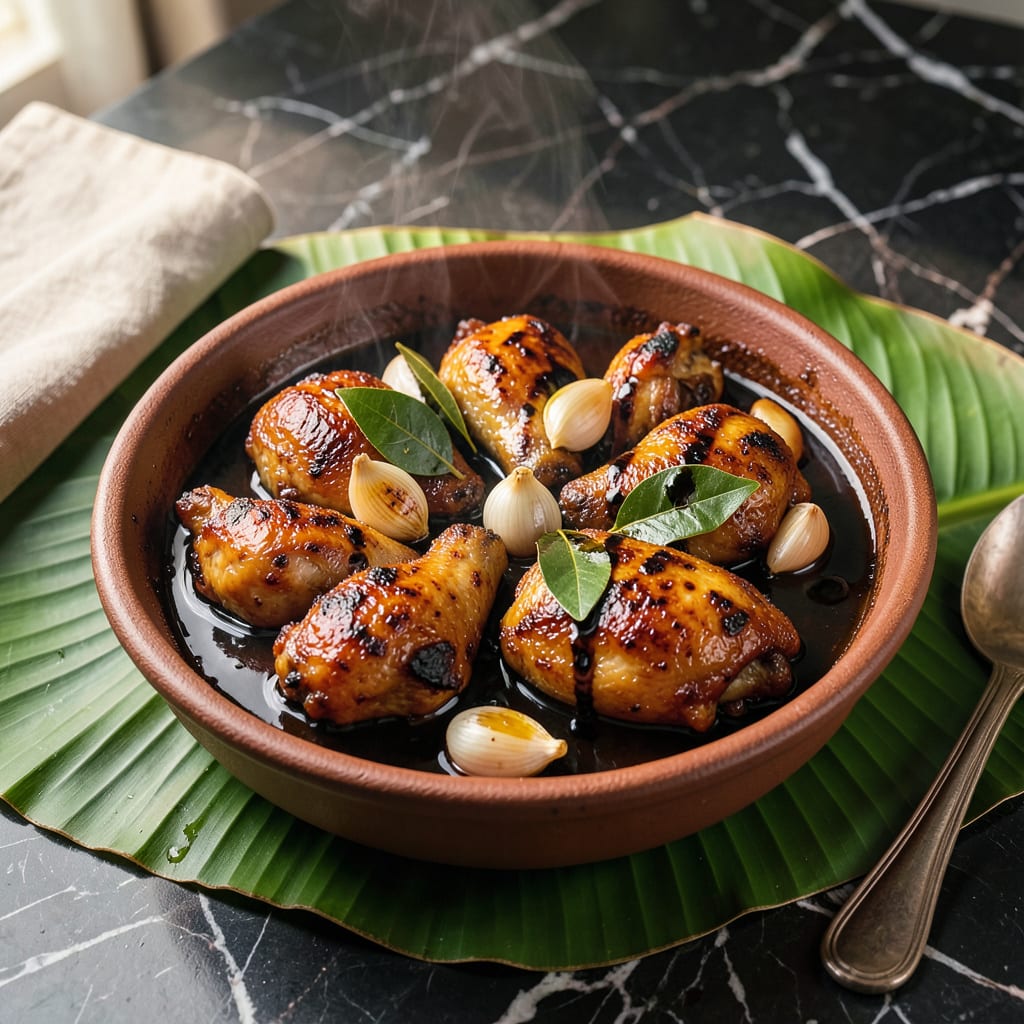
This Filipino adobo recipe transforms humble chicken into a deeply savory dish with a rich oyster sauce twist. The vinegar braise creates tender meat with layers of tangy, umami flavor that define traditional adobo.
What makes this version special is the balance between the vinegar’s brightness and the oyster sauce’s depth. The result is a tender, flavorful chicken with a glossy, finger-licking sauce that’s perfect over rice.
Ingredients for Chicken Adobo with Oyster Sauce Recipe Filipino Style
A handful of pantry staples transforms into a deeply savory Filipino classic with rich, tangy depth.
| Ingredient | Amount | Notes |
|---|---|---|
| Chicken Thighs 🍗 | 2 lb | Boneless, skin-on preferred |
| Soy Sauce 🫙 | ½ cup | Low-sodium variety recommended |
| White Vinegar 💧 | ½ cup | Cane vinegar traditional |
| Oyster Sauce 🐚 | ¼ cup | Thick, quality brand |
| Garlic Cloves 🧄 | 8 cloves | Peeled, smashed |
| Bay Leaves 🍃 | 3 whole | Dried, whole leaves |
| Black Peppercorns 🌶️ | 1 tsp | Whole, lightly crushed |
| Brown Sugar 🧈 | 2 tbsp | Light or dark |
| Onion 🧅 | 1 whole | Medium yellow, sliced |
| Water 💧 | ½ cup | For braising liquid |
| Cornstarch 🌾 | 1 tbsp | For sauce thickening |
| Vegetable Oil 🫒 | 2 tbsp | For searing chicken |
[recipeingredientscaler]
The chicken is the foundation—bone-in, skin-on thighs yield the most flavorful results. Costco and Asian supermarkets often carry higher-quality thighs at better prices. For the vinegar, cane vinegar is traditional, but white vinegar works in a pinch. The oyster sauce should be thick and glossy; Lee Kum Kee is a reliable brand found in most grocery stores.
No oyster sauce? Vegetarian oyster sauce (made from mushrooms) works surprisingly well. Out of cane vinegar? Apple cider vinegar at the same ratio offers a fruitier note. For a deeper umami punch, add 1 tbsp fish sauce—though this strays slightly from traditional adobo. The garlic can be adjusted to taste, but don’t skip it; it’s essential for authenticity.
This dish tastes even better the next day once the flavors meld. Store leftovers in an airtight container in the fridge for up to 4 days. The sauce thickens as it cools—reheat gently with a splash of water to restore its glossy consistency.
Why You’ll Love This Recipe
- One Pan Meal: I just toss the chicken thighs, soy sauce, vinegar, and garlic in a pan—no fancy prep, no fuss.
- Umami Bomb: The oyster sauce adds this deep, savory richness that makes the adobo taste even more addictive.
- Feeds a Crowd: Between us, it’s my go-to for family dinners or when friends drop by unannounced.
- Better Next Day: Honestly, the flavors meld overnight, so leftovers taste even more crave-worthy.
Step-by-Step Instructions for Chicken Adobo With Oyster Sauce Filipino Style
This method ensures tender chicken with a rich, tangy sauce that clings to every piece.
Step 1: Sear the Chicken Thighs
Heat the 2 tbsp vegetable oil in a large pot or Dutch oven over medium-high heat. Once shimmering, add the 2 lb chicken thighs, skin-side down if using skin-on. Sear undisturbed for 5-6 minutes until the skin is deep golden brown and crisp.
Flip the chicken and sear the other side for another 3-4 minutes. You’re not cooking the chicken through at this stage—just developing color and flavor. The skin should release easily from the pot when it’s properly browned. Remove the chicken and set aside.
Step 2: Sauté Aromatics and Build the Braising Liquid
In the same pot, add the sliced 1 whole onion and cook for 2-3 minutes until softened. Add the 8 cloves garlic cloves, 3 whole bay leaves, and 1 tsp black peppercorns, stirring for 30 seconds until the garlic is fragrant but not browned.
Pour in the 0.5 cup soy sauce, 0.5 cup white vinegar, 0.25 cup oyster sauce, 2 tbsp brown sugar, and 0.5 cup water. Stir to combine, scraping up any browned bits from the bottom of the pot. These bits add depth to the sauce.
Step 3: Braise the Chicken Until Tender
Return the chicken to the pot, nestling it into the braising liquid. The liquid should come about halfway up the chicken. Bring to a simmer, then reduce the heat to medium-low to maintain a gentle simmer. Cover and cook for 30-35 minutes, flipping the chicken halfway through.
The chicken is done when it’s fork-tender and the internal temperature reaches 165°F. The sauce should be slightly reduced and the flavors melded together. If the sauce reduces too much during cooking, add a splash of water to loosen it.
Step 4: Thicken the Sauce and Finish
Remove the chicken from the pot and set aside. In a small bowl, mix the 1 tbsp cornstarch with 2 tbsp of cold water to create a slurry. Stir the slurry into the simmering sauce and cook for 2-3 minutes until the sauce thickens to a glossy consistency that coats the back of a spoon.
Return the chicken to the pot and spoon the thickened sauce over it. Simmer for another 2-3 minutes to allow the flavors to meld. Taste and adjust the seasoning if needed, though the combination of soy sauce, vinegar, and oyster sauce should provide a balanced savory, tangy, and slightly sweet profile.
Step 5: Rest and Serve
Let the chicken rest in the sauce for 5-10 minutes off the heat. This allows the flavors to penetrate the meat fully. The sauce should be thick enough to cling to the chicken but still pourable.
Serve the chicken adobo hot, spooning the rich sauce over each portion. This dish pairs exceptionally well with steamed rice, which soaks up the flavorful sauce. The chicken should be tender and juicy, with a deep, complex sauce that balances salty, tangy, and umami notes.
Pro Tips For Making Chicken Adobo With Oyster Sauce Recipe Filipino Style
- Brown the Thighs: Sear the chicken thighs in batches—don’t crowd the pan—so they develop a deep golden crust before simmering. I learned this the hard way after ending up with pale, steamed chicken in my adobo.
- Balance the Vinegar: Add the white vinegar at the end of simmering, not the start, to prevent the chicken from turning tough. My grandmother swore by this, and she was right.
- Skip the Cheap Oyster Sauce: Use a quality oyster sauce—brands like Lee Kum Kee actually change the outcome. The cheap stuff adds a metallic tang that throws off the whole dish.
- Simmer Low and Slow: Once the sauce is added, keep the heat at a gentle bubble for 30-40 minutes. After burning three batches, I finally figured out that high heat ruins the sauce’s rich, sticky consistency.
Perfect Pairings for This Dish
Rice Pairings
Steamed jasmine rice is my go-to—its fragrant aroma complements the adobo’s tangy depth. Cook 1 cup rice to 1.5 cups water for perfect fluffiness. For extra flavor, use the adobo braising liquid instead of plain water when steaming. 💛
Vegetable Sides
Balance the richness with steamed bok choy or stir-fried green beans. Toss 1 lb green beans with 1 tbsp oyster sauce and 2 minced garlic cloves in a hot wok for 3-4 minutes. The oyster sauce ties it back to the main dish.
Fresh Accompaniments
A crisp cucumber and tomato salad with calamansi lime dressing cuts through the richness. Slice 1 cucumber and 2 tomatoes, then toss with 2 tbsp lime juice, 1 tbsp fish sauce, and 1 tsp sugar. It’s refreshing against the savory chicken.
Bread Options
Warm pandesal (Filipino bread rolls) soaks up the sauce beautifully. Toast and serve with a side of salted butter. For a quicker option, garlic bread made with French baguette and garlic-infused olive oil adds a satisfying crunch.
Pickled Sides
Add atchara (Filipino pickled papaya) for a sweet-tangy contrast. You’ll find it in most Asian grocery stores. If unavailable, quick-pickle thinly sliced radishes in rice vinegar, sugar, and salt for 30 minutes. 💡
Nutrition Facts
Frequently Asked Questions
Can I use chicken breasts instead of thighs?
Yes, but thighs stay juicier during the 30-35 minutes braising. If using breasts, reduce cooking time to 20-25 minutes to prevent dryness. The flavor will be milder but still delicious.
Why add oyster sauce to traditional adobo?
It deepens the umami profile, balancing the vinegar’s tang with a rich, slightly sweet complexity. The 0.25 cup creates a glossier sauce that clings beautifully to the chicken.
How do I fix sauce that’s too salty?
Stir in 1-2 tbsp brown sugar or a splash of water to dilute. Simmer for 5 minutes to meld flavors. Taste and adjust—add a pinch of sugar if still too sharp.
Can I make this in a slow cooker?
Sear the chicken first, then cook on low for 4-5 hours or high for 2-3 hours. Thicken the sauce with cornstarch slurry at the end.

- Jollof Rice Sauce Recipe: West African Tomato and Spice Infusion - September 25, 2026
- Japanese Rice Soup Recipe: Umami-Rich Comfort in a Bowl - September 25, 2026
- Homemade Cream Of Rice Recipe: Silk-Smooth Breakfast in Minutes - September 25, 2026