
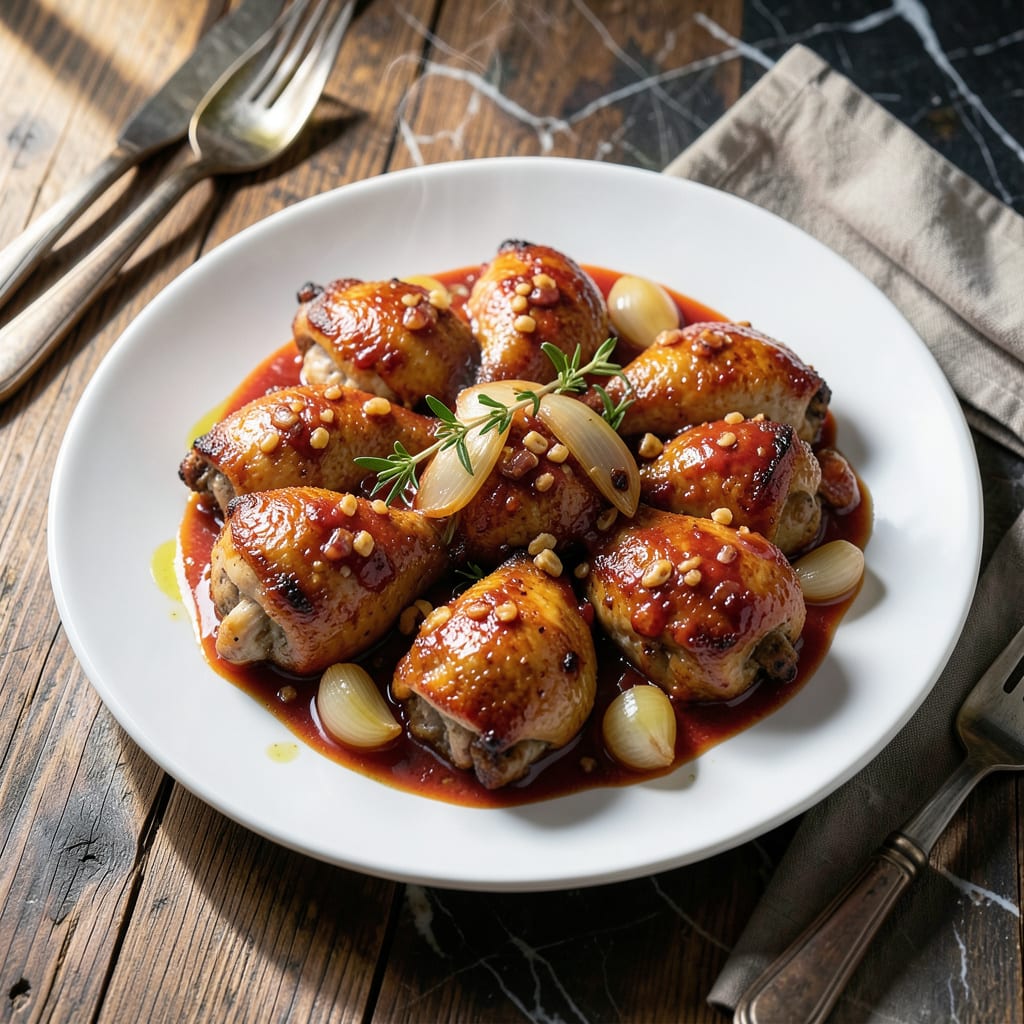
This Filipino chicken adobo with tomato sauce delivers a perfect balance of tangy and savory flavors in every bite. The traditional cooking method slow-simers the chicken in a rich vinegar, soy, and tomato sauce.
The result is tender chicken with a bold, complex sauce that’s ideal over steamed rice. This one-pot dish brings authentic Filipino comfort to your kitchen with minimal effort.
Ingredients for Chicken Adobo with Tomato Sauce
Authentic Filipino flavors start with these pantry staples and fresh aromatics.
| Ingredient | Amount | Notes |
|---|---|---|
| Chicken Thighs 🍗 | 2 lb | Boneless, skin-on preferred |
| Soy Sauce 🥢 | ½ cup | Low-sodium if preferred |
| White Vinegar 💧 | ½ cup | Cane vinegar for authenticity |
| Tomato Sauce 🍅 | 1 cup | Plain, no added herbs |
| Garlic Cloves 🧄 | 8 cloves | Peeled and smashed |
| Yellow Onion 🧅 | 1 whole | Thinly sliced |
| Bay Leaves 🍃 | 3 pieces | Dried, whole |
| Black Peppercorns 🌶️ | 1 tbsp | Lightly crushed |
| Brown Sugar 🏝️ | 1 tbsp | Optional for balancing acidity |
| Vegetable Oil 🫒 | 2 tbsp | For searing chicken |
| Water 💦 | ½ cup | For adjusting sauce consistency |
| Green Onions 🌱 | 4 whole | Sliced for garnish |
[recipeingredientscaler]
The chicken is non-negotiable here—bone-in, skin-on thighs deliver the richest flavor and stay juicy through the long simmer. Filipino brands like Datu Puti for vinegar and soy sauce add authenticity, but any quality brand works. Look for vinegar with at least 5% acidity for that signature tang. Most Asian markets carry the right products, or Amazon for home delivery.
No cane vinegar? Apple cider vinegar works in a pinch (slightly fruitier). Out of tomato sauce? Crushed tomatoes blended smooth at a 1:1 ratio. Chicken breasts can substitute but will dry out—reduce simmer time by half. For extra depth, add a splash of fish sauce (Filipino patis if available), though this keeps it traditional without.
This stew improves overnight. Refrigerate in an airtight container for up to 5 days—the flavors deepen beautifully. Freezes well for 3 months. Reheat gently to avoid breaking the chicken. Always make extra sauce—it’s perfect for soaking into rice.
Why You’ll Love This Recipe
- One Pot Wonder: I toss everything in a single pan—chicken thighs, soy sauce, vinegar, tomato sauce, and garlic—and let it simmer while I set the table.
- Tangy-Savory Bliss: The mix of soy sauce, vinegar, and tomato sauce creates this rich, tangy sauce that soaks into the chicken. Honestly, I could drink it with a spoon.
- Weeknight Hero: Between us, this is my go-to when I need dinner ready fast. It’s just as good for meal prep as it is for a last-minute family meal.
- Budget Stretcher: Chicken thighs are affordable, and the sauce ingredients are pantry staples. I’ll be real: it’s a flavor-packed dish that doesn’t break the bank.
Step-by-Step Instructions for Chicken Adobo With Tomato Sauce
This traditional Filipino method delivers the perfect balance of tangy, savory, and slightly sweet flavors.
Step 1: Sear the Chicken Thighs
Heat the 2 tbsp vegetable oil in a large pot or Dutch oven over medium-high heat. Pat the 2 lb Chicken Thighs dry with paper towels to ensure a good sear. Working in batches if necessary, add the chicken skin-side down and cook undisturbed for 5-6 minutes until the skin is deep golden brown.
Flip the chicken and sear the other side for 3-4 minutes. The skin should be crispy and the meat should release easily from the pan. Transfer the seared chicken to a plate and set aside. This step builds a flavorful foundation for your stew.
Step 2: Sauté Aromatics and Build the Base
In the same pot, add the thinly sliced yellow onion and cook for 3-4 minutes until softened and slightly translucent. Add the 8 cloves garlic cloves and cook for 1 minute until fragrant, stirring constantly to prevent burning.
Pour in the 0.5 cup soy sauce, 0.5 cup white vinegar, and 1 cup tomato sauce. Stir in the 3 pieces bay leaves, 1 tbsp black peppercorns, and 1 tbsp brown sugar. Let this mixture simmer for 2-3 minutes to meld the flavors.
Step 3: Simmer Until Tender
Return the seared chicken to the pot, nestling the pieces into the sauce. Pour in the 0.5 cup water and stir to combine. Bring the mixture to a boil, then reduce the heat to low. Cover and let it simmer for 35-40 minutes, stirring occasionally.
The chicken is done when it’s fork-tender and the internal temperature reaches 165°F. The sauce should have thickened slightly and taken on a rich, glossy appearance. If the sauce is too thin, simmer uncovered for an additional 5 minutes to reduce.
Step 4: Adjust and Garnish
Taste the sauce and adjust the seasoning if needed. If it’s too tangy, add a pinch more brown sugar. If it’s too salty, add a splash of water to balance the flavors. Remove the bay leaves and discard.
Slice the 4 whole green onions and sprinkle them over the top just before serving. This adds a fresh, vibrant contrast to the rich, deeply flavored stew. Serve hot over steamed rice to soak up every bit of the delicious sauce.
Pro Tips For Making Chicken Adobo With Tomato Sauce
- Brown the Thighs: Sear the chicken thighs in batches until deep golden brown—this builds flavor and keeps the sauce from turning gray. I learned this the hard way after skipping it once and ending up with a dull, watery adobo.
- Balance the Vinegar: White vinegar can overpower, so add it gradually and taste as you go. My grandmother swore by this, and she was right: a splash too much can make the whole dish pucker-inducing.
- Simmer Uncovered: Let the sauce reduce uncovered for 15-20 minutes to thicken and concentrate the flavors. Sounds weird, but it works—covering traps steam and leaves you with a thin, sad sauce.
- Crush the Garlic: Smash the garlic cloves with the side of your knife before mincing—it releases more aroma and blends better into the sauce. I was skeptical until I tried it, but now I do it every time.
Regional Styles of This chicken adobo with tomato sauce
Classic Filipino Style
In the Philippines, this dish is often called adobong manok sa sarsa. The traditional method uses cane vinegar and Filipino soy sauce like Datu Puti for that authentic tang. I always add 3 bay leaves and 1 tbsp crushed peppercorns for depth. 🗺️
Pampanga Variation
The Kapampangan region amps up the richness by adding 2 tbsp liver spread to the sauce. This creates a velvety texture and deeper umami. I learned this trick from my lola’s cousin in Angeles City—it’s a game-changer for special occasions.
Bicolano Twist
In Bicol, they incorporate 1-2 tbsp coconut milk at the end for creaminess. This balances the vinegar’s sharpness beautifully. The addition of 1 tsp chili flakes gives it a subtle kick that’s very Bicolano.
Ilocano Version
Northern Luzon’s take uses bagoong (fermented fish paste) instead of soy sauce. The funky, salty depth is unique. If trying this, start with 2 tbsp bagoong and adjust to taste—it’s potent!
Modern Manila
Urban Filipino cooks often add 1 tbsp oyster sauce for extra complexity. Some even finish with a sprinkle of toasted garlic bits for crunch. I love this version for weeknight dinners when I want something familiar yet elevated. ✨
Nutrition Facts
Frequently Asked Questions
Can I use chicken breasts instead of thighs?
You can, but thighs stay juicier during the 35-40 minute simmer. If using breasts, reduce cooking time by half to prevent dryness.
Why add tomato sauce to adobo?
It balances the vinegar’s sharpness with natural sweetness and creates a richer, more complex sauce. Traditional versions often include it for depth.
How do I fix too-sour adobo?
Stir in 1-2 tbsp brown sugar to counter acidity. For saltiness, add 1/4 cup water and simmer 5 minutes.
Can I make this in a slow cooker?
Yes! Sear chicken first, then cook on low for 6-8 hours or high for 3-4 hours. Add vinegar last to preserve tang.

- Jollof Rice Sauce Recipe: West African Tomato and Spice Infusion - September 25, 2026
- Japanese Rice Soup Recipe: Umami-Rich Comfort in a Bowl - September 25, 2026
- Homemade Cream Of Rice Recipe: Silk-Smooth Breakfast in Minutes - September 25, 2026