
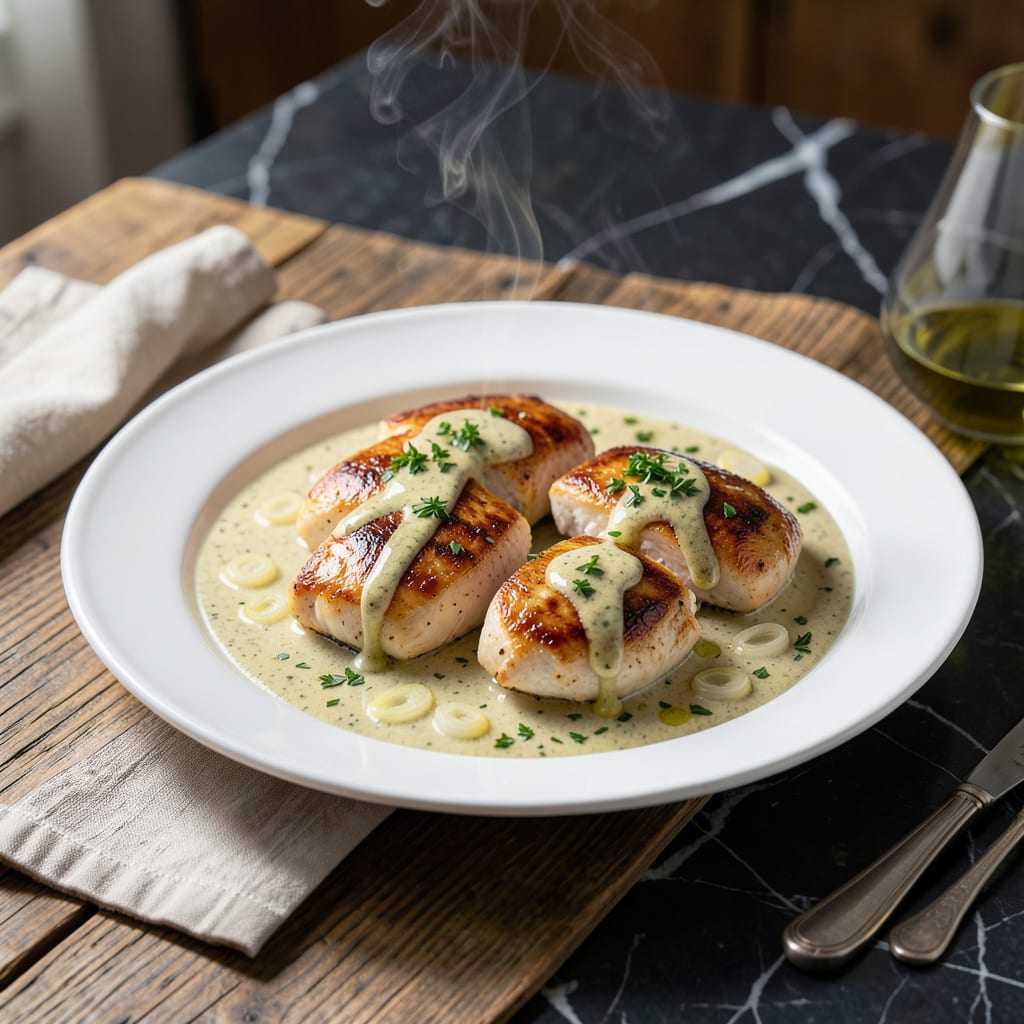
This dish brings French bistro elegance to your home kitchen with its delicate balance of flavors. The tarragon sauce, with its subtle anise notes, perfectly complements the tender chicken.
I’ve refined this recipe to ensure restaurant-quality results every time. The sauce comes together quickly while the chicken rests, making it both impressive and practical for weeknight dinners.
Ingredients for Chicken and Tarragon Sauce
Elevated yet approachable ingredients for a bistro-worthy dish at home.
| Ingredient | Amount | Notes |
|---|---|---|
| Chicken Breast Halves 🍗 | 4 whole | Boneless, skin-on preferred |
| Kosher Salt 🧂 | 1 ½ tsp | Diamond Crystal recommended |
| Black Pepper 🌶️ | 1 tsp | Freshly cracked for best flavor |
| Unsalted Butter 🧈 | 4 tbsp | Divided for cooking and sauce |
| Olive Oil 🫒 | 2 tbsp | Extra-virgin for superior quality |
| Shallots 🧅 | 2 whole | Finely minced for sauce base |
| Garlic Cloves 🧄 | 3 cloves | Minced to release aromatic oils |
| Dry White Wine 🍷 | ½ cup | Sauvignon Blanc or Chardonnay |
| Chicken Stock 🥣 | 1 cup | Low-sodium preferred for control |
| Heavy Cream 🥛 | ½ cup | Full-fat for rich texture |
| Fresh Tarragon Leaves 🌿 | ¼ cup | Chopped, stems discarded |
| Dijon Mustard 🟡 | 1 tbsp | Smooth variety for emulsification |
| Lemon Juice 🍋 | 1 tbsp | Freshly squeezed for brightness |
| Fresh Parsley 🌿 | 2 tbsp | Chopped, for garnish |
[recipeingredientscaler]
The chicken quality is paramount. Air-chilled, organic chicken breasts from Whole Foods or a trusted butcher ensure superior texture and flavor. Skin-on provides crispness and moisture retention. For the tarragon, fresh is non-negotiable—dried loses the delicate anise notes that define this sauce. Look for bright green leaves without wilting at farmers markets or specialty grocers.
No white wine? Dry vermouth works perfectly. Shallots can be replaced with finely diced yellow onion, though the flavor will be slightly sharper. If avoiding alcohol, use additional chicken stock with a splash of lemon juice. For a lighter sauce, half-and-half may substitute the heavy cream, but the richness will be diminished. Always use freshly squeezed lemon juice—bottled lacks the necessary acidity.
The dish reheats well for up to 3 days refrigerated. Store the sauce separately to maintain its velvety texture. Freezing is not recommended as the cream may separate. For best results, bring all ingredients to room temperature before beginning preparation.
Why You’ll Love This Recipe
- One Pan Wonder: I sear the chicken in butter and olive oil—same pan for the tarragon sauce, so cleanup’s a breeze.
- Buttery Tarragon Magic: That warm, slightly peppery tarragon flavor with the rich butter makes the chicken taste restaurant-worthy.
- Feeds a Crowd: Honestly, it’s my go-to for Sunday dinner with family or a casual get-together with friends.
- Leftovers? Yes Please: The sauce thickens overnight, so the chicken tastes even better the next day in a sandwich or over rice.
Step-by-Step Instructions for Chicken and Tarragon Sauce
Master this French bistro classic with precise technique and layered herbal flavors.
Step 1: Sear the Chicken Breast Halves
Season the 4 whole chicken breast halves evenly with the 1.5 tsp kosher salt and 1 tsp black pepper on both sides. Heat 2 tbsp olive oil and 2 tbsp unsalted butter in a large skillet over medium-high heat until the butter stops foaming.
Add the chicken skin-side down and cook undisturbed for 5-6 minutes until the skin is deep golden brown and crisp. Flip and cook for another 4-5 minutes until the internal temperature reaches 160°F. Transfer to a plate and tent with foil to keep warm.
Step 2: Sauté Aromatics for the Sauce Base
In the same skillet, reduce heat to medium and add the 2 whole shallots (finely minced). Cook for 2-3 minutes until softened and translucent, stirring frequently to prevent burning.
Add the 3 cloves garlic cloves (minced) and cook for 30 seconds until fragrant. Pour in the 0.5 cup dry white wine and deglaze the pan, scraping up any browned bits with a wooden spoon. Simmer for 3 minutes until reduced by half.
Step 3: Build the Creamy Tarragon Sauce
Add the 1 cup chicken stock and bring to a gentle simmer. Stir in the 0.5 cup heavy cream, 1 tbsp dijon mustard, and 0.25 cup fresh tarragon leaves (chopped). Simmer for 4-5 minutes until the sauce thickens slightly and coats the back of a spoon.
Remove from heat and whisk in the remaining 2 tbsp unsalted butter, one tablespoon at a time, until the sauce is glossy and emulsified. Stir in the 1 tbsp lemon juice for brightness.
Step 4: Serve with Fresh Parsley Garnish
Return the chicken to the skillet and spoon the sauce over each piece. Simmer for 1-2 minutes to heat through and allow the flavors to meld.
Transfer to serving plates, drizzle with additional sauce, and garnish with the 2 tbsp fresh parsley (chopped). The sauce should be velvety, with a pronounced tarragon aroma and balanced acidity from the lemon juice.
Pro Tips For Making Chicken And Tarragon Sauce
- Pound the Chicken: Use the flat side of a meat mallet or a heavy pan to pound the breast halves to an even ½-inch thickness—this guarantees even cooking and no dry spots near the edges.
- Hot Pan, Cool Butter: Get your skillet screaming hot with olive oil first, then add the butter right before the chicken goes in; this prevents the butter from burning and gives you that golden crust.
- Skip the Overcrowding: I learned this the hard way—cook the chicken in batches if needed, because crowding the pan steams the meat instead of searing it, and that’s how you end up with rubbery chicken.
- Rest Before Saucemaking: Let the chicken rest on a plate for 5-10 minutes while you make the tarragon sauce; it keeps the juices inside the meat instead of all over your cutting board.
Wine and Beer Pairings for This Dish
White Wine Pairings
A crisp Sauvignon Blanc from Loire Valley mirrors the dish’s French roots with its grassy notes and bright acidity. I love how it cuts through the richness of the cream sauce while harmonizing with the tarragon. Serve chilled at 45-50°F. 🍷
Rich Chardonnay
For a fuller-bodied option, choose an oaked Burgundy Chardonnay—its buttery texture complements the sauce beautifully. The vanilla notes from the oak barrel echo the dish’s creamy elements. Avoid overly oaky California styles that might overpower the tarragon.
Light Beer Options
A Belgian witbier like Hoegaarden offers citrus and spice notes that dance with the tarragon. The effervescence cleanses your palate between bites. Serve in a chilled tulip glass at 40-45°F. 🍺
Crisp Lager
A French bière de garde or a clean pilsner provides refreshing contrast to the rich sauce. The subtle malt sweetness balances the dish’s acidity from the lemon juice. I find Stella Artois works particularly well here.
Nutrition Facts
Frequently Asked Questions
What can I use if I don’t have fresh tarragon?
Dried tarragon can work in a pinch, but use just 1 tablespoon for every 1/4 cup fresh. The flavor is more concentrated but lacks the bright, delicate notes of fresh.
Can I use chicken thighs instead of breasts?
Yes! Bone-in, skin-on thighs add more flavor and stay juicier. Sear for 6-7 minutes per side and cook to 175°F internally. Adjust sauce quantities slightly for richer taste.
Why did my sauce curdle?
This happens if the cream gets too hot too fast. Always simmer on low heat and stir constantly when adding butter. If it curdles, whisk in 1 tsp ice water to restore.
How do I make this sauce ahead of time?
Prepare the sauce without butter, cool, and refrigerate for up to 2 days. Reheat gently, then whisk in cold butter just before serving. Never boil reheated cream sauces.

- Jollof Rice Sauce Recipe: West African Tomato and Spice Infusion - September 25, 2026
- Japanese Rice Soup Recipe: Umami-Rich Comfort in a Bowl - September 25, 2026
- Homemade Cream Of Rice Recipe: Silk-Smooth Breakfast in Minutes - September 25, 2026