
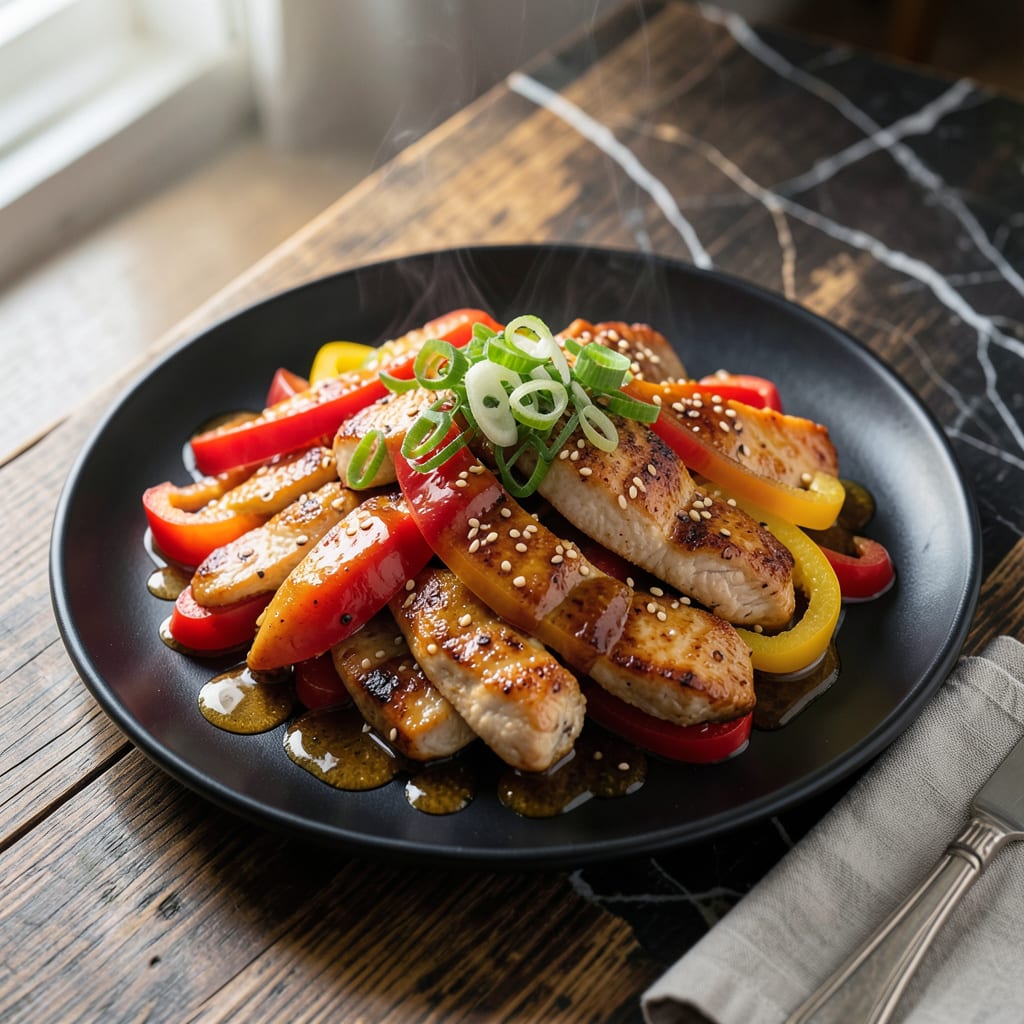
This sauce transforms any stir fry into a restaurant-quality dish with its deep, balanced umami flavor. The combination of soy sauce, garlic, and ginger creates a base that’s both savory and aromatic.
With just a few ingredients and minutes of prep, you’ll have a versatile sauce that elevates chicken and vegetables to new heights. It’s the secret to achieving that authentic wok-tossed taste at home.
Ingredients for Chicken and Vegetable Stir Fry Sauce
Nine ingredients create this umami-packed stir fry sauce with authentic wok flavor.
| Ingredient | Amount | Notes |
|---|---|---|
| Low-Sodium Soy Sauce 🥣 | ½ cup | Tamari for gluten-free option |
| Rice Vinegar 🍶 | ¼ cup | Unseasoned variety preferred |
| Honey 🍯 | 2 tbsp | Agave for vegan alternative |
| Fresh Ginger Root 🌿 | 1 tbsp | Peeled and finely grated |
| Garlic Cloves 🧄 | 4 cloves | Peeled and minced |
| Sesame Oil 🫒 | 1 tbsp | Toasted variety for depth |
| Cornstarch 🌾 | 2 tsp | For thickening the sauce |
| Chicken Broth 🥣 | ¼ cup | Low-sodium for balance |
| Red Pepper Flakes 🌶️ | ½ tsp | Adjust for heat preference |
[recipeingredientscaler]
The soy sauce is the foundation, so opt for low-sodium to control seasoning. Kikkoman or San-J offer consistent quality. Fresh ginger and garlic are non-negotiable—look for firm ginger root with smooth skin and garlic heads with taut, papery layers. The rice vinegar should be clear, not seasoned, for the clean acidity this needs. Most Asian markets carry all these in one stop.
Need a gluten-free version? Tamari replaces soy sauce one-to-one. Short on honey? Brown sugar or maple syrup work in a pinch. The cornstarch can be swapped with arrowroot powder at the same ratio. If you’ve got oyster sauce on hand, add a tablespoon for extra depth—just reduce the soy sauce slightly to compensate.
This sauce keeps beautifully in an airtight container. Store in the fridge for up to 2 weeks, or freeze in ice cube trays for 3 months. Always give it a good shake before using, as the cornstarch may settle.
Why You’ll Love This Recipe
- 5-Minute Mix: I just whisk the soy sauce, honey, and rice vinegar while the ginger and garlic sizzle—no chopping marathon here.
- Sweet-Savory Balance: The honey mellows the soy sauce, and the ginger-garlic punch keeps every bite interesting.
- Meal Prep MVP: I double the sauce on Sunday and use it for stir fry, marinade, and even a quick glaze for roasted veggies all week.
- Pantry Hero: Five ingredients I always have on hand, and it still tastes better than takeout. Honestly, it’s saved me from too many last-minute dinner panics.
Step-by-Step Instructions for Chicken and Vegetable Stir Fry Sauce
Master the technique behind this essential wok sauce with precise timing and layering.
Step 1: Bloom Aromatics in Sesame Oil
Heat the 1 tbsp Sesame Oil in a small saucepan over medium heat until it shimmers but doesn’t smoke. Add the 1 tbsp Fresh Ginger Root and 4 cloves Garlic Cloves, stirring constantly for 45-60 seconds until fragrant.
Watch for the garlic to turn just pale gold at the edges—this signals the aromatics have released their essential oils without burning. Burning garlic at this stage will impart a bitter flavor that will dominate the finished sauce.
Step 2: Build the Liquid Foundation
Pour in the 0.5 cup Low-Sodium Soy Sauce, 0.25 cup Rice Vinegar, and 2 tbsp Honey. Increase heat to medium-high and bring to a gentle boil, stirring to dissolve the honey completely.
The mixture will appear thin at this stage—that’s intentional. The vinegar’s acidity will balance the soy sauce’s saltiness while the honey adds depth. Let it simmer for 2 minutes to allow the flavors to begin melding together.
Step 3: Thicken to Perfect Consistency
In a small bowl, whisk the 2 tsp Cornstarch with the 0.25 cup Chicken Broth until completely smooth. Slowly pour this slurry into the simmering sauce while whisking constantly to prevent lumps from forming.
Continue cooking for 1-2 minutes until the sauce thickens enough to coat the back of a spoon. The transformation should be visible—the liquid will change from watery to glossy and slightly syrupy. This consistency ensures it will cling perfectly to your stir-fry ingredients.
Step 4: Finish with Heat and Final Adjustments
Remove the saucepan from heat and stir in the 0.5 tsp Red Pepper Flakes. The residual heat will activate their flavor without making the sauce overly spicy. Taste and adjust seasoning if needed—though the soy sauce provides the primary salt component.
Let the sauce cool for 5 minutes before using. As it cools, it will thicken slightly more to the ideal stir-fry sauce consistency. The finished product should be glossy, slightly sweet with a tangy backbone, and ready to transform your dish into an umami-packed masterpiece.
Pro Tips For Making Chicken And Vegetable Stir Fry Sauce
- Bloom the Aromatics: Cook the minced ginger and garlic in oil for 30-45 seconds until fragrant—any longer and they’ll turn bitter. I learned this the hard way after burning a batch and wondering why my sauce tasted harsh.
- Balance the Honey: Thin the honey with 1 teaspoon of warm water before adding it to the sauce. It blends smoother and prevents that sticky, clumpy mess at the bottom of the pan.
- Skip the Cold Soy: Use room-temperature soy sauce, not fridge-cold. Sounds weird, but it works: cold soy can cause the sauce to seize up when it hits the hot pan.
- Taste Before Thickening: Adjust the soy-vinegar-honey ratio before adding cornstarch or reducing the sauce. After burning three batches, I finally figured out that fixing the flavor first saves a ton of frustration.
Pro Cooking Tips for Perfect Results
Perfect Aromatic Bloom
Heat your 1 tbsp Sesame Oil over medium heat until it shimmers—this is the ideal temperature for blooming aromatics. Add ginger and garlic, stirring constantly for 45-60 seconds until fragrant but not browned. 🌡️
Slurry Technique
Always mix cornstarch with cold Chicken Broth first to prevent lumps. I use a small whisk to ensure it’s completely smooth before adding to the sauce. This method guarantees a silky texture every time.
Consistency Check
The sauce should coat the back of a spoon when done. If it’s too thin, simmer 1-2 minutes longer. If too thick, whisk in 1-2 tbsp water to reach the perfect stir-fry consistency.
Flavor Layering
Add the Red Pepper Flakes off-heat to preserve their bright, fresh flavor. The residual heat will gently infuse the sauce without overpowering it. I often add a pinch extra for my family’s taste.
Temperature Control
Never boil the sauce vigorously after adding cornstarch—this can break down the thickening power. Keep it at a gentle simmer for 1-2 minutes to achieve the ideal glossy finish.
Resting Time
Let the sauce rest for 5 minutes before using. This allows the flavors to meld and the consistency to set properly. The difference is noticeable in both taste and texture. 💡
Nutrition Facts
Frequently Asked Questions
Can I make this sauce gluten-free?
Simply swap the soy sauce for tamari, which is naturally gluten-free. All other ingredients are already gluten-free, so the flavor remains identical
How long will the sauce keep in the fridge?
When stored in an airtight container, it stays fresh for up to 2 weeks. For longer storage, freeze in ice cube trays for 3 months.
What if my sauce is too thin?
Simmer it for 1-2 minutes longer to thicken. If it’s still thin, mix 1 tsp cornstarch with cold water, then stir into the sauce until it reaches the right consistency.
Can I use a different sweetener?
Yes! Brown sugar or maple syrup work well as substitutes for honey. Use the same 2 tbsp measurement for best results.

- Jollof Rice Sauce Recipe: West African Tomato and Spice Infusion - September 25, 2026
- Japanese Rice Soup Recipe: Umami-Rich Comfort in a Bowl - September 25, 2026
- Homemade Cream Of Rice Recipe: Silk-Smooth Breakfast in Minutes - September 25, 2026