
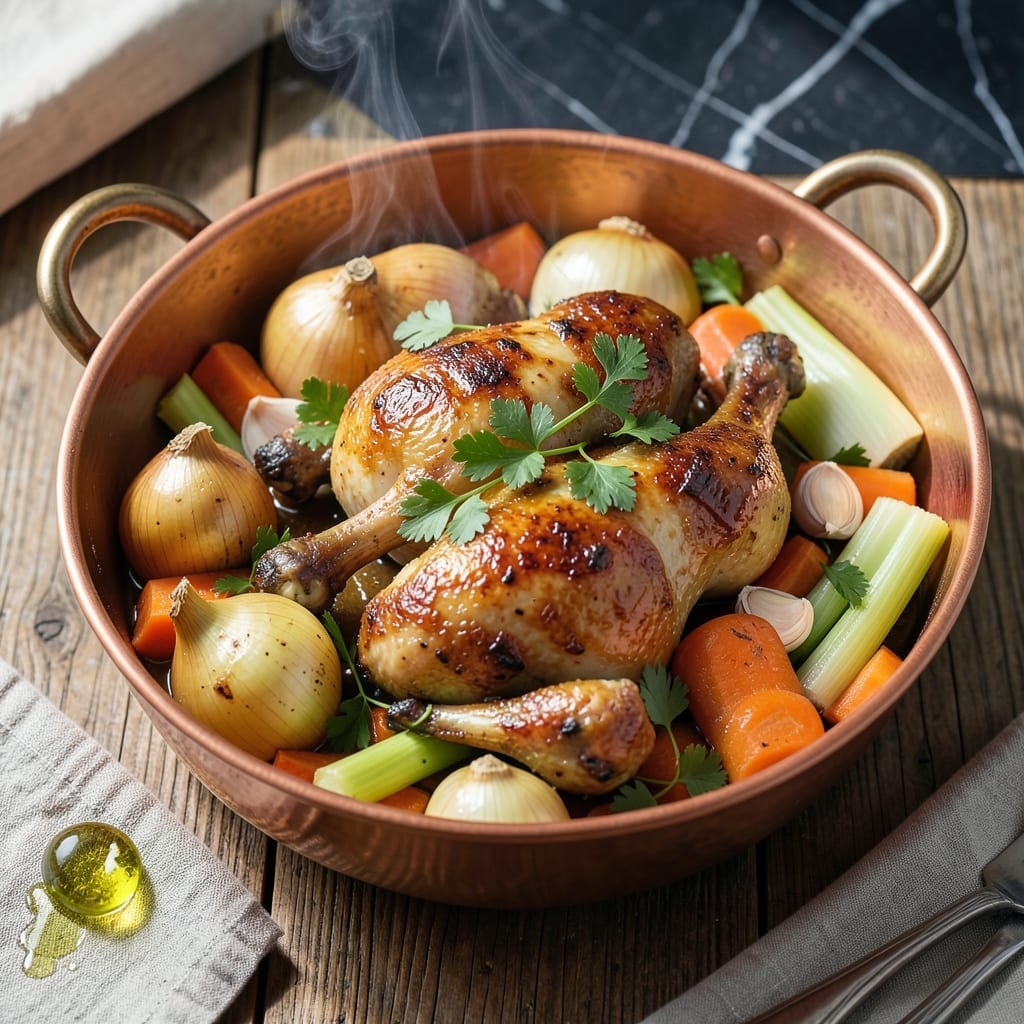
This chicken base transforms ordinary broth into a rich, deeply flavorful foundation for countless dishes. The simmering process extracts every bit of savory goodness from bones, vegetables, and herbs, creating a concentrate that elevates any recipe.
Unlike store-bought versions, this homemade base lets you control the ingredients and intensity. A slow simmer breaks down the components, producing a golden liquid that’s packed with umami and ready to enhance soups, sauces, or stews.
What makes this special is its versatility. Use it as a base for gravies, deglaze pans for sauces, or add depth to risottos and braises. The concentrated flavor means a little goes a long way.
This recipe proves that great cooking starts with great fundamentals.
Ingredients for Chicken Base
These fundamental ingredients create a concentrated, umami-rich foundation for countless culinary applications.
| Ingredient | Amount | Notes |
|---|---|---|
| Chicken Bones 🍗 | 2 lb | Necks, backs, or carcasses |
| Yellow Onion 🧅 | 1 whole | Quartered, skin on |
| Carrots 🥕 | 2 whole | Roughly chopped |
| Celery Stalks 🌿 | 2 whole | Roughly chopped |
| Garlic Cloves 🧄 | 6 cloves | Smashed, unpeeled |
| Fresh Parsley Stems 🌿 | 1 cup | Tied with twine |
| Fresh Thyme Sprigs 🌿 | 4 sprigs | Whole stems |
| Bay Leaves 🍃 | 2 whole | Dried preferred |
| Black Peppercorns 🌶️ | 1 tsp | Whole, not ground |
| Cold Water 💧 | 4 cups | To cover ingredients |
The chicken bones are critical—ask your butcher for free-range or organic if possible. Whole Foods or local farms often have high-quality options. The onion skin adds color and depth, so don’t peel it. Look for vibrant, firm vegetables without soft spots. Fresh herbs should be aromatic; if they’ve lost their scent, they’ve lost their flavor. For the best extraction, use a mix of bone types (necks, backs, wings).
No fresh herbs? Dried herbs at one-third the amount work in a pinch, but the flavor won’t be as bright. Out of thyme? Rosemary or sage can substitute, but they’re stronger—use half as much. If you’re missing parsley stems, add a few extra celery leaves. The key is balance: the bones provide the body, the vegetables add sweetness, and the herbs bring complexity.
This base freezes beautifully for up to 6 months. Strain and cool completely before portioning into airtight containers or ice cube trays. Refrigerate for 4-5 days if using immediately. The flavor intensifies as it cools, so taste before adjusting seasoning in your final dish.
Why You’ll Love This Recipe
- One Pot Wonder: I just toss the bones, onion, carrots, celery, and garlic in a pot and let it simmer—no fancy techniques needed.
- Rich and Deep: The slow simmer pulls every bit of flavor from the chicken and veggies into a stock that’s pure comfort in a bowl.
- Meal Prep Hero: I make a big batch on Sunday and use it all week for soups, risottos, or braising greens.
- Penny Wise: Honestly, it costs almost nothing—just scraps and peels I’d normally throw away, turned into liquid gold.
Step-by-Step Instructions for Chicken Base
Master this fundamental technique to create a rich, flavorful foundation for countless dishes.
Step 1: Roast the Chicken Bones for Depth of Flavor
Preheat your oven to 400°F. Spread the 2 lb Chicken Bones on a baking sheet in a single layer. Roast for 20-25 minutes until the bones turn deep golden brown with some caramelized spots.
This step is crucial for developing a complex, meaty flavor profile. The Maillard reaction during roasting creates the rich, savory depth that defines a quality stock. Watch carefully during the last 5 minutes to prevent burning, which would impart bitter notes to your base.
Step 2: Prepare the Aromatic Vegetables and Herbs
While the bones roast, quarter the 1 whole Yellow Onion (leave the skin on for color), roughly chop the 2 whole Carrots and 2 whole Celery Stalks, and smash the 6 cloves Garlic Cloves (peeling is unnecessary). Tie the 1 cup Fresh Parsley Stems with kitchen twine for easy removal later.
Combine these with the 4 sprigs Fresh Thyme Sprigs, 2 whole Bay Leaves, and 1 tsp Black Peppercorns in a large stockpot. The skin-on onion adds a beautiful amber hue, while the smashed garlic releases its aroma without the risk of burning that minced garlic would present.
Step 3: Combine and Simmer for Maximum Extraction
Transfer the roasted 2 lb Chicken Bones to the stockpot with the vegetables and herbs. Add the 4 cups Cold Water—this should just cover the ingredients. Bring to a boil over high heat, then immediately reduce to a gentle simmer.
Partially cover the pot and maintain a low simmer for 3-4 hours. You’ll see a layer of fat and impurities rise to the surface—skim this off occasionally with a fine-mesh skimmer. The simmer should produce small bubbles that barely break the surface, never a rolling boil, which would cloud your stock.
Step 4: Strain and Reduce for Concentrated Flavor
After simmering, carefully strain the mixture through a fine-mesh sieve into a clean pot, pressing gently on the solids to extract all liquid. Discard the spent bones and vegetables—they’ve given all their flavor to the stock.
Return the strained liquid to the stove and simmer uncovered over medium heat for an additional 15-20 minutes to reduce slightly. This concentrates the flavors and ensures your base has the intensity needed to stand up in soups and sauces. You should end up with about 3 cups of rich, amber-colored liquid.
Pro Tips For Making Chicken Base
- Roast the Bones: Toss the chicken bones with a little oil and roast at 400°F for 20-30 minutes until golden—I learned this the hard way after making pale, flavorless stock for years.
- Skip the Peeling: Leave the skins on the onion, garlic, and carrots (just scrub them well) for deeper color and richer flavor, then strain everything out at the end.
- Cold Water Start: Cover the bones and veg with cold water, not hot, to draw out impurities slowly and guarantee a clearer, cleaner-tasting base.
- Add Vinegar: Splash in a tablespoon of apple cider vinegar—sounds weird, but it actually changes the outcome by pulling more collagen from the bones.
Best Sauces and Condiments for This Dish
Classic French Sauces
Use this base to create a luxurious velouté sauce—melt 2 tbsp butter with 2 tbsp flour, whisk in 2 cups warm chicken base, and simmer until thickened. Finish with a splash of cream for richness. This is a staple in French cuisine. 💫
Asian-Inspired Creations
For a Thai-inspired twist, simmer 1 cup chicken base with 2 tbsp fish sauce, 1 tbsp lime juice, and 1 tbsp brown sugar. Add 1 minced lemongrass stalk and 3 kaffir lime leaves for depth. Strain before using in stir-fries or soups.
Italian Pasta Sauces
Reduce 1 cup chicken base with ½ cup white wine and 2 minced shallots to make a base for a creamy pasta sauce. Stir in ½ cup heavy cream and ¼ cup grated Parmesan for a quick, elegant dish. This works beautifully with fettuccine.
Latin American Flavors
Blend 1 cup chicken base with 2 roasted tomatoes, ½ onion, and 1 jalapeño for a vibrant salsa verde. Simmer for 10 minutes and finish with fresh cilantro. This adds depth to tacos or grilled meats.
Gravy Enhancement
After roasting a chicken, deglaze the pan with 1 cup chicken base and ¼ cup dry sherry. Reduce by half, then whisk in 1 tbsp cornstarch slurry for a glossy, flavorful gravy. I always keep a jar of this base ready for Sunday roasts.
Risotto Foundation
Replace water with warm chicken base when cooking risotto for a deeper, more complex flavor. Use 4 cups base for 1 cup Arborio rice, adding it gradually. The result is a creamy, restaurant-quality dish with minimal effort. ✨
Nutrition Facts
Frequently Asked Questions
How long can I store the finished base?
Properly cooled and refrigerated, it keeps for 4-5 days. For longer storage, freeze in airtight containers for up to 6 months.
Can I use chicken carcasses instead of bones?
Roasted carcasses work perfectly. Just ensure they’re from unseasoned chicken, as seasonings can overpower your base.
Why do I need to skim the fat during simmering?
Skimming removes impurities that would make your base cloudy. A clear, clean base lets the pure chicken flavor shine in your dishes.
What if my base turns out weak?
Simmer longer next time, or reduce the strained liquid by half to concentrate the flavors. The roasting step is key for depth.

- Jollof Rice Sauce Recipe: West African Tomato and Spice Infusion - September 25, 2026
- Japanese Rice Soup Recipe: Umami-Rich Comfort in a Bowl - September 25, 2026
- Homemade Cream Of Rice Recipe: Silk-Smooth Breakfast in Minutes - September 25, 2026