
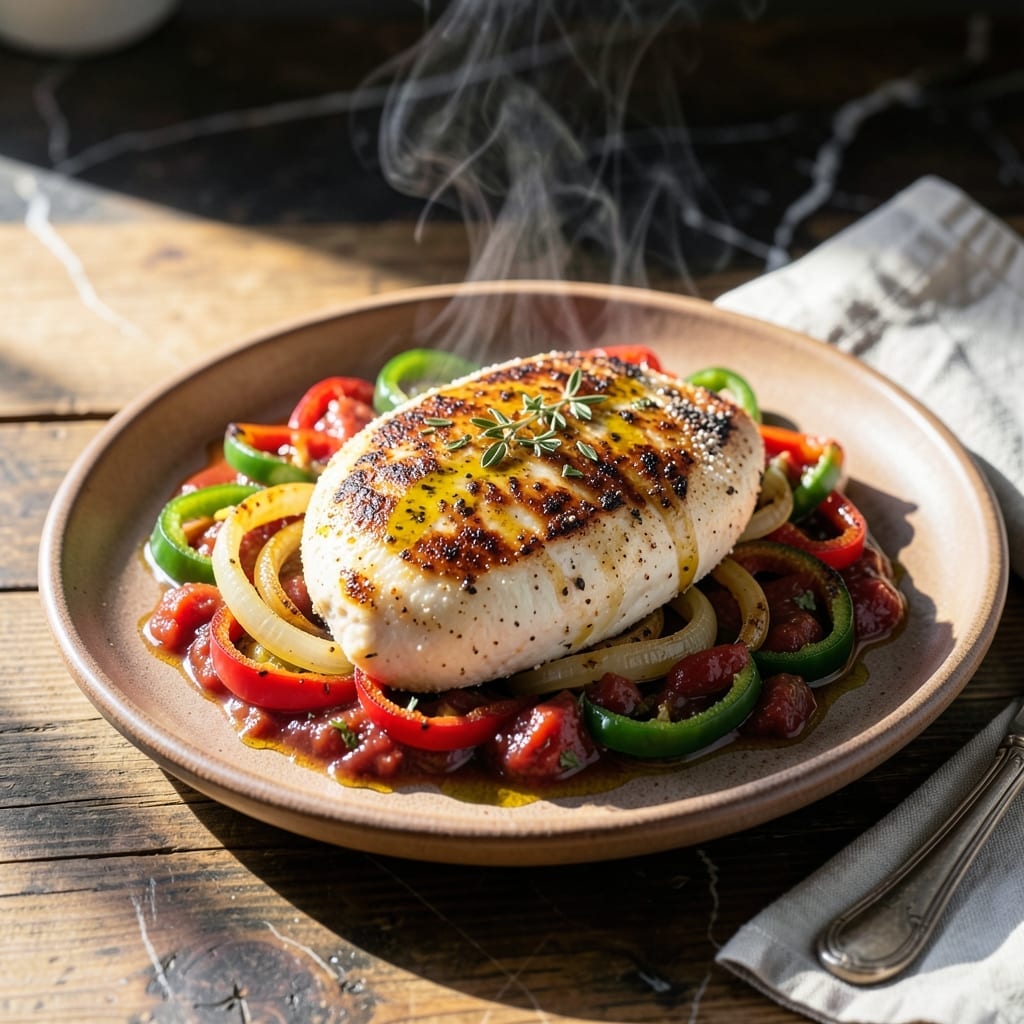
This hunter-style braise transforms simple chicken into a rustic Italian masterpiece. The slow cooking process allows flavors to meld beautifully, creating a rich, hearty dish that feels special without demanding advanced skills.
Tender chicken breast stays juicy as it simmers with bell peppers, onions, and tomatoes in a fragrant herb-infused sauce. The technique is straightforward: brown the meat, build the sauce, then let it all cook together until perfectly tender.
The result is a savory one-pot meal with deep, complex flavors that taste like they’ve been developing all day. Serve it over polenta or crusty bread to soak up every last bit of the delicious sauce.
This Italian classic proves that simple ingredients, when treated with care, can create something extraordinary.
Ingredients for Chicken Breast Cacciatore
Rustic Italian flavors come together in this hearty hunter-style chicken breast braise with bell peppers.
| Ingredient | Amount | Notes |
|---|---|---|
| Boneless Skinless Chicken Breast 🍗 | 1 ½ lb | Pounded to even thickness |
| All-Purpose Flour 🌾 | ½ cup | For dredging chicken |
| Olive Oil 🫒 | 3 tbsp | Divided for browning and sauce |
| Yellow Onion 🧅 | 1 whole | Medium, thinly sliced |
| Red Bell Pepper 🌶️ | 1 whole | Seeds removed, sliced |
| Green Bell Pepper 🌶️ | 1 whole | Seeds removed, sliced |
| Garlic Cloves 🧄 | 4 cloves | Minced finely |
| Canned Diced Tomatoes 🍅 | 1 can | 28 oz, with juices |
| Tomato Paste 🍅 | 2 tbsp | For depth of flavor |
| Dry White Wine 🍷 | ½ cup | Such as Pinot Grigio |
| Chicken Stock 🥘 | 1 cup | Low-sodium preferred |
| Dried Oregano 🍃 | 1 tsp | Mediterranean variety |
| Dried Basil 🌿 | 1 tsp | Crushed for release of oils |
| Bay Leaf 🍃 | 1 whole | Removed before serving |
| Kosher Salt 🧂 | 1 tsp | Plus more to taste |
| Freshly Ground Black Pepper 🌶️ | ½ tsp | Adjust to preference |
| Fresh Flat-Leaf Parsley 🌿 | ¼ cup | Chopped, for garnish |
The chicken breast must stay moist during the long braise. Pounding to even thickness ensures even cooking—aim for ½-inch pieces. For the best results, use free-range or organic breasts from a reputable butcher or Whole Foods. The bell peppers should be firm and vibrant in color; avoid any with soft spots. San Marzano canned tomatoes elevate the sauce, but any good-quality brand works in a pinch.
No white wine? Substitute chicken stock plus 1 tbsp lemon juice for acidity. Fresh herbs can replace dried at 3:1 ratio (3 tbsp fresh per 1 tsp dried). If you’re short on time, pre-sliced peppers and onions from the grocery store work fine. For extra depth, add 1 tsp capers or ¼ cup chopped olives—traditional in some regional variations.
This cacciatore tastes even better the next day as flavors meld. Store in an airtight container in the fridge for up to 4 days or freeze for 3 months. Reheat gently on the stove with a splash of stock to prevent drying out.
Why You’ll Love This Recipe
- One Pan Wonder: Honestly, I toss everything—chicken, onions, peppers—in one skillet and let the stove do the work. No piles of dishes afterward.
- Ridiculously Good: That combination of caramelized onions, sweet red peppers, and tender chicken in a rich tomato sauce? I’ll be real: it’s my new comfort food obsession.
- Weeknight Hero: Between us, this is my Tuesday night lifesaver—ready in 40 minutes and fancy enough for weekend company.
- Budget Stretcher: One pound of chicken breast, a few pantry staples, and it feeds my family of four with leftovers for lunch. Solid value.
Step-by-Step Instructions for Chicken Breast Cacciatore
Master this hunter-style braise with even cooking and bold Mediterranean flavors every time.
Step 1: Dredge and Brown the Chicken
Pat the 1.5 lb boneless skinless chicken breast completely dry, then pound to an even ½-inch thickness for uniform cooking. Season both sides with the 1 tsp kosher salt and 0.5 tsp freshly ground black pepper, then dredge lightly in the 0.5 cup all-purpose flour, shaking off any excess.
Heat 2 tbsp olive oil in a large, heavy skillet over medium-high heat until shimmering. Add the chicken and cook undisturbed for 4-5 minutes per side until golden brown and just cooked through. The flour coating creates a light crust that thickens the sauce later. Transfer to a plate and tent with foil.
Step 2: Sauté the Aromatic Vegetables
In the same skillet, add the remaining 1 tbsp olive oil if needed. Add the thinly sliced yellow onion, sliced red bell pepper, and sliced green bell pepper. Cook over medium heat for 6-7 minutes, stirring occasionally, until the vegetables soften and the onion becomes translucent.
Stir in the 4 cloves minced garlic cloves and cook for 30 seconds until fragrant—don’t let it brown. Add the 2 tbsp tomato paste and cook for 1 minute, stirring constantly, to deepen its flavor and remove any raw taste. This builds the flavor base for your sauce.
Step 3: Deglaze and Build the Sauce
Pour in the 0.5 cup dry white wine and scrape up all the browned bits from the bottom of the skillet with a wooden spoon. This deglazing step captures all the concentrated chicken and vegetable flavors. Let the wine simmer for 2-3 minutes until reduced by half.
Add the 1 can canned diced tomatoes with juices, 1 cup chicken stock, 1 tsp dried oregano, 1 tsp dried basil, and 1 whole bay leaf. Stir to combine and bring to a gentle simmer. The herbs release their oils into the liquid, infusing the sauce with authentic Italian character.
Step 4: Braise and Finish
Return the chicken to the skillet along with any accumulated juices. Spoon some of the sauce over the top to partially submerge the chicken. Reduce heat to medium-low, cover, and simmer for 10-12 minutes until the chicken is fully cooked through and the flavors meld together.
Remove the bay leaf and discard. Taste and adjust seasoning with additional kosher salt and freshly ground black pepper if needed. The sauce should be rich and slightly thickened, coating the back of a spoon. Garnish with the 0.25 cup chopped fresh flat-leaf parsley just before serving to add a bright, fresh note.
Pro Tips For Making Chicken Breast Cacciatore
- Pound the Chicken: Use a meat mallet to gently pound the chicken breasts to an even ½-inch thickness—this guarantees they cook through without drying out, and the flour coating sticks better.
- Sear, Don’t Stew: Get the olive oil screaming hot before adding the floured chicken, and resist the urge to stir until it releases easily—this builds a proper crust that thickens the sauce later.
- Slice Peppers Thin: Cut the red bell pepper into thin strips so it softens quickly and blends into the sauce instead of staying chewy—I learned this the hard way after biting into rubbery chunks.
- Deglaze the Pan: After removing the chicken, pour in a splash of wine or broth and scrape up all those browned bits—this adds a ton of flavor to the cacciatore without extra effort.
Regional Styles of This chicken breast cacciatore
Tuscan Hunter’s Style
In Tuscany, this dish often includes wild mushrooms and rosemary alongside the bell peppers. I add 1 cup sliced cremini when sautéing the vegetables and a 1-inch rosemary sprig while braising. The earthy mushrooms complement the chicken beautifully. 🌿
Roman Tomato Focus
Roman cooks emphasize tomatoes, using San Marzano whole peeled instead of diced. I hand-crush 6-8 tomatoes and add them with 1 tsp red pepper flakes for heat. The sauce becomes silkier and more luxurious with this approach.
Sicilian Citrus Twist
Sicilian versions brighten the dish with citrus. I stir in zest of 1 lemon and 2 tbsp capers during the final 5 minutes of cooking. The acidity cuts through the richness while keeping the dish authentically Italian.
Northern Italian Creamy
In the north, they sometimes finish with ¼ cup heavy cream stirred in at the end. This creates a velvety sauce that clings to the chicken. I find this version particularly comforting during colder months.
Calabrian Spicy
Calabria brings the heat with Calabrian chili paste. I add 1 tbsp when building the sauce, along with ½ tsp fennel seeds. The combination adds complexity without overpowering the dish. 🔥
Nutrition Facts
Frequently Asked Questions
Can I use chicken thighs instead?
Yes, bone-in, skin-on thighs work beautifully and stay juicier during the 10-12 minute braise. Adjust cooking time to 20-25 minutes as they need longer to become tender.
What can I substitute for white wine?
Replace with ½ cup chicken stock plus 1 tbsp lemon juice for acidity. Apple cider vinegar also works in a pinch—use 1 tbsp with ½ cup stock.
How do I keep the chicken from drying out?
Pound breasts to ½-inch thickness for even cooking and don’t overcook—they’re done at 165°F. Return them to the sauce only for the final 10-12 minutes.
Can I make this ahead?
The flavors deepen overnight. Store in an airtight container for up to 4 days or freeze for 3 months. Reheat gently with a splash of stock.

- Jollof Rice Sauce Recipe: West African Tomato and Spice Infusion - September 25, 2026
- Japanese Rice Soup Recipe: Umami-Rich Comfort in a Bowl - September 25, 2026
- Homemade Cream Of Rice Recipe: Silk-Smooth Breakfast in Minutes - September 25, 2026