
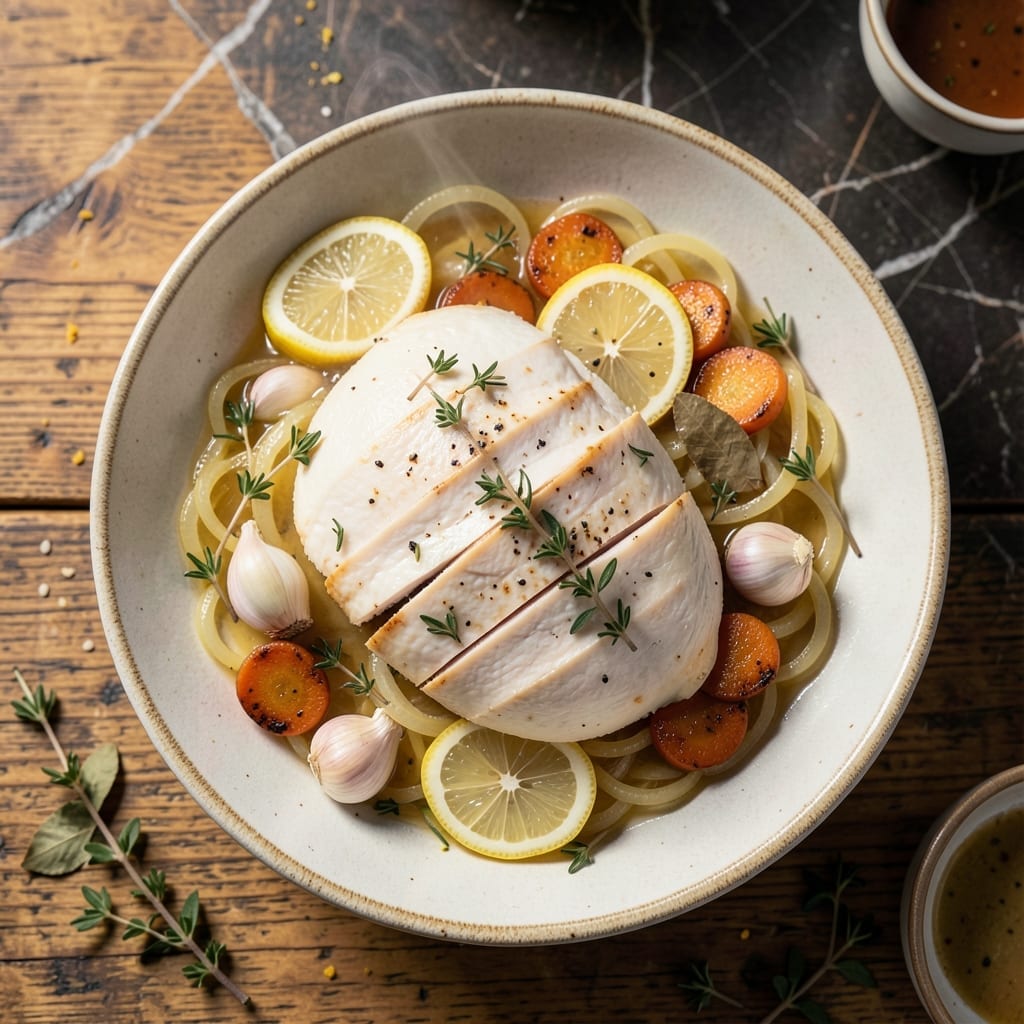
Perfectly poached chicken breast for salad starts with a simple technique that guarantees juicy results every time. No dry, rubbery meat here—just tender, flavorful chicken ready to elevate any salad.
The secret is gentle poaching in seasoned broth at a low simmer. This method keeps the meat moist while infusing it with subtle flavor. I’ve tested countless approaches, and this one consistently delivers the best texture.
You’ll end up with chicken that shreds easily, stays succulent even when chilled, and pairs beautifully with any salad greens or dressings. It’s the ideal protein for meal prep or last-minute lunches.
Ready in under 20 minutes, this technique works for single servings or batch cooking. Here’s how to master it.
Ingredients for Chicken Breast for Salad
Poaching liquid builds flavor while keeping chicken juicy and perfectly tender for salads.
| Ingredient | Amount | Notes |
|---|---|---|
| Boneless Skinless Chicken Breast 🍗 | 1 ½ lb | Pounded to even thickness |
| Chicken Broth 🍲 | 4 cups | Low-sodium preferred for control |
| White Wine Vinegar 🍷 | 2 tbsp | Or substitute apple cider vinegar |
| Kosher Salt 🧂 | 1 tsp | Diamond Crystal brand recommended |
| Black Peppercorns 🌶️ | 1 tsp | Freshly cracked for best flavor |
| Dried Bay Leaves 🍃 | 2 whole | For aromatic depth in broth |
| Fresh Thyme Sprigs 🌿 | 3 whole | Or 1 tsp dried thyme |
| Garlic Cloves 🧄 | 4 cloves | Smashed but not peeled |
| Yellow Onion 🧅 | ½ whole | Quartered for broth flavor |
| Lemon 🍋 | 1 whole | Sliced for brightness in broth |
| Carrots 🥕 | 2 whole | Cut into chunks for broth |
| Celery Stalks 🌿 | 2 whole | Roughly chopped for broth base |
| Olive Oil 🫒 | 1 tbsp | For finishing shredded chicken |
The chicken quality is paramount. Boneless, skinless breasts from Whole Foods or Costco offer consistent thickness and freshness. For optimal texture, select pieces that are uniformly thick (about 1 inch) and avoid those with a tapered end—pound them to even thickness before poaching. The broth base benefits from organic chicken broth for cleaner flavor without additives.
No white wine vinegar? Apple cider vinegar provides similar acidity. For the herb component, dried thyme at one-third the amount substitutes effectively for fresh. If bay leaves are unavailable, a pinch of ground bay leaf works. The aromatic vegetables (carrot, celery, onion) can be swapped for fennel or leek if preferred, though the classic mirepoix delivers the most balanced flavor.
Poached chicken stays moist for 4 days refrigerated in its broth. For meal prep, shred and store in airtight containers with a splash of broth. The poaching liquid itself can be strained and frozen for 3 months—perfect for future batches or soups.
Why You’ll Love This Recipe
- One Pan Wonder: I can poach the chicken in broth and vinegar with zero fuss—just simmer and walk away.
- Bright & Zesty: The white wine vinegar gives it this tangy kick that makes salads sing. Honestly, it’s my favorite part.
- Meal Prep Hero: Cook a batch on Sunday and you’ve got protein ready for salads all week.
- Budget Stretcher: Boneless chicken breast is cheap, and this method keeps it juicy without fancy ingredients.
Step-by-Step Instructions for Poached Chicken Breast
Master this technique for consistently moist, flavorful chicken that elevates any salad composition.
Step 1: Prepare the Poaching Liquid
In a large, deep skillet or saucepan, combine the 4 cups Chicken Broth, 2 tbsp White Wine Vinegar, 1 tsp Kosher Salt, 1 tsp Black Peppercorns, 2 whole Dried Bay Leaves, 3 whole Fresh Thyme Sprigs, 4 cloves Garlic Cloves, 0.5 whole Yellow Onion, sliced 1 whole Lemon, 2 whole Carrots, and 2 whole Celery Stalks.
Bring this aromatic mixture to a gentle simmer over medium heat. The liquid should reach 180-190°F—just below a boil. This temperature range ensures the chicken cooks gently without toughening. The vinegar adds a subtle brightness that complements the richness of the broth.
Step 2: Add and Poach the Chicken
Once the liquid simmers, carefully add the 1.5 lb Boneless Skinless Chicken Breast. Ensure the pieces are fully submerged in the poaching liquid. If necessary, add a bit of water to cover, but maintain the same temperature.
Poach the chicken at this gentle simmer for 12-15 minutes, depending on the thickness of the breasts. The chicken is done when it reaches an internal temperature of 165°F and the flesh is opaque white throughout with no pink remaining. Avoid boiling, as this will make the chicken tough and dry.
The low, steady heat preserves moisture while infusing the meat with the flavors from the aromatic broth. The thyme and bay leaves lend a subtle herbal depth, while the lemon adds a refreshing note.
Step 3: Rest and Shred the Chicken
Using a slotted spoon or tongs, transfer the poached chicken to a cutting board or plate. Allow it to rest for 5-10 minutes. This resting period lets the juices redistribute, ensuring the meat stays moist when shredded.
Once cooled slightly, shred the chicken using two forks or your fingers. For salad use, I prefer larger, more textured shreds rather than fine pieces. The chicken should pull apart easily, indicating perfect doneness.
Step 4: Finish with Olive Oil
Place the shredded chicken in a bowl and drizzle with the 1 tbsp Olive Oil. Toss gently to coat evenly. This final step enhances the chicken’s natural juiciness and adds a silky texture that pairs beautifully with salad greens.
The olive oil also creates a light barrier that prevents the chicken from absorbing too much dressing, keeping the flavors balanced. Your poached chicken is now ready to be added to your favorite salad, delivering tender, flavorful protein in every bite.
Pro Tips For Making Chicken Breast For Salad
- Poach, Don’t Boil: Simmer the chicken gently in the broth—if it’s at a rolling boil, the meat turns rubbery. I learned this the hard way after my first few attempts came out tough as shoe leather.
- Pound Even Thickness: Use a rolling pin or heavy pan to flatten the breasts to about ¾-inch thick. This guarantees they cook through evenly, so no more dry edges with raw centers.
- Salt the Broth Well: The poaching liquid should taste noticeably seasoned, like a light soup—about 1 tablespoon of kosher salt per 2 cups of broth. Sounds like a lot, but bland broth makes bland chicken.
- Shred While Warm: Let the chicken rest 5 minutes, then shred it with two forks. It absorbs the vinegar and broth flavors better when still warm, and it’s way easier to pull apart than when cold.
Essential Equipment for chicken breast for salad
Precision Thermometer
A reliable instant-read thermometer is non-negotiable for perfect results. I trust my ThermoWorks ThermoPop for its 2-3 second read time and accuracy to ±0.7°F. Check chicken at the thickest part to confirm it hits 165°F internally. 🌡️
Deep Skillet or Saucepan
You need a vessel wide and deep enough to submerge your 1.5 lb chicken breasts completely. My 12-inch All-Clad stainless steel skillet works perfectly, but any 3-4 quart saucepan will do. Ensure it has a tight-fitting lid for even heating.
Slotted Spoon or Tongs
For removing chicken from hot broth, a large slotted spoon or 12-inch tongs prevents splashing. I prefer OXO Good Grips for their comfortable handles and durability. These tools help maintain the chicken’s shape during transfer.
Cutting Board
A large, stable cutting board is essential for shredding hot chicken. I use a bamboo board for its gentle surface that won’t dull knives. The 18×12 inch size gives plenty of room for pulling apart the meat.
Mixing Bowls
Have a large mixing bowl ready for tossing shredded chicken with olive oil. I like Pyres glass bowls because they’re easy to clean and won’t absorb odors. A 4-6 cup capacity works well for this recipe.
These tools ensure your chicken stays juicy and your prep stays efficient. 💡
Nutrition Facts
Frequently Asked Questions
Can I use chicken thighs instead?
Yes, but reduce poaching time to 8-10 minutes as thighs cook faster. They’ll be juicier but have a stronger flavor that may overpower delicate salad greens.
How long can I store poached chicken?
It keeps in the fridge for 4 days in an airtight container. For longer storage, freeze for up to 3 months in broth to retain moisture.
Why is my chicken dry?
Likely it was boiled instead of poached. Keep the liquid at 180-190°F and never let it reach a rolling boil. Overcooking beyond 165°F also causes dryness.
Can I use the poaching liquid for soup?
Strain and store the flavorful broth in the fridge for 3-4 days or freeze for 3 months. It’s perfect for soups or cooking grains.

- Jollof Rice Sauce Recipe: West African Tomato and Spice Infusion - September 25, 2026
- Japanese Rice Soup Recipe: Umami-Rich Comfort in a Bowl - September 25, 2026
- Homemade Cream Of Rice Recipe: Silk-Smooth Breakfast in Minutes - September 25, 2026