
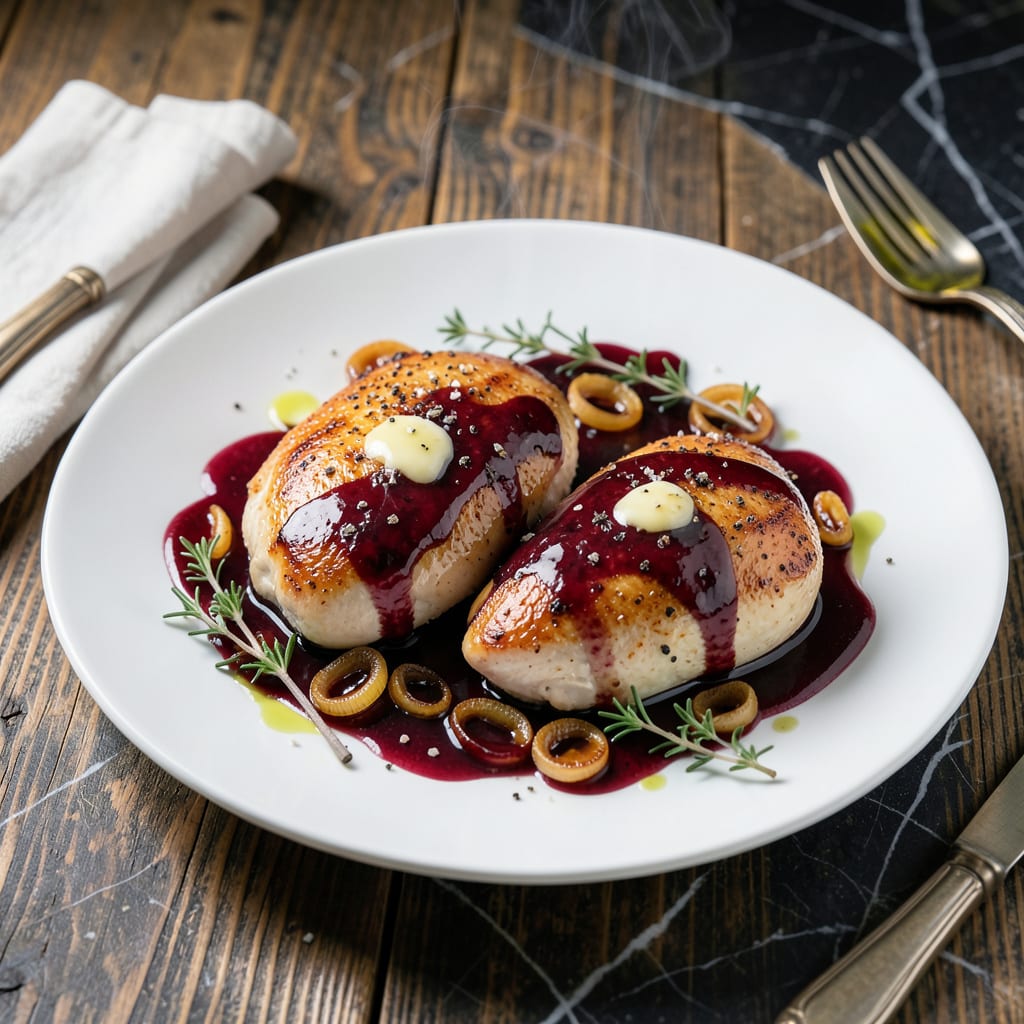
This recipe transforms simple chicken breast into an elegant dish with a rich wine reduction that’s both aromatic and deeply flavorful.
Pan-searing the chicken creates a perfect crust, while the wine sauce develops complexity as it reduces to a glossy finish. Serve with mashed potatoes or crusty bread to soak up every drop.
Ingredients for Chicken Breast in Wine Sauce
Eleven ingredients transform simple chicken into an elegant, aromatic pan-seared masterpiece with rich wine reduction.
| Ingredient | Amount | Notes |
|---|---|---|
| Boneless Skinless Chicken Breast 🍗 | 1 ½ lb | Pounded to even thickness |
| All-Purpose Flour 🌾 | ¼ cup | For dredging chicken |
| Kosher Salt 🧂 | 1 ½ tsp | Divided for seasoning |
| Black Pepper 🌶️ | ½ tsp | Freshly ground preferred |
| Olive Oil 🫒 | 2 tbsp | Divided for cooking |
| Unsalted Butter 🧈 | 2 tbsp | For finishing sauce |
| Shallots 🧅 | 2 whole | Finely minced |
| Garlic Cloves 🧄 | 3 cloves | Minced for sauce |
| Dry White Wine 🍷 | 1 ½ cups | Sauvignon Blanc or Pinot Grigio |
| Low-Sodium Chicken Broth 🥣 | 1 cup | For deglazing pan |
| Dijon Mustard 🟡 | 1 tbsp | For sauce depth |
| Fresh Thyme Sprigs 🌿 | 4 sprigs | Leaves stripped from stems |
| Fresh Parsley 🌿 | 2 tbsp | Chopped, for garnish |
[recipeingredientscaler]
The chicken quality matters here. Air-chilled boneless, skinless breasts from Whole Foods or a trusted butcher yield the best texture and flavor. Pound them to an even thickness (about 3/4-inch) for consistent cooking—this prevents dry spots while ensuring a perfect crust. Diamond Crystal kosher salt is my go-to for its clean taste and easy pinchability.
No white wine? Dry vermouth works in a pinch, or substitute extra chicken broth with 1 tbsp lemon juice for acidity. Shallots can be replaced with half a sweet onion, finely minced. For the wine, avoid cooking wines with added salt—Trader Joe’s has affordable, drinkable options that reduce beautifully. Fresh herbs are ideal, but dried thyme at one-third the amount is acceptable.
Leftover chicken keeps 3-4 days in an airtight container. The wine sauce thickens as it cools—reheat gently with a splash of broth. For best results, serve immediately after cooking when the sauce is glossy and the chicken is at its juiciest.
Why You’ll Love This Recipe
- One Pan Wonder: I love that I only need a skillet and a few pantry staples to make this—flour, salt, pepper, and olive oil do most of the work.
- Rich and Savory: The wine sauce soaks into the chicken, giving every bite a deep, restaurant-quality flavor without the fuss.
- Weeknight Hero: Honestly, it’s my go-to for busy evenings when I need something impressive but quick.
- Budget Friendly: Chicken breasts stretch far, and the simple ingredients mean I’m not breaking the bank for a meal that feels special.
Step-by-Step Instructions for Chicken Breast in Wine Sauce
Here’s the method. Straightforward, tested, works every time.
Step 1: Pound and Season the Chicken
Place the 1.5 lb boneless skinless chicken breast between two sheets of plastic wrap. Pound to an even ½-inch thickness with a meat mallet. This ensures even cooking and prevents dry spots.
Season both sides generously with 1 tsp kosher salt and 0.5 tsp black pepper. The seasoning should form a visible layer—don’t be shy. Dredge the cutlets in 0.25 cup all-purpose flour, shaking off excess. The flour creates a light crust that thickens the sauce later.
Step 2: Sear the Chicken Until Golden
Heat 1 tbsp olive oil in a large skillet over medium-high heat until shimmering. Add the chicken and cook undisturbed for 4-5 minutes per side until golden brown and just cooked through.
The chicken is ready to flip when it releases easily from the pan. Transfer to a plate and tent with foil to keep warm. Don’t wipe the skillet clean—those browned bits are the foundation of your sauce.
Step 3: Build the Aromatic Base
Reduce heat to medium and add the remaining 1 tbsp olive oil to the skillet. Add 2 whole shallots (finely minced) and cook for 2-3 minutes until softened and translucent.
Add 3 cloves garlic cloves (minced) and 4 sprigs fresh thyme sprigs (leaves stripped) and cook for 30 seconds until fragrant. The garlic should sizzle but not brown—burnt garlic turns bitter.
Step 4: Deglaze and Reduce the Sauce
Pour in 1.5 cups dry white wine and scrape up all browned bits from the bottom of the pan with a wooden spoon. Simmer for 5-7 minutes until the liquid reduces by half.
Add 1 cup low-sodium chicken broth, 1 tbsp Dijon mustard, and 2 tbsp unsalted butter. Simmer for another 3-4 minutes until the sauce thickens slightly and coats the back of a spoon. The butter adds richness and a glossy finish.
Step 5: Finish and Serve
Return the chicken to the skillet along with any accumulated juices. Spoon the sauce over the cutlets and simmer for 1-2 minutes to heat through. The sauce should cling to the chicken with a velvety texture.
Garnish with 2 tbsp fresh parsley (chopped) and serve immediately. Each bite should deliver tender chicken with a rich, aromatic wine sauce that’s balanced by the bright acidity of the white wine.
Pro Tips For Making Chicken Breast In Wine Sauce
- Pound the Chicken: Use a rolling pin or meat mallet to pound the chicken breasts to an even ½-inch thickness—this guarantees even cooking and prevents dry, chewy edges.
- Season the Flour: Mix kosher salt and black pepper into the all-purpose flour before dredging; this creates a well-seasoned crust that sticks better than sprinkling spices on the meat.
- Hot Pan, Quick Sear: Heat the olive oil until it shimmers, then sear the chicken for 3-4 minutes per side on medium-high—any lower and you’ll steam it instead of browning.
- Rest Before Saucing: Let the seared chicken rest on a plate for 5 minutes before adding it back to the wine sauce; this keeps it juicy and prevents the sauce from turning watery.
Creative Variations of chicken breast in wine sauce
Red Wine Twist
Swap the dry white wine for 1.5 cups Pinot Noir and add 1 tsp balsamic vinegar for depth. The red wine creates a deeper, more robust sauce that pairs wonderfully with the chicken. I recommend Meiomi Pinot Noir for its smooth, fruit-forward profile. 🍷
Creamy Mushroom
Add 8 oz sliced cremini mushrooms when cooking the shallots. After deglazing, stir in ½ cup heavy cream for a luxurious finish. This variation turns the dish into a richer, more decadent experience perfect for colder months.
Herb Infusion
For a Provençal twist, add 1 tbsp herbes de Provence with the thyme. This blend of lavender, rosemary, and savory adds a fragrant, earthy dimension to the sauce. I love how it transports the dish to the South of France.
Citrus Brightness
Stir in zest of 1 lemon and 2 tbsp fresh lemon juice at the end of sauce reduction. The citrus cuts through the richness and adds a bright, fresh note. This works especially well with the Dijon mustard already in the recipe.
Coconut Curry
Replace the wine with 1 cup coconut milk and 1 tbsp red curry paste. Simmer with the broth and finish with 1 tbsp lime juice. This Thai-inspired version offers a creamy, spicy alternative that’s surprisingly easy. 🌶️
Sun-Dried Tomato
Add ¼ cup chopped sun-dried tomatoes with the shallots. Their concentrated sweetness complements the wine’s acidity beautifully. I use the Trader Joe’s brand for consistent quality and texture.
Nutrition Facts
Frequently Asked Questions
What wine works best for the sauce?
Use a dry white like Sauvignon Blanc or Pinot Grigio. Avoid cooking wines with added salt. A drinkable wine reduces better for a balanced flavor.
How do I know when the chicken is done?
Cook until it reaches 165°F internally and the juices run clear. The chicken should release easily from the pan when ready to flip.
Can I make this with bone-in chicken?
Yes, but adjust cooking time to 6-8 minutes per side. Bone-in stays juicier but may require more time to reach safe temperature.
Why did my sauce turn out thin?
Simmer longer until it coats the back of a spoon. If needed, mix 1 tsp cornstarch with water and stir in. The flour from dredging also helps thicken.

- Jollof Rice Sauce Recipe: West African Tomato and Spice Infusion - September 25, 2026
- Japanese Rice Soup Recipe: Umami-Rich Comfort in a Bowl - September 25, 2026
- Homemade Cream Of Rice Recipe: Silk-Smooth Breakfast in Minutes - September 25, 2026