
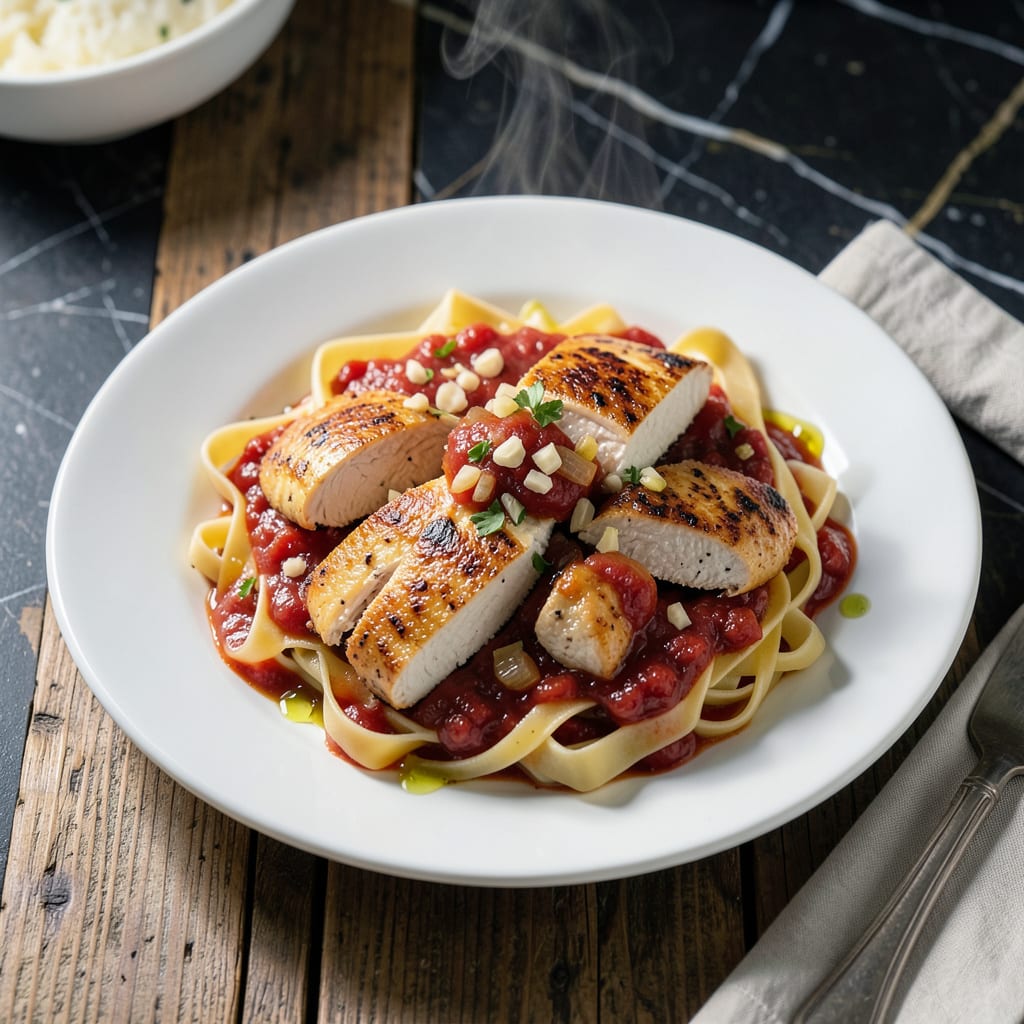
This recipe transforms simple chicken breast into a perfect pasta topping with a rich tomato-basil sauce that clings beautifully to every strand. The key is simmering the chicken in the sauce to infuse it with deep, savory flavor.
You’ll end up with tender, juicy chicken pieces coated in a velvety sauce that’s ready in under 45 minutes. The basil adds freshness while the tomatoes create a robust base that pairs perfectly with any pasta shape.
Ingredients for Chicken Breast Pasta Sauce
Simple chicken breast becomes extraordinary with these rich sauce ingredients ready in under 45 minutes.
| Ingredient | Amount | Notes |
|---|---|---|
| Boneless Skinless Chicken Breast 🍗 | 1 ½ lb | Cut into bite-sized pieces |
| Olive Oil 🫒 | 2 tbsp | Extra-virgin preferred |
| Garlic Cloves 🧄 | 4 cloves | Minced finely |
| Yellow Onion 🧅 | 1 whole | Finely diced |
| Canned Crushed Tomatoes 🍅 | 28 oz | San Marzano preferred |
| Tomato Paste 🍅 | 2 tbsp | For depth of flavor |
| Dry White Wine 🍷 | ½ cup | Or substitute chicken broth |
| Chicken Broth 🥣 | ½ cup | Low-sodium preferred |
| Fresh Basil Leaves 🌿 | ½ cup | Loosely packed, chopped |
| Dried Oregano 🍃 | 1 tsp | Mediterranean variety |
| Red Pepper Flakes 🌶️ | ½ tsp | Adjust to taste |
| Kosher Salt 🧂 | 1 ½ tsp | Diamond Crystal preferred |
| Ground Black Pepper 🌶️ | ½ tsp | Freshly ground |
| Granulated Sugar 🍚 | 1 tsp | Balances acidity |
| Grated Parmesan Cheese 🧀 | ½ cup | For finishing |
[recipeingredientscaler]
The tomatoes are foundational here. San Marzano canned tomatoes offer superior sweetness and low acidity—seek them at Whole Foods or Italian specialty markets. For the chicken, air-chilled breasts (available at Trader Joe’s) maintain better texture. The Parmesan should be freshly grated from a wedge of Parmigiano-Reggiano for authentic depth.
No white wine? Chicken broth with 1 tsp vinegar mimics the acidity. Basil can be reduced to 1/4 cup if using dried (at one-third the amount). For a richer sauce, add 2 tbsp heavy cream at the end. The tomato paste can be omitted in a pinch, but expect a less concentrated flavor profile.
The sauce keeps beautifully in the fridge for 4-5 days and freezes well for 3 months. Store chicken separately if not using immediately—cooked chicken stays fresh for 3-4 days. Reheat gently to preserve the velvety texture.
Why You’ll Love This Recipe
- One Pot Wonder: I love that everything cooks in a single pan—just sear the chicken, sauté the garlic and onion, then simmer with tomatoes.
- Rich and Hearty: The crushed tomatoes soak up all the juices from the chicken breast, making a sauce that’s deep and satisfying.
- Meal Prep Hero: This sauce keeps beautifully in the fridge for up to four days, so I can make a big batch for easy dinners.
- Budget Friendly: Boneless chicken breast and canned tomatoes stretch far, feeding my family without breaking the bank.
Step-by-Step Instructions for Chicken Breast Pasta Sauce
Master this technique for a velvety tomato-basil sauce that clings beautifully to pasta.
Step 1: Sear the Chicken Breast for Maximum Flavor
Begin by heating the 2 tbsp olive oil in a large, heavy-bottomed skillet over medium-high heat until it shimmers. Add the 1.5 lb boneless skinless chicken breast pieces in a single layer, being careful not to crowd the pan. Season immediately with 1 tsp kosher salt and 0.5 tsp ground black pepper.
Sear undisturbed for 4-5 minutes until the chicken develops a golden-brown crust on the bottom. This Maillard reaction creates deep flavor compounds that will enrich your sauce. Flip and cook for another 3-4 minutes until just cooked through, then transfer to a plate and set aside.
Step 2: Build the Aromatic Foundation
In the same skillet, reduce heat to medium and add the 1 whole yellow onion, sautéing for 3-4 minutes until translucent. Add the 4 cloves garlic cloves and cook for 30 seconds until fragrant—be careful not to let it brown, as burnt garlic turns bitter.
Stir in the 2 tbsp tomato paste and cook for 1-2 minutes, which helps mellow its raw flavor. This step, called “blooming,” intensifies the tomato’s natural sweetness. Deglaze the pan with the 0.5 cup dry white wine, scraping up all the browned bits from the chicken.
Step 3: Simmer the Sauce to Perfection
Add the 28 oz canned crushed tomatoes, 0.5 cup chicken broth, 1 tsp dried oregano, 0.5 tsp red pepper flakes, 1 tsp granulated sugar, and remaining 0.5 tsp kosher salt. Stir to combine and bring to a gentle simmer.
Return the chicken to the skillet, reduce heat to low, and let it simmer uncovered for 15-20 minutes. The sauce should thicken slightly and develop a rich, deep red color. Stir occasionally to prevent sticking.
Step 4: Finish with Fresh Basil and Parmesan
Remove from heat and stir in the 0.5 cup fresh basil leaves. The residual heat will wilt the basil and release its aromatic oils into the sauce. Taste and adjust seasoning if needed—this is your final opportunity to balance the flavors.
For serving, toss the sauce with cooked pasta and finish with the 0.5 cup grated parmesan cheese. The cheese should melt into the sauce, creating a silky, cohesive coating that clings to every strand of pasta. Serve immediately while hot.
Pro Tips For Making Chicken Breast Pasta Sauce
- Pound the Chicken: Slice each breast horizontally, then pound to an even ½-inch thickness—this guarantees quick, even cooking and no dry, chewy bits.
- Sauté Onions First: Cook the yellow onion in olive oil until soft and golden before adding garlic, about 5-7 minutes; raw onion bits ruin the sauce’s smooth flavor.
- Skip Overcrowding: Resist the urge to dump all the chicken in at once—cook in batches to get a proper sear instead of steamed, pale meat.
- Use Tomato Juice: Swirl a splash of the juice from the canned tomatoes into the pan after browning the chicken—it lifts all the browned bits for extra flavor.
Regional Styles of These Flavors
Italian Classic Style
In Rome, this dish becomes Pollo alla Romana with the addition of bell peppers and olives. I sauté 1 diced red bell pepper with the onions and add ½ cup pitted green olives when simmering the sauce. The olives add a briny depth that’s authentically Roman.
The tomatoes should be San Marzano—I always use 28 oz cans from my local Italian market. They’re sweeter and less acidic than standard varieties, creating that signature velvety texture. 🌟
Southern Comfort Twist
For a taste of the American South, stir in 1 tbsp brown sugar and 1 tsp smoked paprika with the tomatoes. I also add ½ cup frozen okra during the last 10 minutes of simmering. The okra thickens the sauce naturally while adding a subtle earthy note.
Serve this version over penne pasta with a side of cornbread. The sweetness balances the acidity beautifully, and the paprika gives it that characteristic Southern warmth.
Mediterranean Flare
I love adding ½ cup crumbled feta and ½ cup sliced kalamata olives to give it a Greek twist. The feta melts into the sauce, creating a creamy, tangy element that pairs perfectly with the tomatoes. Stir these in during the last 5 minutes of cooking.
Fresh oregano works better here than dried—use 1 tbsp chopped instead of the dried version. This small change makes a noticeable difference in the Mediterranean flavor profile.
Nutrition Facts
Frequently Asked Questions
Can I use chicken thighs instead of breast?
Chicken thighs stay juicier and can handle longer simmering. Use 1.5 lb boneless thighs and follow the same steps, but add 5 minutes to the cooking time since dark meat cooks slower.
How do I prevent the sauce from being too watery?
Simmer uncovered for the full 15-20 minutes to let excess liquid evaporate. For a thicker result, mash some tomatoes with a spoon or add 1 tbsp tomato paste at the end.
What pasta shape works best with this sauce?
Short shapes like penne or rigatoni hold sauce beautifully. Avoid long pasta like spaghetti unless you plan to toss everything together vigorously before serving.

- Jollof Rice Sauce Recipe: West African Tomato and Spice Infusion - September 25, 2026
- Japanese Rice Soup Recipe: Umami-Rich Comfort in a Bowl - September 25, 2026
- Homemade Cream Of Rice Recipe: Silk-Smooth Breakfast in Minutes - September 25, 2026