
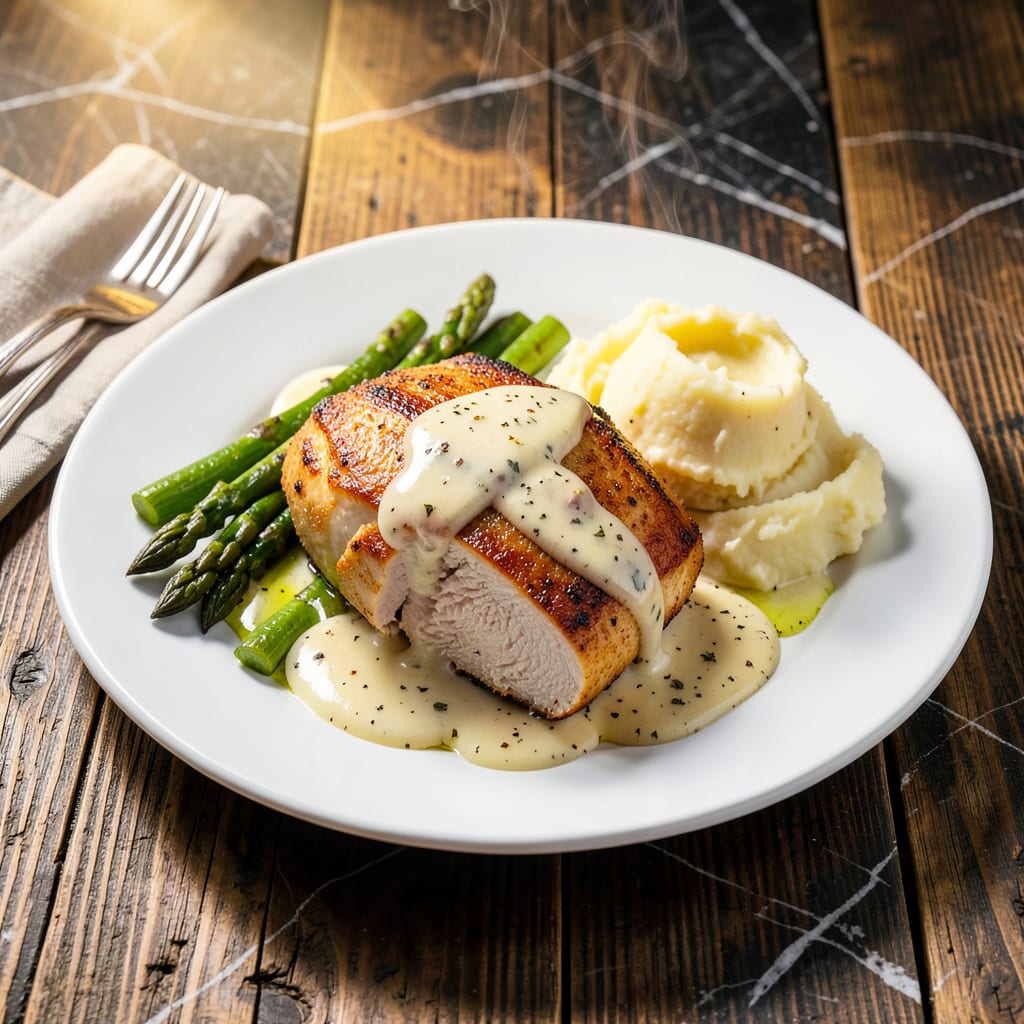
This recipe transforms simple chicken breast into a restaurant-quality dish with a silky white wine reduction. The key is achieving a golden sear while keeping the meat juicy and tender.
Pan-searing builds flavor, and the herb-infused sauce adds a sophisticated finish. Serve this elegant creation with roasted vegetables or mashed potatoes for a complete meal.
Ingredients for Chicken Breast with White Wine Sauce
These refined ingredients create a restaurant-quality pan-seared dish with elegant sauce.
| Ingredient | Amount | Notes |
|---|---|---|
| Boneless Skinless Chicken Breast 🍗 | 1 ½ lb | Pounded to even thickness |
| All-Purpose Flour 🌾 | ¼ cup | For dredging chicken |
| Kosher Salt 🧂 | 1 ½ tsp | Diamond Crystal preferred |
| Freshly Ground Black Pepper 🌶️ | ½ tsp | Coarse grind recommended |
| Unsalted Butter 🧈 | 3 tbsp | Divided for searing and sauce |
| Olive Oil 🫒 | 2 tbsp | High smoke point variety |
| Dry White Wine 🍷 | ¾ cup | Sauvignon Blanc or Pinot Grigio |
| Chicken Stock 🍲 | ½ cup | Low-sodium preferred |
| Shallots 🧅 | 2 whole | Finely minced |
| Garlic Cloves 🧄 | 3 cloves | Minced for sauce |
| Fresh Thyme Sprigs 🌿 | 4 sprigs | Leaves stripped from stems |
| Fresh Rosemary Sprig 🌿 | 1 whole | Leaves finely chopped |
| Heavy Cream 🥛 | ¼ cup | Full-fat for silky texture |
| Dijon Mustard 🟡 | 1 tsp | Smooth, not whole grain |
| Lemon Juice 🍋 | 1 tbsp | Freshly squeezed |
[recipeingredientscaler]
The chicken quality is paramount. Air-chilled boneless, skinless breasts from Whole Foods or a trusted butcher ensure better texture and flavor retention. Pounding to even thickness (about 3/4-inch) guarantees uniform cooking. For the wine, select a dry white you’d actually drink—Sauvignon Blanc or Pinot Grigio work beautifully. Avoid cooking wines, which contain added salt and preservatives that mute flavor.
No white wine? Dry vermouth makes an excellent substitute with similar acidity. Shallots can be swapped for yellow onion at a 1:1 ratio, though the flavor will be slightly more pungent. Fresh herbs are ideal, but dried at one-third the amount works in a pinch. For a lighter sauce, replace heavy cream with half-and-half (texture will be less velvety). The chicken stock can be homemade or high-quality store-bought.
The sauce is best served immediately but reheats gently over low heat. Store leftovers in an airtight container for up to 3 days in the refrigerator. Do not freeze the sauce, as the cream may separate. Chicken can be prepped a day ahead—keep it in the coldest part of your fridge, well-wrapped.
Why You’ll Love This Recipe
- One Pan Wonder: I love that I can sear the chicken, deglaze with wine, and make the sauce in the same pan—minimal cleanup, maximum flavor.
- Restaurant-Quality Taste: The butter and white wine create this rich, velvety sauce that makes the chicken taste way fancier than the effort involved.
- Weeknight Hero: Honestly, it’s my go-to for busy evenings when I need something impressive but can’t spend hours in the kitchen.
- Budget-Friendly Luxe: A few simple ingredients like chicken breast and butter stretch into a dish that feels special without breaking the bank.
Step-by-Step Instructions for Chicken Breast With White Wine Sauce
Master the technique for perfectly seared chicken and a velvety, herb-infused reduction every time.
Step 1: Pound and Season the Chicken Breasts
Place the 1.5 lb boneless skinless chicken breast between two sheets of plastic wrap. Using a meat mallet, pound to an even ½-inch thickness to ensure uniform cooking. This prevents dry, overcooked edges while the center finishes.
Season both sides evenly with the 1.5 tsp kosher salt and 0.5 tsp freshly ground black pepper. I prefer Diamond Crystal kosher salt for its clean, balanced flavor. Let the seasoned chicken sit at room temperature for 10 minutes while you prepare the remaining ingredients.
Step 2: Sear the Chicken to Golden Perfection
Heat 2 tbsp olive oil and 1 tbsp unsalted butter in a large, heavy-bottomed skillet over medium-high heat until the butter foams. Add the chicken and cook undisturbed for 4-5 minutes per side until golden brown and cooked through.
The chicken is ready to flip when it releases easily from the pan and the edges appear opaque and white. Transfer the cooked chicken to a plate and tent with foil to keep warm. The residual heat will continue cooking the chicken slightly, so remove it just before it reaches full doneness.
Step 3: Build the Aromatic Base for the Sauce
In the same skillet, reduce heat to medium and add the remaining 2 tbsp unsalted butter. Once melted, add the 2 whole finely minced shallots and cook for 2-3 minutes until softened and translucent. Stir in the 3 cloves minced garlic cloves, stripped leaves from 4 sprigs fresh thyme sprigs, and finely chopped leaves from 1 whole fresh rosemary sprig. Cook for 30 seconds until fragrant.
Be careful not to let the garlic brown—it should just soften and release its aroma. This aromatic base forms the flavor foundation for your sauce, so take your time to develop these layers properly.
Step 4: Deglaze and Reduce the White Wine Sauce
Pour in the 0.75 cup dry white wine and scrape up all the browned bits from the bottom of the pan with a wooden spoon. This deglazing step captures the concentrated chicken flavor and incorporates it into the sauce. Simmer for 3-4 minutes until the wine reduces by half.
Add the 0.5 cup chicken stock, 1 tsp Dijon mustard, and 1 tbsp lemon juice. Simmer for another 3-4 minutes until the liquid reduces slightly. Stir in the 0.25 cup heavy cream and simmer for 1-2 minutes until the sauce thickens enough to coat the back of a spoon.
Step 5: Finish and Serve the Dish
Return the chicken to the skillet along with any accumulated juices. Spoon the sauce over the chicken and let it simmer for 1-2 minutes to heat through and allow the flavors to meld. Taste and adjust seasoning if needed, though the initial salt should be sufficient.
Serve immediately with the sauce spooned over the top. The chicken should be tender and juicy with a golden crust, while the sauce should be silky and rich with a bright, herbal finish. Pair with crusty bread or roasted vegetables to soak up every last bit of this luxurious sauce.
Pro Tips For Making Chicken Breast With White Wine Sauce
- Pound the Breasts: Chicken breasts cook more evenly when they’re the same thickness—pound them to about ½ inch with a rolling pin or heavy pan. I learned this the hard way after serving dry, rubbery edges while the centers stayed raw.
- Season the Flour: Mix a teaspoon each of kosher salt and black pepper into your all-purpose flour before dredging—it sticks better than seasoning the chicken directly and gives every bite consistent flavor.
- Don’t Crowd the Pan: Resist the urge to cook all the chicken at once; overcrowding steams instead of sears, and you’ll lose that golden crust that makes the sauce cling. Two at a time in a 12-inch skillet is my sweet spot.
- Deglaze While Hot: After removing the chicken, pour in the white wine immediately while the pan’s still screaming hot—those browned bits (the fond) dissolve right into the sauce, adding depth you can’t get any other way.
Essential Equipment for chicken breast with white wine sauce
Quality Skillet
A heavy-bottomed stainless steel skillet is my top choice for even heat distribution. I use a 12-inch All-Clad for perfect searing and sauce reduction. Avoid nonstick—it can’t handle the high heat needed for a proper sear.
Meat Mallet
Pounding chicken to even thickness requires a flat-sided meat mallet. I prefer one with a textured side for tenderizing. A rolling pin works in a pinch, but a mallet gives you more control.
Tongs for Handling
Use 12-inch locking tongs to flip chicken without piercing it. I recommend OXO Good Grips for comfort and precision. This keeps juices inside the meat where they belong. 💡
Wooden Spoon
A wooden spoon is essential for deglazing the pan. It won’t scratch your skillet and can scrape up all those flavorful browned bits. I keep a dedicated one just for sauces.
Instant-Read Thermometer
Check chicken doneness with a digital instant-read thermometer. I use a ThermoWorks ThermoPop for accuracy. Pull the chicken at 155°F—it’ll rise to 160°F while resting. 🌡️
Fine-Mesh Strainer
If your sauce has herb stems, strain it through a fine-mesh sieve before serving. I like Cuisinox for its durability. This ensures a silky-smooth texture every time.
Nutrition Facts
Frequently Asked Questions
Can I use chicken thighs instead of breasts?
Yes, boneless chicken thighs work well and stay juicier. Reduce cooking time to 3-4 minutes per side since they cook faster. The sauce preparation remains exactly the same.
What if my sauce is too thin?
Simmer it longer to reduce further. If needed, mix 1 tsp cornstarch with 1 tbsp cold water and stir into the sauce. Cook for 1-2 minutes until thickened.
How do I prevent the sauce from curdling?
Keep heat at medium-low when adding cream. Stir constantly and avoid boiling. If it starts to separate, immediately remove from heat and whisk vigorously.
Can I make this ahead of time?
Cook chicken fully, but prepare sauce separately. Reheat sauce gently over low heat and pour over warmed chicken. Store leftovers in an airtight container for up to 3 days.

- Jollof Rice Sauce Recipe: West African Tomato and Spice Infusion - September 25, 2026
- Japanese Rice Soup Recipe: Umami-Rich Comfort in a Bowl - September 25, 2026
- Homemade Cream Of Rice Recipe: Silk-Smooth Breakfast in Minutes - September 25, 2026