
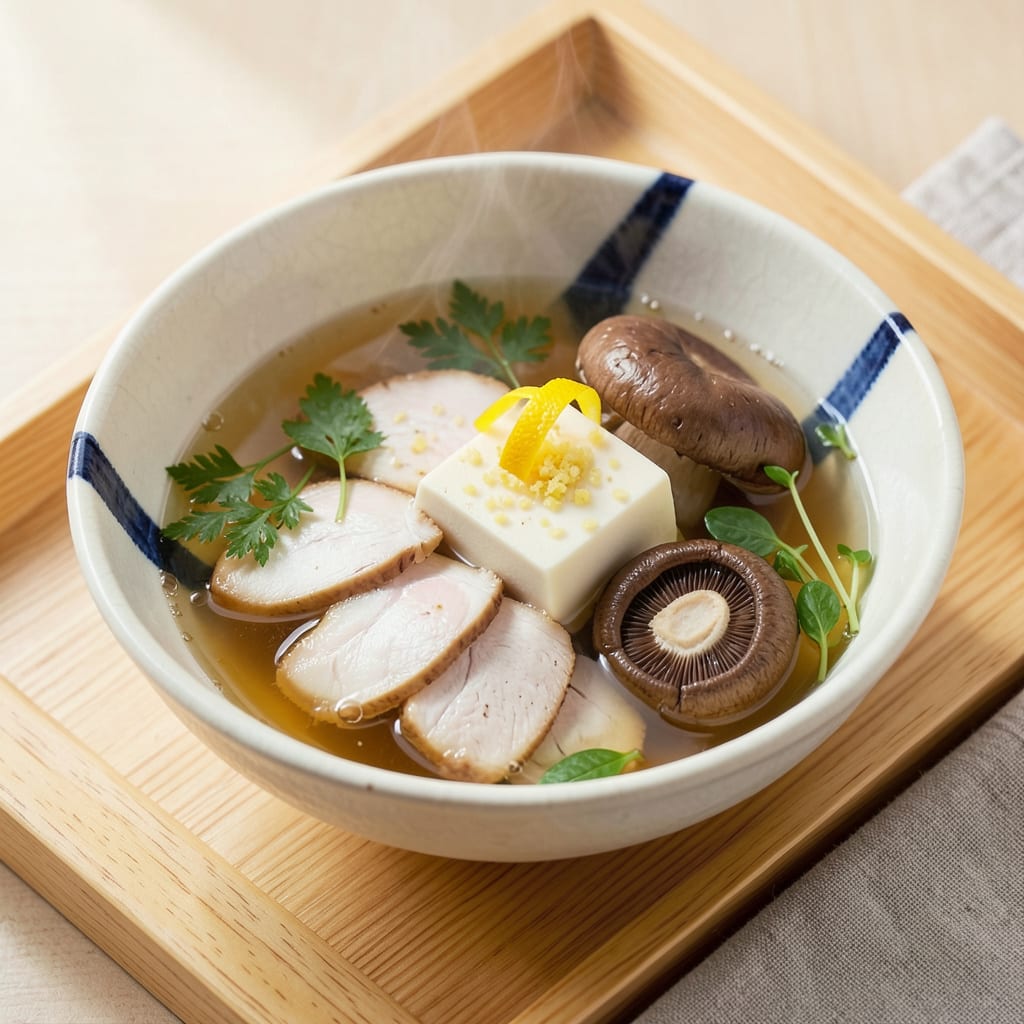
In Japan, chicken broth is typically lighter and clearer than Western versions, often used as a secondary umami base alongside dashi. It’s made with kombu, bonito flakes, and sometimes chicken bones for a delicate, savory flavor.
This approach reflects Japan’s culinary philosophy of layered flavors rather than overpowering bases. The broth’s subtlety comes from short simmering times and careful ingredient selection—kombu adds natural glutamates while bonito flakes contribute inosinate, creating that signature umami depth. 🔥
What’s fascinating is how this broth functions in traditional washoku. Unlike Western stocks that often stand alone, Japanese chicken broth typically plays a supporting role, enhancing without dominating. It’s the secret backbone in everything from delicate chawanmushi to complex ramen bases.
💡 In This Article
- How Japanese Chicken Broth Differs from Western Stock
- Using Japanese Chicken Broth in Traditional Dishes
How Japanese Chicken Broth Differs from Western Stock
The secret lies in the simmering philosophy—Japanese broths are typically cooked at 140-160°F for just 30-60 minutes, compared to Western stocks that often boil aggressively for 3-4 hours. This gentle approach prevents emulsification of fats, keeping the broth crystal clear while extracting pure flavor.
The chicken bones (usually wings or feet) are blanched first to remove impurities, then simmered with aromatics like ginger and scallions rather than heavy mirepoix.
What creates that signature umami punch is the kombu-bonito synergy. Kombu (dried kelp) contributes glutamic acid, while bonito flakes add inosinic acid—these compounds multiply umami intensity by 8-10x when combined. A standard ratio is 10g kombu + 5g bonito per liter, simmered with chicken for just 20 minutes.
This creates a broth with 300-500mg/100ml of free amino acids versus Western chicken stock’s typical 100-200mg/100ml. ✨
The fat content tells another story. Japanese versions contain just 0.5-1.5% fat compared to Western stocks at 3-8%. This isn’t accidental—chefs skim constantly during simmering and often chill the broth to remove solidified fats.
The result is a broth that coats the tongue lightly rather than feeling heavy, allowing other ingredients to shine in dishes like sumashijiru (clear soups) or oden.
Culturally, this broth reflects washoku’s “five flavors” principle (sweet, sour, salty, bitter, umami) where no single element dominates. While Western stocks often serve as the sole flavor base, Japanese chicken broth typically comprises just 30-40% of a dish’s liquid—balanced with dashi, soy, or mirin.
This modular approach allows for incredible versatility across regional cuisines from Kyoto’s refined obanzai to Tokyo’s robust ramen styles. 💫
The ingredient quality makes a dramatic difference too. Japanese chickens like Nagoya Cochin or Satsumadori have 20-30% more collagen in their bones than standard broilers, yielding more gelatin without extended cooking. Even the water matters—soft mineral water (like that from Mount Fuji) is preferred to prevent cloudiness from calcium reactions.
This attention to detail explains why professional Japanese kitchens might use 5-7 different broths in a single kaiseki meal.
Here’s what most home cooks miss: the two-stage extraction method. First, chicken bones simmer with kombu at 140°F for 30 minutes. Then bonito flakes are added off-heat and steeped for 10 minutes before straining. This prevents bitterness from over-extracted bonito while maximizing umami.
The temperature control is so precise that professional kitchens often use digital thermometers to maintain the ideal range. ⚡
Compare this to French fond blanc which reduces by 50% for intensity, or Chinese master stocks that reuse the same broth base for months. Japanese chicken broth’s ephemeral nature—often made fresh daily—reflects the cultural value placed on shun (seasonality) and ichigo ichie (one moment, one encounter) in cooking.
This is why you’ll rarely find it sold commercially in Japan; the freshness is considered essential to its delicate character.

- Rice A Roni Pork Fried Rice Recipe: Quick Wok-Style Meal with Savory Bites - September 25, 2026
- Mandhi Rice Recipe: Yemeni Spiced Lamb and Rice Feast - September 25, 2026
- Chuy’s Green Chili Rice Copycat Recipe: Spicy Southwest Flavor in Every Bite - September 25, 2026