
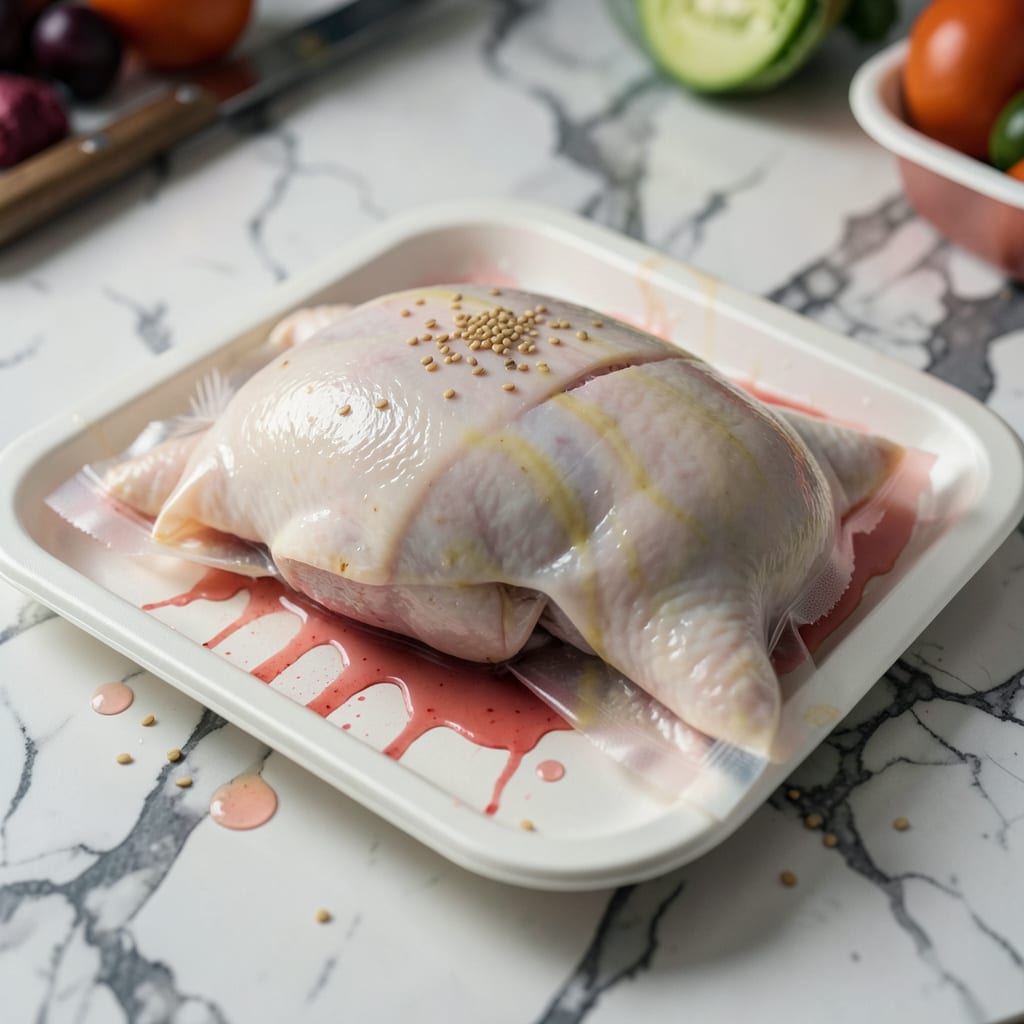
Leaking chicken packages are unsafe if the liquid is pink or bloody, indicating raw juice contamination. Clear liquid may be condensation, but discard if the package is swollen, foul-smelling, or past its date.
This isn’t just about spoilage—it’s about foodborne illness risks like salmonella or campylobacter. 🔥 The color and consistency of the liquid tell you everything: pink or bloody means raw juices have escaped, while clear liquid often comes from temperature fluctuations during transport. I always check the package integrity too—any tears or bulging seams mean bacteria could’ve entered, even if the liquid looks harmless.
What most people overlook is the cross-contamination danger from leaked fluids. Those juices can spread harmful bacteria to your fridge shelves, other foods, or countertops during handling. That’s why I immediately isolate leaking packages and disinfect the area with a bleach solution (1 tablespoon bleach per gallon of water) before touching anything else. ✨
💡 In This Article
- Why Chicken Packages Leak and When It’s Dangerous
- Step-by-Step Guide for Handling Leaking Chicken Packages
Why Chicken Packages Leak and When It’s Dangerous
The liquid in chicken packages comes from two sources: condensation or raw juices. Condensation forms when temperature fluctuates during transport—like when chicken moves from a cold truck to room temperature. This clear liquid is mostly water and harmless. But pink or bloody liquid means raw chicken juices have escaped, which may contain salmonella or campylobacter.
The USDA warns that even small amounts of these pathogens can multiply rapidly at temperatures above 40°F. 🔥
Bacteria thrive in leaked fluids because they provide moisture and nutrients. A single drop of chicken juice can contain thousands of bacteria that double every 20 minutes in the “danger zone” (40-140°F). Swollen packages indicate gas production from bacterial growth—this is your red flag.
I once saw a package bulge overnight in a fridge set at 45°F (too warm), proving how quickly spoilage occurs. ✨
The real risk isn’t just the chicken itself—it’s cross-contamination. Leaked juices can spread bacteria to fridge shelves, drawers, or other foods. Studies show salmonella can survive on surfaces for up to 32 hours. That’s why I immediately quarantine leaking packages and disinfect with a bleach solution (1 tablespoon per gallon of water).
The CDC confirms this concentration kills 99.9% of foodborne pathogens. 💫
Temperature abuse is the #1 cause of dangerous leaks. Chicken should stay below 40°F or above 140°F—anything in between creates ideal bacterial growth conditions. A package left on the counter for 2 hours can develop enough bacteria to cause illness.
Pro tip: Use a fridge thermometer—many home fridges run warmer than the 37°F ideal for raw poultry storage. ⚡
Clear liquid isn’t always safe either. If the package feels slimy or has an off odor (like sour milk or ammonia), bacteria are present even without visible blood. The USDA’s Food Safety Inspection Service found that 25% of “clear liquid” cases actually contained harmful bacteria.
When in doubt, remember: no amount of cooking can reverse bacterial toxins already produced in spoiled meat. 🌟
Here’s what to check beyond the liquid:
- Package integrity: Tears or loose seals mean bacteria could’ve entered
- Expiration date: Even unopened, chicken degrades after its use-by date
- Storage history: If it thawed and refroze, ice crystals can create false “leaks”
Bottom line: Pink liquid = toss it.
Clear liquid + other red flags (odor, texture, temperature abuse) = toss it. When handling leaks, treat every drop as potentially hazardous—your health isn’t worth the risk of saving $5 worth of chicken. 💛

- Jollof Rice Sauce Recipe: West African Tomato and Spice Infusion - September 25, 2026
- Japanese Rice Soup Recipe: Umami-Rich Comfort in a Bowl - September 25, 2026
- Homemade Cream Of Rice Recipe: Silk-Smooth Breakfast in Minutes - September 25, 2026