
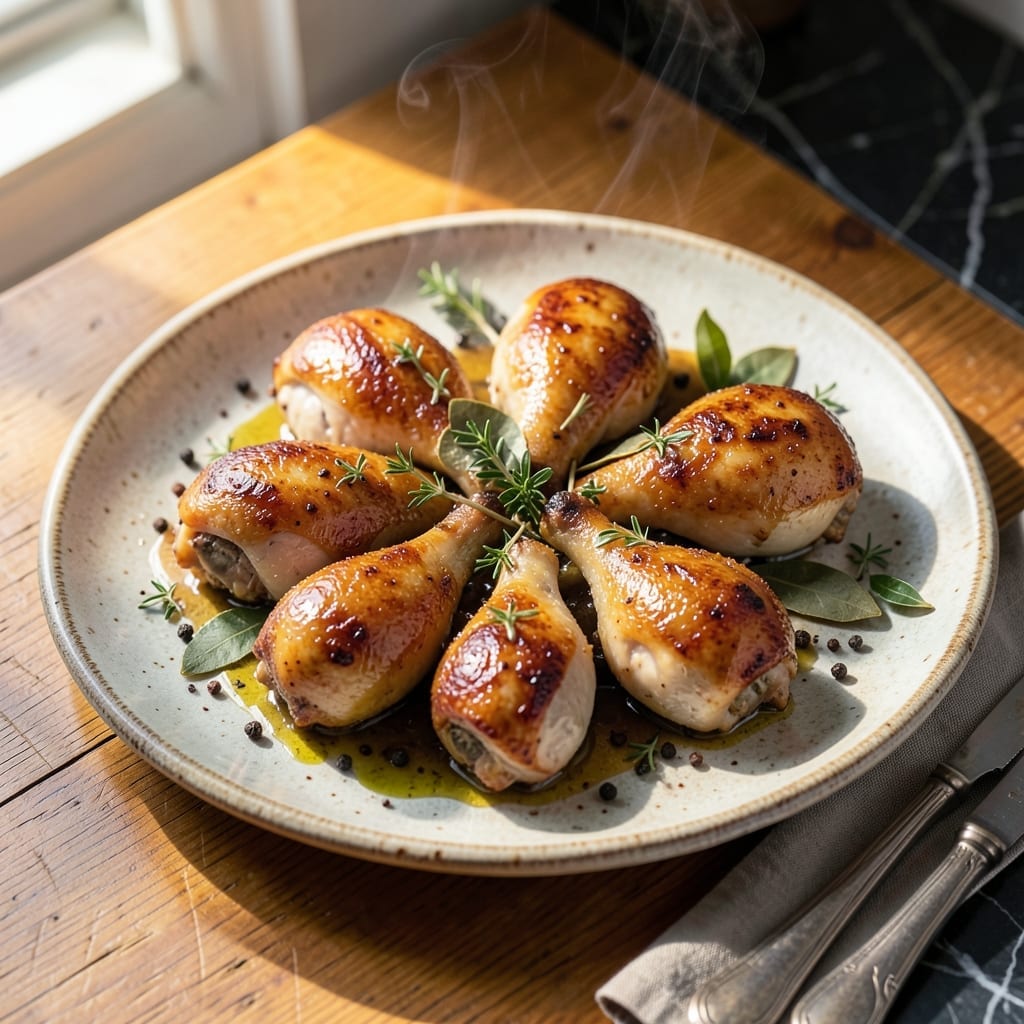
There’s a reason French cooks have relied on confit for centuries—it transforms tough cuts into tender, fall-off-the-bone perfection. This method involves slow-cooking chicken thighs in duck fat at low heat, preserving their richness and depth.
The process is simple yet precise: submerge the thighs completely and let time work its magic. The duck fat infuses every bite with unmatched flavor while keeping the meat impossibly juicy.
What emerges is tender chicken with golden, crisp-edged skin that gives way to succulent meat. The fat seals in moisture, creating a dish that’s rich without being heavy.
Serve it warm or cold—the flavors only deepen. Here’s how to master this classic technique at home.
Ingredients for Chicken Confit
These classic ingredients create French-style confit with minimal effort but maximum flavor payoff.
| Ingredient | Amount | Notes |
|---|---|---|
| Chicken Thighs 🍗 | 8 whole | Bone-in, skin-on, about 2 lbs |
| Duck Fat 🦆 | 4 cups | Rendered, enough to submerge thighs |
| Kosher Salt 🧂 | ¼ cup | Diamond Crystal preferred for curing |
| Fresh Thyme Sprigs 🌿 | 6 sprigs | Plus extra for garnish |
| Fresh Bay Leaves 🍃 | 2 whole | Dried acceptable in pinch |
| Black Peppercorns 🌶️ | 1 tbsp | Lightly crushed for infusion |
| Garlic Cloves 🧄 | 8 cloves | Lightly smashed, unpeeled |
| Shallots 🧅 | 2 whole | Peeled and halved |
| Juniper Berries 🌿 | ½ tsp | Optional but traditional |
| Dry White Wine 🍷 | ½ cup | For deglazing, optional |
The duck fat is non-negotiable here. D’Artagnan and Maple Leaf Farms offer high-quality rendered duck fat online and at specialty grocers like Whole Foods. For the chicken, bone-in, skin-on thighs are essential—they hold up to the long cooking time and emerge impossibly tender. Look for thighs that are uniformly sized so they cook at the same rate. The salt should be Diamond Crystal kosher salt for its clean flavor and proper curing ratio.
No duck fat? This isn’t a true confit without it (vegetable oil or lard won’t deliver the same depth). Chicken legs can substitute for thighs if needed. Fresh herbs are ideal, but dried at one-third the amount works—just add them to the fat during cooking. The wine is optional but adds brightness; vermouth is a great alternative if you have it. Skip the juniper berries if you can’t find them, but they add a subtle piney note worth seeking out.
The confit keeps up to 1 month submerged in its fat in the fridge. For longer storage, pack into jars, cover completely with fat, and freeze for 3 months. The fat solidifies when cold but reheats beautifully—just warm gently to liquid before using. Always discard any fat that smells off or shows mold.
Why You’ll Love This Recipe
- Hands-Off Cooking: Most of the work is just waiting while the duck fat and herbs do their magic in the oven.
- Rich, Fall-Off-Bone: Honestly, the thyme and bay leaves infuse the chicken with a depth that makes every bite melt in your mouth.
- Dinner or Lunch: I’ll use the leftovers in salads, sandwiches, or even tossed with pasta—it’s that adaptable.
- Budget Stretcher: Duck fat sounds fancy, but a little goes a long way, and chicken thighs are always affordable.
Step-by-Step Instructions for Chicken Confit
Master the classic French technique with this precise method for fall-off-the-bone results.
Step 1: Cure the Chicken with Aromatics
Begin by generously coating all 8 whole Chicken Thighs with 0.25 cup Kosher Salt, ensuring every surface is evenly covered. This curing step is essential for both preservation and flavor development.
In a large bowl, combine the thighs with 6 sprigs Fresh Thyme Sprigs, 2 whole Fresh Bay Leaves, 1 tbsp Black Peppercorns, 8 cloves Garlic Cloves, 2 whole Shallots, and 0.5 tsp Juniper Berries. Mix gently to distribute the aromatics.
Cover and refrigerate for 12-24 hours. This extended curing time ensures the salt penetrates deeply, resulting in perfectly seasoned meat that will remain tender during the long cooking process.
Step 2: Rinse and Dry the Thighs
After curing, rinse the 8 whole Chicken Thighs under cold water to remove excess salt. Pat them completely dry with paper towels—this is crucial for achieving the best texture.
Discard the used aromatics and any excess liquid. The thighs should feel slightly tacky from the cure but not wet. This step prevents the final dish from being overly salty while maintaining the flavor infusion from the curing process.
Step 3: Slow-Cook in Duck Fat
Place the 8 whole Chicken Thighs in a single layer in a deep, oven-safe dish. Pour over 4 cups Duck Fat, ensuring the thighs are completely submerged. The fat should cover the meat by at least ½ inch.
Cook in a preheated 275°F oven for 2-3 hours until the meat is fork-tender and nearly falling off the bone. The cooking time depends on the size of your thighs, so check at the 2-hour mark. The fat should remain just below a simmer—small bubbles may appear at the edges, but avoid any vigorous bubbling.
Step 4: Optional Crisping and Deglazing
For serving, carefully remove the thighs from the fat and transfer to a skillet. Cook over medium-high heat for 3-4 minutes per side until the skin is golden and crispy.
To create a pan sauce, pour off most of the fat from the skillet, then add 0.5 cup Dry White Wine. Simmer for 2-3 minutes, scraping up any browned bits, until the liquid reduces by half. This optional step adds a bright, acidic contrast to the rich duck fat.
Step 5: Serve and Store
Serve the confit warm, with some of the crispy skin and a spoonful of the pan sauce if using. The meat should be incredibly tender, pulling away from the bone with minimal effort.
To store, submerge the cooked thighs completely in the strained duck fat in an airtight container. Refrigerated, they will keep for up to 30 days. The fat acts as a natural preservative while continuing to infuse the meat with flavor.
Pro Tips For Making Chicken Confit
- Salt Generously: Use 1 tablespoon of kosher salt per pound of chicken thighs—it’s not too much. I learned this the hard way after my first batch tasted bland despite the duck fat.
- Submerge Fully: Make sure the chicken is completely covered in duck fat before it goes in the oven. Sounds obvious, but I skipped this once and ended up with dry spots.
- Low and Slow: Keep the oven at 300°F or lower. After burning a batch at 350°F, I finally figured out that patience is what makes the meat fall-off-the-bone tender.
- Use Fresh Herbs: Splash out on fresh thyme and bay leaves—the dried stuff just doesn’t cut it. My grandmother swore by this, and she was right.
Storing and Reheating This Dish
Refrigerator Storage
Let your confit cool completely at room temperature for no more than 2 hours. Transfer thighs and duck fat to a clean, airtight container—I use glass jars. Ensure meat is fully submerged in fat. Store at 40°F or below for up to 30 days. ❄️
Freezer Storage
For longer storage, pack cooled confit into freezer-safe containers, covering completely with duck fat. Leave 1 inch headspace for expansion. Freeze for up to 3 months without quality loss. The fat will solidify but thaws beautifully.
Oven Reheating
Preheat oven to 325°F. Place thighs skin-side up in a baking dish with ¼ cup duck fat. Cover with foil and heat for 20-25 minutes until warmed through. Remove foil last 5 minutes to crisp the skin. 🔥
Stovetop Reheating
Gently heat thighs in a skillet over medium-low heat with 2 tbsp duck fat for 8-10 minutes, turning occasionally. Add a splash of water to prevent sticking. This method maintains texture best.
Serving from Storage
For cold service, simply remove from fat and serve. The duck fat preserves moisture perfectly. For warm service, I prefer the oven method to maintain the skin’s integrity. Always check internal temp reaches 165°F.
Nutrition Facts
Frequently Asked Questions
What if I don’t have duck fat?
You can use a mix of olive oil and butter, but duck fat is ideal for authentic flavor. Avoid vegetable oil—it lacks the depth and richness.
Can I shorten the curing time?
No, the 12-24 hour cure is essential for proper seasoning and texture. Skipping it risks bland meat and uneven tenderness.
How do I know when it’s done?
The meat should pull away from the bone easily. Check at 2 hours—if it resists, cook up to 3 hours at 275°F.
Why submerge in fat completely?
Full submersion preserves the meat and prevents drying. The fat seals out air, locking in moisture and flavor for weeks.

- Beaten Rice Recipe: Fluffy Grains With Nutty Depth - September 25, 2026
- Machboos Rice Recipe: Bahraini Spiced One-Pot Tradition - September 25, 2026
- Recipe For Zucchini Rice Casserole: Cheesy Bake With Garden Freshness - September 25, 2026