
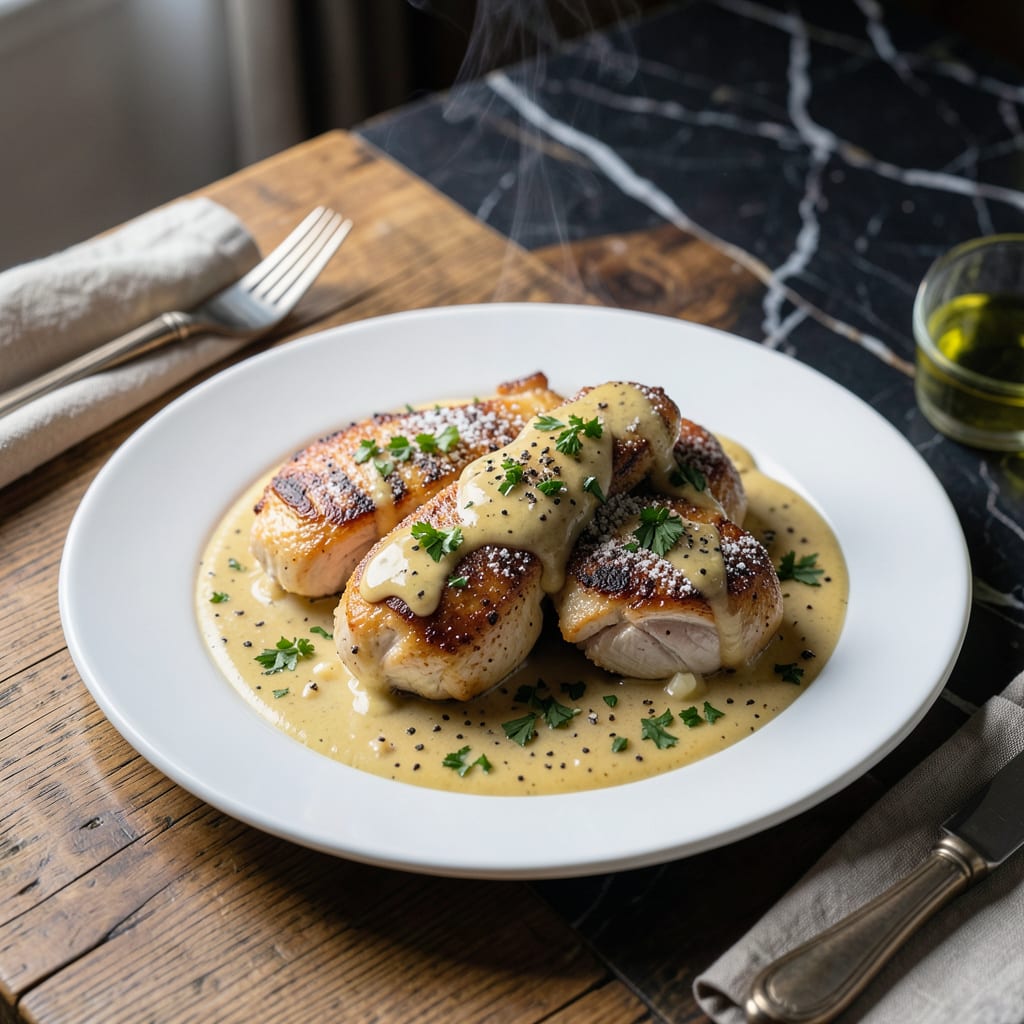
This recipe transforms simple pan-seared chicken into a restaurant-worthy dish with a bold French-inspired sauce. The secret lies in building layers of flavor through caramelized bits, aromatic garlic, and the sharp tang of Dijon mustard.
You’ll achieve juicy chicken with a velvety sauce that clings perfectly to every bite. The technique is straightforward yet delivers professional results every time.
Ingredients for Chicken Dijon Garlic Sauce
Transform everyday chicken with bold French flavors through caramelized bits and aromatic additions.
| Ingredient | Amount | Notes |
|---|---|---|
| Boneless Skinless Chicken Breasts 🍗 | 1 ½ lb | Pounded to even thickness |
| Kosher Salt 🧂 | 1 tsp | Diamond Crystal preferred |
| Freshly Ground Black Pepper 🌶️ | ½ tsp | Coarse grind for texture |
| All-Purpose Flour 🌾 | ¼ cup | For dusting chicken |
| Unsalted Butter 🧈 | 3 tbsp | Divided for cooking and sauce |
| Olive Oil 🫒 | 2 tbsp | Neutral flavor for searing |
| Garlic Cloves 🧄 | 6 cloves | Minced for sauce |
| Dijon Mustard 🟡 | 2 tbsp | High-quality French brand |
| Dry White Wine 🍷 | ½ cup | Sauvignon Blanc recommended |
| Chicken Stock 🥣 | ½ cup | Low-sodium preferred |
| Heavy Cream 🥛 | ¼ cup | Full-fat for richness |
| Fresh Thyme Sprigs 🌿 | 3 whole | Leaves stripped for garnish |
| Fresh Parsley 🌿 | 2 tbsp | Chopped for garnish |
[recipeingredientscaler]
The chicken quality is paramount for this dish. Boneless, skinless breasts from Whole Foods or a trusted butcher ensure tenderness. Pounding to even thickness—about ½-inch—guarantees uniform cooking. For the Dijon, Maille or Grey Poupon deliver the authentic sharp tang required. Diamond Crystal kosher salt is the professional choice for even seasoning without overpowering.
No white wine? Substitute with additional chicken stock plus 1 tbsp lemon juice. Heavy cream can be replaced with half-and-half for a lighter version, though the sauce won’t be as velvety. Fresh thyme not available? Dried thyme at one-third the amount works, but add it earlier in cooking. For the butter, European-style cultured butter adds a subtle depth if you’re feeling indulgent.
The sauce keeps well for 3 days refrigerated in an airtight container—reheat gently to avoid separation. Chicken is best served immediately but can be stored with sauce for 2 days. For optimal texture, keep chicken and sauce separate until reheating. Never freeze the finished dish, as the sauce may curdle.
Why You’ll Love This Recipe
- One Pan Magic: I sear the chicken in butter, then make the sauce right in the same pan—minimal cleanup, maximum flavor.
- Buttery Garlic Kick: The dijon and garlic melt into the butter for a sauce so rich I end up licking the plate.
- Weeknight Hero: Between us, this is my go-to when I need dinner ready before the kids start asking “what’s for dinner?”
- Leftovers? No Problem: The flavors actually get better overnight, so I always make extra for tomorrow’s lunch.
Step-by-Step Instructions for Chicken Dijon Garlic Sauce
Master this technique and you’ll produce perfectly juicy chicken with a rich, velvety French-inspired sauce.
Step 1: Prepare and Sear the Chicken Breasts
Pat the 1.5 lb boneless skinless chicken breasts completely dry with paper towels. Season both sides evenly with the 1 tsp kosher salt and 0.5 tsp freshly ground black pepper. This ensures proper browning and flavor penetration.
Dredge each breast lightly in the 0.25 cup all-purpose flour, shaking off any excess. Heat 2 tbsp olive oil and 1 tbsp unsalted butter in a large skillet over medium-high heat until the butter stops foaming. Add the chicken and sear for 5-6 minutes per side until golden brown and cooked through.
Transfer the chicken to a plate and tent with foil to keep warm. The residual heat will allow the chicken to finish cooking while you prepare the sauce.
Step 2: Build the Aromatic Foundation
In the same skillet, reduce heat to medium and add the remaining 2 tbsp unsalted butter. Once melted, add the 6 cloves minced garlic cloves and the stripped leaves from the 3 whole fresh thyme sprigs. Sauté for 1-2 minutes until the garlic is fragrant and just beginning to turn golden.
Be careful not to let the garlic burn—this would introduce a bitter flavor to your sauce. The thyme will infuse the butter with its earthy notes, creating a perfect base for the Dijon and wine.
Step 3: Deglaze and Create the Pan Sauce
Pour in the 0.5 cup dry white wine and scrape up all the browned bits from the bottom of the pan with a wooden spoon. These fond bits are packed with flavor and will dissolve into your sauce. Let the wine simmer for 2-3 minutes until reduced by about half.
Stir in the 2 tbsp Dijon mustard and 0.5 cup chicken stock. Simmer for another 3-4 minutes until the sauce begins to thicken slightly. The mustard will emulsify the sauce, giving it a beautiful, velvety texture.
Step 4: Finish with Cream and Serve
Reduce heat to low and stir in the 0.25 cup heavy cream. Simmer for 2 minutes until the sauce is smooth and coats the back of a spoon. Taste and adjust seasoning if needed, though the chicken should already be well-seasoned.
Return the chicken to the skillet along with any accumulated juices. Spoon the sauce over the chicken and let it warm through for 1-2 minutes. Garnish with the 2 tbsp chopped fresh parsley before serving.
Serve immediately, ensuring each portion is generously nappe with the rich Dijon garlic sauce for maximum flavor and juiciness.
Pro Tips For Making Chicken Dijon Garlic Sauce
- Pound the Chicken: Even thickness means even cooking—I learned this the hard way after too many dry, overdone edges. Aim for ½-inch thick pieces for consistent doneness.
- Season the Flour: Mix a teaspoon of kosher salt and ½ teaspoon of black pepper right into the flour before dredging. Sounds weird, but it works: the seasoning sticks better and every bite tastes balanced.
- Skip Cold Butter: Let your unsalted butter sit out for 10 minutes before starting—it browns more evenly and won’t seize up when you add the Dijon and garlic. I used to rush this and wondered why my sauce broke.
- Rest Before Saucing: Give the chicken a solid 5 minutes on a plate after cooking. My grandmother swore by this, and she was right: it keeps the juices inside where they belong, not all over your sauce.
Make-Ahead Tips for This Recipe
Prep Ahead Strategy
You can prep all ingredients 24 hours in advance. Pound and season the 1.5 lb chicken breasts, then store them in an airtight container in the fridge. Mince the 6 garlic cloves and strip thyme leaves, keeping them together in a small container. 💡
Sauce Pre-Making
The sauce base (without cream) can be made 1 day ahead. Prepare through deglazing with wine, then stop before adding cream. Store in an airtight container in the fridge. Reheat gently before adding cream the next day.
Chicken Storage
Cooked chicken without sauce keeps well for 3 days in the fridge. Store in a shallow container to cool quickly. To reheat, warm in a skillet over medium-low heat with a splash of chicken stock to prevent drying.
Sauce Storage
The finished sauce lasts 3 days refrigerated but may separate slightly. Reheat slowly over low heat, whisking constantly. If it looks thin, simmer for 2-3 minutes to thicken. Never boil the sauce after adding cream. ✨
Freezing Tips
Freeze cooked chicken and sauce separately for up to 1 month. Use quart-sized freezer bags, squeezing out all air. Thaw overnight in the fridge. Reheat chicken in sauce over low heat until warmed through.
Day-Of Assembly
For best results, combine reheated chicken and sauce just before serving. This prevents the chicken from absorbing too much sauce and becoming soggy. Garnish with fresh parsley right before plating for maximum color and flavor.
Nutrition Facts
Frequently Asked Questions
Can I use chicken thighs instead of breasts?
Yes! Bone-in, skin-on thighs work beautifully. Sear for 6-7 minutes per side and cook to 175°F. The extra fat enhances the sauce’s richness.
What can I substitute for white wine?
Use 0.5 cup chicken stock plus 1 tbsp lemon juice for similar acidity. For alcohol-free, apple cider vinegar diluted with water works in a pinch.
How do I prevent the sauce from breaking?
Keep heat at low after adding cream and avoid boiling. If it separates, whisk in 1 tsp cold butter to bring it back together.
Can this sauce be made ahead?
The sauce base (without cream) can be prepped 1 day ahead. Store in an airtight container and reheat gently before finishing.

- Jollof Rice Sauce Recipe: West African Tomato and Spice Infusion - September 25, 2026
- Japanese Rice Soup Recipe: Umami-Rich Comfort in a Bowl - September 25, 2026
- Homemade Cream Of Rice Recipe: Silk-Smooth Breakfast in Minutes - September 25, 2026