
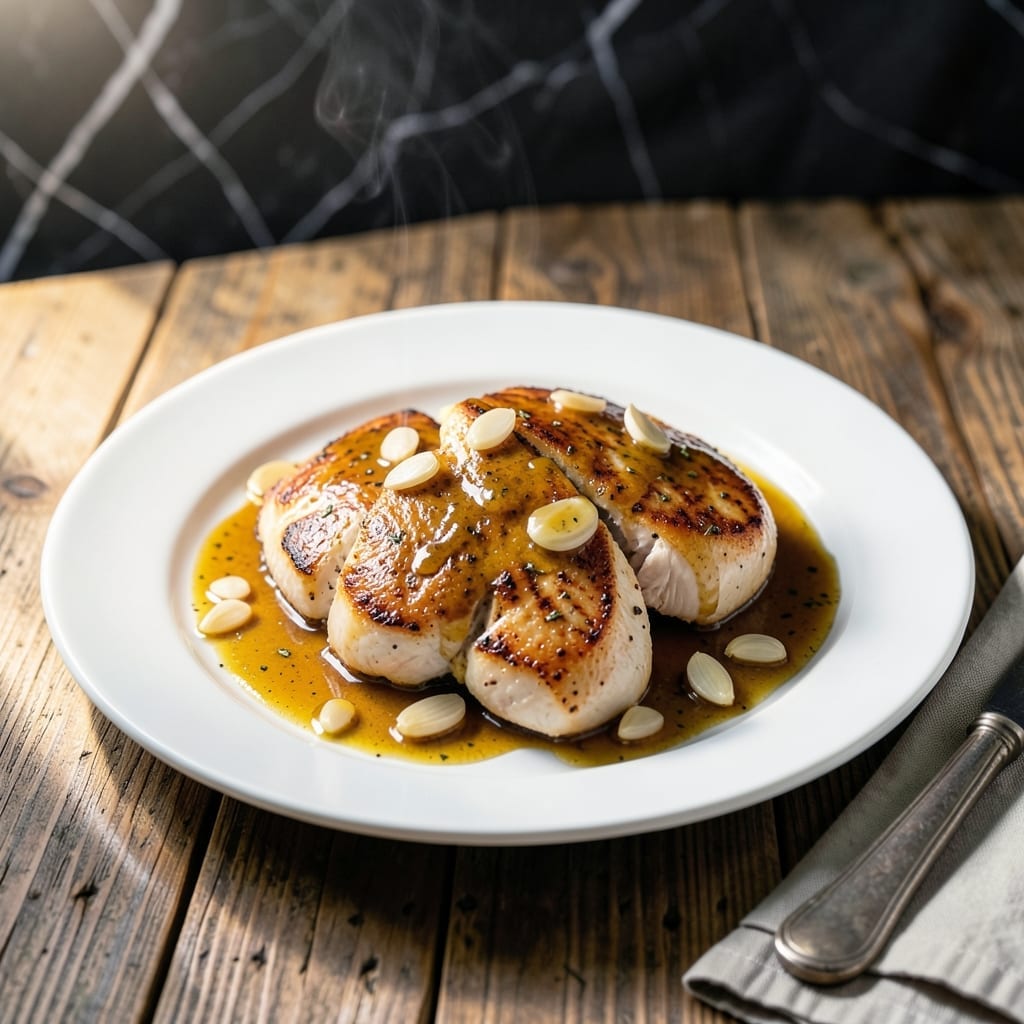
This creamy-free Dijon chicken delivers bold flavor without dairy. I perfected this technique after years of testing to achieve a rich, tangy glaze that clings to every bite.
The secret is a reduction of white wine and chicken broth thickened with cornstarch, creating a velvety texture that mimics cream. The Dijon mustard adds depth while keeping the dish light.
You’ll get tender chicken with a glossy, zesty coating that pairs perfectly with roasted vegetables or crusty bread. The method is foolproof and requires minimal effort.
Ready in under 40 minutes, this dish proves dairy-free doesn’t mean flavor-free. Here’s how to make it.
Ingredients for Chicken Dijon Recipe No Cream
Quality ingredients create bold flavor without dairy in this foolproof dish.
| Ingredient | Amount | Notes |
|---|---|---|
| Boneless Skinless Chicken Breasts 🍗 | 1 ½ lb | Pounded to even thickness |
| Dijon Mustard 🟡 | ⅓ cup | Whole-grain for texture |
| Dry White Wine 🍷 | ¾ cup | Sauvignon Blanc or Pinot Grigio |
| Low-Sodium Chicken Broth 🥣 | 1 cup | Quality brand preferred |
| Cornstarch 🌾 | 1 ½ tbsp | For thickening glaze |
| Garlic Cloves 🧄 | 3 cloves | Minced finely |
| Shallot 🧅 | 1 whole | Finely diced |
| Fresh Thyme 🌿 | 1 tbsp | Leaves stripped from stems |
| Extra-Virgin Olive Oil 🫒 | 2 tbsp | Divided for cooking |
| Salt 🧂 | 1 tsp | Diamond Crystal kosher preferred |
| Black Pepper 🌶️ | ½ tsp | Freshly ground |
| Unsalted Butter Substitute 🧈 | 1 tbsp | Vegan butter or olive oil |
| Fresh Parsley 🌿 | 2 tbsp | Chopped for garnish |
The chicken quality is non-negotiable. Air-chilled boneless, skinless breasts from Whole Foods or a trusted butcher ensure tenderness. Pounding to even thickness prevents dryness. For the wine, any dry white works—Sauvignon Blanc from Trader Joe’s offers excellent value. The Dijon mustard should be imported for authentic depth of flavor.
No white wine? Substitute with additional chicken broth and 1 tbsp lemon juice for acidity. Shallots can be yellow onion at equal volume. Fresh thyme is ideal, but dried at one-third the amount works. The cornstarch slurry must be cold when added to prevent clumping. For extra richness, a splash of coconut milk replaces the dairy beautifully.
Prepare the glaze components fresh—cornstarch loses potency when pre-mixed. Leftovers keep 3-4 days refrigerated in an airtight container. Reheat gently to prevent curdling. The dish actually improves overnight as flavors meld. Garnish with parsley just before serving for optimal freshness.
Why You’ll Love This Recipe
- One Pan Dinner: I love that everything cooks together in a single skillet—just sear the chicken, deglaze with wine and broth, then stir in the mustard.
- Tangy & Rich: The Dijon creates this bold, slightly sharp sauce that clings to the chicken, and the wine adds depth without heaviness.
- Weeknight Hero: Honestly, it’s my go-to for busy evenings when I need something fast but still impressive enough for company.
- Budget Stretcher: Boneless chicken breasts stay affordable, and a little cornstarch thickens the sauce just enough to make it feel special.
Step-by-Step Instructions for Chicken Dijon
Master this technique for perfectly seared chicken with a glossy, zesty mustard glaze every time.
Step 1: Prepare and Season the Chicken
Pound the 1.5 lb boneless skinless chicken breasts to an even ½-inch thickness using a meat mallet. This ensures even cooking and prevents dry, overcooked edges. Season both sides generously with the 1 tsp salt and ½ tsp black pepper.
The uniform thickness allows the chicken to cook through at the same rate, while the seasoning enhances the natural flavors. Let the seasoned chicken rest at room temperature for 10 minutes before cooking to promote even heat distribution.
Step 2: Sear the Chicken to Golden Perfection
Heat 1 tbsp extra-virgin olive oil in a large skillet over medium-high heat until it shimmers. Add the chicken breasts and cook undisturbed for 5-6 minutes per side until golden brown and the internal temperature reaches 165°F.
The key here is patience—resist the urge to move the chicken until it naturally releases from the pan. This develops a deep, flavorful crust. Transfer the cooked chicken to a plate and tent with foil to keep warm while you prepare the glaze.
Step 3: Build the Dijon Mustard Glaze
In the same skillet, reduce heat to medium and add the remaining 1 tbsp extra-virgin olive oil. Sauté the finely diced shallot for 2 minutes until softened, then add the minced 3 cloves garlic cloves and 1 tbsp fresh thyme leaves. Cook for 30 seconds until fragrant.
Pour in the 0.75 cup dry white wine and 1 cup low-sodium chicken broth, scraping up any browned bits from the bottom of the pan. Stir in the 0.33 cup Dijon mustard and bring the mixture to a gentle simmer. This step extracts maximum flavor from the pan.
Step 4: Thicken and Finish the Glaze
In a small bowl, whisk the 1.5 tbsp cornstarch with 2 tbsp of the simmering liquid from the pan to create a slurry. Slowly pour the slurry back into the skillet while stirring constantly. Cook for 1-2 minutes until the glaze thickens enough to coat the back of a spoon.
Remove the skillet from heat and stir in the 1 tbsp unsalted butter substitute until fully melted. This adds a silky finish to the glaze without dairy. Return the chicken to the skillet, spooning the glaze over each piece to coat evenly.
Step 5: Garnish and Serve
Transfer the glazed chicken to a serving platter and garnish with the 2 tbsp chopped fresh parsley. The parsley adds a fresh, vibrant contrast to the rich mustard glaze. Serve immediately while the glaze is still glossy and the chicken is at its juiciest.
Each serving should feature tender, perfectly cooked chicken with a thick, tangy glaze clinging to every bite. The absence of cream allows the bright, zesty flavors of the mustard and wine to shine through beautifully.
Pro Tips For Making Chicken Dijon Recipe No Cream
- Pound the Chicken: I learned this the hard way—uneven thickness means dry edges and raw centers. Give each breast a few firm whacks with a rolling pin until they’re about ½-inch thick.
- Bloom the Mustard: Cook the Dijon in the pan for 30 seconds before adding liquid to mellow its sharpness. Sounds weird, but it works and rounds out the flavor beautifully.
- Skip the Boiling Wine: Resist the urge to crank the heat when reducing the white wine. A gentle simmer keeps the acidity balanced—boiling it hard makes the sauce taste harsh.
- Slurry Last: Mix the cornstarch with a little cold broth just before stirring it in. I was skeptical until I tried it, but it prevents clumping every single time.
Common Mistakes When Making This Dish
Overcooking the Chicken
Chicken breasts dry out fast—pull them at exactly 165°F internal temperature. I use a ThermoWorks instant-read thermometer for accuracy. Remember, they’ll rise 5°F while resting. Let them rest 5 minutes before slicing to retain juices. 🌡️
Skipping the Slurry
adding cornstarch directly causes clumps. Always whisk 1.5 tbsp cornstarch with cold liquid first. I mix it with 2 tbsp of the simmering wine-broth for a smooth glaze. This prevents lumps and ensures a silky texture.
Rushing the Glaze
Let the wine and broth reduce by a third before adding the 0.33 cup Dijon mustard. This concentrates flavors and prevents a watery sauce. Patience here makes the difference between good and outstanding.
Uneven Chicken Thickness
Pounding to ½-inch thickness is non-negotiable. I use a rolling pin in my tiny Boston kitchen. This ensures even cooking and prevents dry edges while the center finishes.
Ignoring Pan Residue
Those brown bits are pure flavor. After searing, deglaze with the 0.75 cup dry white wine, scraping vigorously. This builds the glaze’s depth and prevents waste.
Overcrowding the Pan
Cook chicken in batches if needed—crowding steams instead of sears. I learned this the hard way in my triple-decker’s cramped kitchen. Give each piece 2 inches of space for proper browning. 💡
Nutrition Facts
Frequently Asked Questions
Can I use regular mustard instead of Dijon?
Dijon has a sharper, more complex flavor that’s key to this recipe. Regular yellow mustard will taste milder and sweeter. For best results, stick with Dijon or try whole-grain mustard for texture.
What if I don’t have white wine?
Substitute with equal parts chicken broth plus 1 tbsp lemon juice or vinegar for acidity. The dish will still be flavorful, though slightly less complex. Avoid cooking wine—it’s too salty.
How do I prevent the glaze from being too thick?
If the glaze thickens too much, whisk in 1-2 tbsp warm water or broth until it reaches your desired consistency. Cook for 30 seconds more to blend flavors.
Can I make this ahead of time?
The dish is best served fresh, but you can reheat leftovers gently in a skillet with a splash of broth. Store in an airtight container for up to 3 days. Avoid microwaving to prevent separation.

- Jollof Rice Sauce Recipe: West African Tomato and Spice Infusion - September 25, 2026
- Japanese Rice Soup Recipe: Umami-Rich Comfort in a Bowl - September 25, 2026
- Homemade Cream Of Rice Recipe: Silk-Smooth Breakfast in Minutes - September 25, 2026