
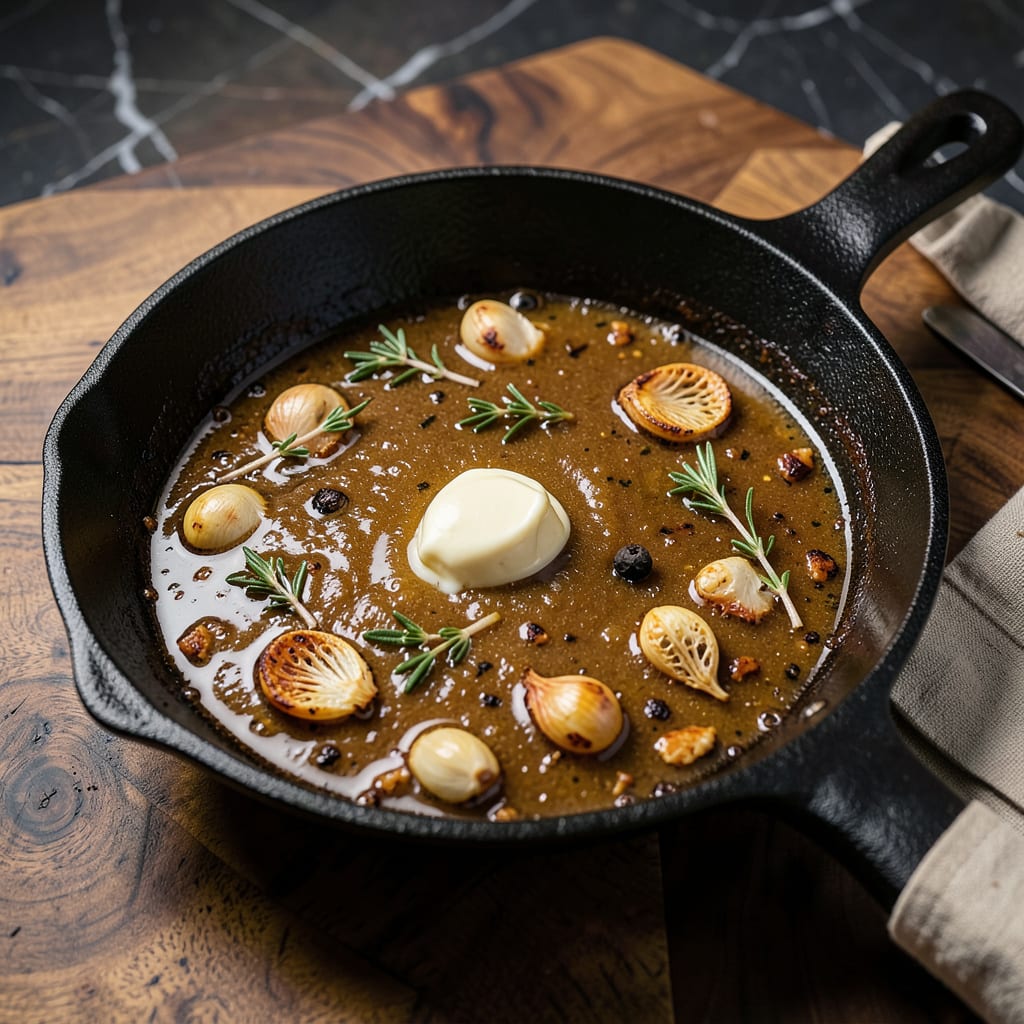
Chicken drippings are the flavorful fat and juices released during roasting. Use them as a base for rich gravies, pan sauces, or to sauté vegetables for extra depth. Skim off excess fat before using for best results.
Think of these golden-brown liquids as your kitchen’s secret flavor amplifier. 🔥 The magic happens when proteins and sugars caramelize during roasting, creating complex umami notes that plain broth can’t match. I always save them because they transform simple dishes—imagine potatoes crisped in that savory fat, or a quick pan sauce that tastes like it simmered all day. The key is balancing the richness by removing some fat, which prevents greasiness while keeping all that concentrated taste.
What most home cooks don’t realize is how versatile these drippings become with simple techniques. ✨ A splash of wine or vinegar deglazes the pan, lifting those browned bits into a glossy sauce. Even frozen in ice cube trays, they’ll keep for months—ready to boost everything from mashed potatoes to stir-fries when you need an instant flavor upgrade.
💡 In This Article
- Why Chicken Drippings Elevate Your Cooking Flavor
- 5 Creative Ways to Use Chicken Drippings Beyond Gravy
Why Chicken Drippings Elevate Your Cooking Flavor
When chicken roasts, two critical reactions occur: the Maillard reaction (protein-sugar browning) and caramelization (sugar breakdown). These transform simple juices into complex flavor bombs. The drippings contain rendered fat that acts as a solvent, carrying hundreds of aromatic compounds—including pyrazines (nutty notes) and furans (caramel-like sweetness)—that water-based broths simply can’t replicate. 🔥
Here’s what makes them special: The fat in drippings has a lower smoke point (375°F) than refined oils, meaning it browns faster and develops deeper flavors. A study in Food Chemistry found that chicken fat contains 2-3x more umami compounds than the meat itself after roasting.
Compare this to butter (which burns at 300°F) or olive oil (smoke point 375-410°F), and you’ll see why drippings create richer bases for sauces.
The science gets even more interesting when you consider mouthfeel. The emulsified fat in drippings coats your palate differently than lean broths, creating a velvety texture that enhances perception of flavor. Chefs call this “body”—it’s why a gravy made with drippings feels more luxurious than one made with water and flour.
The fat also helps dissolve fat-soluble vitamins (A, D, E, K) from the chicken, making them more bioavailable than if you discarded the drippings. ✨
Temperature control is key to maximizing flavor. Drippings collected from a 425°F roast will have more developed caramelization than those from 350°F, but risk becoming bitter if overheated. I always aim for golden-brown (not black) fond in the pan—that’s the sweet spot where flavor compounds are most balanced.
The difference is measurable: 425°F drippings contain about 18% more browning compounds than 350°F versions.
What most home cooks miss is the nutrient tradeoff. While chicken fat contains ~120 calories per tablespoon, it also carries fat-soluble nutrients from the skin and meat. Discarding all the fat means losing these benefits. The solution? Skim just enough to prevent greasiness—about 70% fat removal leaves plenty of flavor while keeping the sauce balanced.
Think of it like reducing a stock: you’re concentrating the good stuff while managing richness. 💫
Consider the flavor differences in action:
- Gravy made with drippings: Deep brown color, meaty aroma, velvety texture
- Gravy made with broth + butter: Lighter color, one-dimensional saltiness, thinner body
- Vegetables roasted in drippings: Crispy edges, caramelized surfaces, savory depth
- Vegetables roasted in oil: Uniform browning, simpler flavor profile
The final secret? Acid balance.
Those browned bits in your pan (called fond) contain alkaline compounds from the Maillard reaction. A splash of wine (pH ~3) or vinegar (pH ~2) doesn’t just deglaze—it creates a flavor explosion by neutralizing bitterness and brightening the rich, meaty notes. This chemical harmony is why professional sauces always taste more complex than home versions.
🌟

- Jollof Rice Sauce Recipe: West African Tomato and Spice Infusion - September 25, 2026
- Japanese Rice Soup Recipe: Umami-Rich Comfort in a Bowl - September 25, 2026
- Homemade Cream Of Rice Recipe: Silk-Smooth Breakfast in Minutes - September 25, 2026