
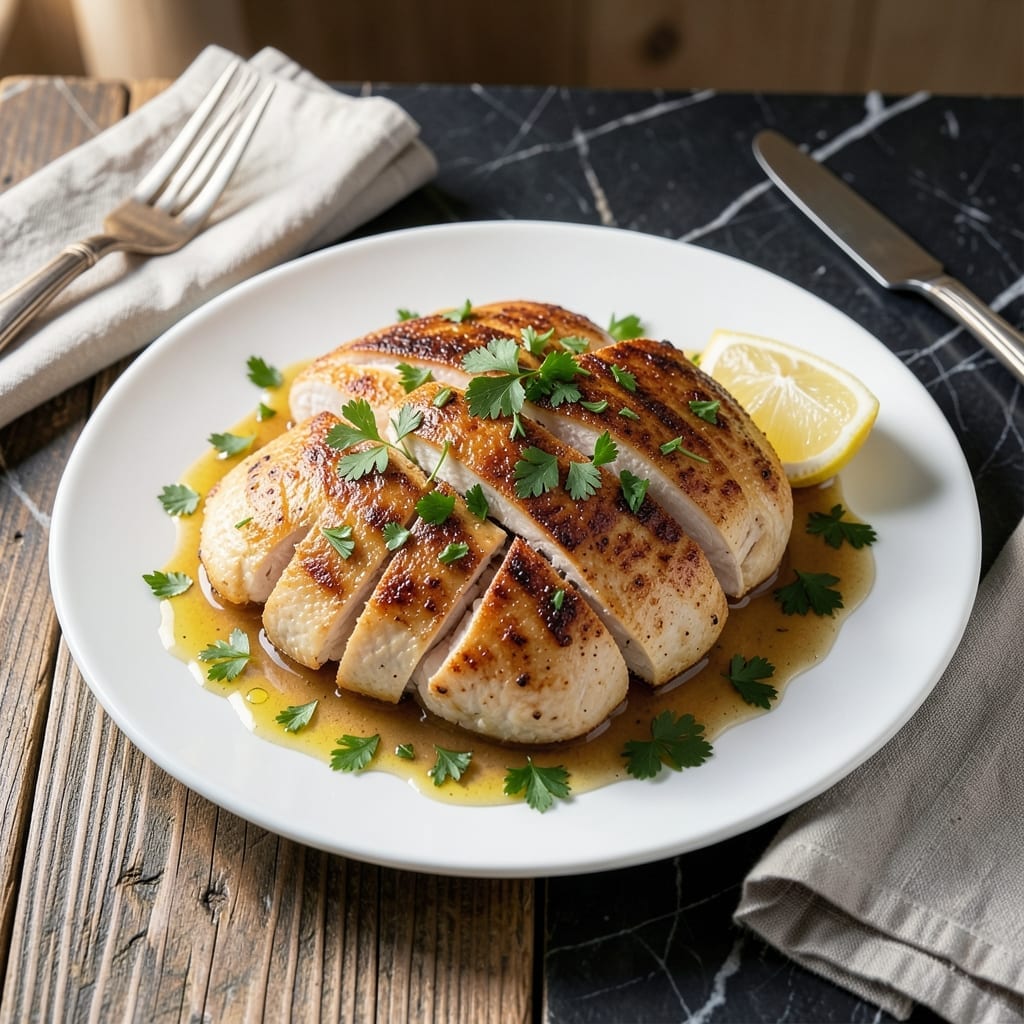
This classic French-inspired dish brings restaurant-quality elegance to your home kitchen with minimal effort. The combination of tender chicken, bright lemon, and rich butter creates a sauce that’s both luxurious and surprisingly simple to master.
The secret lies in the quick pan sauce that comes together in the same skillet as the chicken. A splash of white wine and fresh lemon juice create the perfect balance of acidity and richness, while capers add a briny complexity that takes this dish to the next level.
You’ll achieve perfectly golden chicken cutlets with a velvety sauce that clings to every bite. The entire process takes less than 30 minutes, making it ideal for weeknight dinners that feel special.
Serve with pasta, rice, or crusty bread to soak up every drop of that incredible sauce. Here’s how to make it perfectly every time.
Ingredients for Chicken Francaise
Pantry staples plus a quick stop at the dairy aisle. Nothing exotic, just good stuff.
| Ingredient | Amount | Notes |
|---|---|---|
| Boneless Skinless Chicken Breasts 🍗 | 1 ½ lb | Pounded to 1/4-inch thickness |
| All-Purpose Flour 🌾 | ½ cup | For dredging chicken |
| Salt 🧂 | 1 tsp | Divided, kosher preferred |
| Black Pepper 🌶️ | ½ tsp | Freshly ground preferred |
| Large Eggs 🥚 | 2 whole | Beaten for egg wash |
| Unsalted Butter 🧈 | 6 tbsp | Divided for cooking and sauce |
| Olive Oil 🫒 | 2 tbsp | For frying chicken |
| Dry White Wine 🍷 | ½ cup | Sauvignon Blanc or Pinot Grigio |
| Fresh Lemon Juice 🍋 | ¼ cup | About 2-3 lemons |
| Capers 🌿 | 2 tbsp | Drained and rinsed |
| Fresh Parsley 🌿 | 2 tbsp | Chopped, for garnish |
| Garlic Cloves 🧄 | 2 cloves | Minced for sauce |
| Low-Sodium Chicken Broth 💧 | ¼ cup | Optional for deglazing |
The chicken is the star here. Boneless, skinless breasts work best—pound them thin so they cook evenly and stay tender. I grab mine from Whole Foods or the butcher counter at Kroger if I want thicker cutlets to pound myself. Look for air-chilled if you can find it—less water weight, better texture. The butter needs to be unsalted so you control the seasoning.
No white wine? Substitute extra chicken broth with a splash of lemon juice—it won’t be quite the same, but still tasty. Fresh lemon juice is non-negotiable though (bottled just doesn’t cut it). Out of capers? Chopped green olives work in a pinch. For the flour, Wondra gives an extra-crispy coating, but all-purpose is totally fine. The parsley is just for garnish—skip if you don’t have it.
This sauce doesn’t hold well—serve it fresh, right after cooking. Leftover chicken keeps 3-4 days in the fridge, but the sauce will thicken and separate. Reheat gently with a splash of broth. Don’t freeze this one; the texture changes too much.
Why You’ll Love This Recipe
- One Pan Wonder: I love that I only dirty one skillet—dredge the chicken in flour, dip in egg, and cook it all right there.
- Lemon-Kissed Perfection: That light, crispy egg coating with a squeeze of lemon? So bright and satisfying.
- Feeds a Crowd: Four chicken breasts stretch easily for family dinners or company—no fancy scaling needed.
- Budget Stretcher: Boneless breasts and pantry staples mean I can make this for under $10 and still impress.
Step-by-Step Instructions for Chicken Francaise
This elegant dish comes together faster than you think with my simple method.
Step 1: Pound and Dredge the Chicken Breasts
Place the 1.5 lb boneless skinless chicken breasts between plastic wrap and pound to an even ¼-inch thickness using a meat mallet. This ensures even cooking and prevents dry spots.
Season both sides with ½ tsp of the salt and all of the ½ tsp black pepper. Dredge each piece in the ½ cup all-purpose flour, shaking off any excess. The flour creates a light coating that helps the egg adhere and gives the finished dish its signature texture.
Step 2: Create the Egg Wash and Pan-Fry
In a shallow dish, beat the 2 whole large eggs until well combined. Dip each floured chicken breast into the egg wash, letting any excess drip off. This step is crucial for that golden, delicate crust.
Heat 2 tbsp olive oil and 2 tbsp of the unsalted butter in a large skillet over medium-high heat. When the butter stops foaming, add the chicken and cook for 3-4 minutes per side until golden brown. Transfer to a plate and tent with foil to keep warm.
Don’t rush this—you want a deep golden color, which means the egg coating has properly set. If the pan gets too hot and starts smoking, reduce the heat slightly.
Step 3: Build the Lemon-Butter Sauce
In the same skillet, reduce heat to medium and add the 2 minced garlic cloves. Cook for 30 seconds until fragrant, then pour in the ½ cup dry white wine.
Scrape up any browned bits from the bottom of the pan with a wooden spoon. Let the wine simmer for 2-3 minutes until it reduces by about half. This deglazing step captures all the flavor from the chicken.
Add the ¼ cup fresh lemon juice, ¼ cup low-sodium chicken broth, 2 tbsp capers, and the remaining 4 tbsp unsalted butter. Stir until the butter melts and the sauce thickens slightly, about 2-3 minutes.
Step 4: Finish and Serve Immediately
Return the chicken to the skillet and spoon the sauce over each piece. Cook for another 1-2 minutes to heat through and allow the flavors to meld. The sauce should coat the back of a spoon with a glossy sheen.
Sprinkle with the 2 tbsp chopped fresh parsley and serve right away. This dish is best enjoyed immediately while the sauce is creamy and the chicken is at its peak tenderness. Pair with a simple side like roasted asparagus or a light salad to let the lemon-butter sauce shine.
Pro Tips For Making Chicken Francaise
- Pound the Chicken: Use a rolling pin or meat mallet to pound the breasts to an even 1/4-inch thickness—I learned this the hard way after my first few came out dry and uneven. Uniform thickness means even cooking and that perfect tender bite.
- Season the Flour: Mix a teaspoon of salt and a half teaspoon of black pepper right into the flour before dredging. Sounds simple, but it actually changes the outcome by ensuring every bite is seasoned, not just the surface.
- Skip the Crowding: Fry the chicken in batches if needed—about 2 pieces at a time in a 12-inch skillet. After burning my first batch, I finally figured out that crowding drops the oil temp and leaves you with greasy, soggy coating.
- Warm the Plates: Pop your serving plates in a low oven (around 200°F) while you cook. My grandmother swore by this, and she was right: it keeps the crispy egg coating from turning rubbery while you finish the sauce.
Essential Equipment for This Dish
Essential Skillet
A heavy 12-inch stainless steel skillet is non-negotiable here. I swear by All-Clad—it distributes heat evenly and develops a perfect fond for your sauce. Avoid non-stick; you need those browned bits for flavor. A good skillet lasts decades and pays for itself in results. 🔥
Tongs and Spatula
Use locking tongs to flip your chicken—they give you precision without piercing the meat. A wooden spoon is perfect for scraping up those flavorful browned bits when deglazing. I keep both within reach throughout cooking.
Meat Mallet
Pounding chicken to an even ¼-inch thickness requires a proper meat mallet. I prefer the flat side for even compression. A rolling pin works in a pinch, but a mallet gives you better control. Look for one with a comfortable grip.
Fine Mesh Strainer
For the smoothest sauce, strain your capers and lemon juice through a fine mesh strainer. This removes any seeds or caper stems that could affect texture. It’s a small step that makes a noticeable difference in the final dish.
Instant Read Thermometer
While experience helps, a ThermoWorks Thermapen ensures your chicken hits 165°F perfectly every time. I check the thickest piece to be safe. It’s the easiest way to avoid overcooking while maintaining that tender texture.
Shallow Dishes
For dredging and egg washing, use wide, shallow dishes (I use pie plates). They make coating the chicken much easier than deep bowls. Keep one for flour and one for eggs to streamline your prep process.
Nutrition Facts
Frequently Asked Questions
Why do we pound the chicken so thin?
Pounding to ¼-inch thickness ensures even cooking and prevents dry spots. It also creates more surface area for the egg coating to crisp up beautifully.
Can I use chicken thighs instead?
Yes, but they’ll need 1-2 extra minutes per side. Thighs stay juicier but have a different texture. Stick to boneless, skinless for best results.
What if my sauce breaks or separates?
Remove from heat and whisk vigorously to re-emulsify. If needed, add 1 tsp cold water and stir. Low heat helps prevent separation in the first place.
Is the wine necessary or can I skip it?
Wine adds depth, but substitute ½ cup chicken broth + 1 tbsp lemon juice. The acidity is key for balancing the buttery sauce.

- Jollof Rice Sauce Recipe: West African Tomato and Spice Infusion - September 25, 2026
- Japanese Rice Soup Recipe: Umami-Rich Comfort in a Bowl - September 25, 2026
- Homemade Cream Of Rice Recipe: Silk-Smooth Breakfast in Minutes - September 25, 2026